Agentic repository work
Explore code, make coordinated edits, run tools, and iterate on multi-step software-engineering tasks inside Cognition's agent environments.
Independent tool overview
SWE-1.6 is Cognition's previous-generation coding-agent model and remains available in Devin Desktop, but SWE-1.7 is now the current successor for longer-horizon software-engineering work across Devin Web, Desktop, and CLI.
Visit the official SWE-1.7 (successor to SWE-1.6) site ↗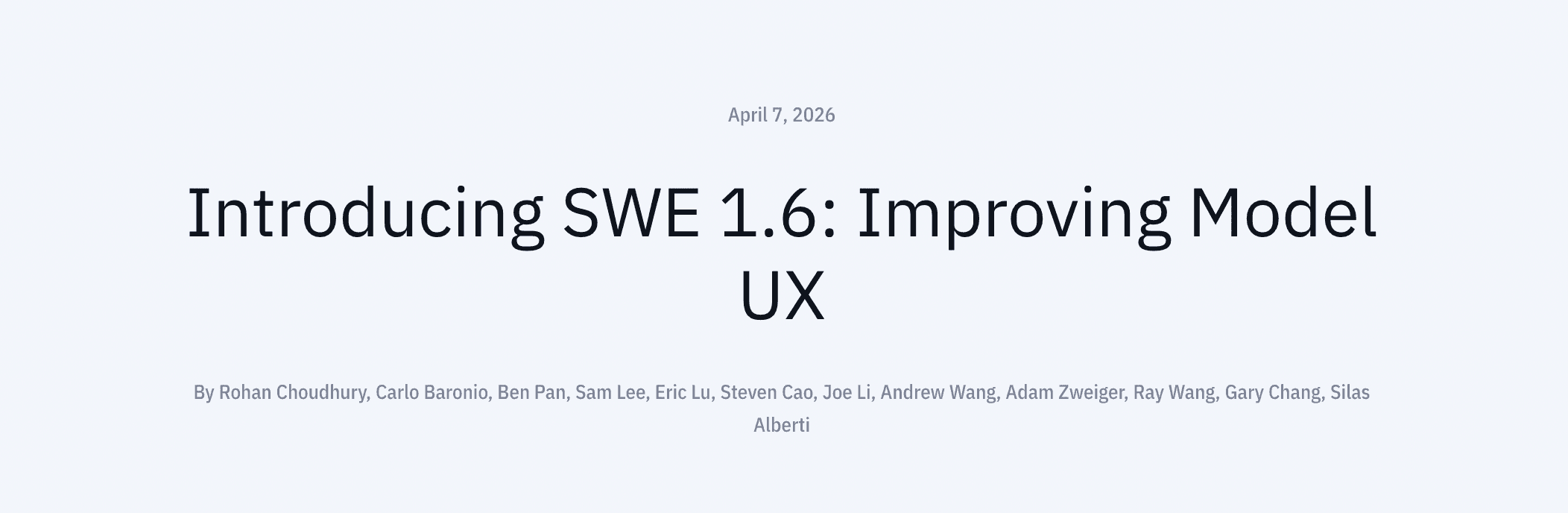
Overview
Cognition released SWE-1.6 in April 2026 as a software-engineering agent model optimized for both coding ability and a smoother interactive experience. It focused on reducing overthinking, repetitive loops, unnecessary terminal use, and sequential tool calls while offering standard and faster inference options.
SWE-1.6 has not disappeared: Cognition's current Devin Desktop model guide still lists SWE-1.6 and the paid-user SWE-1.6 Fast variant. However, the same guide labels it the previous generation. SWE-1.7, released July 8, 2026, is the current in-house model and is available in Devin Web, Devin Desktop, and Devin CLI.
SWE-1.7 adds Medium and Max reasoning-effort variants plus SWE-1.7 Lightning on Cerebras. Cognition says it is trained for longer-horizon asynchronous work and reports large benchmark gains over SWE-1.6, but those vendor-run scores should inform a repository-specific evaluation rather than substitute for one.
Use cases
The strongest fit depends on the job you need the product to complete, not the size of its feature list.
Explore code, make coordinated edits, run tools, and iterate on multi-step software-engineering tasks inside Cognition's agent environments.
Use the Lightning variant when interactive responsiveness matters and the task fits the model's capabilities.
Keep coding-model selection, local and cloud agents, repository context, quotas, and collaboration inside the existing Devin platform.
Capabilities
Cognition positions SWE-1.7 as its latest software-engineering model, with Medium and Max reasoning-effort variants for balancing speed and task depth.
SWE-1.7 Lightning runs on Cerebras and is presented as the same model intelligence with lower latency. Cognition's launch article reports throughput of 1,000 tokens per second.
The successor was trained for longer asynchronous tasks and learned self-compaction: summarizing its working state and continuing beyond a raw context window.
SWE-1.7 is available through Devin Web, the Devin Desktop IDE, and Devin CLI rather than as a standalone consumer chat product.
The current model guide still includes standard SWE-1.6 and SWE-1.6 Fast, which can matter for comparing behavior or preserving an existing workflow while testing the successor.
Cognition also uses SWE-1-mini for Tab suggestions, swe-grep for code-context retrieval, and swe-check for lightweight review tasks within the broader developer experience.
Process
Step 1
Open Devin Web, Devin Desktop, or Devin CLI rather than treating SWE-1.6 or SWE-1.7 as a separately purchased application.
Step 2
Supply architecture notes, project rules, relevant tests, and a precise definition of done. Exclude secrets and give tools only the permissions needed for the task.
Step 3
Start with Cognition's recommended Adaptive router or SWE-1.7 Medium. Move to Max for difficult reasoning or Lightning when latency is the main constraint.
Step 4
If SWE-1.6 behavior is already known, give both generations the same representative tasks and compare correctness, diff quality, tool usage, completion time, and quota cost.
Step 5
Inspect terminal commands, dependency changes, network access, generated migrations, and security-sensitive edits. Do not accept a benchmark or confident explanation as proof that the code is correct.
Step 6
Run focused tests, type checks, linting, builds, and realistic acceptance checks, then review the final diff before merging or deploying.
Cost
SWE-1.6 and SWE-1.7 are accessed through Cognition's Devin products rather than sold as standalone model subscriptions. Current self-serve usage is quota-based and extra paid usage varies with the selected model's token cost. Prices below reflect Devin's individual and team plans checked on August 28, 2026.
$0
For lightweight agent use and the core Devin Desktop experience.
$20/month
The main individual plan for the broader model catalog and Devin Cloud.
$200/month
For individual developers needing substantially higher quotas.
$80/month + $40/full seat
For organizations managing shared billing, usage, and collaboration.
Contact sales
For custom governance, deployment, and usage arrangements.
Pricing checked . Check current pricing at the source ↗
Assessment
Compare
The right alternative depends on the specific output, workflow, controls and budget your project requires.
Coding
Choose Cursor when you want another agent-first desktop editor with its own routing and coding-model options.
Explore Cursor →Coding
Choose Claude Code when Anthropic's terminal-first agent and models fit an existing editor and command-line workflow better.
Explore Claude Code →Coding
Choose OpenAI Codex when you want OpenAI's coding agents across app, CLI, IDE, cloud, and code-review workflows.
Explore Codex →Coding
Choose Replit Agent when browser-based building, managed infrastructure, collaboration, and deployment are more important than a local repository workflow.
Explore Replit Agent →Questions
SWE-1.6 is Cognition's April 2026 model for software-engineering agents, trained for coding ability and smoother tool use. It remains available in Devin Desktop but is now labeled the previous generation.
SWE-1.7 is the current successor. Cognition launched it on July 8, 2026 and makes it available in Devin Web, Devin Desktop, and Devin CLI.
Yes. Cognition's current Devin Desktop model guide lists SWE-1.6 and SWE-1.6 Fast alongside the newer SWE-1.7 family. SWE-1.6 Fast is described as available to paying users.
Cognition reports that SWE-1.7 Lightning is served through Cerebras at 1,000 tokens per second. Real task time also depends on reasoning, tool calls, repository size, network operations, and verification.
It is bundled into Devin's platform plans rather than sold as a standalone subscription. Devin currently lists Free at $0, Pro at $20 per month, Max at $200, and Teams at $80 per month plus $40 per full developer seat. Quotas and extra model usage apply.
Start new evaluations with SWE-1.7 because Cognition identifies it as the current model. Keep SWE-1.6 only when an existing workflow depends on its behavior or a controlled comparison shows it performs better on a specific task.
Cognition reports competitive results across FrontierCode, Terminal-Bench, and SWE-Bench Multilingual, but the comparison is vendor-run. Evaluate the model on representative repositories and count correctness, review effort, latency, and cost.
Bottom line
SWE-1.6 remains usable, but it should no longer be the headline recommendation. SWE-1.7 is Cognition's active successor and the better starting point for new Devin coding-agent evaluations, especially when long-horizon work or Lightning latency matters. Use SWE-1.6 only as a known baseline, and choose a Devin plan only after measuring the current model selector, quota consumption, patch quality, and required human review on real work.
Visit SWE-1.7 (successor to SWE-1.6) website ↗
Cursor 3 - Cursor's agent-first interface for running parallel coding agents across repos
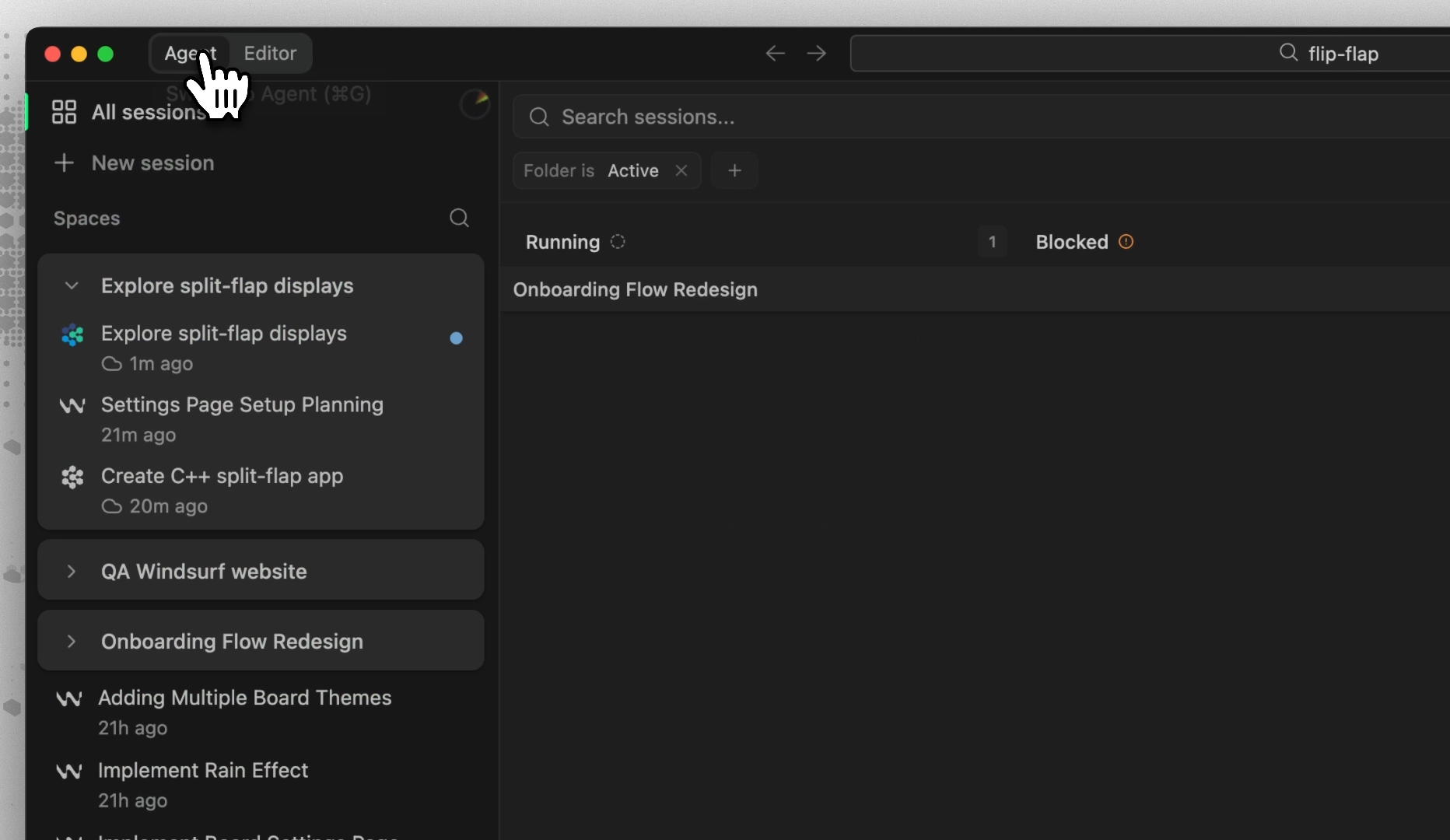
Windsurf 2.0 - Windsurf's updated agentic IDE with a new command center and embedded Devin cloud agent

Composer 2 - Cursor's powerful, cost-effective new in-house coding model

Qwen3.6-27B - Alibaba's open-source 27B model that beats its 397B predecessor on coding benchmarks

Get access to all our AI courses, hundreds of real-world AI use cases, live expert-led workshops, an exclusive network of AI early adopters, and more.
Get unlimited access to all of our current & upcoming industry-specific AI courses for the duration of your subscription.
To keep up with the rapid pace of AI, our team publishes AI implementation guides daily. Our library contains 300+ practical use cases to automate real-world work.
Join weekly, live, interactive sessions with industry leaders who are at the forefront of AI for hands-on implementation guidance and exclusive insights.
Network with an exclusive community of AI-first professionals who are working smarter with AI. Learn how early adopters are using AI in their work and businesses.