Developer video products
Teams that need a documented API for text, image, or audio-conditioned video with selectable speed and quality.
Independent tool overview
LTX-2 is Lightricks' open-weight audio-video model family for generating synchronized video and sound from text, images, video, or audio. The original LTX-2 API models have been removed, but the product line remains active through LTX-2.3 and the current LTX-2.5, available as downloadable weights, a self-hosted stack, and per-second APIs. LTX-2.5 adds native multi-shot continuity, stronger prompt adherence, automatic duration, improved motion, fine-tuning, and higher-end HDR and RAW workflows. It is a serious developer and production option, but self-hosting is hardware-intensive and the custom community license—not an unrestricted permissive software license—requires paid terms for entities at or above $10 million in annual revenue outside limited noncommercial use.
Visit the official LTX-2 Model Family site ↗
Overview
LTX-2 began as Lightricks' joint audio-video diffusion-transformer family, generating visuals and synchronized dialogue, ambience, sound effects, or music in one process. The current flagship is LTX-2.5, while LTX-2.3 remains available for API workflows including Retake, Extend, and Reframe that 2.5 does not yet expose.
The original API identifiers, ltx-2-fast and ltx-2-pro, are no longer usable. LTX announced deprecation in July 2026 and removed them on August 16, 2026. Existing integrations must select ltx-2-3-fast, ltx-2-3-pro, ltx-2-5-fast, or ltx-2-5-pro according to endpoint support.
LTX-2.5 supports text-to-video, image-to-video, and audio-to-video through both synchronous and asynchronous APIs. Fast reaches landscape or portrait 4K and up to 50 fps; Pro currently reaches 1080p. Supported durations vary by model, resolution, and frame rate, with automatic duration available for text and image generation.
LTX-2.5's headline addition is native multi-shot generation: one run can create connected shots while trying to preserve character, setting, lighting, visual style, and voice across cuts. Other additions include a new diffusion video decoder, a Gemma 4-based text encoder and prompt enhancer, cleaner motion, fine-tuning, and professional HDR and RAW claims.
Developers can download weights and code, run the stack locally or on-premises, build ComfyUI and Python workflows, and train LoRA or IC-LoRA adaptations. Lightricks advertises inference paths starting around 16GB VRAM, but full training documentation recommends Linux, CUDA, and far larger GPUs—80GB VRAM for the standard configuration or 32GB with low-memory options.
The weights use Lightricks' LTX-2.x Community License. It permits broad use subject to restrictions for qualifying users, but entities with at least $10 million in annual revenue need a paid commercial agreement for commercial use. Redistribution, derivatives, acceptable-use obligations, downstream notices, and model-specific component licenses require review.
Generated video is not factual evidence and can contain identity drift, temporal artifacts, impossible physics, lip-sync errors, visual bias, offensive material, or misleading depictions. Production deployment needs provenance, consent, disclosure, rights review, content moderation, human approval, and conventional post-production.
Use cases
The strongest fit depends on the job you need the product to complete, not the size of its feature list.
Teams that need a documented API for text, image, or audio-conditioned video with selectable speed and quality.
Qualified organizations that want open weights and infrastructure control instead of a mandatory hosted API.
Technical teams with licensed datasets and suitable GPUs for LoRA, IC-LoRA, or full fine-tuning.
Creators exploring connected scenes with more consistent characters, settings, lighting, style, and voice.
Music, dialogue, or sound-driven workflows where generated motion and imagery should follow an input track.
Studios evaluating 4K, HDR, RAW, portrait, high-frame-rate, and self-hosted generation inside conventional finishing workflows.
Capabilities
Generates video and synchronized sound within the same model family rather than stitching independent systems together.
Supports text-to-video, image-to-video, and audio-to-video in current LTX-2.5 API variants.
LTX-2.5 can create multiple connected shots in one run while attempting to hold identity, scene, lighting, style, and voice.
Lets LTX-2.5 choose an allowed clip length from the requested action for text and image generation.
Fast supports portrait or landscape output through 4K; Pro supports portrait or landscape through 1080p.
API parameters can request supported camera movements and first or last-frame conditioning.
Provides model checkpoints, Python inference packages, training code, ComfyUI support, and reference workflows.
Supports trainable development checkpoints, LoRA, IC-LoRA, and full fine-tuning on appropriately licensed data.
LTX-2.5 is marketed with native 4K HDR and RAW-oriented workflows for downstream color and finishing.
LTX-2.3 currently supplies Retake, Extend, and Reframe API endpoints while 2.5 focuses on generation.
Returns a video directly for synchronous requests or a job ID for polling in longer asynchronous workflows.
Lightricks maintains an open-source LTX Desktop application for local LTX-model video workflows.
Process
Step 1
Use LTX-2.5 Fast or Pro for current generation; retain LTX-2.3 when you need Retake, Extend, Reframe, or a lower published rate.
Step 2
Calculate revenue across the covered entity and affiliates, classify commercial versus noncommercial use, and review redistribution, derivative, attribution, acceptable-use, and downstream obligations.
Step 3
Compare per-second cloud costs with GPU acquisition, storage, bandwidth, operations, security, electricity, model updates, and staff time.
Step 4
Obtain rights and consent for scripts, music, voices, faces, reference images, footage, trademarks, datasets, and fine-tuning material.
Step 5
Use approved storage and signed uploads, strip unnecessary metadata, set retention rules, and prefer a controlled self-hosted boundary when cloud processing is not permitted.
Step 6
Define shot purpose, subject, action, environment, camera, lens, light, timing, sound, continuity anchors, duration, aspect ratio, and exclusions.
Step 7
Test prompt structure, motion, and composition with Fast or a lower resolution before paying for high-resolution or Pro renders.
Step 8
Use consistent, authorized reference assets, first and last frames, seeds, adapters, and descriptive anchors across shots.
Step 9
Block deceptive impersonation, non-consensual likeness use, sexual abuse material, dangerous content, rights violations, and other prohibited uses before generation or delivery.
Step 10
Inspect identity, hands, mouths, text, logos, continuity, physics, flicker, cuts, lip sync, audio artifacts, and unintended background content.
Step 11
Edit, color-grade, mix, caption, normalize sound, clear music and likeness rights, add disclosures or provenance, and export through a controlled mastering process.
Step 12
Set duration and resolution limits, disable unsafe auto top-up defaults, monitor failures and retries, and account for the maximum credit hold when using automatic duration.
Step 13
Require an accountable reviewer before publishing, advertising, news use, client delivery, or any high-impact decision.
Cost
LTX-2.5 weights can be downloaded and self-hosted under the custom community license, with no per-generation fee from Lightricks for qualifying use; infrastructure is still a real cost. Entities with annual revenue of at least $10 million generally need a paid commercial agreement for commercial use. The hosted API uses prepaid or approved postpaid billing per second. Automatic-duration jobs temporarily hold enough prepaid credit for the maximum possible clip, then release the unused remainder.
No LTX usage fee for qualifying users
For local, on-premises, fine-tuned, or embedded deployment under the current LTX-2.x Community License.
$0.09–$0.30 per second
The current speed-focused API with portrait and landscape output through 4K.
$0.12–$0.17 per second
The current higher-fidelity API option at 720p or 1080p.
$0.03–$0.34 per second
Still-supported Fast and Pro models, including current editing endpoints.
Custom
For larger commercial entities, negotiated licensing, volume, support, or deployment terms.
Pricing checked . Check current pricing at the source ↗
Assessment
Compare
The right alternative depends on the specific output, workflow, controls and budget your project requires.
Content Creator
Choose Runway Gen-4.5 for a managed creative platform and commercial video workflow without self-hosting model weights.
Explore Runway Gen-4.5 →Content Creator
Choose Google Veo 3.1 for Google's hosted high-end video generation and its surrounding Flow and Vertex AI ecosystem.
Explore Veo 3.1 →Content Creator
Choose Sora 2 for OpenAI's integrated consumer and creative video experience.
Explore Sora 2 →Content Creator
Choose Wan 3.0 when evaluating Alibaba's current multimodal video family and alternative deployment options.
Explore Wan 3.0 →Content Creator
Choose Kling 3.0 for another hosted native-audio video model with long-clip and consistency features.
Explore Kling 3.0 →Content Creator
Choose Hailuo AI for a simpler hosted video-generation interface aimed at creators rather than model operators.
Explore Hailuo AI →Questions
LTX-2 is Lightricks' open-weight audio-video foundation-model family. It generates synchronized video and sound from text, images, video, or audio and can be accessed through weights, self-hosted tools, and LTX APIs.
Yes, as a model family. The original ltx-2-fast and ltx-2-pro API IDs were removed in August 2026, but LTX-2.3 and the current LTX-2.5 are active successors.
LTX-2.5 is the current flagship as of August 31, 2026. It adds native multi-shot generation, stronger prompt adherence, cleaner motion, automatic duration, fine-tuning support, and professional HDR and RAW-oriented workflows.
Choose among ltx-2-3-fast, ltx-2-3-pro, ltx-2-5-fast, and ltx-2-5-pro. Confirm the endpoint matrix first because Retake, Extend, and Reframe currently remain on LTX-2.3.
Lightricks publishes weights and code and markets the family as open source. The model weights are governed by a custom LTX-2.x Community License with revenue thresholds, use restrictions, and redistribution duties, so teams should describe it precisely as open-weight and review the binding terms.
Lightricks says entities under $10 million in annual revenue can use it commercially without an LTX usage fee, subject to the full community license. Entities at or above that threshold generally need paid commercial terms. Legal counsel should evaluate the actual entity, affiliates, purpose, deployment, derivatives, and distribution.
LTX-2.5 Fast is $0.09 per second at 720p, $0.13 at 1080p, $0.19 at 1440p, and $0.30 at 4K. Pro is $0.12 at 720p and $0.17 at 1080p. Text and image generation bill output duration; audio-to-video bills input-audio duration.
Yes, the Fast API supports native portrait and landscape output through 4K on supported duration and frame-rate combinations. The current Pro API tops out at 1080p.
Yes. Native multi-shot generation is a headline 2.5 feature intended to preserve character, setting, lighting, style, and voice across connected cuts. Review output closely because continuity is not guaranteed.
LTX's product page advertises a minimum path around 16GB VRAM, but the exact requirement depends on checkpoint, precision, resolution, duration, backend, and pipeline. Training documentation recommends 80GB VRAM for a standard setup or 32GB with low-memory options.
Yes. It can generate synchronized audio with text- or image-generated video and can generate visuals driven by an input audio track. Sound, speech, music, timing, consent, and licensing still require review.
It can be part of a production pipeline when the operator supplies security, rights management, moderation, provenance, quality control, human approval, and post-production. The model card says it is not factual and may produce biased, inappropriate, or prompt-misaligned output.
Use 2.5 for its newer generation quality, native multi-shot, automatic duration, and current foundation. Use 2.3 when you need current Retake, Extend, or Reframe endpoints, broader Pro resolution tiers, or its lower published API pricing.
The model license says Lightricks generally claims no rights in generated output, but the user remains accountable for inputs and uses. That does not clear copyrights, trademarks, publicity rights, privacy, consent, music, dataset rights, or local-law requirements.
Bottom line
LTX-2 remains one of the most important open-weight video families, but the page must be read as a moving product line rather than the frozen January 2026 release. LTX-2.5 is now the strongest starting point for new generation work, while 2.3 still matters for editing and lower-cost API paths. The combination of synchronized audio, multi-shot continuity, downloadable weights, fine-tuning, and public per-second pricing is unusually attractive to technical teams. The tradeoff is operational and legal ownership: capable GPUs, a custom revenue-gated license, model and dependency security, moderation, rights clearance, and frame-level human review all sit with the deployer.
Visit LTX-2 Model Family website ↗
Hunyuan Motion 1.0 - Tencent's open-source model for 3D character animations from text prompts
Scribe v2 - ElevenLabs' SOTA transcription model with top accuracy, multi-language support, keyterm prompting, and more
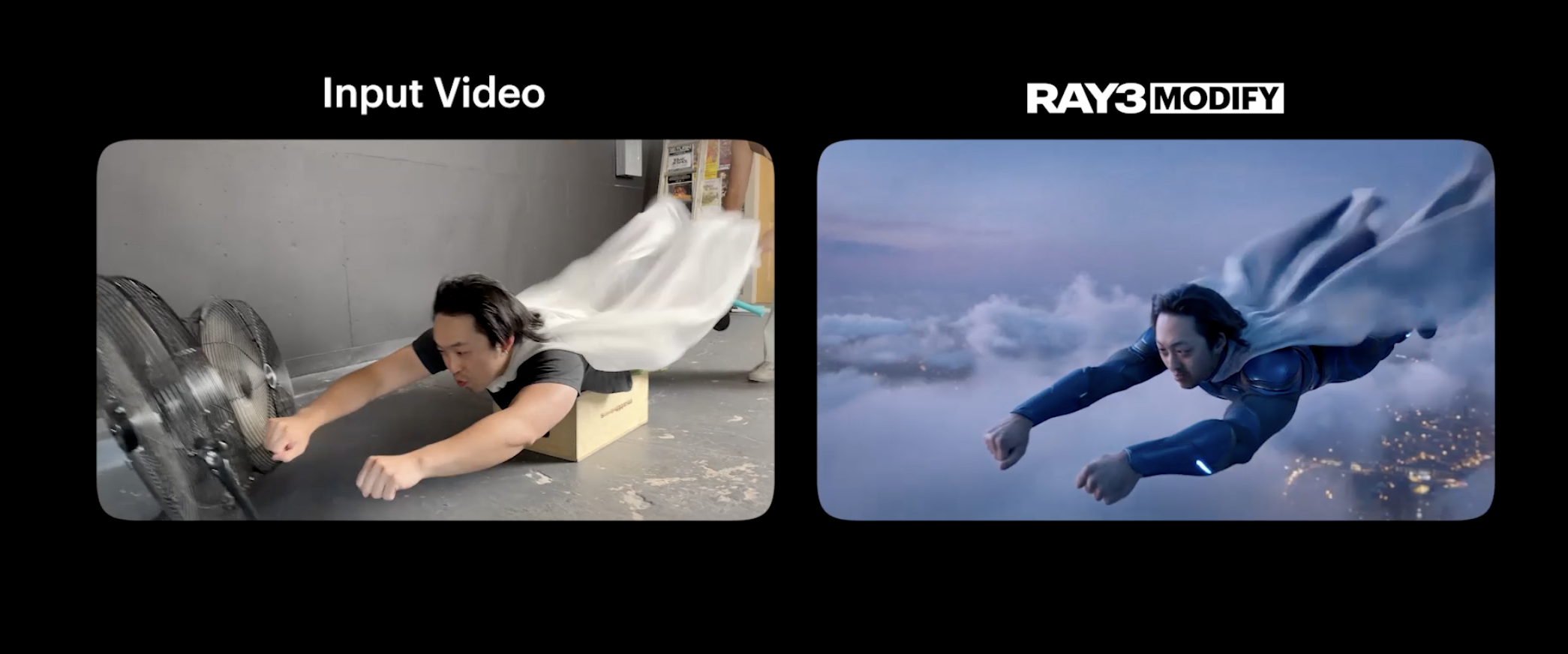
Ray3 Modify - Edit and reimagine videos with precise keyframe and character reference controls

GLM-Image - Z AI's new open-source image generation model

Get access to all our AI courses, hundreds of real-world AI use cases, live expert-led workshops, an exclusive network of AI early adopters, and more.
Get unlimited access to all of our current & upcoming industry-specific AI courses for the duration of your subscription.
To keep up with the rapid pace of AI, our team publishes AI implementation guides daily. Our library contains 300+ practical use cases to automate real-world work.
Join weekly, live, interactive sessions with industry leaders who are at the forefront of AI for hands-on implementation guidance and exclusive insights.
Network with an exclusive community of AI-first professionals who are working smarter with AI. Learn how early adopters are using AI in their work and businesses.