Real-time image previews
Use the 4B model for interactive creative tools where latency and cost matter more than maximum fidelity.
Independent tool overview
FLUX.2 [klein] is Black Forest Labs' compact image generation and editing family, built for low-latency API use and local deployment in 4B and 9B variants.
Visit the official FLUX.2 [klein] site ↗![FLUX.2 [klein] product preview](/_next/image?url=https%3A%2F%2Fcdn.prod.website-files.com%2F67ab272a36622522cbb3bac1%2F696d3ab90fa358b40187952c_Screenshot%25202026-01-18%2520at%25201.55.31%25E2%2580%25AFPM.png&w=3840&q=75)
Overview
FLUX.2 [klein] combines text-to-image generation and prompt-based image editing in a compact architecture designed for interactive applications. It supports up to four reference images, exact hex-color prompts and outputs from 64×64 pixels to four megapixels. Black Forest Labs advertises sub-second inference on high-end data-center hardware, while local speed depends heavily on the selected variant and GPU.
The family contains distilled models for faster generation and Base models intended for customization. The 4B weights use Apache 2.0, making them the straightforward local commercial option; the 9B weights use BFL's non-commercial license unless a separate commercial license is obtained. Both distilled API endpoints are pay-as-you-go and include commercial output rights.
Use cases
The strongest fit depends on the job you need the product to complete, not the size of its feature list.
Use the 4B model for interactive creative tools where latency and cost matter more than maximum fidelity.
Run inexpensive API batches for thumbnails, concept variants and other workflows that need many fast outputs.
Supply existing images and text instructions to generate a revised result while using up to four references.
Choose a 4B variant under Apache 2.0 when an organization needs local weights and permissive commercial terms.
Start from a Base variant when control and model adaptation are more important than distilled inference speed.
Capabilities
The 4B and 9B distilled models prioritize generation speed, with BFL reporting roughly 0.3 and 0.5 seconds respectively on GB200 hardware.
Use the same model family to create an image from a prompt or transform existing visual inputs.
Provide as many as four reference images to guide the result's subject, composition or style.
Include hex values in a prompt when a workflow needs a more specific target color.
Download 4B or 9B weights for local inference, subject to the distinct license attached to each model size.
Undistilled 4B Base and 9B Base variants trade much slower inference for greater fine-tuning flexibility.
Integrate through BFL's production API or try the family through an interactive browser experience before building.
Process
Step 1
Start with 4B for the lowest latency, cost and permissive local license; test 9B when additional quality may justify the hardware and licensing tradeoff.
Step 2
Use the API for the fastest integration and included commercial rights, or deploy weights for infrastructure and data control.
Step 3
Describe subject, setting, composition, lighting, style and mood because [klein] does not automatically expand short prompts.
Step 4
Supply up to four references and account for their processing in both API cost and creative evaluation.
Step 5
Check anatomy, text, brand consistency, provenance and the applicable model license before shipping generated assets.
Cost
BFL uses pay-as-you-go megapixel pricing with no subscription or seat fee. The first megapixel costs $0.014 on 4B or $0.015 on 9B; additional output megapixels and reference inputs cost $0.001 per MP on 4B or $0.002 per MP on 9B. Resolution is rounded up to a whole megapixel and outputs are capped at 4 MP.
Free
A no-signup browser demo for testing the model before adding API credits.
From $0.014/image
The fastest and least expensive [klein] API endpoint.
From $0.015/image
The larger compact model for a stronger quality-and-speed balance.
Apache 2.0
Permissive local deployment with infrastructure costs paid by the operator.
Non-commercial by default
Local access under the FLUX Non-Commercial License; commercial deployment needs an appropriate BFL license.
Pricing checked . Check current pricing at the source ↗
Assessment
Compare
The right alternative depends on the specific output, workflow, controls and budget your project requires.
Content Creator
Use the broader FLUX.2 page to compare [klein] with pro, max, flex and other quality-control tradeoffs.
Explore FLUX.2 →Content Creator
Consider Krea AI for a creator-facing workspace with real-time generation, enhancement and multiple model options.
Explore Krea →Design
Consider Ideogram when typography and polished marketing graphics matter more than local [klein] deployment.
Explore Ideogram →Questions
FLUX.2 [klein] is Black Forest Labs' compact family for fast text-to-image generation and image editing. It is available as 4B and 9B distilled and Base variants through API and local weights.
The 4B model is faster, cheaper and Apache 2.0 licensed for local use. The 9B model targets a stronger quality-speed balance but requires more hardware and uses BFL's non-commercial license for local weights.
API generation starts at $0.014 for the first megapixel on 4B and $0.015 on 9B. Extra output resolution and reference inputs add $0.001 per MP on 4B or $0.002 per MP on 9B.
Yes through BFL's paid API, which includes commercial use. For local weights, 4B is Apache 2.0, while 9B is non-commercial by default and needs separate commercial licensing.
Yes. BFL publishes all four variants for local use. The 4B family has substantially lower memory requirements, while actual inference speed and usable resolution depend on the GPU, software stack and deployment settings.
Bottom line
FLUX.2 [klein] is one of the clearest choices for developers prioritizing low latency, low API cost and local deployment. Start with 4B because its speed and Apache 2.0 license remove the most friction; move to 9B only after a quality test shows enough improvement to justify its memory needs and more restrictive local license.
Visit FLUX.2 [klein] website ↗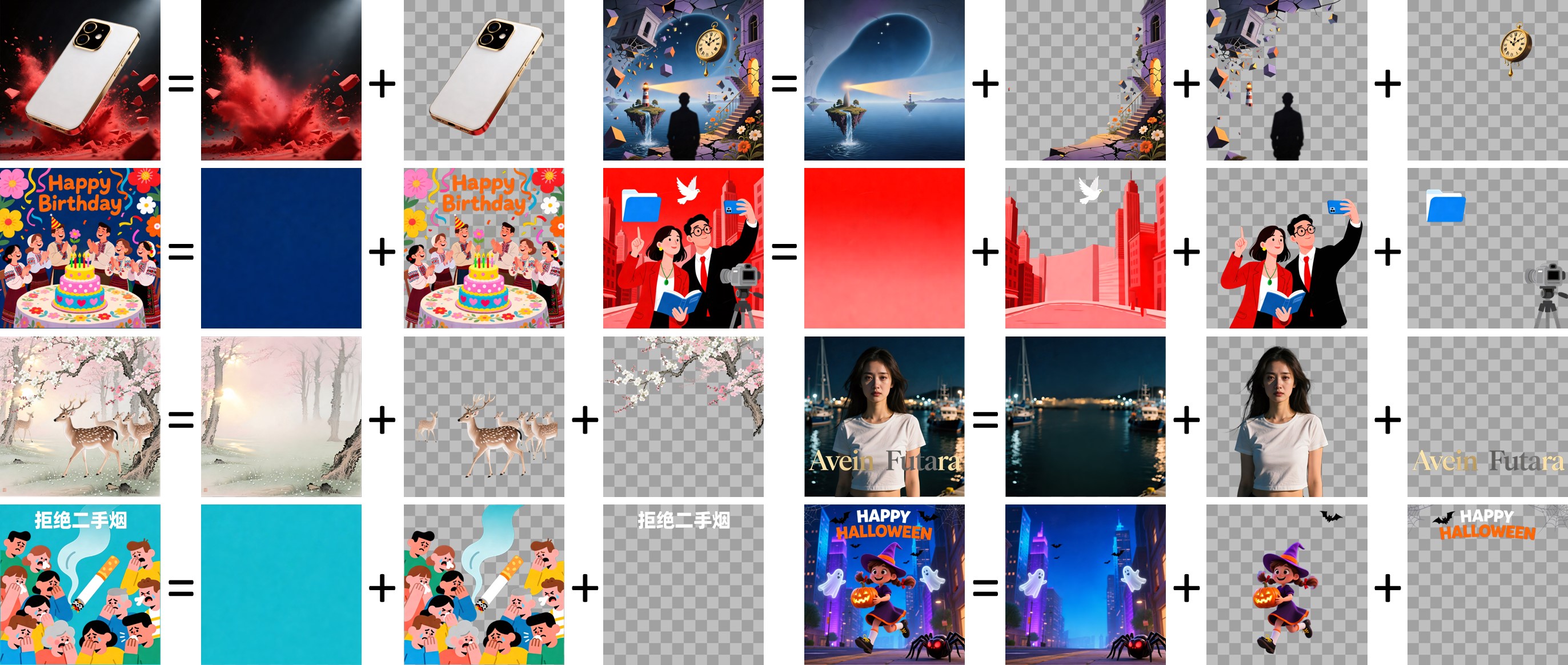
Qwen Image Layered - AI image model variant that breaks outputs into layers for edibility
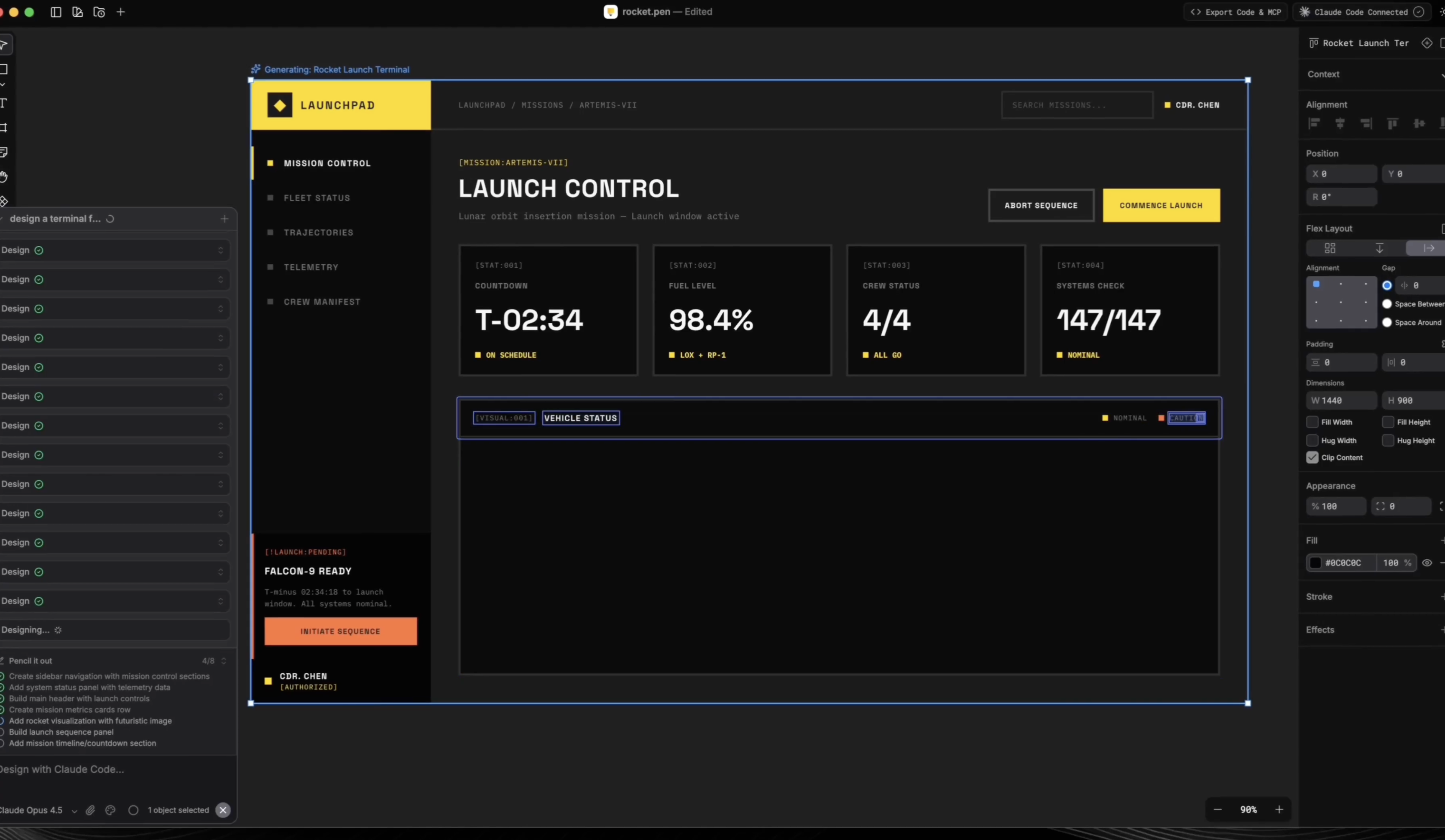
Pencil - An infinite design canvas for Claude Code

Stitch - Google's experimental tool for turning ideas into UI designs for mobile and web applications
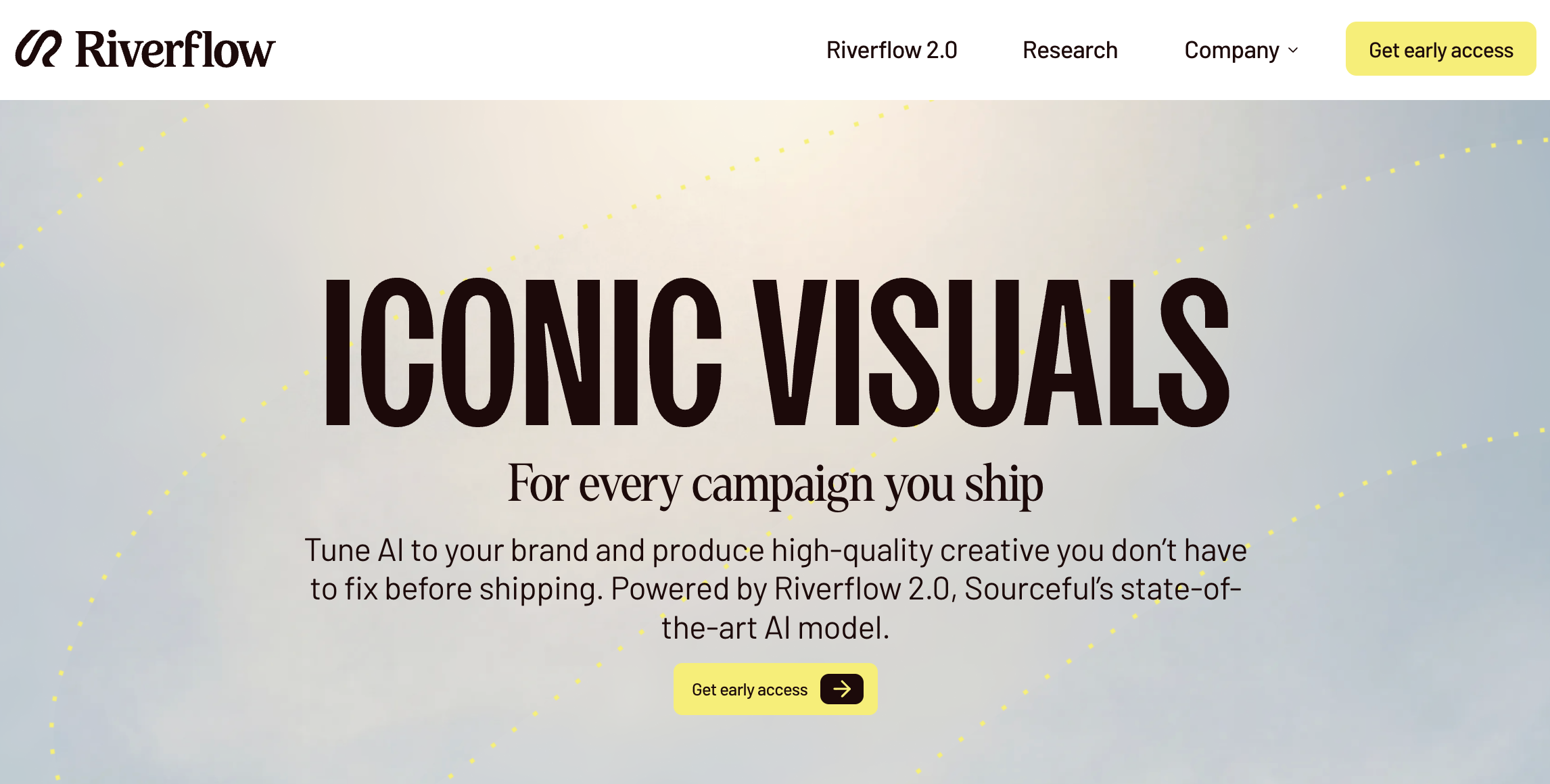
Riverflow 2.0 - Sourceful's new SOTA image editing model

Get access to all our AI courses, hundreds of real-world AI use cases, live expert-led workshops, an exclusive network of AI early adopters, and more.
Get unlimited access to all of our current & upcoming industry-specific AI courses for the duration of your subscription.
To keep up with the rapid pace of AI, our team publishes AI implementation guides daily. Our library contains 300+ practical use cases to automate real-world work.
Join weekly, live, interactive sessions with industry leaders who are at the forefront of AI for hands-on implementation guidance and exclusive insights.
Network with an exclusive community of AI-first professionals who are working smarter with AI. Learn how early adopters are using AI in their work and businesses.