Chinese-language applications
Teams that want to benchmark a Baidu-developed model for Chinese writing, search, reasoning, and local-market use cases.
Independent tool overview
ERNIE 5.0 is Baidu's 2.4-trillion-parameter unified multimodal foundation model and remains available through the Qianfan API for text generation, visual understanding, and deep thinking. It is no longer Baidu's newest consumer model—ERNIE 5.1 replaced it in the ERNIE chat experience—but 5.0 remains a usable, separately priced developer endpoint.
Visit the official ERNIE 5.0 site ↗
Overview
Baidu introduced ERNIE 5.0 as a native multimodal mixture-of-experts model trained across text, images, video, and audio in one autoregressive architecture. Its technical report describes a shared expert pool, less than 3% parameter activation per token, elastic depth and width, and a context-training progression up to 128K tokens.
The current international Qianfan catalog exposes `ernie-5.0` for text generation, visual understanding, and deep-thinking requests. The listed endpoint has a 128K context window, up to 119K input tokens, up to 65,536 output tokens, and default limits of 60 requests and 150,000 tokens per minute. The public API documentation presents text output even when the input includes visual material, so developers should not infer that every media-generation capability described in the research release is exposed through this endpoint.
ERNIE 5.1 became Baidu's latest chat model in May 2026 and is a smaller, more efficient successor derived from ERNIE 5.0's elastic sub-model matrix. Use 5.0 when an existing integration or evaluation specifically depends on it; new deployments should benchmark 5.1 and other current models on Chinese language, visual understanding, reasoning quality, latency, tool use, and total cost.
Baidu's leaderboard results and benchmark claims are useful starting points, not deployment guarantees. Before using ERNIE for consequential decisions, evaluate it on representative private test sets, verify citations and calculations, apply content and access controls, and keep qualified humans responsible for medical, legal, financial, hiring, or safety-sensitive outputs.
Use cases
The strongest fit depends on the job you need the product to complete, not the size of its feature list.
Teams that want to benchmark a Baidu-developed model for Chinese writing, search, reasoning, and local-market use cases.
Applications that need text responses grounded in images or mixed inputs through Qianfan's visual-understanding endpoint.
Production systems that need a stable named endpoint while teams evaluate the behavior and migration cost of ERNIE 5.1.
Capabilities
Baidu trained text, vision, video, and audio representations within one autoregressive framework instead of attaching separate late-fusion decoders.
A 2.4T-parameter capacity model activates roughly 3% of parameters per token and routes modalities through a shared expert pool.
The Qianfan endpoint supports text generation and visual-understanding requests with text responses.
A reasoning endpoint can emit substantial reasoning and answer content within the model's token limits; the API does not expose a thinking-budget control.
Qianfan documents structured-output and tool-calling features for application integrations, which still require schema validation and execution safeguards.
The international catalog lists 128K context, 119K maximum input, and up to 65,536 output tokens for ERNIE 5.0.
Process
Step 1
Compare ERNIE 5.0 with 5.1 and at least one non-Baidu model on the exact language, modality, latency, and policy requirements of the application.
Step 2
Include Chinese and multilingual prompts, long documents, images, tool calls, refusal cases, and known difficult examples with expected results.
Step 3
Keep API keys server-side, validate structured responses, restrict callable tools, cap tokens and spend, and never execute generated actions without authorization checks.
Step 4
Track task success, factual error, citation quality, unsafe completions, latency, token volume, and rate-limit behavior instead of relying on public leaderboards.
Step 5
Require domain-owner approval for consequential decisions and preserve audit logs, source material, model version, and rollback paths.
Cost
Baidu's international Qianfan price page lists ERNIE 5.0 at $1.40 per million input tokens and $5.60 per million output tokens for text generation, visual understanding, and deep thinking. Mainland China pricing is published separately in yuan and varies by input length, so accounts should use the price sheet for their region. Consumer access now defaults to ERNIE 5.1 rather than providing a clearly priced ERNIE 5.0 chat plan.
$1.40 input / $5.60 output per 1M tokens
Pay-as-you-go ERNIE 5.0 inference pricing for the international Qianfan service.
Region-specific yuan pricing
The Chinese service publishes separate short- and long-context rates.
Pricing checked . Check current pricing at the source ↗
Assessment
Compare
The right alternative depends on the specific output, workflow, controls and budget your project requires.
Consumer
Choose ERNIE 5.1 for Baidu's current, more parameter-efficient successor and latest consumer chat experience.
Explore ERNIE 5.1 →Consumer
Consider Qwen3.5-Omni for another Chinese-developed native multimodal model with broad language and media support.
Explore Qwen3.5-Omni →Business Operations
Consider DeepSeek when open-model options, reasoning economics, or a different Chinese AI ecosystem matter more than Baidu's multimodal stack.
Explore DeepSeek →Questions
Yes. Baidu's current international Qianfan documentation still lists the `ernie-5.0` endpoint for text generation, visual understanding, and deep thinking, even though ERNIE 5.1 is now the latest chat model.
The developer API is pay as you go, not free: the international service lists $1.40 per million input tokens and $5.60 per million output tokens. Any trial credits or consumer access can vary by account and region.
Baidu describes the foundation model as native across text, image, video, and audio. The current Qianfan model metadata supports multimodal inputs for visual understanding and returns text through the documented endpoint; verify exact file formats and limits in the API before building.
The international Qianfan catalog lists 128K tokens of context, up to 119K input tokens, and up to 65,536 output tokens. Deep-thinking tokens and final answer tokens share the output limit.
Benchmark both, but start with 5.1 unless compatibility or a measured 5.0 advantage justifies the older endpoint. Baidu says 5.1 inherits 5.0's foundation while using fewer total and active parameters and substantially less pre-training compute.
Not without validation and accountable human review. Like other foundation models it can produce plausible errors, omit context, or mishandle ambiguous instructions; use authoritative sources and qualified experts for consequential work.
Bottom line
ERNIE 5.0 remains a credible Baidu API model for Chinese-language, long-context, visual-understanding, and reasoning workloads, but it is now a previous-generation option. Its clearest use is compatibility or a benchmarked workload-specific advantage. For greenfield development, evaluate ERNIE 5.1 first and verify what multimodal capabilities are actually exposed in the target Qianfan region rather than assuming the full research architecture is available through one API.
Visit ERNIE 5.0 website ↗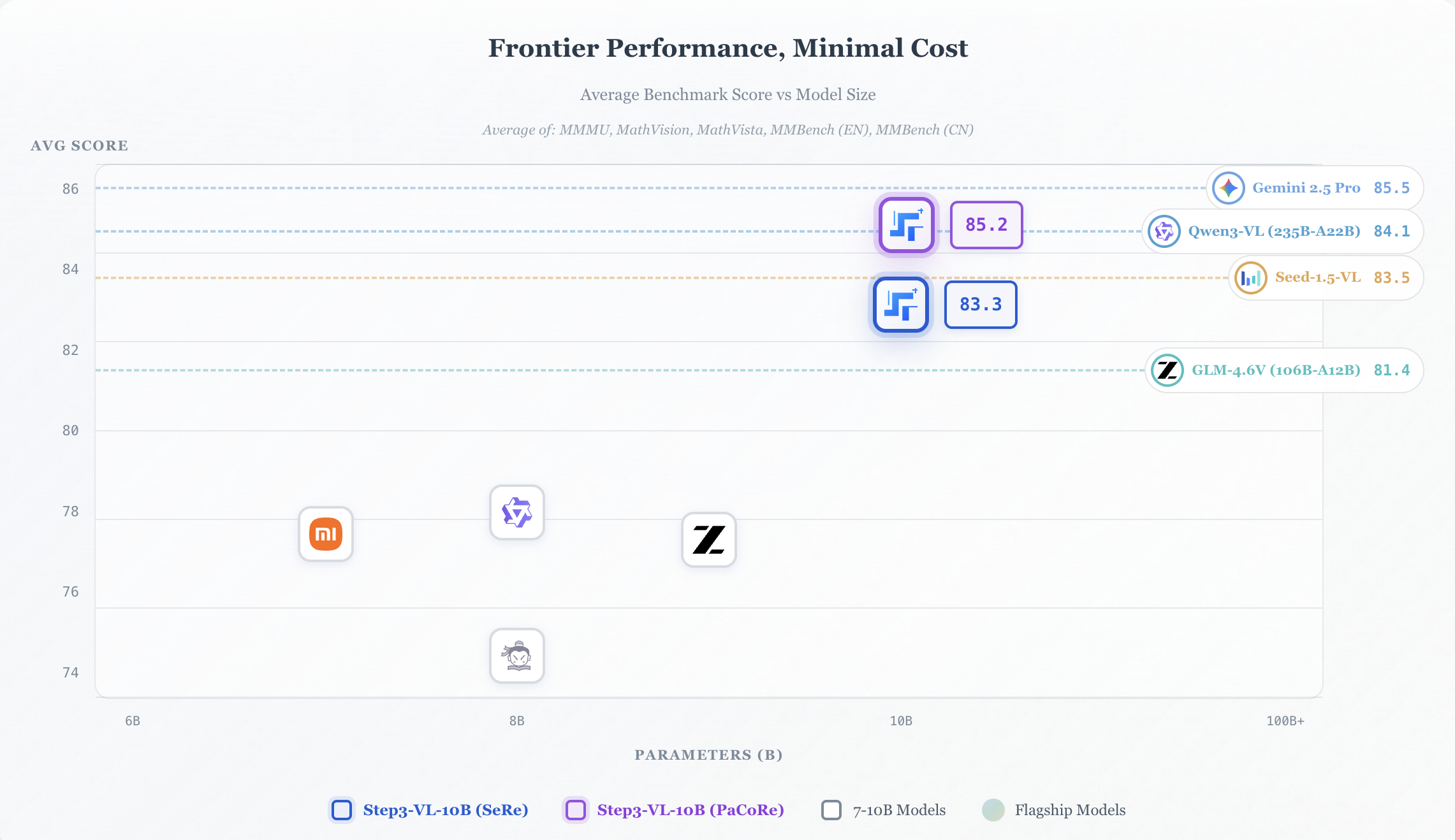
Step3-VL-10B - StepFun's open-source SOTA vision language model
.png)
Qwen3-Max-Thinking - Alibaba's new flagship reasoning model competitive with models like Claude 4.5 Opus, GPT 5.2-Thinking, and Gemini 3 Pro across benchmarks

Translate with ChatGPT - Translate text, voice, or images instantly across 50+ languages
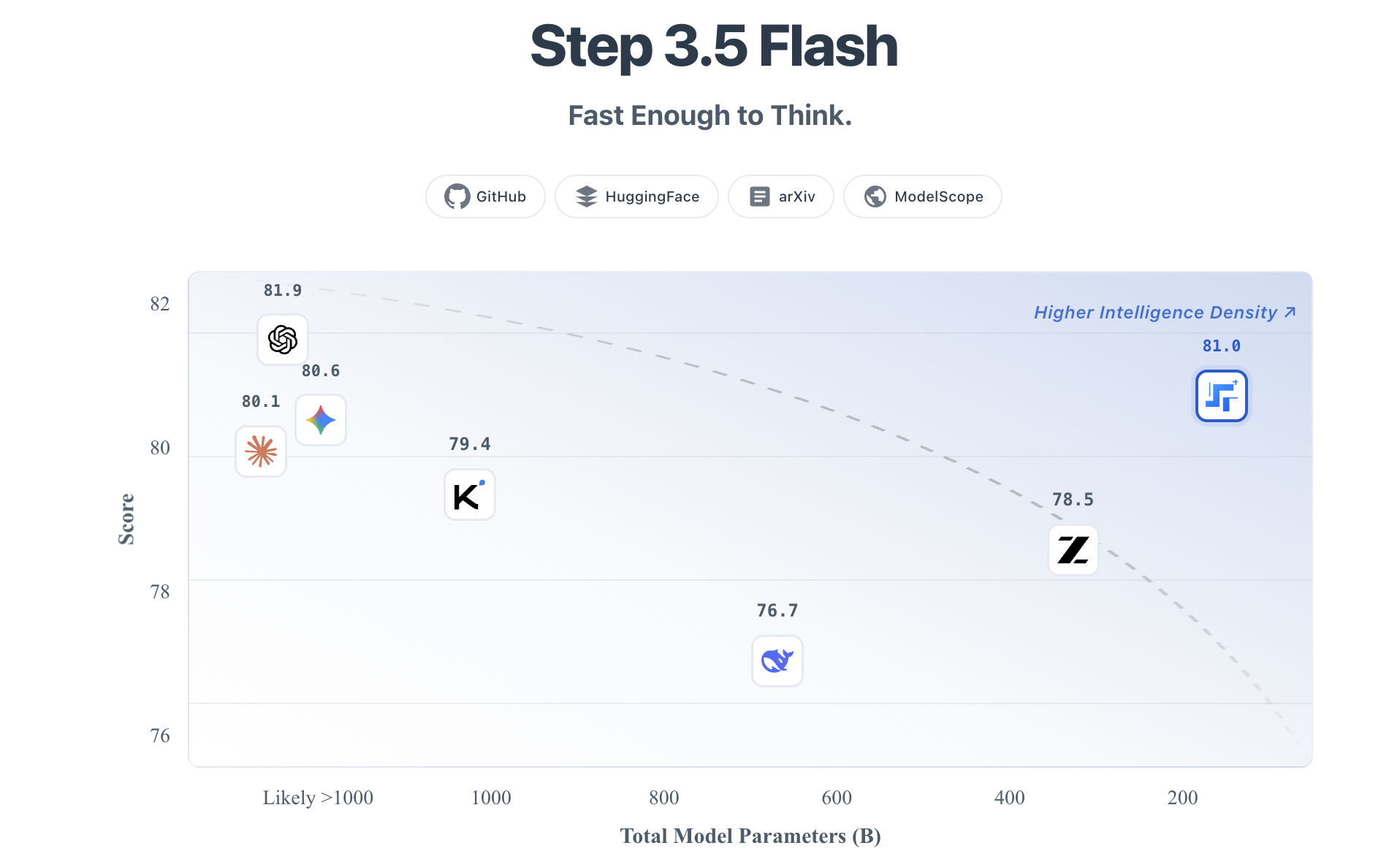
Step-3.5-Flash - StepFun's powerful open-source model with strong reasoning and agentic capabilities

Get access to all our AI courses, hundreds of real-world AI use cases, live expert-led workshops, an exclusive network of AI early adopters, and more.
Get unlimited access to all of our current & upcoming industry-specific AI courses for the duration of your subscription.
To keep up with the rapid pace of AI, our team publishes AI implementation guides daily. Our library contains 300+ practical use cases to automate real-world work.
Join weekly, live, interactive sessions with industry leaders who are at the forefront of AI for hands-on implementation guidance and exclusive insights.
Network with an exclusive community of AI-first professionals who are working smarter with AI. Learn how early adopters are using AI in their work and businesses.