Agent developers
Give assistants and autonomous workflows current web context without building a crawler, index, and ranking system.
Independent tool overview
Parallel Search is a web search API for AI agents that returns ranked URLs and token-dense excerpts from Parallel's web index.
Visit the official Parallel Search site ↗
Overview
Parallel Search is infrastructure for developers, not a consumer search engine. An application sends a natural-language research objective plus one or more search queries, and the API returns relevant URLs with compressed excerpts designed to fit efficiently into an AI model's context window.
Developers can tune search for latency and depth with Turbo, Fast, Basic, and Advanced modes. The API also supports source inclusion and exclusion rules, freshness controls, live page fetching, and optional extraction when an agent needs more than a result snippet.
Parallel Search can be called directly through Python, TypeScript, or HTTP, or exposed to models through Parallel's MCP server and ecosystem integrations. It is best evaluated on real application queries, because retrieval accuracy, source coverage, downstream answer quality, and total model cost all depend on the workflow around the API.
Use cases
The strongest fit depends on the job you need the product to complete, not the size of its feature list.
Give assistants and autonomous workflows current web context without building a crawler, index, and ranking system.
Use Turbo or Fast modes for interactive experiences where response time and predictable per-query cost matter.
Combine Search with extraction or Parallel's broader Task, Responses, Monitor, and FindAll APIs when retrieval is one stage of a larger workflow.
Capabilities
Accepts a plain-language objective alongside search queries so ranking can reflect what the agent is trying to accomplish.
Returns compressed passages with URLs and titles, reducing the amount of irrelevant page text sent to the downstream model.
Turbo, Fast, Basic, and Advanced modes trade latency, retrieval depth, and price for different agent workloads.
Lets developers set page-age thresholds and live-fetch timeouts when current information is more important than cached speed.
Supports domain inclusion and exclusion controls to constrain retrieval to approved or relevant parts of the web.
Works through HTTP and official SDKs or as a search tool exposed to compatible AI systems through MCP.
Process
Step 1
Write a self-contained description of the information the agent needs, then add focused search queries for the key concepts.
Step 2
Start with Fast for interactive agents, Turbo for the tightest budget, or Advanced when deeper retrieval justifies more latency.
Step 3
Limit or exclude domains, set live-fetch behavior, and select the result count and excerpt depth needed downstream.
Step 4
Pass URLs and excerpts to the model, preserve citations, log failures, and test retrieval plus final-answer quality on representative queries.
Cost
Parallel prices Search per request rather than by tokens. Turbo and Fast cost $1 per 1,000 searches with 10 results; Basic and Advanced cost $5 per 1,000. Additional result blocks are billed separately, and extracted page content can add cost.
$1 per 1,000 requests
Lowest-cost mode for latency-sensitive, high-volume lookups.
$1 per 1,000 requests
Interactive search mode balancing speed and retrieval quality.
$5 per 1,000 requests
General mode for most agent workloads.
$5 per 1,000 requests
Deeper search for multi-hop or background research agents.
Free credits; enterprise custom
A developer allowance for evaluation plus custom controls for larger deployments.
Pricing checked . Check current pricing at the source ↗
Assessment
Compare
The right alternative depends on the specific output, workflow, controls and budget your project requires.
Data Analysis
Choose Exa for another AI-native search and content retrieval API with semantic and structured search options.
Explore Exa →Agents
Choose Exa Agent when you want a packaged research API rather than assembling retrieval and synthesis yourself.
Explore Exa Agent →Data Analysis
Choose Perplexity when the primary need is a finished, user-facing answer engine instead of a low-level search tool for your own agent.
Explore Perplexity →Questions
Parallel Search is an API that retrieves ranked public-web pages and LLM-optimized excerpts for use inside AI agents and applications.
Turbo and Fast are listed at $1 per 1,000 requests with 10 results, while Basic and Advanced are $5 per 1,000. Extra results, page extraction, and the downstream AI model can add cost.
The Search API primarily returns URLs and excerpts. Your application or language model normally interprets those results and produces the final answer. Parallel also sells separate Responses and Task APIs that include more synthesis.
Fast targets interactive search at around 700ms and $1 per 1,000 requests. Advanced spends more retrieval time—roughly three seconds—and costs $5 per 1,000 for deeper or multi-hop searches.
Yes. Parallel provides an official Search MCP server. Anonymous access is available with lower limits, while an API key can be supplied for higher-rate usage.
Parallel marks the Search API as SOC 2 on its pricing and product pages. Enterprise buyers should request the current report and verify that the exact services and controls they plan to use are in scope.
Bottom line
Parallel Search is a strong building block for teams that need fast, compact, controllable web retrieval inside an AI product. Its low per-request pricing and multiple latency modes make experiments inexpensive, but the meaningful evaluation is end to end: whether retrieval plus the downstream model produces accurate, well-cited answers on your actual workload.
Visit Parallel Search website ↗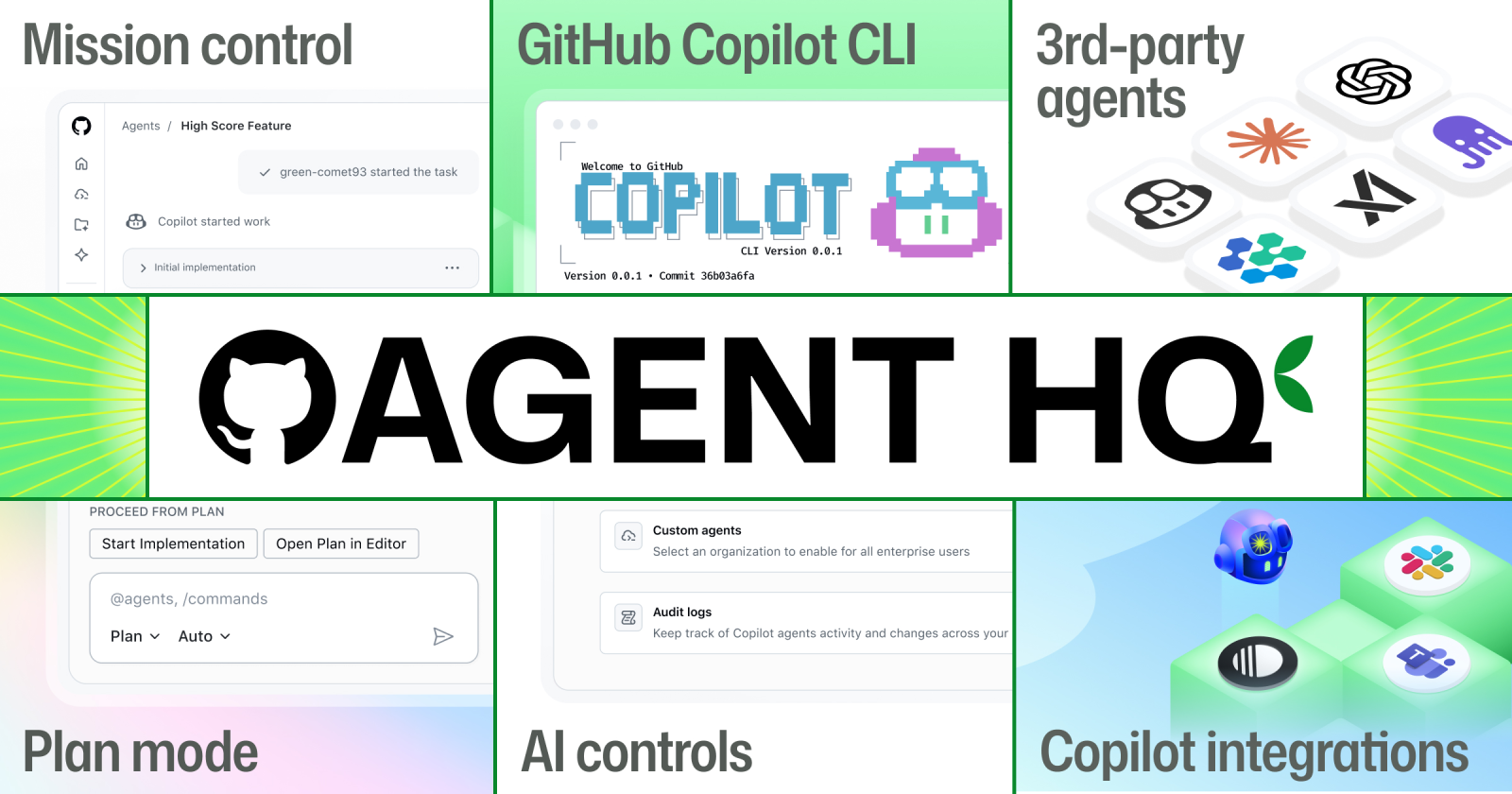
Agent HQ - A single, unified workflow for developers to be able to orchestrate any agent, any time, anywhere

Kimi K2 Thinking - Moonshot AI's open-source thinking agent
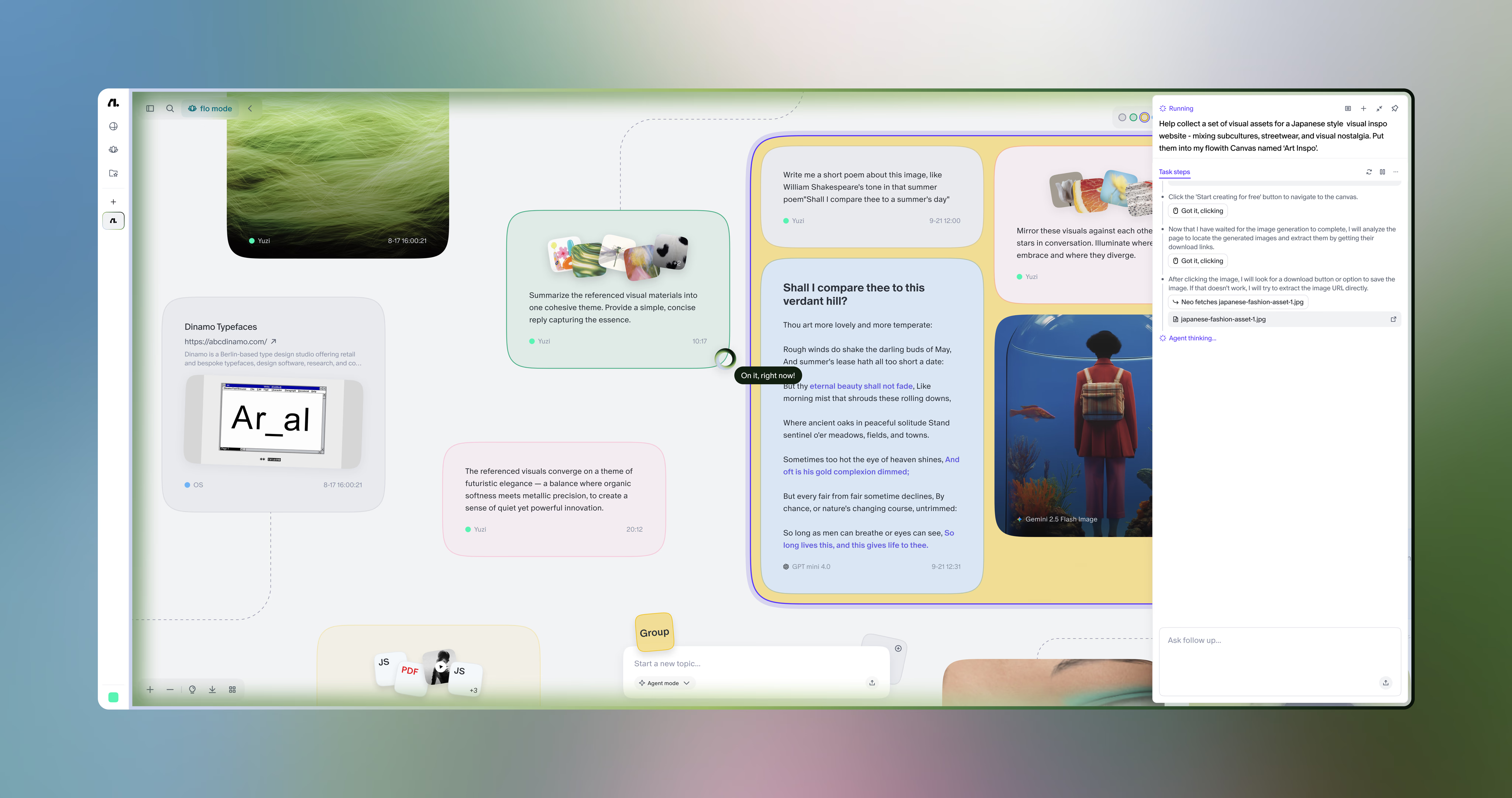
FlowithOS - An agentic workspace that connects your knowledge, creation, and execution in a single flow

Holo 2 - Lightweight AI models that power cost-efficient computer-use agents

Get access to all our AI courses, hundreds of real-world AI use cases, live expert-led workshops, an exclusive network of AI early adopters, and more.
Get unlimited access to all of our current & upcoming industry-specific AI courses for the duration of your subscription.
To keep up with the rapid pace of AI, our team publishes AI implementation guides daily. Our library contains 300+ practical use cases to automate real-world work.
Join weekly, live, interactive sessions with industry leaders who are at the forefront of AI for hands-on implementation guidance and exclusive insights.
Network with an exclusive community of AI-first professionals who are working smarter with AI. Learn how early adopters are using AI in their work and businesses.