Classic PC game remasters
Visually rebuilding compatible fixed-function DirectX titles without access to their original source code.
Independent tool overview
NVIDIA RTX Remix is a free, open-source modding platform for remastering compatible classic Windows games with replaced assets, physically based materials, path tracing, neural rendering and current DLSS features. Its Toolkit captures and edits scenes through OpenUSD, while the Runtime intercepts the original game's Direct3D 9 rendering and injects the remaster at playback. RTX Remix 1.5 is active in 2026 and adds packaging, performance and compatibility improvements alongside AI-agent skills and generative texture workflows. The major constraint is compatibility, not price: Remix works best with DirectX 8 and early DirectX 9 titles using fixed-function graphics, especially games from roughly 2000–2005. It is unlikely to work cleanly with modern shader-heavy games, and even a compatible title can require wrappers, per-game configuration and extensive asset repair. Use an isolated game copy, verify mod and asset rights, avoid anti-cheat or online titles, and budget for an RTX-class Windows PC—NVIDIA recommends an RTX 4070 with 12 GB VRAM, 32 GB RAM and fast storage.
Visit the official NVIDIA RTX Remix site ↗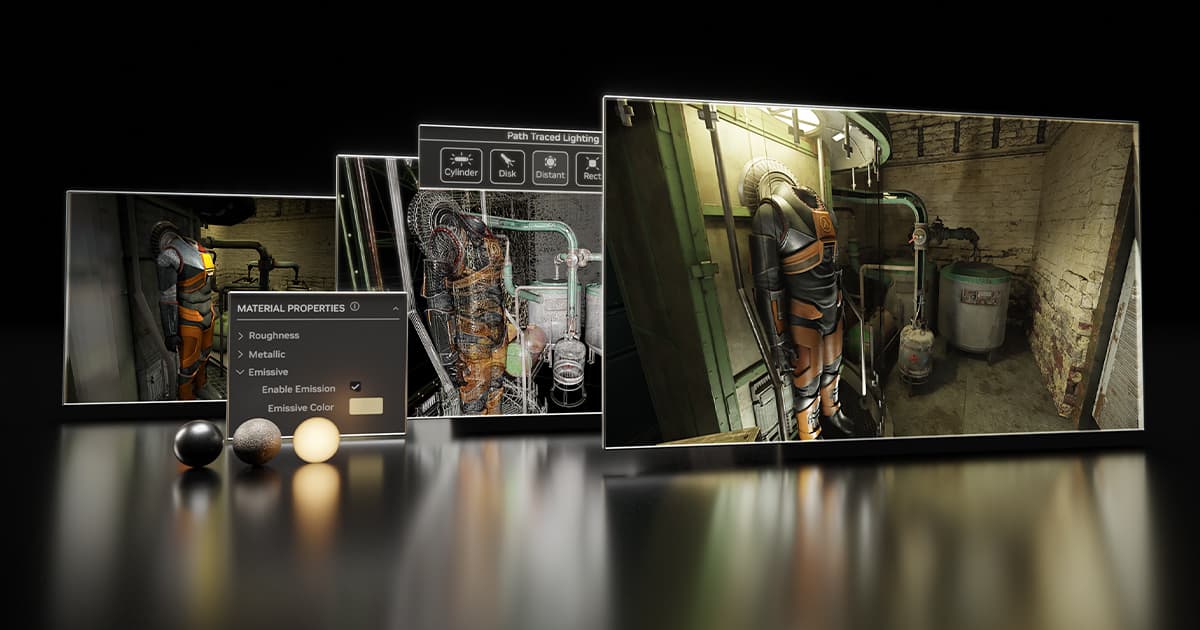
Overview
NVIDIA RTX Remix is an active open-source platform for creating and playing path-traced remasters of classic games.
The platform has two main pieces: the Toolkit for capturing scenes, replacing assets, editing materials and lights, and packaging mods; and the Runtime for intercepting game rendering and injecting those changes during play.
RTX Remix is designed primarily for DirectX 8 and DirectX 9 games that use a fixed-function graphics pipeline. Early DirectX 9 titles are better candidates than later shader-heavy games.
NVIDIA's compatibility guidance says games released between 2000 and 2005 are the most likely to work, while games released after 2010 generally do not unless modified.
Older DirectX or OpenGL games may work through separately acquired wrappers that translate to fixed-function DirectX 9, but wrappers introduce another source of configuration and instability.
A game being listed as compatible only means Remix can intercept most draw instructions. It does not guarantee clean captures, correct effects, stable gameplay or a finished remaster.
The Toolkit uses OpenUSD and can replace meshes, ingest high-resolution textures, define physically based materials, relight scenes and add path-traced particles.
Built-in generative texture tools can analyze old textures, generate normal and roughness maps and upscale by as much as 8×. ComfyUI integration opens access to additional community models.
The Runtime currently includes path tracing, DLSS 4.5, Multi Frame Generation, Neural Radiance Cache, Reflex and an in-game tuning overlay, with exact availability dependent on hardware and release.
RTX Remix 1.5, released in June 2026, improved packaging, large-scene efficiency and Runtime stability and introduced workflows designed to help coding agents contribute compatibility and tooling work.
NVIDIA recommends Windows 11, an i7-13700K or Ryzen 7 7700X, 32 GB RAM, an RTX 4070 with 12 GB VRAM and 10 GB of NVMe space. Real projects and source assets can require much more storage.
Software availability does not grant rights to the original game's assets, trademarks, music, characters or code. Mod creators must review the game's EULA, publisher policy, asset licenses and distribution rules.
Use cases
The strongest fit depends on the job you need the product to complete, not the size of its feature list.
Visually rebuilding compatible fixed-function DirectX titles without access to their original source code.
Artists and technical modders able to handle asset replacement, materials, lighting, game-specific configuration and QA.
Exploring modern lighting and neural-rendering techniques inside older game geometry.
Moving remastered assets between Remix and tools such as Blender or Adobe Substance.
Developers extending the open Runtime, testing wrappers and improving support for specific games.
Creating draft high-resolution textures and material maps that artists then compare with the original art direction.
Capabilities
Intercepts compatible draw calls and captures meshes, textures, cameras and lights from the running game.
Swaps original assets for higher-fidelity meshes and textures at playback without replacing the whole game engine.
Adds detailed PBR surfaces, parallax occlusion mapping and subsurface scattering.
Rebuilds scene lighting with modern path tracing, reflections, shadows and volumetric effects.
Upscales textures by up to 8× and generates material maps, with optional ComfyUI integration for additional models.
Creates large particle systems that interact with lighting, reflections and shadows.
Includes current DLSS, Multi Frame Generation, Neural Radiance Cache and Reflex features supported by the release and GPU.
Uses an industry-standard scene format for interchange with common 3D content tools.
Tunes graphics and compatibility settings while the game is running.
Validates, migrates and packages projects for distribution, with newer releases improving missing-reference handling and size.
Publishes Toolkit and Runtime-related repositories under component-specific open licenses for community contribution.
Process
Step 1
Read the game EULA and publisher mod policy and identify which original and third-party assets can be modified or redistributed.
Step 2
Use NVIDIA's rules, the ModDB compatibility table and a matching Runtime configuration before investing in art.
Step 3
Back up saves and original files, disable cloud-sync surprises and never test DLL injection in an online or anti-cheat environment.
Step 4
Use the NVIDIA App or verified NVIDIA GitHub releases and record the exact Toolkit, Runtime and wrapper versions.
Step 5
Install the Runtime beside the correct executable, launch offline and confirm the Remix splash and Alt+X overlay.
Step 6
Start with one representative area and inventory missing geometry, shaders, effects, lights and broken materials.
Step 7
Define whether the project preserves the original art style or intentionally reimagines it before generating or replacing assets.
Step 8
Keep source files, licenses and metadata; re-ingest assets after source changes and use version control for USD layers and configs.
Step 9
Review generated textures and maps for invented symbols, altered storytelling, seams, repetition and inappropriate training references.
Step 10
Balance path-traced visuals with navigation, readability, original mood and performance across representative scenes.
Step 11
Measure frame rate, VRAM, load time, shader behavior and crashes across the minimum and intended target GPUs.
Step 12
Distribute only files and binaries permitted by their licenses, document dependencies and never bundle the base game.
Step 13
Publish the tested game build, Runtime version, wrapper, rtx.conf and known issues so users can reproduce the setup.
Cost
RTX Remix itself is free to download, and NVIDIA publishes the combined project and major Toolkit/Runtime components in public repositories under component-specific open-source licenses. There is no RTX Remix subscription or per-project fee. The practical cost is hardware, storage, a legitimate copy of the base game, optional 3D and texture tools, licensed replacement assets, and substantial artist and engineering time. NVIDIA recommends an RTX 4070-class 12 GB GPU, 32 GB RAM and NVMe storage; a new PC built to that level can cost far more than the software. Pricing and availability were checked August 31, 2026.
Free
The creator application for capturing, editing, relighting and packaging compatible game remasters.
Free
The playback and capture component for compatible games and distributed Remix mods.
Hardware and labor
The meaningful budget is an RTX PC, licensed tools and assets, storage, testing and production time.
Pricing checked . Check current pricing at the source ↗
Assessment
Compare
The right alternative depends on the specific output, workflow, controls and budget your project requires.
Design
A simpler AI-assisted 3D scene creation option when the goal is building a new scene rather than intercepting a classic game.
Explore Playbook 3D →Design
Better for generating production-oriented 3D topology and assets for a conventional game pipeline.
Explore Hunyuan 3D Smart Topology (PolyGen) →Design
An image-to-3D alternative for teams creating simulation-ready assets outside a Remix-compatible base game.
Explore Seed 3D →Miscellaneous
Useful for reconstructing objects or people from images before bringing assets into a broader 3D workflow.
Explore Sam 3D →Questions
It is a free modding platform that captures compatible classic game scenes, replaces assets and lighting, and injects path tracing and neural-rendering features at playback.
Yes. The Toolkit and Runtime are free, with important components published in open-source repositories. Users still pay for hardware, the base game, assets, other tools and production labor.
It works best with fixed-function DirectX 8 and early DirectX 9 games, especially titles from about 2000–2005. Check NVIDIA and ModDB compatibility records for the exact game and Runtime version.
No. Later DirectX 9 games often rely heavily on programmable shaders that Remix cannot reconstruct cleanly.
Sometimes, through separate translation wrappers that target fixed-function DirectX 9. These setups add compatibility and stability risk.
Any RTX GPU is listed as the minimum. NVIDIA recommends Windows 11, an RTX 4070 with 12 GB VRAM, 32 GB RAM, a modern i7/Ryzen 7 CPU and NVMe storage.
Creators install the Toolkit, which includes the Runtime. Players only need the Runtime or the version bundled with a trusted mod.
Yes. Its tools can upscale textures by up to 8× and generate material maps, and it integrates with ComfyUI. Artists should review every output for accuracy and rights.
Major Toolkit and Runtime components are public and open source, but component and bundled third-party licenses differ. Review each repository before redistribution.
Software access alone does not grant commercial rights to the game or its assets. Review the publisher's EULA and mod policy, every third-party license and applicable law before distributing or selling anything.
Avoid online and anti-cheat environments. Remix installs interception DLLs and modifies the game directory, which can trigger integrity or anti-cheat systems.
Compatibility only means most draw instructions can be intercepted. Shaders, particles, culling, UI, wrappers, game builds and configuration can still require manual fixes.
Bottom line
RTX Remix is uniquely powerful when the target is exactly right: a legally moddable, fixed-function-era Windows game and a team willing to do real technical art work. In that niche, free access, OpenUSD, open components, AI-assisted materials and a modern path-tracing Runtime can produce results that would otherwise require an engine port. It is not a one-click remasterer or a general solution for modern games. Prove compatibility on one room before creating assets, lock the tested build and Runtime version, preserve the original game, and treat legal clearance, performance optimization and QA as first-class production work.
Visit NVIDIA RTX Remix website ↗
Get access to all our AI courses, hundreds of real-world AI use cases, live expert-led workshops, an exclusive network of AI early adopters, and more.
Get unlimited access to all of our current & upcoming industry-specific AI courses for the duration of your subscription.
To keep up with the rapid pace of AI, our team publishes AI implementation guides daily. Our library contains 300+ practical use cases to automate real-world work.
Join weekly, live, interactive sessions with industry leaders who are at the forefront of AI for hands-on implementation guidance and exclusive insights.
Network with an exclusive community of AI-first professionals who are working smarter with AI. Learn how early adopters are using AI in their work and businesses.


