Private coding agents
Run a coding model in controlled infrastructure when source code cannot be sent to a shared external service.
Independent tool overview
North Mini Code is Cohere's Apache-2.0 agentic coding model: a 30-billion-parameter mixture-of-experts system with 3 billion active parameters, a 256K context window, and local, API, or dedicated deployment options.
Visit the official North Mini Code site ↗
Overview
North Mini Code is Cohere's first model built specifically for agentic software engineering. It is intended to work inside coding harnesses that can inspect repositories, call terminal tools, edit files, run tests, and continue across multiple steps.
The model uses a mixture-of-experts architecture with 30 billion total parameters and about 3 billion active for each token. That lowers inference work compared with a similarly sized dense model, but it does not turn the full checkpoint into a 3B download: the official BF16 repository is roughly 61 GB.
Cohere publishes the weights under Apache 2.0 in BF16, FP8, and W4A16 formats. Teams can self-host with frameworks including Transformers, vLLM, SGLang, and Docker Model Runner, call model ID north-mini-code-1-0 through Cohere, or use a dedicated Model Vault deployment.
The model offers 256,000 tokens of context and up to 64,000 generated tokens. Cohere trained it across multiple agent harnesses and specifically highlights OpenCode compatibility, terminal tasks, repository changes, architecture mapping, code review, scientific coding, and subagent orchestration.
North Mini Code is attractive when data location, open licensing, controllable infrastructure, and operating cost matter more than having the strongest proprietary frontier model. It still needs a capable harness, safe permissions, evaluation on the team's repositories, and human ownership of shipped changes.
Use cases
The strongest fit depends on the job you need the product to complete, not the size of its feature list.
Run a coding model in controlled infrastructure when source code cannot be sent to a shared external service.
Use a small active-parameter footprint for workflows that make many model and terminal calls.
Pair the model with a harness for scoped code changes, tests, refactors, reviews, and issue resolution.
Drive a narrow set of shell tools through a multi-turn ReAct-style loop with approvals and validation.
Keep model weights, code, logs, and inference in an organization's cloud, VPC, on-premises environment, or dedicated vault.
Benchmark a permissively licensed coding model against proprietary APIs on the team's own languages and repositories.
Capabilities
Trained for repository-level changes, terminal work, code generation, review, architecture mapping, and multi-step software tasks.
Uses about 3B active parameters from a 30B total model, reducing per-token computation while retaining broader parameter capacity.
Accepts up to 256K tokens and can generate up to 64K tokens, supporting substantial code and tool history when context is curated.
Allows broad commercial use, modification, and redistribution subject to the license's notice and attribution requirements.
Official BF16, FP8, and W4A16 releases provide options for quality, memory use, and serving throughput.
The official repository documents Transformers, vLLM, SGLang, Docker Model Runner, and OpenAI-compatible local endpoints.
Supports Cohere Chat V2, Chat V1, and Chat Completions through model ID north-mini-code-1-0.
Cohere can operate the model in an isolated, single-tenant managed environment for production workloads.
Cohere lists reasoning, tool use, structured outputs, multilingual use, image inputs, safety modes, and citations for the hosted model.
Process
Step 1
Decide between a quick Cohere API evaluation, self-hosting for maximum control, or Model Vault for dedicated managed infrastructure.
Step 2
Benchmark BF16, FP8, or W4A16 on the target accelerators; do not assume the 3B active count means the full 30B checkpoint fits like a dense 3B model.
Step 3
Connect the model to OpenCode or another agent loop with explicit file, search, patch, terminal, and test tools.
Step 4
Provide architecture notes, coding conventions, test commands, acceptance criteria, and protected areas before allowing edits.
Step 5
Use a sandbox, least-privilege credentials, network allowlists, resource limits, and approval gates for consequential actions.
Step 6
Measure correct patches, test pass rate, regressions, retries, token use, latency, GPU utilization, and human review time on real repositories.
Step 7
Inspect the diff and run appropriate tests, security checks, builds, and runtime validation before merging or deploying.
Step 8
Monitor capacity, queueing, context length, cost, failure modes, model updates, audit logs, and abuse or prompt-injection attempts.
Cost
The North Mini Code weights have no software-license fee under Apache 2.0, but self-hosting requires compute and operations. Cohere currently allows hosted API use without a token charge until rate limits are reached. Dedicated production use through Standard Model Vault is listed at $57.50 per XL instance-hour, with access and commitment pricing handled through Cohere.
$0 software license
Download and self-host the Apache-2.0 weights in an available precision format.
$0 until rate limits
Cohere's model page says trial and production keys can call North Mini Code without a model charge until applicable limits are reached.
$57.50 per XL instance-hour
Dedicated Cohere-managed inference for organizations that want isolation without operating the serving stack.
Pricing checked . Check current pricing at the source ↗
Assessment
Compare
The right alternative depends on the specific output, workflow, controls and budget your project requires.
Coding
Choose Devstral 2 when comparing Mistral's newer open coding-model family and its Vibe agent workflow.
Explore Devstral 2 →Coding
Choose Qwen3-Coder-Next for another open-weight, efficiency-focused model designed for agentic coding.
Explore Qwen3-Coder-Next →Coding
Choose GPT-5.3-Codex when frontier hosted capability and a managed OpenAI agent ecosystem matter more than weight access.
Explore GPT-5.3-Codex →Coding
Choose Gemini CLI when you want an open-source terminal harness with Google-hosted models and a low-friction entry path.
Explore Gemini CLI →Questions
North Mini Code is Cohere's 30B-total, 3B-active mixture-of-experts model for agentic coding, terminal work, repository changes, code review, and related software tasks.
Cohere calls it open source and publishes the model weights under Apache 2.0. A precise description is an openly downloadable, permissively licensed model that can be self-hosted and modified.
Yes. Cohere publishes BF16, FP8, and W4A16 variants and documents several local serving frameworks. Hardware needs depend on precision, context length, concurrency, cache size, and performance targets.
No. About 3B parameters participate in each token's computation, but the serving system still needs access to the full 30B mixture-of-experts checkpoint. The official BF16 repository is roughly 61 GB.
The weights have no software fee under Apache 2.0. Cohere currently provides hosted API calls without a token price until limits apply. Standard Model Vault lists North Mini Code at $57.50 per XL instance-hour. Self-hosting infrastructure is separate.
Cohere documents a 256,000-token context window and a 64,000-token maximum generation length.
The Apache 2.0 license permits commercial use, subject to its terms. Organizations should still review model notices, output and dependency licenses, data policies, and their intended distribution.
Yes. Cohere says it was specifically trained for OpenCode compatibility, while also targeting broader coding harnesses and terminal agents.
Not without controls. Use a sandbox, minimal credentials, network restrictions, approved commands, resource limits, audit logs, human confirmation for consequential actions, and independent testing of every change.
Bottom line
North Mini Code is a compelling option for teams that want a permissively licensed coding model with a long context window, efficient MoE inference, and several deployment paths. The strongest use case is controlled agentic coding where sovereignty or predictable infrastructure matters. Compare its actual patch quality and total operating cost against both open and hosted alternatives before standardizing, because the surrounding harness and safety design will determine much of the result.
Visit North Mini Code website ↗
Devin Desktop - Cognition's Windsurf rebrand for managing all your coding agents in a single platform
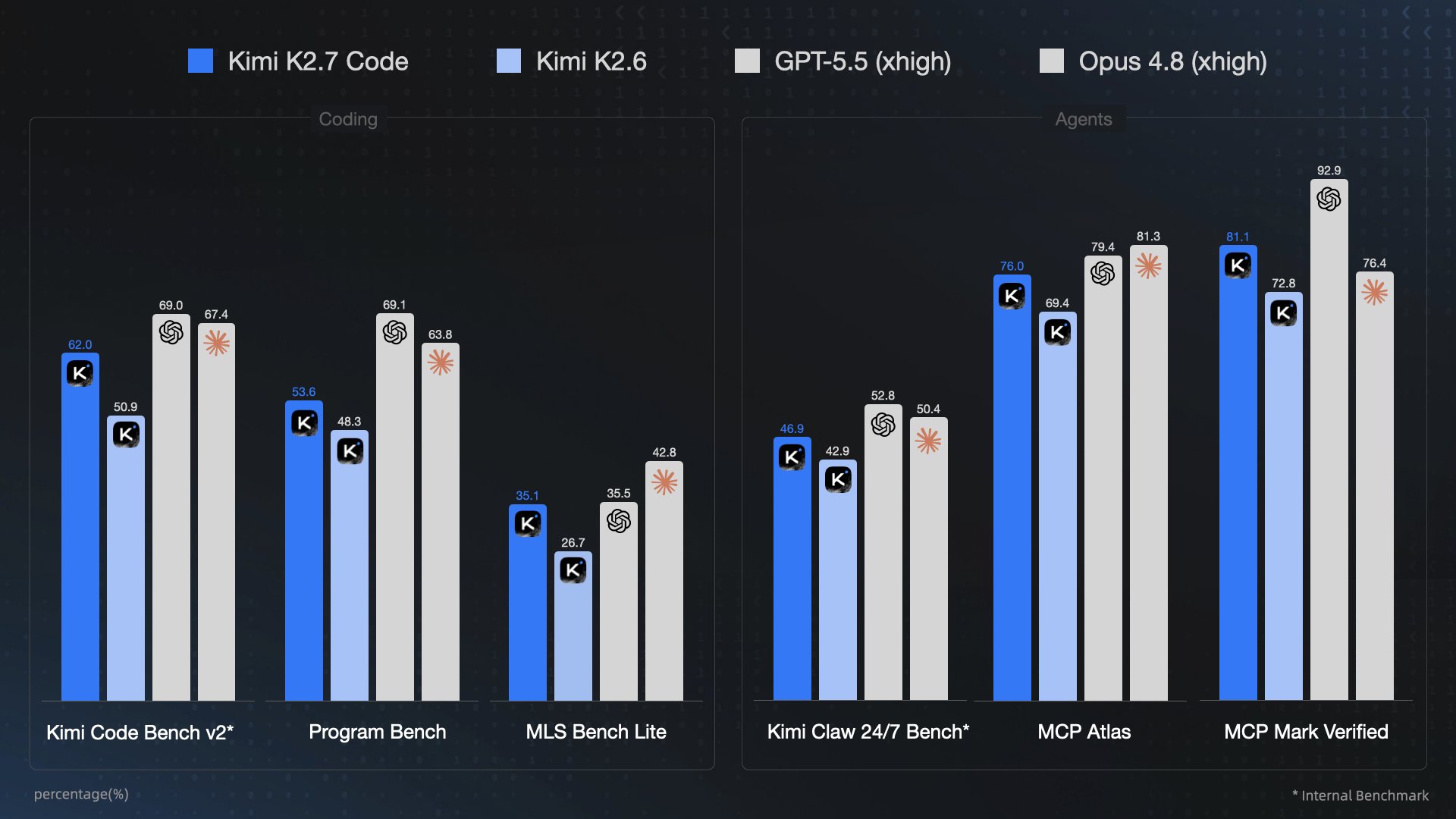
Kimi-K2.7-Code - Moonshot's open-source coding model, 30% leaner on reasoning

Antigravity 2.0 - Google's standalone desktop app for orchestrating parallel agents

GLM 5.2 - Z AI's new flagship coding model with usable 1M context

Get access to all our AI courses, hundreds of real-world AI use cases, live expert-led workshops, an exclusive network of AI early adopters, and more.
Get unlimited access to all of our current & upcoming industry-specific AI courses for the duration of your subscription.
To keep up with the rapid pace of AI, our team publishes AI implementation guides daily. Our library contains 300+ practical use cases to automate real-world work.
Join weekly, live, interactive sessions with industry leaders who are at the forefront of AI for hands-on implementation guidance and exclusive insights.
Network with an exclusive community of AI-first professionals who are working smarter with AI. Learn how early adopters are using AI in their work and businesses.