Repository-scale code changes
Explore a codebase, coordinate edits across files, run tests, and correct failures.
Independent tool overview
Devstral 2 is Mistral's open-weight coding-model family for repository exploration, multi-file editing, and software-engineering agents, offered as a 123B model and a more locally deployable 24B Small variant.
Visit the official Devstral 2 site ↗%2520(1).png&w=3840&q=75)
Overview
Devstral 2 is a specialized coding-model family released by Mistral AI with All Hands AI. The 123B dense model targets autonomous software engineering in data-center environments, while Devstral Small 2 brings related agentic coding capabilities to a 24B checkpoint that can run on far smaller hardware.
Both variants support a 256K context and are designed to use tools to search repositories, edit multiple files, execute commands, run tests, detect failures, and retry. Mistral's open-source Vibe CLI supplies a native terminal harness with project context, file and shell tools, subagents, permission controls, and IDE integration.
The model weights remain available, but the original hosted Devstral 2 API version is deprecated for new integrations as of May 22, 2026. Mistral directs new hosted coding integrations to Mistral Medium 3.5, which also powers the newer remote-agent experience in Vibe.
Use cases
The strongest fit depends on the job you need the product to complete, not the size of its feature list.
Explore a codebase, coordinate edits across files, run tests, and correct failures.
Keep source code within controlled infrastructure by serving open weights locally or on-premises.
Analyze architecture and incrementally migrate older code with test-driven verification.
Pair the weights with Vibe, Cline, Kilo Code, OpenHands, or another compatible agent scaffold.
Use the 24B Small variant when the 123B model's data-center requirements are impractical.
Capabilities
Built to inspect repositories, modify multiple files, and use development tools across a task.
Handles large code and conversation histories, with input and output sharing the total limit.
Supports tool-driven workflows and structured software-engineering agents.
Offers a stronger 123B data-center model and a smaller 24B checkpoint for local deployment.
Publishes FP8 weights for both family members with model-specific licenses.
Provides project-aware terminal automation, file references, commands, history, subagents, and configurable permissions.
Supports on-premises serving and enterprise customization without sending code to a shared hosted model.
Devstral Small 2 accepts images for multimodal coding agents; the 123B model is text-to-text.
Process
Step 1
Use open weights for Devstral 2 itself, or Mistral Medium 3.5 for a new Mistral-hosted integration.
Step 2
Reserve the 123B model for data-center GPUs and use Small 2 when single-system deployment is the goal.
Step 3
Configure Vibe or another compatible harness with repository, terminal, Git, and testing tools.
Step 4
Require approval for destructive commands, network access, secrets, deployment, and irreversible changes.
Step 5
Give acceptance criteria, relevant tests, repository guidance, and explicit files or systems that are out of scope.
Step 6
Review architecture, dependencies, security, tests, generated artifacts, and unrelated modifications.
Step 7
Compare pass rate, review time, regressions, latency, compute, and total trajectory cost before scaling.
Cost
The original Devstral 2 hosted endpoint is deprecated, so its launch price is no longer the right basis for a new API integration. Open weights remain downloadable, with infrastructure and license obligations. Mistral's current hosted replacement is Medium 3.5.
Free weights under Modified MIT
Self-host the 123B FP8 checkpoint for private coding-agent workloads.
Free under Apache 2.0
Use the 24B checkpoint for more accessible local and private deployment.
Deprecated for new integrations
The hosted 25.12 endpoint was priced at $0.40 input and $2 output per million tokens before deprecation.
$1.50 input / $0.15 cached input / $7.50 output per 1M tokens
Mistral's current hosted replacement for new agentic coding integrations.
Pricing checked . Check current pricing at the source ↗
Assessment
Compare
The right alternative depends on the specific output, workflow, controls and budget your project requires.
Consumer
Choose MiMo-V2.5-Pro for a newer MIT-licensed coding model with a one-million-token context and low hosted token prices.
Explore MiMo-V2.5-Pro →Coding
Evaluate Kimi K2.7 Code for another current open-weight model built specifically for coding-agent trajectories.
Explore Kimi K2.7 Code →Business Operations
Consider DeepSeek for a broader low-cost model family with coding, reasoning, hosted API, and open-weight options.
Explore DeepSeek →Consumer
Use Trinity Large Thinking for permissive long-context agentic work beyond a coding-only specialization.
Explore Trinity-Large-Thinking →Questions
It is Mistral's coding-model family for agents that explore repositories, edit multiple files, execute tools, run tests, and correct failures.
The open weights remain available and the model family remains active, but the original hosted Devstral 2 API version is deprecated for new integrations. Mistral recommends Medium 3.5 for new hosted work.
Devstral 2 is a 123B text model for data-center deployment. Small 2 is a 24B model that can run on much smaller hardware and also supports image input.
The 123B model uses a Modified MIT license with a $20M consolidated monthly-revenue restriction. Small 2 uses Apache 2.0. Vibe CLI is also Apache 2.0.
Mistral recommends a minimum of four H100-class GPUs for the 123B model. Small 2 is designed for single-GPU and even CPU-only configurations.
Both Devstral 2 variants support 256K total context, shared between input and generated output.
Mistral's model documentation directs new integrations to Mistral Medium 3.5, a 256K multimodal agentic and coding model.
Vibe is Mistral's open-source coding agent for the terminal and IDE, with repository context, development tools, subagents, skills, permission controls, and remote-agent options.
Bottom line
Devstral 2 remains useful as an open-weight coding family, especially when source code must stay private. Small 2 is the practical choice for accessible self-hosting, while the 123B checkpoint demands expensive infrastructure and careful license review. For a new hosted integration, follow Mistral's current guidance and evaluate Medium 3.5 instead of building on the deprecated Devstral endpoint. In every path, the agent harness, permissions, tests, and diff review matter as much as the model.
Visit Devstral 2 website ↗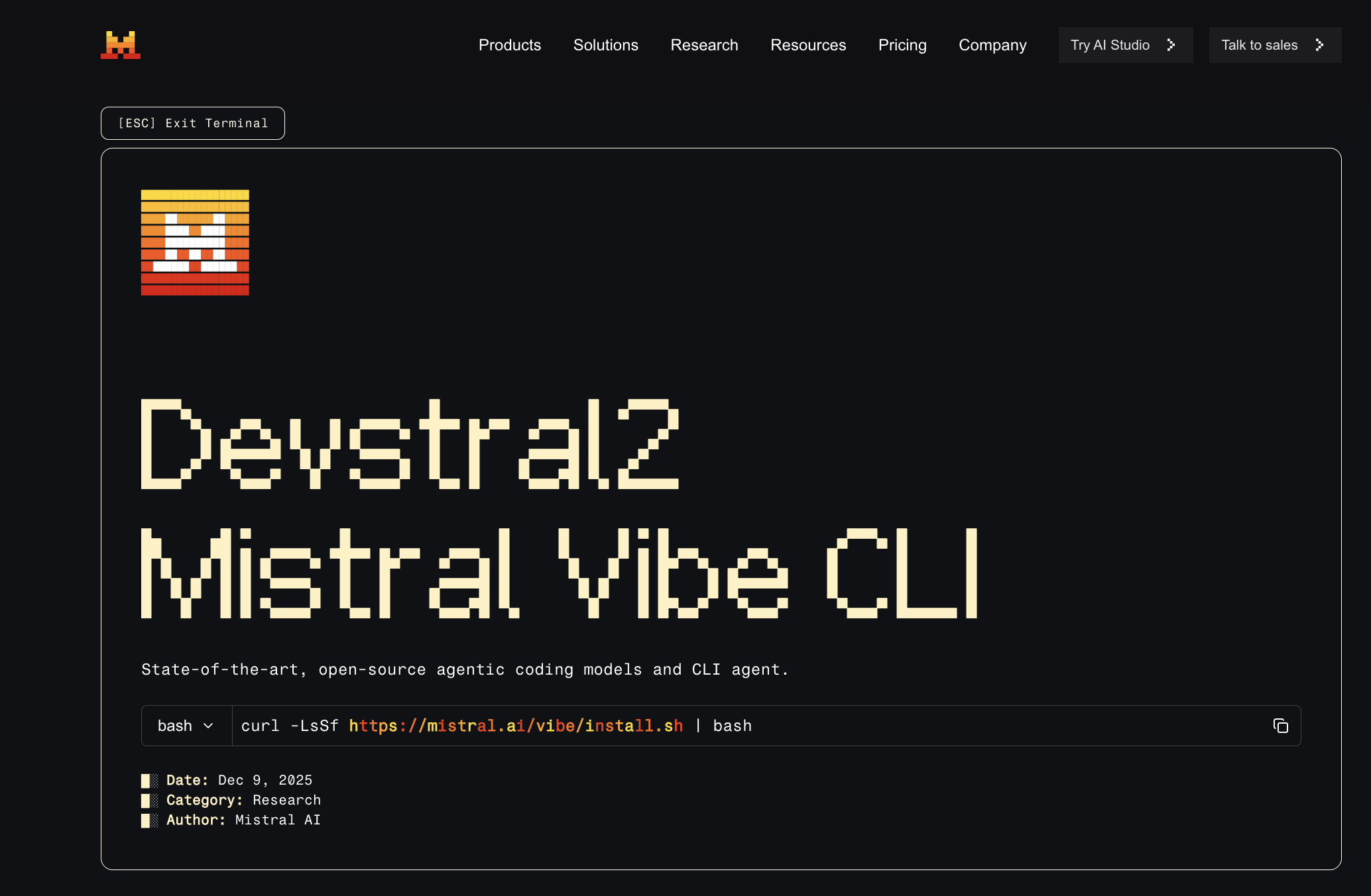
Mistral Vibe CLI - Mistral's new open-source CLI coding assistant powered by its Devstral models

Codeium Windsurf: Provides ai-powered code suggestions, completions, and debugging tools for developers.
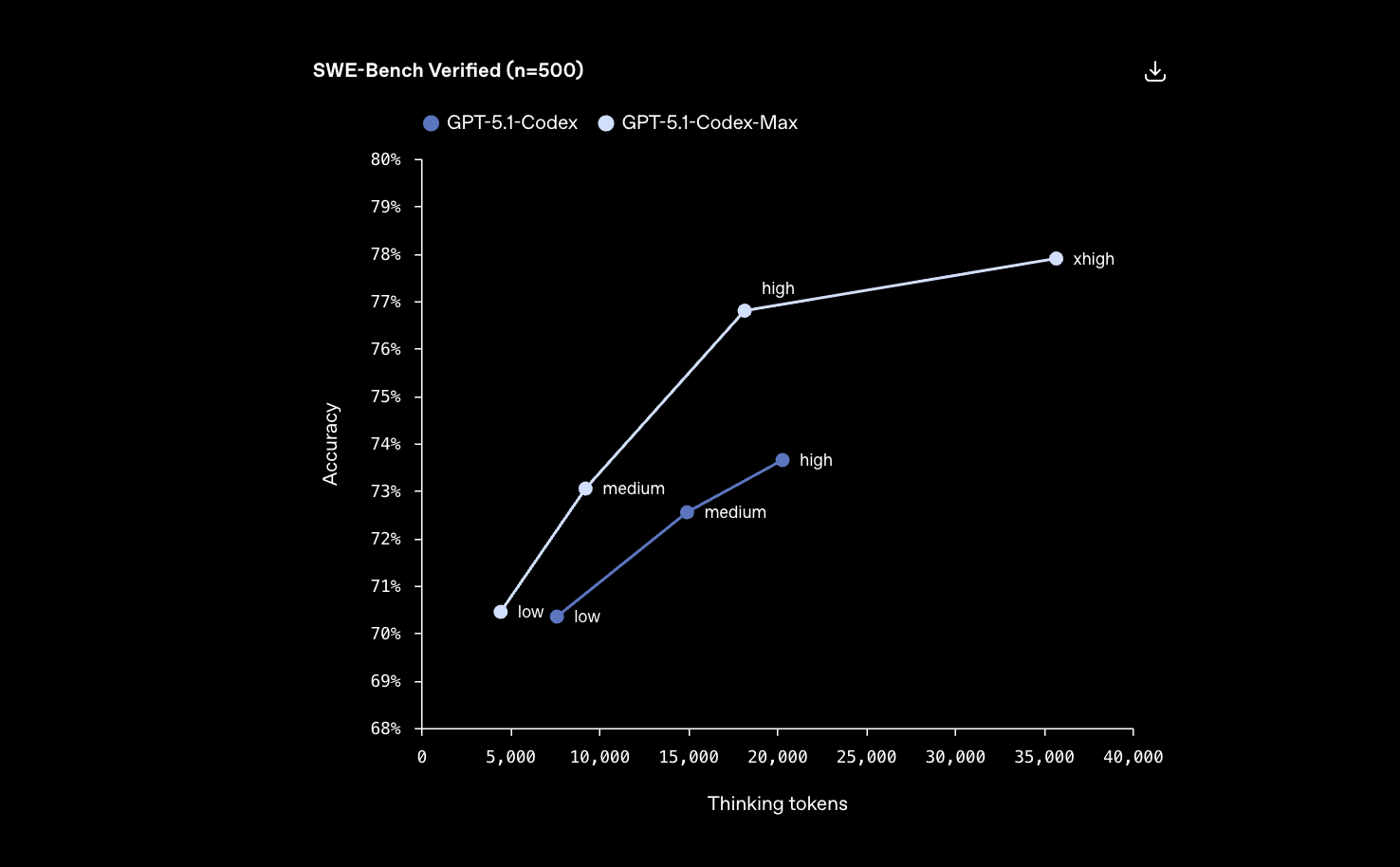
Codex Max - OpenAI's new frontier agentic coding model

GPT-5.2-Codex - Agentic coding model for professional software engineering and defensive cybersecurity.

Get access to all our AI courses, hundreds of real-world AI use cases, live expert-led workshops, an exclusive network of AI early adopters, and more.
Get unlimited access to all of our current & upcoming industry-specific AI courses for the duration of your subscription.
To keep up with the rapid pace of AI, our team publishes AI implementation guides daily. Our library contains 300+ practical use cases to automate real-world work.
Join weekly, live, interactive sessions with industry leaders who are at the forefront of AI for hands-on implementation guidance and exclusive insights.
Network with an exclusive community of AI-first professionals who are working smarter with AI. Learn how early adopters are using AI in their work and businesses.