Agent developers
Prototype applications that plan, call functions, maintain long context, and work across external tools.
Independent tool overview
Muse Spark 1.1 is Meta's July 2026 multimodal reasoning model for agentic workflows, computer use, coding, and long-context tasks; Muse Spark 1.2 is now the newer release.
Visit the official Muse Spark 1.1 site ↗
Overview
Muse Spark 1.1 is a hosted multimodal reasoning model from Meta Superintelligence Labs. Released in July 2026, it expanded the original Muse Spark with stronger tool use, computer interaction, coding, multimodal understanding, and active management of a 1 million-token context window.
Meta made the model available in Thinking mode through Meta AI and opened a public preview of the Meta Model API for developers. Its agentic design supports long-running workflows that plan, call tools, work across interfaces, and coordinate parallel subagents, while its multimodal inputs include images, video, audio, and documents.
Muse Spark 1.1 is no longer Meta's latest Spark release. Meta introduced the coding-optimized Muse Spark 1.2 and Muse Code in August 2026, so new production evaluations should compare the current model catalog instead of defaulting to 1.1 solely because of its original launch claims.
Use cases
The strongest fit depends on the job you need the product to complete, not the size of its feature list.
Prototype applications that plan, call functions, maintain long context, and work across external tools.
Test agents that combine scripted automation with direct interaction across changing user interfaces.
Evaluate bug fixes, feature work, migrations, visual debugging, and multi-step coding workflows.
Reason over combinations of text, screenshots, images, video, audio, PDFs, and tool results.
Capabilities
The model manages a context window of up to 1 million tokens, retrieving earlier work and compacting history during extended tasks.
The Meta Model API exposes agentic affordances for connecting model reasoning to developer-controlled tools and services.
Muse Spark 1.1 can switch between writing automation scripts and operating interfaces directly, including batching related actions.
It was trained to act as a coordinating main agent or a bounded subagent and to escalate when a delegated job requires help.
Meta positions the model for debugging, feature implementation, migrations, visual inspection, and multi-turn work in large codebases.
It can incorporate visual, audio, video, and document information into workflows that also take actions or call tools.
Process
Step 1
Compare Muse Spark 1.1 with Muse Spark 1.2 and other current options before pinning an older model ID in a new application.
Step 2
Use real task shapes, allowed data, tool schemas, expected outputs, and failure cases rather than relying only on vendor benchmarks.
Step 3
Give the model the minimum permissions needed, use strict allowlists, isolate workspaces, and require approval for consequential actions.
Step 4
Track success rate, retries, tool errors, latency, long-context drift, token usage, human interventions, and total cost per completed task.
Step 5
Log decisions and actions, defend against prompt injection, set spending and action limits, and maintain a reliable human override path.
Cost
Muse Spark 1.1 is a hosted model rather than an open-weight download. Meta Model API pricing is usage based; the reviewed public rate is $1.25 per million input tokens, $0.15 per million cached input tokens, and $4.25 per million output tokens. Search grounding and third-party gateways can add separate charges, and preview pricing can change.
Consumer access
Muse Spark 1.1 launched in Thinking mode in the Meta AI app and on meta.ai; consumer availability and limits follow Meta's current product access.
$1.25 input / $4.25 output per 1M tokens
Pay-as-you-go developer access during the Meta Model API public preview.
Pricing checked . Check current pricing at the source ↗
Assessment
Compare
The right alternative depends on the specific output, workflow, controls and budget your project requires.
Consumer
Compare Google's flagship multimodal reasoning model for long-context, tool-use, and enterprise application workloads.
Explore Gemini 3.1 Pro →Consumer
A strong alternative for demanding coding and agentic workflows where reliability and extended task execution are priorities.
Explore Claude Opus 4.8 →Consumer
Consider xAI's current model when evaluating agentic performance, coding capability, speed, and API cost across providers.
Explore Grok 4.5 →Questions
Muse Spark 1.1 is Meta's July 2026 hosted multimodal reasoning model for agentic tasks, tool use, computer interaction, coding, and long-context workflows.
No. Meta introduced Muse Spark 1.2 and Muse Code in August 2026. Check the current model catalog before starting a new integration.
Meta describes a 1 million-token context window with active context management that retrieves earlier work and compacts history during long tasks.
Meta's 1.1 release is provided through Meta AI and a hosted Model API. The release does not include open model weights for self-hosting.
The reviewed direct rate is $1.25 per million input tokens, $0.15 per million cached input tokens, and $4.25 per million output tokens. Confirm current preview pricing and any separate tool or search charges before deployment.
No agent should receive broad unsupervised access by default. Use minimal permissions, tool allowlists, isolated workspaces, action and spending limits, logs, and human approval for consequential operations.
Bottom line
Muse Spark 1.1 was an important step in Meta's move from a consumer assistant model to a developer-facing agentic platform. Its multimodal, long-context, coding, and computer-use combination remains technically relevant, but new projects should evaluate Muse Spark 1.2 and current competitors while measuring complete task success, safety controls, and cost—not model pricing in isolation.
Visit Muse Spark 1.1 website ↗
GPT-Live - OpenAI's new voice model with more natural conversation abilities
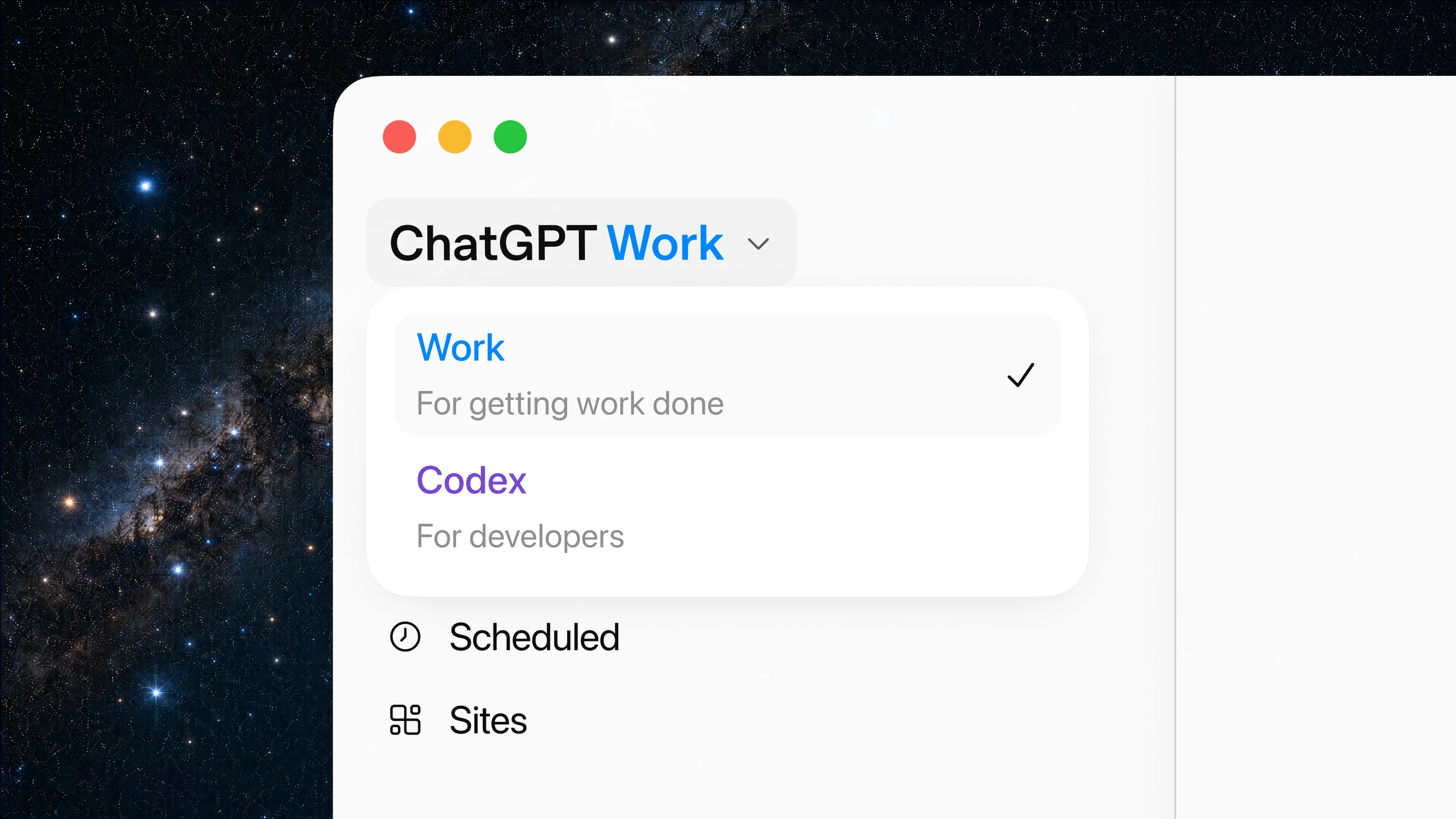
ChatGPT Work- OpenAI's Codex-powered agent for everyday non-coding work
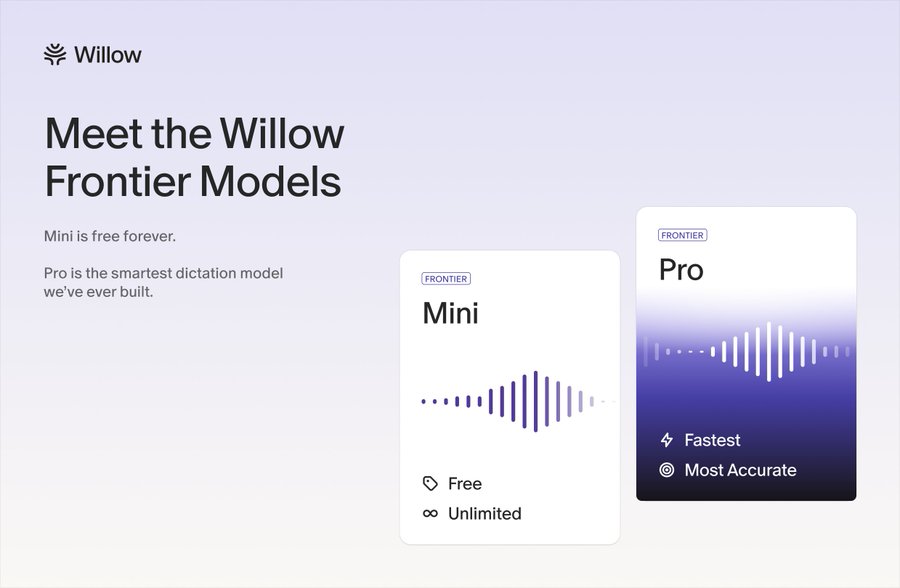
Willow Frontier Mini - Willow's free, unlimited AI dictation model

Bonsai 27B - PrismML's compressed 27B model small enough for iPhones

Get access to all our AI courses, hundreds of real-world AI use cases, live expert-led workshops, an exclusive network of AI early adopters, and more.
Get unlimited access to all of our current & upcoming industry-specific AI courses for the duration of your subscription.
To keep up with the rapid pace of AI, our team publishes AI implementation guides daily. Our library contains 300+ practical use cases to automate real-world work.
Join weekly, live, interactive sessions with industry leaders who are at the forefront of AI for hands-on implementation guidance and exclusive insights.
Network with an exclusive community of AI-first professionals who are working smarter with AI. Learn how early adopters are using AI in their work and businesses.