Spec-driven feature work
Teams that want a written requirements, design, and task trail before an agent implements a substantial change.
Independent tool overview
Kiro is an AWS-built agentic engineering platform that combines a Code OSS-based IDE, terminal agent, cloud development sessions, mobile access, and an open-source Crew workspace.
Visit the official Kiro site ↗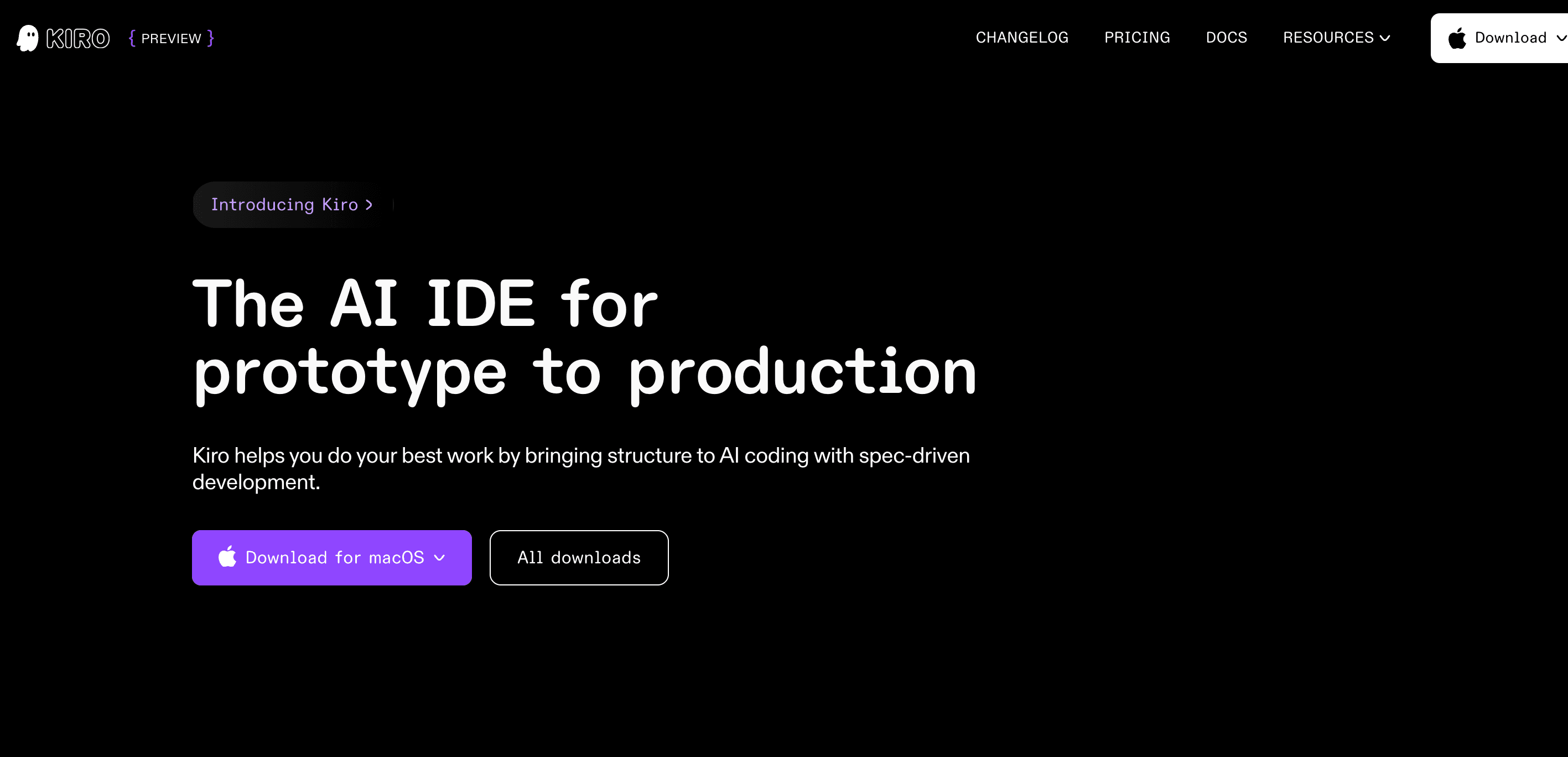
Overview
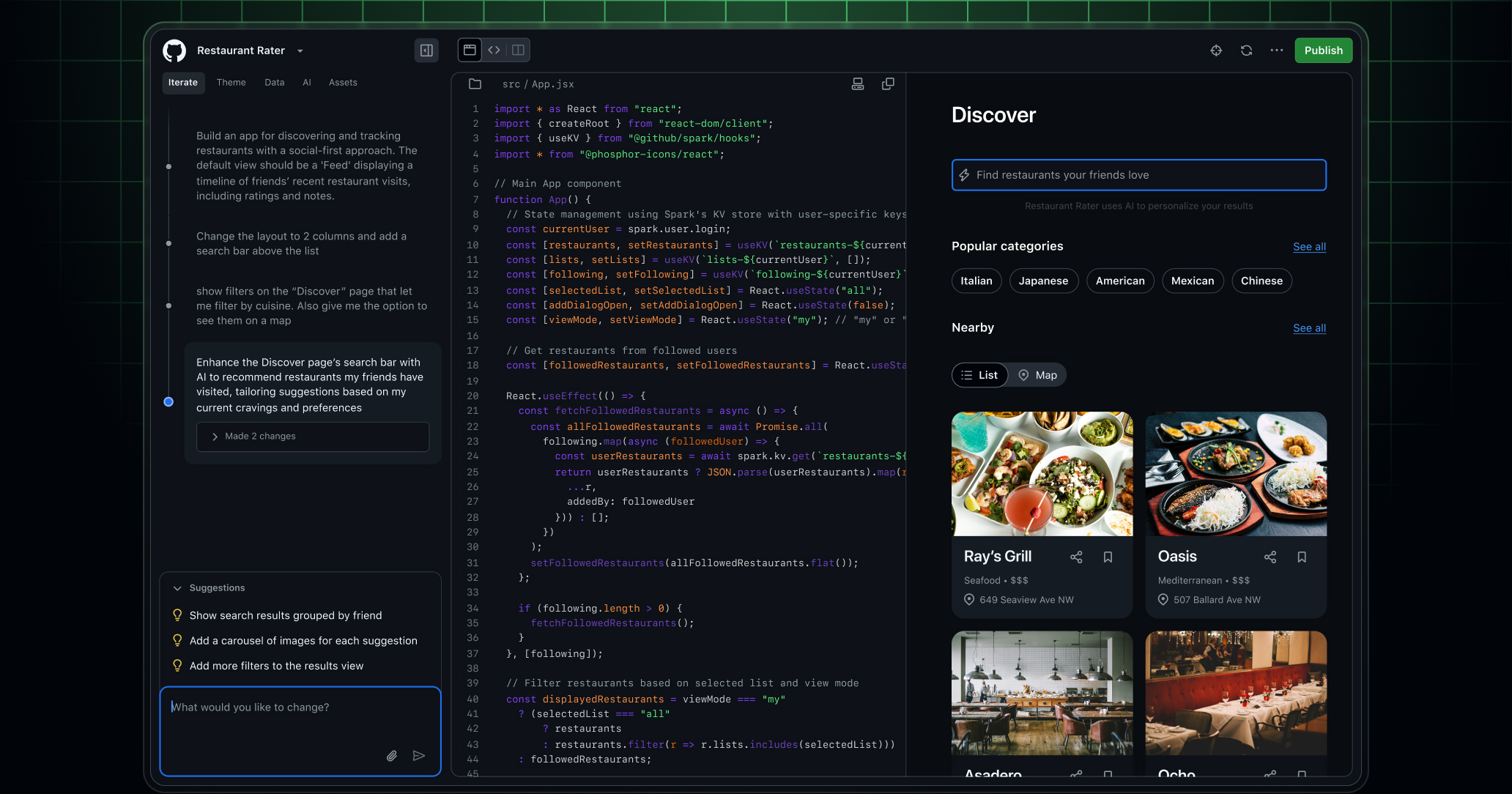
Kiro is broader than the original "AI IDE" label suggests. AWS now presents it as an agentic engineering platform spanning a desktop IDE, CLI, browser-based cloud sessions, mobile access, and the open-source Kiro Crew project. Its defining workflow is spec-driven development: the agent can turn a request into reviewable requirements, a technical design, and an ordered task plan before changing the code.
That structure can make larger feature and bug-fix work easier to inspect, but it does not make generated requirements, designs, tests, or code automatically correct. Kiro's agents can read files, write code, run commands, connect to external tools, and work in cloud environments. Teams should therefore isolate workspaces, restrict credentials and trusted commands, review specs and diffs, and keep normal tests, security checks, code review, and deployment controls in place.
Use cases
The strongest fit depends on the job you need the product to complete, not the size of its feature list.
Teams that want a written requirements, design, and task trail before an agent implements a substantial change.
Developers working on multi-file features, bug fixes, migrations, refactors, and tests inside an existing codebase.
Engineers who want to move between an IDE, terminal, browser sandbox, and mobile oversight while preserving project context.
Projects whose task graph contains genuinely independent changes that multiple agents can execute without editing the same areas.
Companies that value AWS identity, governance, monitoring, regional, and enterprise deployment options.
Capabilities
Feature, bug-fix, and quick-spec flows can create structured requirements, design, and task files for review before implementation.
The IDE and CLI can analyze proposed requirements for omissions, contradictions, and unclear assumptions.
Kiro can organize implementation work into a dependency graph and execute independent tasks in parallel waves.
The IDE can derive test properties, generate many randomized inputs, and shrink failures to smaller counterexamples.
A Code OSS-based desktop editor combines code navigation, chat, agents, checkpoints, settings, themes, and Open VSX extensions.
The CLI supports interactive and headless operation, custom agents, voice mode, Agent Client Protocol, and use in scripted workflows.
Browser sessions can work against connected GitHub or GitLab repositories in isolated cloud environments and continue after a laptop closes.
The web product includes autonomous mode and automations for delegated repository work.
Repository steering files can record architecture, conventions, commands, and product rules for reuse across Kiro surfaces.
Model Context Protocol servers, skills, hooks, custom agents, and built-in tools extend the agent with external data and actions.
Users can choose Auto routing or supported Anthropic, OpenAI, and open-weight models with different context limits and credit multipliers.
The separate open-source Crew project provides a persistent local multi-agent workspace with configurable interfaces and apps.
Process
Step 1
Start on a clean branch or disposable environment, remove unnecessary secrets, scope repository and cloud credentials, and keep trusted commands narrow.
Step 2
Choose a feature, bug-fix, or quick spec; state the goal, constraints, non-goals, acceptance criteria, and affected systems.
Step 3
Correct assumptions before implementation and explicitly check data handling, permissions, migrations, compatibility, observability, and rollback.
Step 4
Confirm dependencies and allow parallel execution only where tasks are independent and unlikely to edit the same files or contracts.
Step 5
Review diffs, commands, dependency changes, generated tests, and agent tool calls at small checkpoints; reject or rewind questionable work.
Step 6
Run unit, integration, end-to-end, security, and migration tests as appropriate, obtain human code review, deploy gradually, and retain a rollback path.
Cost
Kiro uses monthly credits whose consumption varies by model multiplier and task. Paid subscribers can buy additional credits for $0.04 each. Model availability, regional routing, promotions, taxes, and enterprise terms can change, so confirm the live pricing and model pages before purchasing.
$0
A limited starting tier for trying Kiro.
$20 per user per month
The entry paid plan for regular individual use.
$40 per user per month
A larger monthly credit allowance for heavier use.
$100 per user per month
A high-volume individual plan.
$200 per user per month
Kiro's largest listed self-serve credit package.
Contact sales
Organization deployment, identity, governance, and support options.
Pricing checked . Check current pricing at the source ↗
Assessment
Compare
The right alternative depends on the specific output, workflow, controls and budget your project requires.
Coding
Choose Cursor for a mature AI-first editor centered on interactive coding, repository chat, and agent workflows.
Explore Cursor →Coding
Choose Claude Code for an Anthropic-native terminal coding agent with strong repository and automation workflows.
Explore Claude Code →Coding
Choose Devin Desktop, formerly Windsurf, for an agentic editor connected to the broader Devin ecosystem.
Explore Devin Desktop (formerly Windsurf) →Business Operations
Consider Microsoft's Copilot ecosystem when Microsoft identity, enterprise governance, and broader Microsoft workflows matter most.
Explore Microsoft Copilot →Questions
Kiro is an AWS-built agentic engineering platform with a desktop IDE, CLI, browser-based cloud agents, mobile access, and a separate open-source Crew workspace. Its signature feature is turning requests into reviewable requirements, designs, and implementation tasks.
Yes. The listed Free plan costs $0 and includes 50 monthly credits with selected models and rate limits. Paid plans start at $20 per user per month.
As of August 30, 2026, listed self-serve plans are Free at $0, Pro at $20, Pro+ at $40, Pro Max at $100, and Power at $200 per user per month. Paid subscribers can purchase additional credits for $0.04 each. Enterprise pricing is custom.
Specs are structured project artifacts for requirements, technical design, and implementation tasks. Kiro offers feature, bug-fix, and quick-spec workflows, but developers should review the content before allowing implementation.
Yes. Kiro can map task dependencies and run independent tasks in parallel waves. Parallelism is most useful when tasks do not touch the same files, schemas, or interfaces.
Kiro offers Auto routing plus supported models from OpenAI, Anthropic, and open-weight providers. Each model can have a different context window, region, plan requirement, and credit multiplier, so check the live model table for the current lineup.
Kiro provides approvals, supervised mode, protected paths, checkpoints, and enterprise controls, but its agents can still read files, write code, and run commands. Use isolated workspaces, least-privilege credentials, narrow trusted-command rules, human review, tests, and staged deployments.
No. Kiro's IDE is based on Code OSS and uses Open VSX extensions, so it feels familiar to VS Code users, but extension availability and compatibility are not identical to Microsoft's Visual Studio Code Marketplace.
Bottom line
Kiro is a strong fit for teams that want agentic coding to begin with explicit requirements, design, and task planning instead of an immediate code dump. Its breadth across IDE, CLI, cloud sessions, and enterprise AWS controls is compelling, but buyers should evaluate the whole operating model—not just model quality. Credit economics, regional routing, permission scope, third-party tools, generated assumptions, and human review discipline will determine whether the platform improves delivery safely.
Visit Kiro website ↗
Get access to all our AI courses, hundreds of real-world AI use cases, live expert-led workshops, an exclusive network of AI early adopters, and more.
Get unlimited access to all of our current & upcoming industry-specific AI courses for the duration of your subscription.
To keep up with the rapid pace of AI, our team publishes AI implementation guides daily. Our library contains 300+ practical use cases to automate real-world work.
Join weekly, live, interactive sessions with industry leaders who are at the forefront of AI for hands-on implementation guidance and exclusive insights.
Network with an exclusive community of AI-first professionals who are working smarter with AI. Learn how early adopters are using AI in their work and businesses.