Maintaining a validated integration
Teams with production prompts, evaluations, and safeguards already tuned to GPT-5.2 that need time to migrate without changing behavior abruptly.
Independent tool overview
GPT-5.2 is an older OpenAI frontier reasoning model that remains available through the API for complex professional and agentic work. It has a 400,000-token context window, up to 128,000 output tokens, image input, tool calling, structured outputs, and reasoning effort from none through xhigh. It was retired from ChatGPT on June 12, 2026, and OpenAI now recommends GPT-5.6 for new API work, so GPT-5.2 is mainly relevant to teams maintaining or benchmarking an existing integration.
Visit the official GPT-5.2 site ↗
Overview
GPT-5.2 launched in December 2025 as OpenAI's flagship family for professional knowledge work, long-context reasoning, coding, vision, spreadsheets, presentations, and multi-step agents. The family included Instant, Thinking, Pro, Chat, and coding-oriented variants, but those names do not all have the same current availability or API behavior.
The important current distinction is platform status. GPT-5.2 Instant, Thinking, and Pro were removed from ChatGPT on June 12, 2026, and existing conversations moved to corresponding GPT-5.5 models. The standard gpt-5.2 and gpt-5.2-pro API models remain listed and usable as previous-generation models; gpt-5.2-chat-latest is deprecated.
The standard API model supports a 400,000-token context window, 128,000 maximum output tokens, an August 31, 2025 knowledge cutoff, text and image input, streaming, function calling, and structured outputs. It supports reasoning.effort values none, low, medium, high, and xhigh, with none as the default.
OpenAI currently recommends GPT-5.6 for new general API work. GPT-5.2 can still make sense when a team has a tested prompt suite, needs the lower $1.75/$14 token price, relies on the 2025-12-11 snapshot, or wants a stable baseline during migration. New production systems should compare quality, latency, safety, and total task cost against current models rather than choosing it because it was once the flagship.
Like every language model, GPT-5.2 can hallucinate facts, produce incorrect code or calculations, misuse tools, miss material details in a long context, and follow malicious instructions embedded in retrieved content. Use external sources, deterministic validation, least-privilege tools, human approval, and monitoring for any consequential workflow.
Use cases
The strongest fit depends on the job you need the product to complete, not the size of its feature list.
Teams with production prompts, evaluations, and safeguards already tuned to GPT-5.2 that need time to migrate without changing behavior abruptly.
Developers comparing newer models against the dated 2025-12-11 snapshot for repeatable quality, latency, and cost measurements.
Document, codebase, and multi-file tasks that fit within a 400,000-token window and benefit from configurable reasoning.
Existing Responses API systems that require function calling, structured outputs, allowed-tool controls, and long-running context management.
Generating or reviewing code, spreadsheets, presentations, and structured professional work with deterministic downstream checks.
Workloads where evaluations show GPT-5.2 still meets the target and its $1.75 input and $14 output rates beat the total cost of migrating.
Capabilities
Supports none, low, medium, high, and xhigh reasoning effort; none is the default and prioritizes lower latency.
Accepts up to 400,000 tokens of context and can return up to 128,000 tokens, including internal reasoning-token use within the model's budget.
Takes text and image input and returns text, supporting document, chart, screenshot, diagram, and interface analysis.
Can choose and populate developer-defined tools as part of a multi-step workflow.
Supports schema-constrained responses for applications that need reliably shaped JSON rather than free-form text.
Can constrain custom-tool output with context-free grammars for SQL, domain-specific languages, and other exact syntaxes.
Lets developers steer toward shorter or more detailed final responses separately from reasoning effort.
Supports encrypted, opaque conversation compaction for long-running tool workflows that would otherwise exceed the standard context window.
Streams response events so applications can present progress before a long output finishes.
The gpt-5.2-2025-12-11 snapshot can lock model behavior for regression testing and controlled production changes.
A slower Responses-API-only variant uses more compute for difficult problems and supports medium, high, and xhigh reasoning.
Process
Step 1
Document the prompt, latency, cost, compatibility, contractual, or regression reason for keeping GPT-5.2 instead of the current recommended model.
Step 2
Use gpt-5.2-2025-12-11 when reproducibility matters. Treat the moving alias as a separate deployment target and test it before switching.
Step 3
Include normal, ambiguous, adversarial, long-context, tool-error, multilingual, safety, and high-impact cases with human-approved expected outcomes.
Step 4
Test none first for simple tasks, then raise to medium, high, or xhigh only where measured quality gains justify added latency and output cost.
Step 5
Use structured outputs or a grammar for machine-consumed results and validate every field, enum, identifier, date, amount, and citation server-side.
Step 6
Separate instructions from documents, strip active content, defend against prompt injection, and never let a retrieved page grant itself tool authority.
Step 7
Give the model only the tools and records required for the current step. Use read-only operations by default and require confirmation for messages, purchases, deletes, account changes, or production writes.
Step 8
Recalculate numbers, run tests, check citations and source dates, scan code, reconcile records, and route medical, legal, financial, security, or eligibility decisions to qualified reviewers.
Step 9
Track input, cached input, reasoning, output, tool calls, retries, latency, refusals, schema failures, hallucinations, and human overrides by task type.
Step 10
Compare GPT-5.2 with GPT-5.6 or another current candidate on the same evaluation set, including total task cost and operational failure rate—not token price alone.
Step 11
Shadow traffic, review disagreements, canary a small cohort, retain a rollback path, and update prompts and reasoning settings before expanding the successor.
Cost
GPT-5.2 remains usage-priced in the OpenAI API. Standard gpt-5.2 costs $1.75 per million input tokens, $0.175 per million cached input tokens, and $14 per million output tokens. GPT-5.2 Pro costs $21 per million input tokens and $168 per million output tokens. Tool calls and some platform features can add charges. GPT-5.2 is no longer a selectable ChatGPT model, so a ChatGPT subscription is not a way to buy current GPT-5.2 access.
$1.75 input / $14 output per 1M tokens
Previous flagship reasoning model for complex professional and agentic work.
$21 input / $168 output per 1M tokens
Higher-compute previous-generation Pro model for difficult tasks where quality is worth substantially higher cost and latency.
No longer available
GPT-5.2 Instant, Thinking, and Pro were retired from ChatGPT on June 12, 2026.
Pricing checked . Check current pricing at the source ↗
Assessment
Compare
The right alternative depends on the specific output, workflow, controls and budget your project requires.
Consumer
Choose GPT-5.5 when you want the successor that replaced GPT-5.2 conversations in ChatGPT and a newer frontier baseline.
Explore GPT 5.5 →Consumer
Choose GPT-5.4 for a newer OpenAI reasoning generation with native computer-use positioning and a larger context design.
Explore GPT 5.4 →Consumer
Choose GPT-5.4 mini or nano for higher-volume, lower-cost agents and focused subagent tasks where frontier-model depth is unnecessary.
Explore GPT-5.4 mini & nano →Project Management
Choose Claude when Anthropic's model behavior, tooling, enterprise controls, or long-document workflow performs better on your evaluations.
Explore Claude →Content Creator
Choose Gemini when Google's model and Workspace ecosystem, multimodal features, or current pricing is a better operational fit.
Explore Gemini →Questions
Yes in the API, but not in ChatGPT. The standard gpt-5.2 and gpt-5.2-pro API models remain listed as previous-generation models. GPT-5.2 Instant, Thinking, and Pro were retired from ChatGPT on June 12, 2026.
The standard gpt-5.2 API model is listed as a previous flagship rather than deprecated. The gpt-5.2-chat-latest alias is deprecated, and OpenAI recommends GPT-5.6 for new general API usage.
The standard API model has a 400,000-token context window and a 128,000-token maximum output. Its Chat-aligned deprecated alias had smaller limits.
Standard API pricing is $1.75 per million input tokens, $0.175 per million cached input tokens, and $14 per million output tokens. Tools and other platform services can add charges.
GPT-5.2 Pro costs $21 per million input tokens and $168 per million output tokens. It is Responses-API-only, can take several minutes, and does not support structured outputs.
The standard model supports none, low, medium, high, and xhigh. None is the default. Test the lowest setting that meets your quality target before paying the latency and token cost of higher effort.
Yes. It accepts images as input alongside text and returns text. Native audio and video input or output are not supported.
The standard model supports function calling, structured outputs, streaming, and custom-tool grammars. GPT-5.2 Pro supports function calling but not structured outputs.
Usually not without a measured reason. OpenAI recommends GPT-5.6 for new general API work. Use GPT-5.2 when its tested quality, cost, compatibility, or fixed snapshot is specifically valuable.
OpenAI says API inputs and outputs are not used for model training by default unless the customer opts in. Default abuse-monitoring logs can retain content for up to 30 days, and approved Zero Data Retention or Modified Abuse Monitoring controls have endpoint-specific rules.
No. It can assist with research, analysis, drafting, coding, and calculations, but high-impact work needs current sources, deterministic validation, qualified review, and an accountable human decision-maker.
Bottom line
GPT-5.2 is still a capable API model, but it is now a maintenance and benchmarking choice rather than the obvious starting point. Its 400K context, 128K output, strong tool support, stable snapshot, and $1.75/$14 pricing can justify keeping a proven integration alive. The ChatGPT retirement, deprecated chat alias, older knowledge cutoff, and explicit recommendation to use GPT-5.6 make migration planning essential. Keep it only where evaluations show a real advantage, pin behavior when needed, constrain every machine-consumed output, sandbox tools, and move consequential decisions through independent checks and human approval.
Visit GPT-5.2 website ↗
Purpose - AI mentor for deep, personalized guidance on-demand
Gemini Deep Research Agent - Google's SOTA agent for long-running context gathering and synthesis tasks
Kling Avatar 2.0 - Upgraded avatar model with enhanced expressiveness, realism, and full 5-minute generations
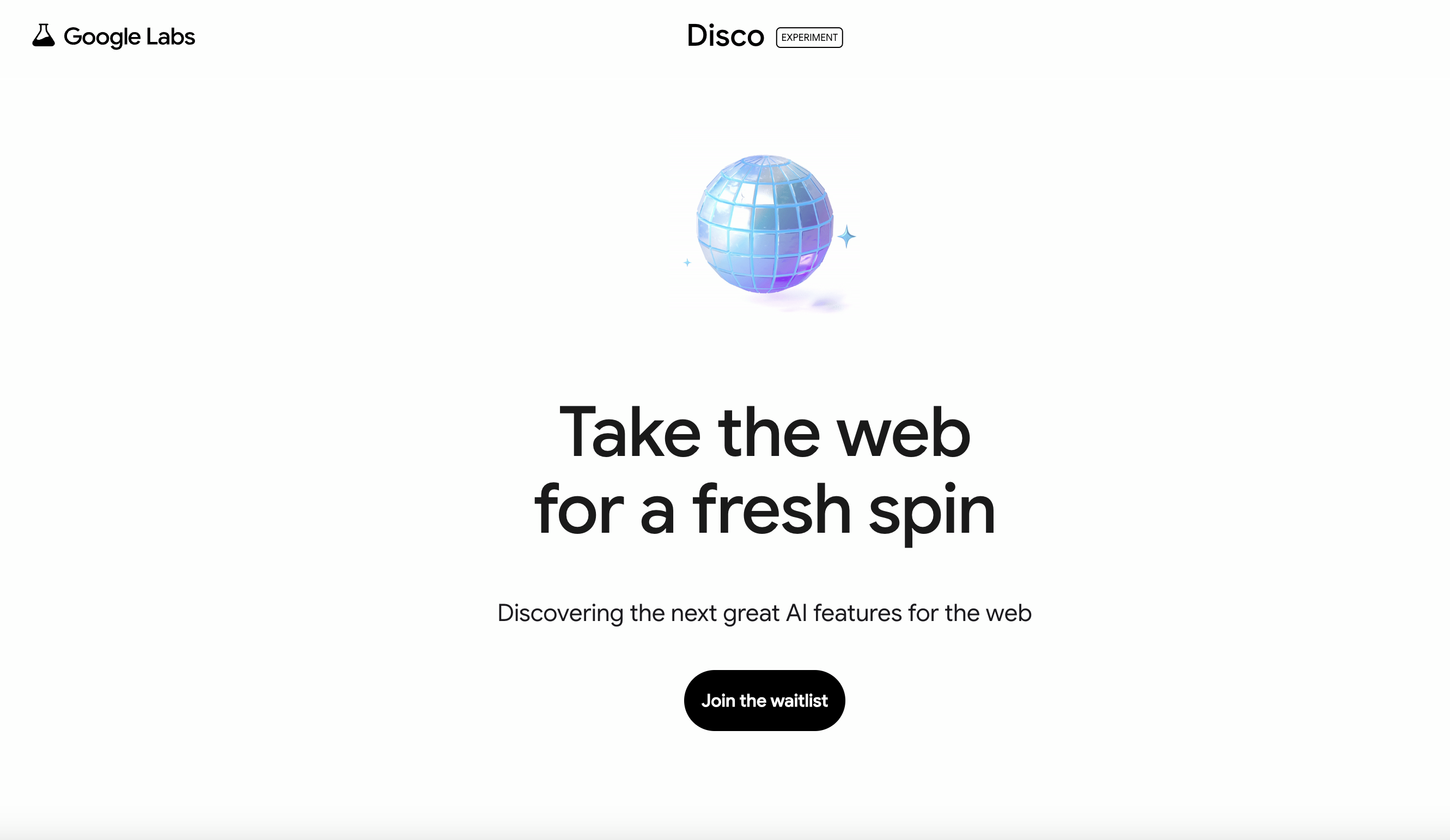
Disco - Google's experimental browser that uses Gemini 3 to generate custom web applications based on your open tabs and browsing tasks

Get access to all our AI courses, hundreds of real-world AI use cases, live expert-led workshops, an exclusive network of AI early adopters, and more.
Get unlimited access to all of our current & upcoming industry-specific AI courses for the duration of your subscription.
To keep up with the rapid pace of AI, our team publishes AI implementation guides daily. Our library contains 300+ practical use cases to automate real-world work.
Join weekly, live, interactive sessions with industry leaders who are at the forefront of AI for hands-on implementation guidance and exclusive insights.
Network with an exclusive community of AI-first professionals who are working smarter with AI. Learn how early adopters are using AI in their work and businesses.