Document AI developers
Add OCR and layout recovery to a controlled application or processing pipeline.
Independent tool overview
DeepSeek-OCR 2 is an open-weight 3B vision-language model for extracting text and document structure from images and PDFs.
Visit the official DeepSeek OCR 2 site ↗
Overview
DeepSeek-OCR 2 is a developer-focused optical character recognition model that converts document images into text or layout-aware Markdown. DeepSeek publishes the model weights, reference code, paper, and examples for local or self-managed deployment.
Its central research idea is Visual Causal Flow. DeepEncoder V2 dynamically reorders visual tokens according to image semantics instead of processing every page in a fixed top-left-to-bottom-right raster order. The approach is intended to better follow the logical reading order of complex page layouts.
This is not a hosted drag-and-drop document service. Teams need a compatible Python and GPU environment, must build ingestion and output handling, and should benchmark the model on their own languages, scans, forms, tables, equations, handwriting, and layout types before production use.
Use cases
The strongest fit depends on the job you need the product to complete, not the size of its feature list.
Add OCR and layout recovery to a controlled application or processing pipeline.
Run open weights in infrastructure the team manages rather than sending documents to a bundled SaaS interface.
Extract readable text while preserving useful page structure for search, retrieval, or downstream language models.
Study semantic visual-token ordering or compare document-understanding models on an internal benchmark.
Capabilities
The official grounded prompt converts a document image into Markdown intended to retain meaningful structure.
A separate Free OCR prompt extracts text without emphasizing document layout.
DeepEncoder V2 uses causal reasoning to reorder visual tokens based on page semantics before language-model interpretation.
The reference implementation supports variable image crops and visual-token counts for different page complexity.
The repository includes scripts for single-image output, concurrent PDF processing, and benchmark evaluation.
DeepSeek documents Transformers and vLLM inference, and publishes the model as safetensors on Hugging Face.
Process
Step 1
Collect representative clean pages, poor scans, tables, formulas, multi-column layouts, languages, and edge cases with approved ground truth.
Step 2
Install the repository's pinned dependencies and configure compatible NVIDIA GPU, CUDA, PyTorch, FlashAttention, and model-storage resources.
Step 3
Use grounded Markdown conversion when layout matters or the plain OCR prompt when only reading text is required.
Step 4
Process images or PDFs, retain page boundaries, and normalize Markdown, coordinates, tables, and metadata for the downstream system.
Step 5
Measure text accuracy, reading order, table and formula quality, latency, GPU memory, failure rate, and human-review load on internal documents.
Cost
DeepSeek publishes the DeepSeek-OCR 2 code and model under the Apache 2.0 license. There is no DeepSeek subscription price for downloading the open model, but deployment is not cost-free: teams pay for GPU compute, storage, engineering, monitoring, security, and any third-party hosting they choose.
Free to download
DeepSeek provides the 3B model weights and code for self-managed use under Apache 2.0.
Pricing checked . Check current pricing at the source ↗
Assessment
Compare
The right alternative depends on the specific output, workflow, controls and budget your project requires.
Business Operations
An alternative OCR-focused multimodal model to compare for text, formula, table, and structured-document extraction.
Explore GLM-OCR →Business Operations
Consider Tencent's open visual-understanding model when evaluating multilingual OCR and self-hosted options.
Explore HunyuanOCR →Business Operations
A strong comparison for teams that prefer a managed document-understanding API rather than operating an open model themselves.
Explore Mistral OCR 3 →Questions
DeepSeek-OCR 2 is a 3B parameter vision-language model and research release for extracting text and document structure from images and PDFs.
It is DeepSeek's approach to reordering visual tokens according to the semantic and logical structure of an image before language-model interpretation, rather than relying only on fixed raster-scan order.
The official code and model are available under the Apache 2.0 license. Compute, storage, engineering, security, and any hosting provider remain separate costs.
Yes. The repository includes PDF processing examples, and its grounded document prompt is designed to convert page content into layout-aware Markdown.
The official release is centered on model weights, code, and local or self-managed inference. A production web interface, document pipeline, review process, and service guarantees are not included.
No. Validate extracted text and structure on representative documents, and require human review where errors could affect money, compliance, safety, legal obligations, or customer records.
Bottom line
DeepSeek-OCR 2 is a notable open option for engineering teams that want layout-aware document extraction and control over deployment. Its compact model and published reference workflows are attractive, but the real decision should come from an internal benchmark that includes operating cost, reading-order quality, difficult layouts, and the cost of correcting errors.
Visit DeepSeek OCR 2 website ↗
Microsoft Copilot: Is your ai companion across microsoft 365 for writing, summarizing, and automating work.

Claude Marketplace - Anthropic's enterprise hub for buying Claude-powered partner tools
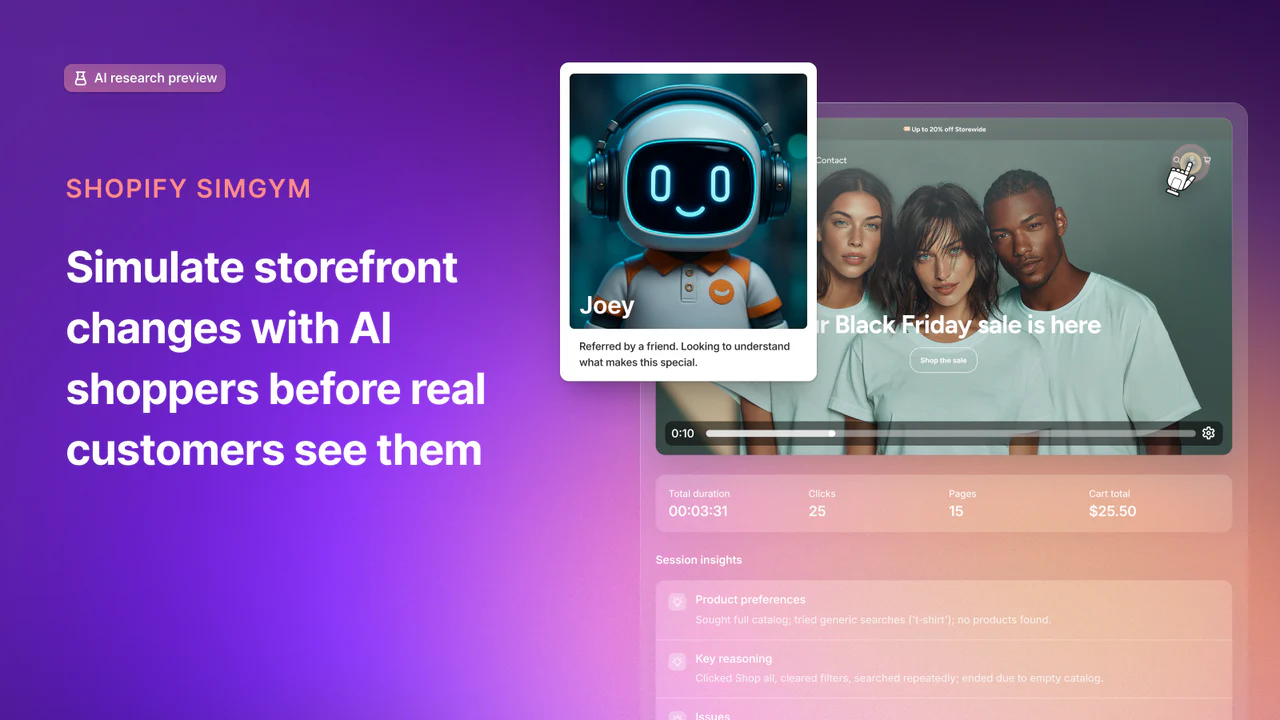
Shopify SimGym - Simulate buyer behavior with AI shoppers and gain the confidence of high traffic brands before launch.

Voxtral TTS - Mistral's voice cloning model for building multilingual AI speech agents

Get access to all our AI courses, hundreds of real-world AI use cases, live expert-led workshops, an exclusive network of AI early adopters, and more.
Get unlimited access to all of our current & upcoming industry-specific AI courses for the duration of your subscription.
To keep up with the rapid pace of AI, our team publishes AI implementation guides daily. Our library contains 300+ practical use cases to automate real-world work.
Join weekly, live, interactive sessions with industry leaders who are at the forefront of AI for hands-on implementation guidance and exclusive insights.
Network with an exclusive community of AI-first professionals who are working smarter with AI. Learn how early adopters are using AI in their work and businesses.