Multilingual voice agents
Engineering teams that need streaming speech in several supported languages with one provider and controlled voice identity.
Independent tool overview
Voxtral TTS is Mistral AI's 4B-parameter multilingual text-to-speech model for narration and low-latency voice agents. It supports nine languages, preset or cloned voices, streaming, a $0.016-per-1,000-character API, and noncommercial open-weight deployment.
Visit the official Voxtral TTS site ↗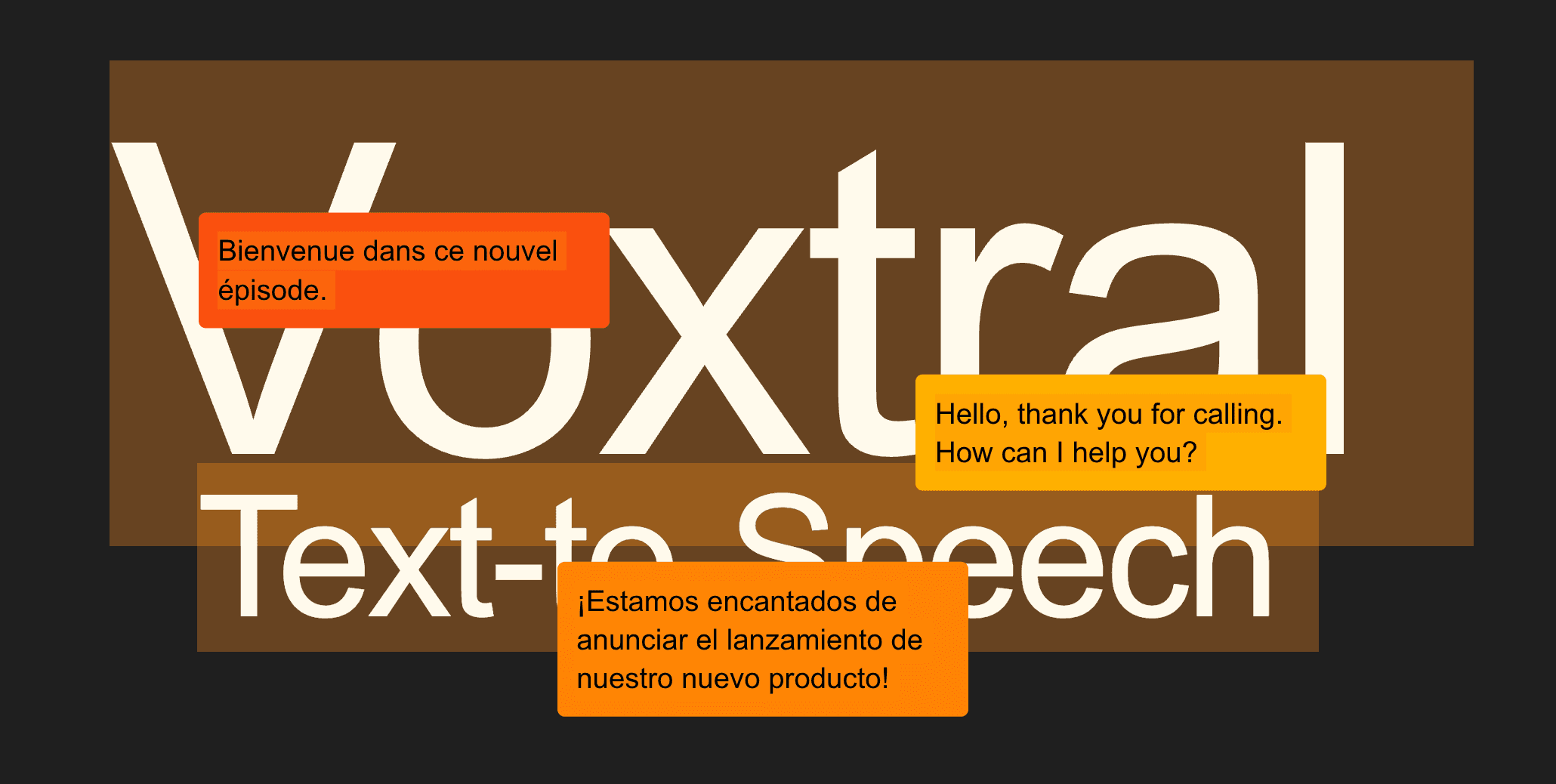
Overview
Voxtral TTS turns text into expressive speech in English, French, Spanish, German, Italian, Portuguese, Dutch, Arabic, and Hindi. It can use Mistral's preset voices, a reusable saved voice, or one-off reference audio, and it carries rhythm, accent, intonation, emotion, and even disfluencies from a short voice sample into the result.
The hosted API is aimed at production narration and conversational systems. It supports standard and streaming delivery in MP3, WAV, PCM, FLAC, and Opus. Mistral reports about 90 milliseconds of model processing, but its own documentation puts end-to-end first audio at roughly 0.8 seconds for PCM and three seconds for MP3, a more useful expectation for application design.
Developers can also download the 4B open-weight model, run it with vLLM Omni on a GPU with at least 16GB of memory, and use the bundled reference voices. That release inherits a CC BY-NC 4.0 license, so it is not a free path to commercial self-hosting. Commercial teams should use the hosted API or negotiate appropriate rights rather than assuming open weights mean unrestricted use.
Voxtral can clone a voice from only a few seconds of audio. Mistral's API documentation requires explicit consent and prohibits impersonation, fraud, deception, misinformation, and privacy-invasive content, but the documented creation call accepts a base64 audio sample without describing a live speaker-verification step. Teams must build durable consent, disclosure, access controls, and misuse monitoring around the model.
Use cases
The strongest fit depends on the job you need the product to complete, not the size of its feature list.
Engineering teams that need streaming speech in several supported languages with one provider and controlled voice identity.
Companies with explicit speaker rights that want a reusable voice for support, training, podcasts, or product experiences.
Teams testing whether a consented voice can remain recognizable across another supported language, with native-speaker review.
Researchers and experimenters with suitable GPU infrastructure who can comply with the open model's CC BY-NC 4.0 license.
Capabilities
Generates speech in nine documented languages and supports code-mixing and cross-lingual voice transfer.
Adapts to a speaker from a short audio prompt, including accent, pacing, intonation, and emotional style.
Stores a reference sample as a reusable voice ID so applications do not resend the audio with every request.
Generates speech directly from a temporary reference clip when a persistent voice profile is unnecessary.
PCM and other output formats support interactive voice experiences, with PCM providing the fastest documented first audio.
Returns MP3, WAV, PCM, FLAC, or Opus for different quality, storage, and streaming requirements.
The 4B model can be self-hosted with vLLM Omni on suitable hardware for noncommercial uses allowed by its license.
The hosted TTS API can reject text that violates acceptable-use controls.
Process
Step 1
Use the hosted API for commercial production and managed scaling; use open weights only when the noncommercial license and infrastructure fit.
Step 2
Obtain explicit written consent covering cloning, storage, languages, scripts, distribution, commercial contexts, duration, and withdrawal.
Step 3
Prefer a preset or designed voice when a real person's identity is unnecessary. For cloning, record only the consenting speaker in a controlled setting.
Step 4
Save the sample as a restricted voice ID or provide one-off reference audio, and limit both paths to authorized systems and staff.
Step 5
Spell out ambiguous numbers and abbreviations, remove rich formatting and emojis, and keep segments under 300 words for best results.
Step 6
Use PCM when first-audio latency matters, MP3 for broad compatibility, or lossless formats for production editing.
Step 7
Have a native or proficient reviewer check names, numbers, meaning, politeness, pronunciation, accent, and cultural fit.
Step 8
Tell listeners the voice is AI-generated, identify the responsible organization, and provide a human path for consequential interactions.
Step 9
Log usage, block unsafe scripts, respond to misuse, honor consent withdrawal, remove the stored voice, and retire exported audio where possible.
Cost
Voxtral TTS is priced by input characters through Mistral's hosted API. The downloadable model has no API fee but is noncommercial under CC BY-NC 4.0 and requires self-managed GPU infrastructure. General Mistral account credits and enterprise arrangements may offset or change the effective cost.
$0 account plan
Mistral's current general Free plan includes limited Studio access and $10 per month in API credits.
$0.016 per 1K characters
Usage-based access to voxtral-mini-tts-latest through Mistral's speech endpoint.
No API fee; infrastructure required
Downloadable Voxtral-4B-TTS-2603 weights for uses permitted by CC BY-NC 4.0.
Contact sales
Commercial private deployments, custom models, support, and governance require a negotiated arrangement.
Pricing checked . Check current pricing at the source ↗
Assessment
Compare
The right alternative depends on the specific output, workflow, controls and budget your project requires.
Miscellaneous
Choose xAI Custom Voices for a hosted TTS and real-time voice stack whose console includes a documented live passphrase and speaker-similarity check.
Explore xAI Custom Voices →Marketing
Choose ElevenLabs for a mature end-to-end voice platform with creator tools, dubbing, agents, and multiple cloning workflows.
Explore ElevenLabs →Content Creator
Choose Qwen3-TTS when open-model experimentation and a different licensing or deployment tradeoff matter more than Mistral's hosted API.
Explore Qwen3-TTS →Questions
Voxtral TTS is Mistral AI's 4B-parameter multilingual speech-generation model for narration, cloned voices, localization, and low-latency voice agents.
English, French, Spanish, German, Italian, Portuguese, Dutch, Arabic, and Hindi. It also supports code-mixing and cross-lingual voice transfer.
As of September 1, 2026, Mistral lists the hosted model at $0.016 per 1,000 input characters, equivalent to $16 per 1 million characters.
It is open weight, not unrestricted open source. The downloadable model inherits CC BY-NC 4.0, which requires attribution and excludes commercial use.
Not under the published CC BY-NC 4.0 weights alone. Commercial self-hosting requires separate rights or an enterprise agreement with Mistral.
Mistral's model card says the BF16 model can run on a single GPU with at least 16GB of memory using current vLLM and vLLM Omni versions.
Mistral says adaptation can work from about two to three seconds of audio. A longer, clean, representative sample should be tested because very short clips cannot capture every context.
The documentation requires explicit consent and prohibits impersonation, but the published API creation example accepts a base64 sample without describing a live ownership check. Build and document your own consent verification.
Yes. Speech generation can take one-off reference audio, or you can create a reusable saved voice and pass its voice ID.
Mistral reports about 90 milliseconds of model processing, but end-to-end first audio is approximately 0.8 seconds for PCM and three seconds for MP3. Network, queueing, script processing, and application logic add latency.
The model natively generates up to about two minutes, while Mistral says its API can handle longer output through interleaving. The documentation recommends keeping text segments under 300 words for quality.
Yes. PCM is the recommended low-latency format; MP3, WAV, FLAC, and Opus are also supported.
Yes. Mistral explicitly requires consent. Use a written agreement that covers cloning, storage, commercial use, languages, channels, generated scripts, distribution, duration, and withdrawal.
Yes whenever a listener could believe the person recorded or approved the exact message, and wherever law or platform rules require it.
Bottom line
Voxtral TTS is a strong technical option for multilingual voice applications: nine languages, short-reference adaptation, streaming, straightforward API pricing, and a workable noncommercial self-hosting path. Its ease of cloning demands stronger controls than the API documents technically enforce. Use a preset or designed voice when identity is unnecessary; otherwise require written consent, visible disclosure, locked-down voice assets, native-language review, and human control over every consequential workflow.
Visit Voxtral TTS website ↗
Claude Marketplace - Anthropic's enterprise hub for buying Claude-powered partner tools
Gemini 3.1 Flash Live - Google's low-latency voice model for building real-time AI agents
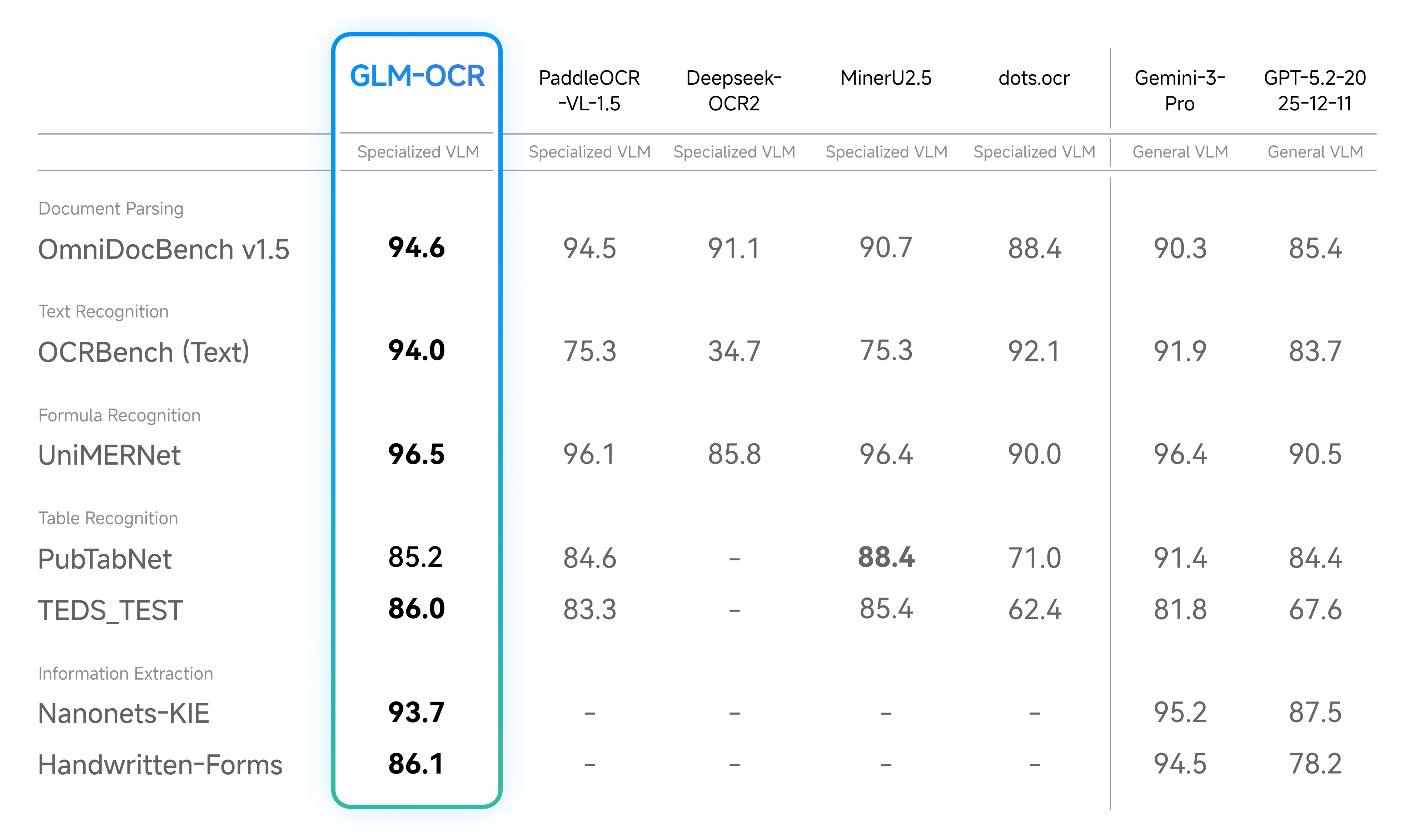
GLM-OCR - Z AI's SOTA multimodal model for extracting text and images from documents

Lovable Payments - Lovable's one-conversation setup for adding payments, tax, and multi-currency support to AI-built apps

Get access to all our AI courses, hundreds of real-world AI use cases, live expert-led workshops, an exclusive network of AI early adopters, and more.
Get unlimited access to all of our current & upcoming industry-specific AI courses for the duration of your subscription.
To keep up with the rapid pace of AI, our team publishes AI implementation guides daily. Our library contains 300+ practical use cases to automate real-world work.
Join weekly, live, interactive sessions with industry leaders who are at the forefront of AI for hands-on implementation guidance and exclusive insights.
Network with an exclusive community of AI-first professionals who are working smarter with AI. Learn how early adopters are using AI in their work and businesses.