Governed enterprise workflows
Automate repeatable work that spans documents, multiple systems, approvals, and expert judgment.
Independent tool overview
Context is an enterprise execution platform for building, running, evaluating, and improving AI agents on infrastructure an organization controls.
Visit the official Context site ↗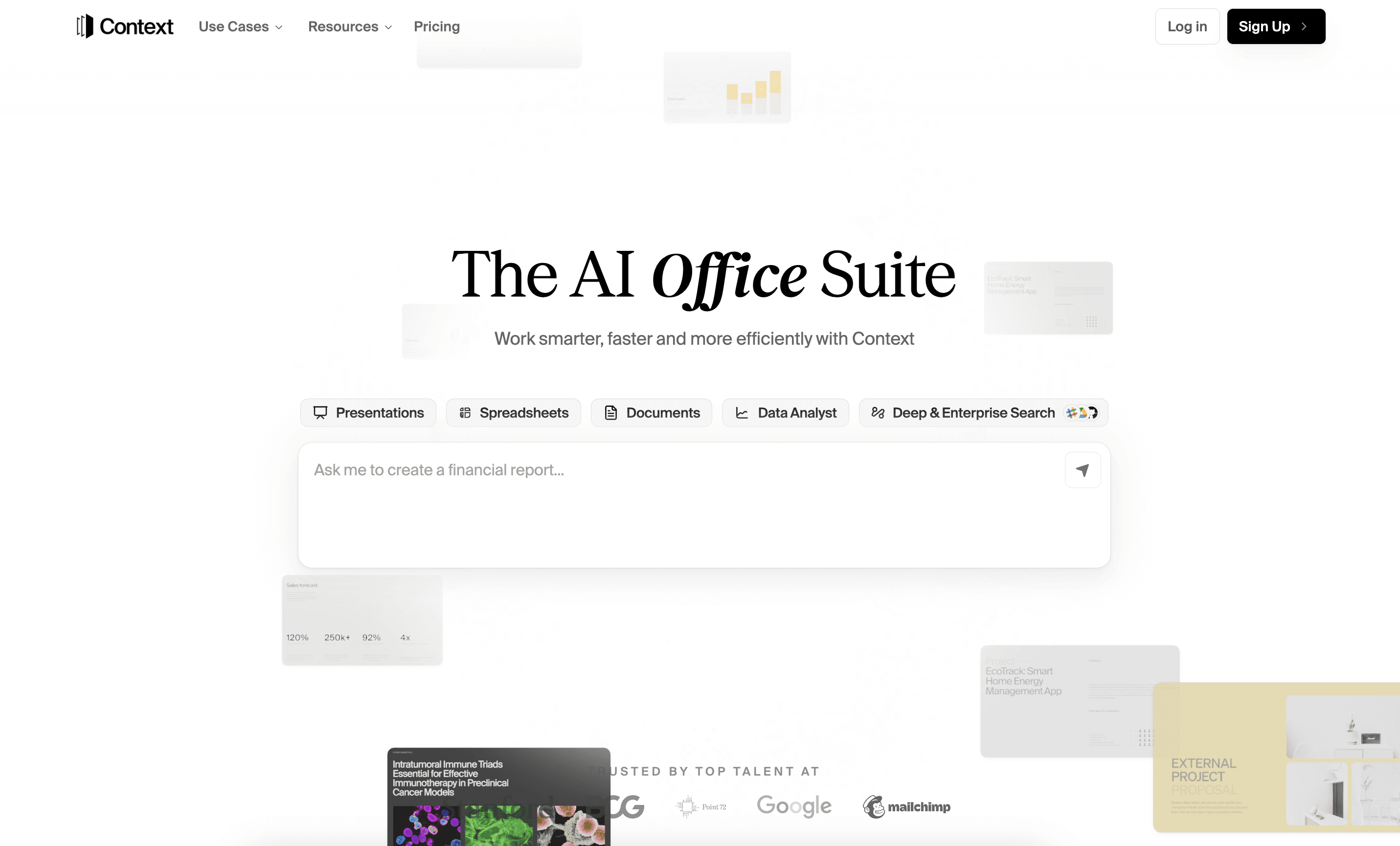
Overview
Context has changed substantially from the AI Office Suite introduced in 2025. The current product is an enterprise agent platform: teams describe repeatable work as plain-English runbooks, connect approved systems, run agents in isolated environments, and score results against organization-specific rubrics.
Its four main layers cover a shared workspace, an execution engine, institutional knowledge, and evaluations. Agents can work with documents, spreadsheets, decks, and connected business systems while inheriting user identity and passing each proposed action through authorization policy.
Context can be managed by the vendor or deployed in a customer's VPC, on-premises, or in an air-gapped environment. Pricing is quote-based, so it is best suited to organizations with a high-value repeatable workflow and the security or governance maturity to operate production agents.
Use cases
The strongest fit depends on the job you need the product to complete, not the size of its feature list.
Automate repeatable work that spans documents, multiple systems, approvals, and expert judgment.
Deploy the control plane, execution runtime, traces, and credentials inside a customer-controlled VPC, on-premises environment, or air gap.
Use rubrics, golden sets, audit trails, and accepted outputs to test whether an agent meets the organization's definition of good work.
Route different steps to frontier or open-weight models instead of committing every workflow to one model vendor.
Capabilities
People and agents work with documents, spreadsheets, presentations, kanbans, and file viewers in the same environment.
Teams define repeatable procedures, tools, approvals, and expected outputs in plain language rather than relying on one-off chats.
A structured filesystem stores domain documents and what agents learn from reviewed work so future runs can use organization-specific context.
Rubrics and golden sets can gate workflow changes, while step-level routing selects a model that meets quality requirements at a lower cost.
Agents are first-class principals tied to the organization's identity provider, with policy checks before actions and brokered credentials at runtime.
Run Context as a managed service, inside an AWS, Azure, or Google Cloud VPC, on premises, or in a disconnected environment.
Use the web workspace, Microsoft Teams, Slack, desktop tools, or Context Code in the terminal while keeping runs visible to the team.
Process
Step 1
Start with a repeatable workflow that has clear inputs, systems, review points, and a measurable definition of done.
Step 2
Decide whether managed hosting, a customer VPC, on-premises infrastructure, or air-gapped operation matches the data and compliance requirements.
Step 3
Connect the identity provider, approve only the required systems, separate read from write permissions, and establish credential rotation and revocation.
Step 4
Capture the steps, approval gates, examples, source requirements, edge cases, and scoring criteria used by human experts.
Step 5
Run a representative evaluation set, inspect every action and output, test failure and revocation paths, and expand only after the workflow passes.
Cost
Context does not publish per-seat or platform prices. Quotes depend on the deployment model, usage, support requirements, and implementation scope; model-inference charges and customer-operated infrastructure can add to the total cost.
Custom quote
The vendor operates the deployment when a hosted control plane fits the organization's policy.
Custom quote
Run the platform in the organization's AWS, Azure, or Google Cloud account.
Custom quote
Deployment for organizations that need the entire platform inside a controlled or disconnected perimeter.
Pricing checked . Check current pricing at the source ↗
Assessment
Compare
The right alternative depends on the specific output, workflow, controls and budget your project requires.
Business Operations
A better fit when the main requirement is an assistant embedded directly across Microsoft 365 with published seat pricing.
Explore Microsoft Copilot →Agents
A more accessible option for building cross-app agents and automations without operating an enterprise agent platform.
Explore Zapier Agents →Business Operations
A general-purpose assistant platform with faster self-serve rollout when most work can stay inside individual chat and agent sessions.
Explore ChatGPT →Questions
Context is an enterprise platform for defining AI work as runbooks, running agents with approved tools and identity, grounding them in company knowledge, and scoring the results with organization-specific evaluations.
The company has substantially repositioned the product. The current Context offering is an enterprise agent execution platform, although it still includes working surfaces for documents, spreadsheets, presentations, and other files.
It supports a vendor-managed deployment, a customer's AWS, Azure, or Google Cloud VPC, on-premises infrastructure, and air-gapped environments. The selected architecture determines the data boundary and operating responsibilities.
Context describes the platform as model-agnostic and lists Claude, GPT, Gemini, Kimi, and open-weight models. Model availability, retention, and routing depend on the deployment design.
Pricing is quote-based and depends on deployment, usage, support, and implementation. Buyers should also budget for model inference, their own infrastructure, security review, and ongoing operations.
Vercel's April 2026 security bulletin says a compromise of Context.ai allowed an attacker to take over a Vercel employee's Google Workspace account and pivot into Vercel systems. Organizations evaluating the current platform should review the incident report, remediation evidence, penetration-test results, OAuth controls, credential handling, and architecture of their exact deployment.
Context says it does not use one customer's traces, corrections, or institutional context to train models for other customers. Retention and training policies at the selected model provider still need to be documented and verified.
Bottom line
Context is designed for a harder problem than a general office copilot: governed, repeatable agents operating across production systems and sensitive data. Its runbooks, evaluations, model choice, and customer-controlled deployment options are compelling for mature enterprises. The tradeoff is equally significant—custom pricing, operational complexity, and a security history that warrants a rigorous, evidence-based review before granting access.
Visit Context website ↗
Perplexity - Your Research Assistant, available wherever you are
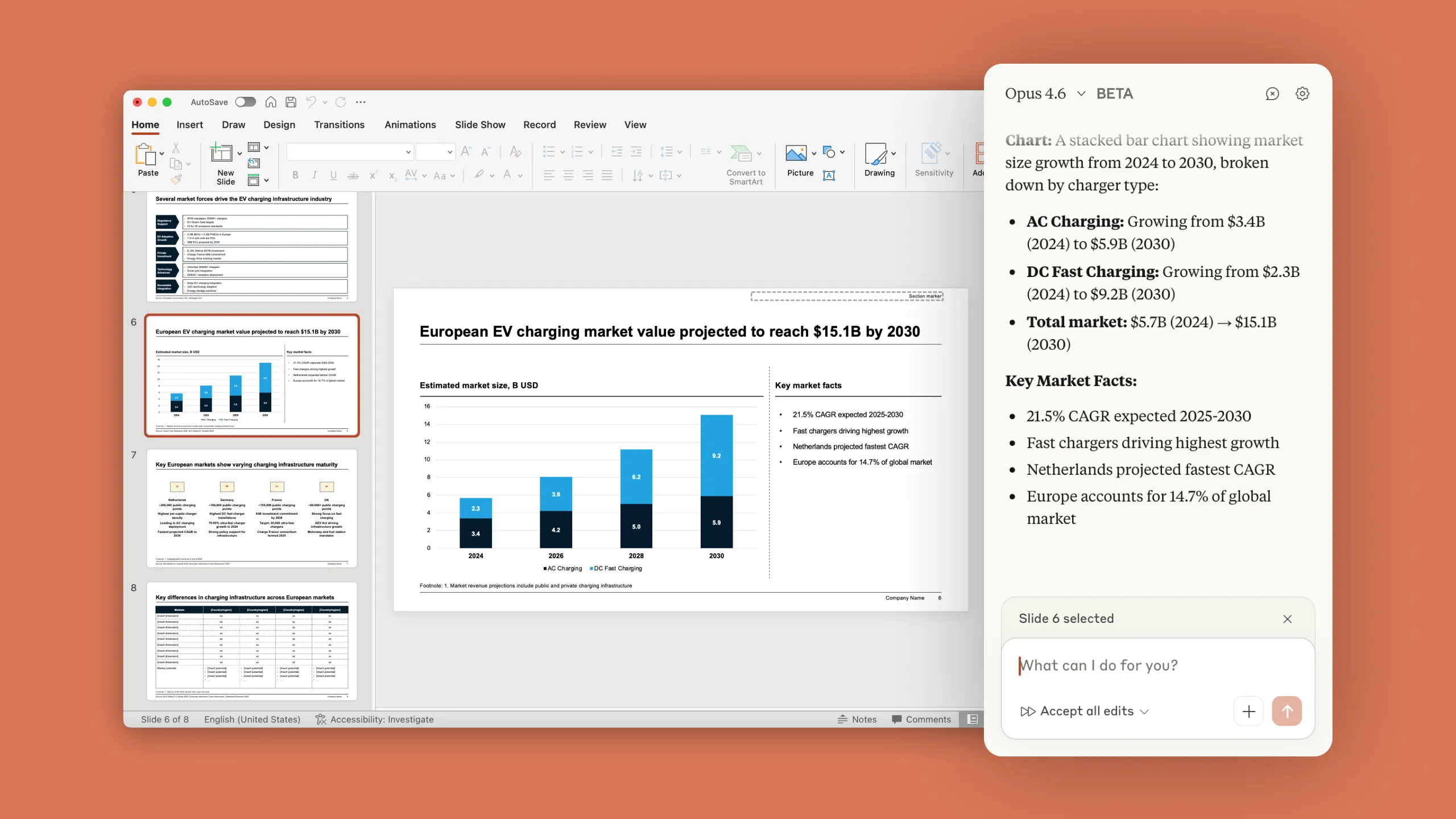
Claude in Powerpoint - Anthropic's AI sidebar for building and editing slides natively in PowerPoint

Google Sheets AI: Bring ai power to spreadsheets with smart formula generation, summaries, and automation inside google sheets.

Grok for Excel - Ask questions in plain English, write formulas, and run scenarios with Grok inside Excel

Get access to all our AI courses, hundreds of real-world AI use cases, live expert-led workshops, an exclusive network of AI early adopters, and more.
Get unlimited access to all of our current & upcoming industry-specific AI courses for the duration of your subscription.
To keep up with the rapid pace of AI, our team publishes AI implementation guides daily. Our library contains 300+ practical use cases to automate real-world work.
Join weekly, live, interactive sessions with industry leaders who are at the forefront of AI for hands-on implementation guidance and exclusive insights.
Network with an exclusive community of AI-first professionals who are working smarter with AI. Learn how early adopters are using AI in their work and businesses.