Complex agentic coding
Long-horizon repository work, code review, debugging, and multi-step tool use.
Independent tool overview
Claude Opus 5 is an Anthropic model for complex agentic coding and enterprise work, with a 1M-token context window and thinking enabled by default.
Visit the official Claude Opus 5 site ↗
Overview
Anthropic positions Opus 5 for deep reasoning, long-horizon agent tasks, coding, vision, document work, code review, and multi-agent coordination. It supports effort controls and features such as mid-conversation tool changes, fallbacks, and fast mode on supported platforms.
Opus 5 remains available, but Anthropic has released Opus 5.5 at a lower published price. Buyers should compare both models on task quality, latency, migration constraints, and total token use rather than assume the older model is the better default.
Use cases
The strongest fit depends on the job you need the product to complete, not the size of its feature list.
Long-horizon repository work, code review, debugging, and multi-step tool use.
Deep analysis, document tasks, vision, and workflows that need strong sustained reasoning.
Capabilities
Uses adaptive reasoning with effort levels for quality and cost control.
Offers a 1M-token context window and up to 128K output.
Supports long-horizon tool use, multi-agent coordination, and beta tool-list changes.
Process
Step 1
Compare it with current Opus 5.5 and other models on representative work.
Step 2
Set the exact model ID, effort, max output, and supported tools for the platform.
Step 3
Measure quality, latency, refusals, token use, and fallback behavior before production.
Cost
Anthropic lists Claude Opus 5 at $5 per million input tokens and $25 per million output tokens. Fast mode on the Claude API is listed at $10 input and $50 output per million tokens.
$5 input / $25 output per MTok
Published Claude API base pricing for Opus 5.
$10 input / $50 output per MTok
Research-preview Claude API mode for lower latency.
Pricing checked . Check current pricing at the source ↗
Assessment
Compare
The right alternative depends on the specific output, workflow, controls and budget your project requires.
Agents
Choose Agent Builder for an existing OpenAI agent-building workflow.
Explore Agent Builder →Agents
Choose ChatGPT Agent for a consumer-facing agent that can research and act with connected tools.
Explore ChatGPT Agent →Questions
Claude Opus 5 is an Anthropic model for complex agentic coding and enterprise work, with a 1M-token context window and thinking enabled by default.
Long-horizon repository work, code review, debugging, and multi-step tool use. Deep analysis, document tasks, vision, and workflows that need strong sustained reasoning.
Anthropic lists Claude Opus 5 at $5 per million input tokens and $25 per million output tokens. Fast mode on the Claude API is listed at $10 input and $50 output per million tokens.
Bottom line
Claude Opus 5 is a verified, capable model and deserves an exact listing, but it is no longer the newest Opus option. Existing users should benchmark migration to Opus 5.5, while new users should choose Opus 5 only when evals show a clear reason.
Visit Claude Opus 5 website ↗
OpenAI model family for complex production, coding, agent, and tool-using workloads.
Anthropic's fastest Claude model for high-volume classification, extraction, routing, and subagent work.
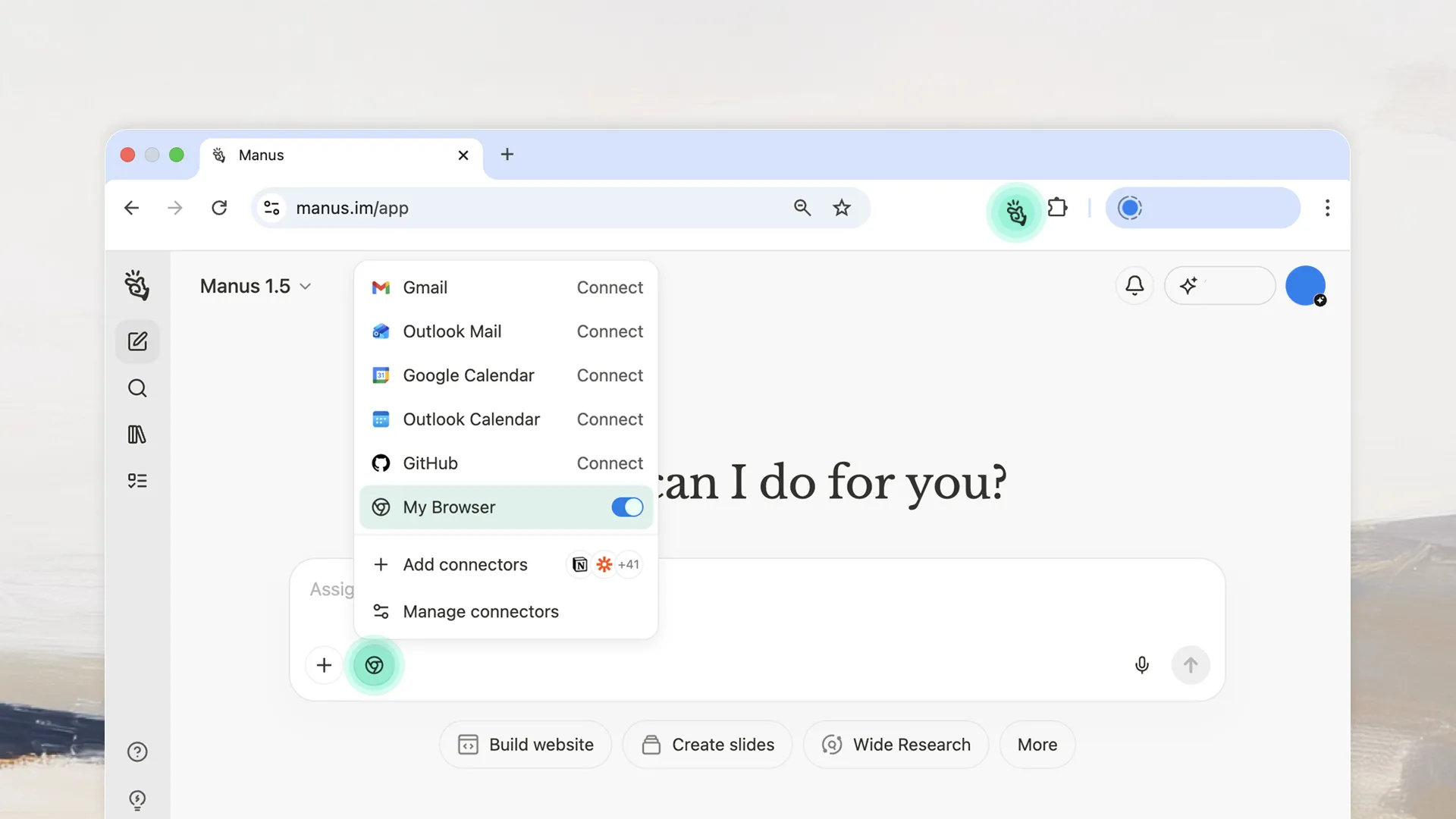
Manus browser extension that lets an agent work in a user's authenticated Chrome or Edge session with visible actions and user interruption controls.
Assign Claude tasks from a phone and have them run through the Claude desktop app, local files, apps, and tools.

Get access to all our AI courses, hundreds of real-world AI use cases, live expert-led workshops, an exclusive network of AI early adopters, and more.
Get unlimited access to all of our current & upcoming industry-specific AI courses for the duration of your subscription.
To keep up with the rapid pace of AI, our team publishes AI implementation guides daily. Our library contains 300+ practical use cases to automate real-world work.
Join weekly, live, interactive sessions with industry leaders who are at the forefront of AI for hands-on implementation guidance and exclusive insights.
Network with an exclusive community of AI-first professionals who are working smarter with AI. Learn how early adopters are using AI in their work and businesses.