Biopharma discovery teams
Commercial teams evaluating computational-first antibody discovery for difficult or previously low-yield targets.
Independent tool overview
Chai-2 is Chai Discovery's generative molecular-design platform for creating de novo antibodies, nanobodies, and miniprotein binders against specified biological targets.
Visit the official Chai-2 site ↗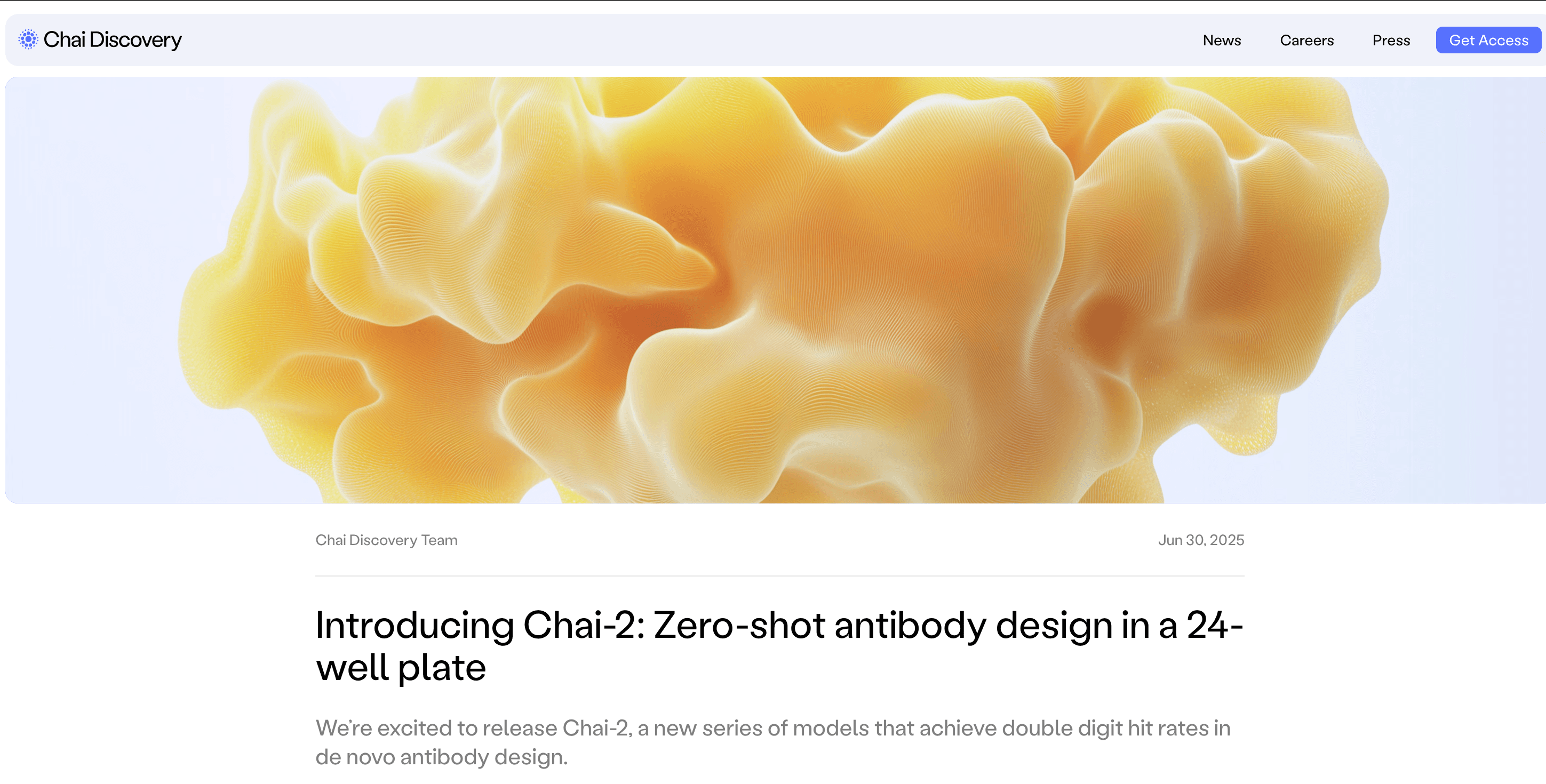
Overview
Chai-2 is a series of AI models for computational protein design. Researchers provide a target structure or sequence and design constraints, and the platform generates novel binders such as full-length monoclonal antibodies, VHH nanobodies, scFv antibodies, or miniproteins. It combines all-atom structure prediction with generative modeling so teams can target particular epitopes, formats, antigen states, chemical modifications, and cross-reactivity requirements.
Chai Discovery's initial study tested no more than 20 designs against each of 52 targets and reported a 16% binding rate overall, with at least one binder found for half of the targets. The company later reported full-length antibodies across challenging targets, including GPCRs and peptide-MHC complexes, along with experimental structural and developability measurements. These are company research results, not proof that every target will produce a viable drug.
Chai-2 is an industry and research platform rather than a consumer app. Commercial organizations request access directly, while limited non-commercial academic access is handled through an interest form. Chai does not publish self-serve pricing, and every computational design still needs rigorous laboratory validation and the normal preclinical and clinical development process.
Use cases
The strongest fit depends on the job you need the product to complete, not the size of its feature list.
Commercial teams evaluating computational-first antibody discovery for difficult or previously low-yield targets.
Researchers who need control over antibody format, framework, epitope, antigen state, or cross-reactivity.
Non-commercial groups with a defined molecular-design problem that fits Chai's limited access program.
Capabilities
Generates novel binders for a target without starting from an existing target-specific antibody or relying on massive screening libraries.
Supports full-length monoclonal antibodies, VH-VL and scFv formats, VHH nanobodies, and miniprotein binders.
Lets researchers select a target epitope or allow the model to choose, including small, buried, or weakly immunogenic regions.
Can work from public or private structures, or from a target sequence paired with a predicted structure.
Supports format and framework choices, antigen-state targeting, species specificity, ortholog selectivity, and planned cross-reactivity.
Can reason about target structures that include bound ligands or post-translational modifications such as glycans.
Process
Step 1
Provide a structure or sequence and specify the biological target, intended mechanism, and available experimental context.
Step 2
Choose the molecular format, framework, epitope, antigen state, specificity, cross-reactivity, and other program requirements.
Step 3
Use Chai-2 to create and rank novel molecular designs that meet the computational objectives.
Step 4
Synthesize a selected set and test binding, specificity, function, stability, manufacturability, and other relevant properties.
Step 5
Only candidates supported by experimental evidence move into optimization, preclinical assessment, and the broader drug-development process.
Cost
Chai Discovery does not publish Chai-2 prices. Commercial access is arranged directly, and limited non-commercial academic access requires an approved request.
Contact for pricing
Access for pharmaceutical, biotechnology, and other commercial research organizations.
Limited access by request
A non-commercial access program for selected academic research use cases.
Pricing checked . Check current pricing at the source ↗
Assessment
Compare
The right alternative depends on the specific output, workflow, controls and budget your project requires.
Science
Claude Science supports broader scientific analysis and research workflows, but it is not a dedicated de novo molecular-design platform.
Explore Claude Science →Science
SciSpace BioMed Agent is aimed at biomedical literature, multi-omics, phenotype, and protocol reasoning rather than generating antibody structures.
Explore SciSpace BioMed Agent →Science
Edison Analysis helps scientists analyze evidence and research data, making it complementary to experimental validation rather than a direct Chai-2 replacement.
Explore Edison Analysis →Questions
Chai-2 is Chai Discovery's series of generative models for designing novel antibodies, nanobodies, and miniprotein binders against specified biological targets.
Structure prediction is part of the system, but Chai-2 goes further by generating new molecular binders under specified structural and biological constraints.
Chai lists full-length monoclonal antibodies, VH-VL and scFv formats, and VHH nanobodies, along with miniprotein binders.
In its initial 52-target study, Chai reported a 16% binding rate and at least one successful binder for 50% of targets while testing no more than 20 candidates per target. Later company research reported full-length, drug-like antibody leads and experimental structural validation on selected programs.
No. The goal is to reduce the number of designs that need screening, but generated candidates still require synthesis and rigorous wet-lab testing.
Chai says it is making Chai-2 available for limited non-commercial academic use. Researchers must submit an access request and describe their intended use.
Chai does not publish pricing. Commercial organizations schedule a call, while academic teams register for limited access and receive terms directly.
Chai-2 is not presented as an openly downloadable model. Access to the platform is provided selectively to commercial and academic partners.
No. A generated binder is an early research candidate, not an approved therapy. It must pass extensive laboratory, preclinical, regulatory, and clinical evaluation.
Bottom line
Chai-2 is one of the more ambitious specialized AI platforms for de novo antibody discovery, with unusually concrete company-reported wet-lab results and support for therapeutically relevant formats. Its value is highest for experienced biopharma and protein-engineering teams that can design the right experiments and validate every candidate. Selective access, undisclosed pricing, and the distance between an experimental binder and an approved medicine make it unsuitable as a simple plug-and-play research tool.
Visit Chai-2 website ↗
Personal AI for mental health tracking and support.

MedGemma - Google's open models for health AI development

Your personal AI companion for mental well-being.
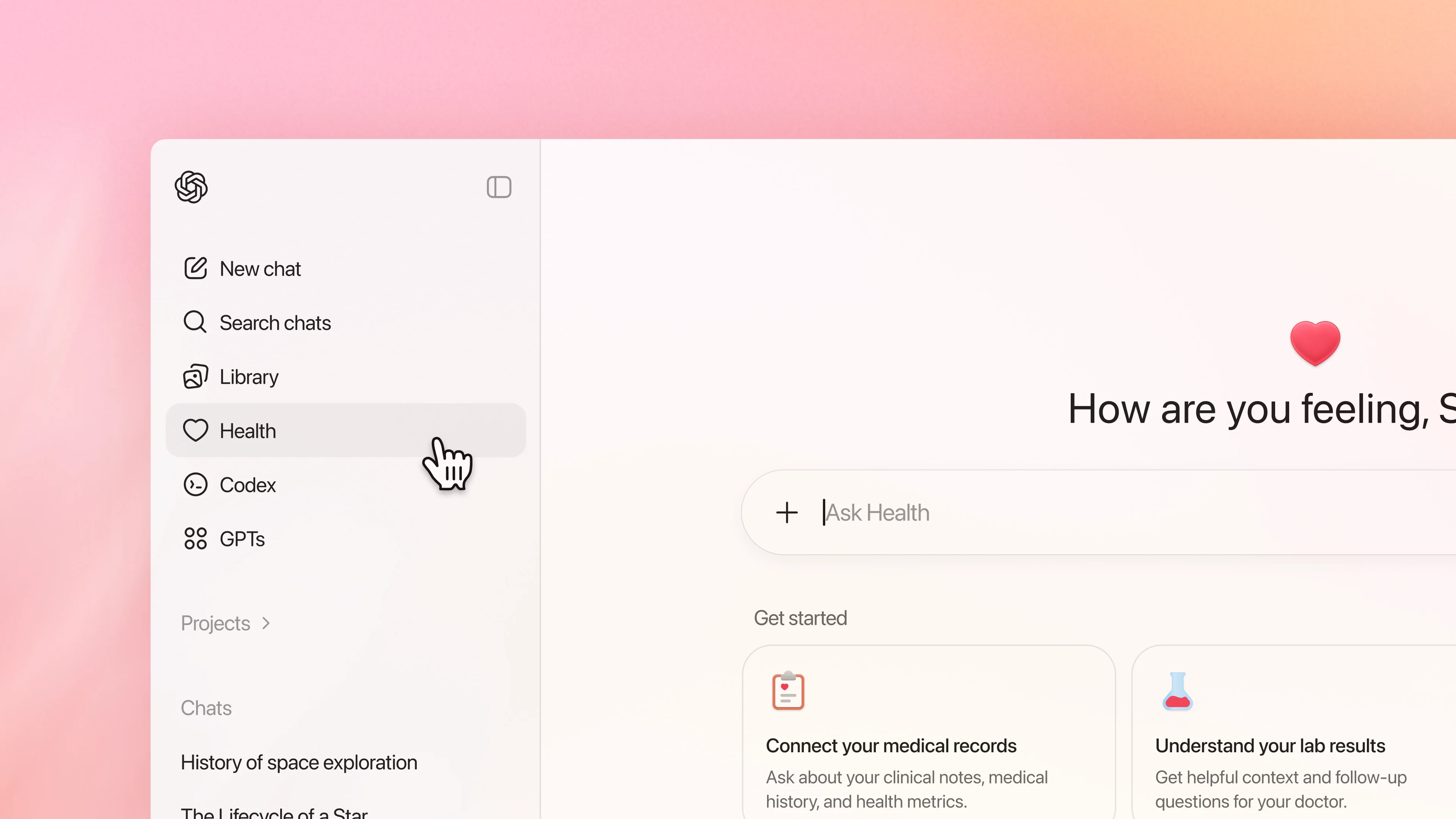
ChatGPT Health - Dedicated, private experience for health conversations within ChatGPT, enabling connecting medical data and wellness apps

Get access to all our AI courses, hundreds of real-world AI use cases, live expert-led workshops, an exclusive network of AI early adopters, and more.
Get unlimited access to all of our current & upcoming industry-specific AI courses for the duration of your subscription.
To keep up with the rapid pace of AI, our team publishes AI implementation guides daily. Our library contains 300+ practical use cases to automate real-world work.
Join weekly, live, interactive sessions with industry leaders who are at the forefront of AI for hands-on implementation guidance and exclusive insights.
Network with an exclusive community of AI-first professionals who are working smarter with AI. Learn how early adopters are using AI in their work and businesses.