Computational biologists
Explore omics, genetics, survival and other research datasets with an agent built around scientific code and notebooks.
Independent tool overview
Edison Analysis is a scientific data-analysis agent that iteratively writes and runs Python, R and Bash inside a Jupyter notebook. It can inspect supplied datasets, retrieve public scientific data, generate figures and return a downloadable, auditable analysis package. It is strongest in computational biology but is designed to generalize to other quantitative research domains.
Visit the official Edison Analysis site ↗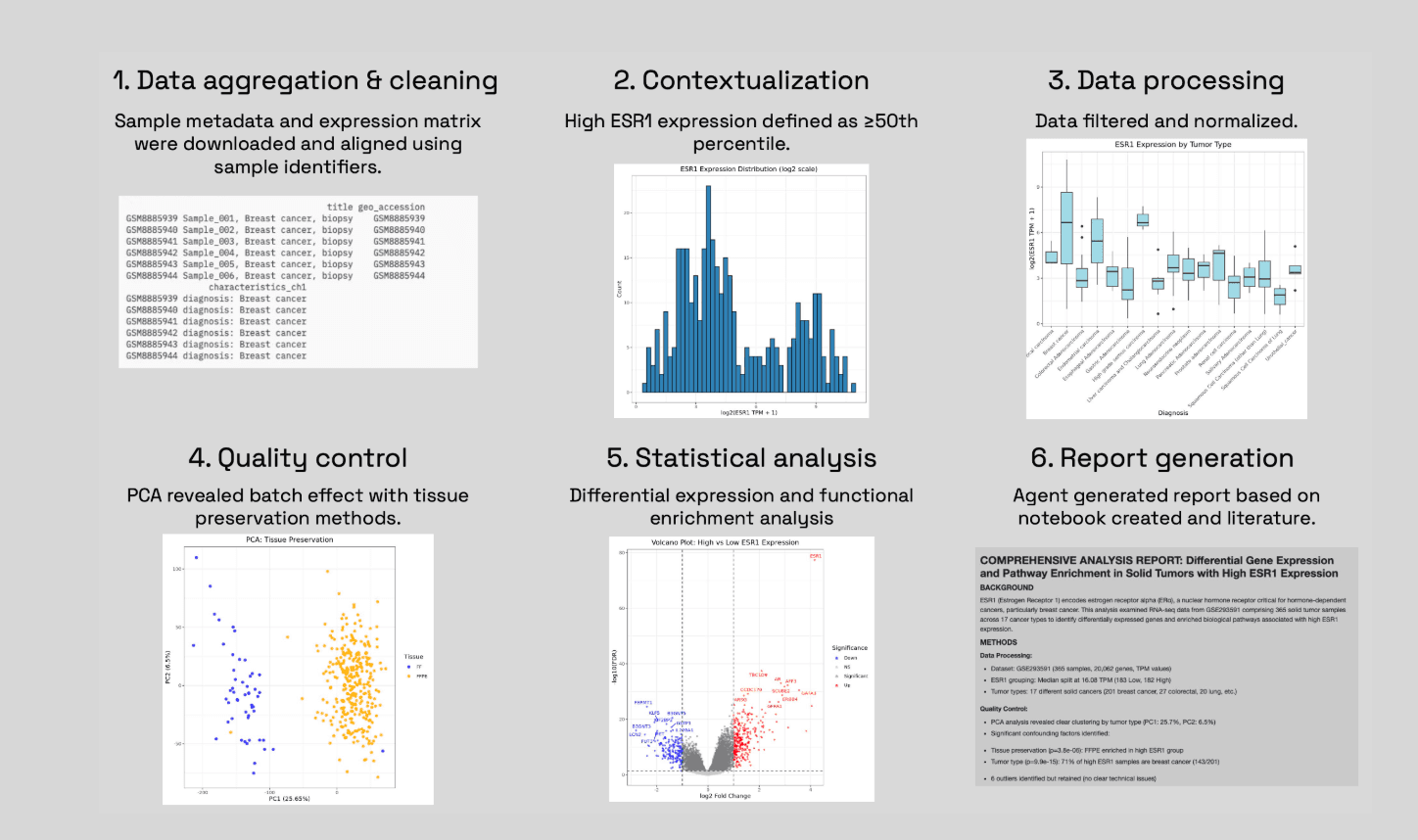
Overview
Edison Analysis is the successor to FutureHouse's Finch agent and the analysis engine used inside Edison's Kosmos AI scientist. A researcher supplies data and a question; the agent explores the files, chooses methods, executes code, revises the notebook and produces a Markdown report and visual summary.
The notebook-first design is the main advantage. Users can inspect the exact code, parameters and transformations, ask follow-up questions, or download the notebook and associated data for local validation and extension. A specialized retrieval tool connects to frequently used scientific repositories and can construct API requests for other data sources.
This is an analysis accelerator, not an autonomous source of scientific truth. Edison's launch evaluation reported 46% overall accuracy on BixBench, even while outperforming the compared systems. Every data choice, statistical assumption, failed step and conclusion still needs review by a qualified researcher.
Use cases
The strongest fit depends on the job you need the product to complete, not the size of its feature list.
Explore omics, genetics, survival and other research datasets with an agent built around scientific code and notebooks.
Generate a first-pass pipeline and report that a domain expert can inspect, correct and extend.
Keep code, parameters, intermediate steps, figures and narrative in a downloadable notebook rather than an opaque chat response.
Find and retrieve relevant public datasets before handing a selected source into deeper analysis or Kosmos.
Capabilities
Build and revise notebook cells as the agent explores data, tests methods and reacts to intermediate results.
Use the language and command-line tools appropriate to the scientific task instead of limiting work to a chat sandbox.
Search common repositories such as Zenodo and the Protein Data Bank through specialized connectors or constructed API queries.
Run inside a dedicated Docker image containing frequently used data-analysis packages.
Return the editable notebook, Markdown report, figure and supporting data for independent review.
Use the agent interactively in Edison's public research playground or integrate it programmatically through the API.
Process
Step 1
Specify the biological or quantitative objective, expected output, valid comparisons and unacceptable assumptions.
Step 2
Upload clean source files with a data dictionary, provenance, experimental design and known quality issues.
Step 3
State required covariates, statistical thresholds, multiple-testing correction, batch handling and validation criteria.
Step 4
Allow iterative exploration and code execution while preserving logs and generated artifacts.
Step 5
Inspect retrieval sources, sample exclusions, transformations, model assumptions, parameters, warnings and negative results.
Step 6
Download the notebook and data, rerun the analysis in a controlled environment and refine figures or methods before publication.
Cost
Edison Analysis uses the Edison credit system. Edison stated in June 2026 that its public research agents, including Analysis, remain available in the Edison Playground and that all users receive 10 free credits per month. The company is transitioning away from founding subscriptions and has not published a stable new paid price for Analysis on its public product page; API and enterprise use may be paid.
10 free credits per month
Public interactive access to Edison's core research agents.
Current public price not listed
Higher-volume, programmatic or organizational usage.
Contact Edison
Organizational deployment, data integration and support.
Pricing checked . Check current pricing at the source ↗
Assessment
Compare
The right alternative depends on the specific output, workflow, controls and budget your project requires.
Science
Edison's broader AI scientist for long-horizon objectives that combine literature synthesis, many analysis trajectories and discovery generation.
Explore Kosmos →Data Analysis
A more general and approachable data-analysis assistant for business files, charts and everyday quantitative questions.
Explore Julius AI →Data Analysis
A better fit when the core job is finding, screening and extracting evidence from research papers rather than running scientific code.
Explore Elicit →Questions
Edison Analysis is a scientific analysis agent that writes and runs Python, R and Bash inside an editable Jupyter notebook to answer questions about supplied or retrieved data.
It is the next generation of FutureHouse's Finch analysis agent and is now operated as part of the Edison Scientific platform.
It specializes in bioinformatics but can perform broader quantitative analyses, provided the task, data, packages and domain assumptions fit its environment.
Yes. Its search-and-retrieve tool connects to common scientific sources and can construct requests for additional documented APIs.
Yes. Edison says users can download the generated notebook and associated data to inspect, reproduce or extend the work locally.
All users currently receive 10 free Edison Playground credits per month. Edison has not published a stable new paid Analysis price on the public product page during its subscription transition.
Yes. The launch announcement says Edison Analysis is available on the platform and through the Edison API.
Edison reported 46% overall accuracy on its launch BixBench evaluation. That result led the compared agents but also means users must expect and catch substantial errors.
No. It can accelerate retrieval, coding and exploratory analysis, but a qualified scientist must validate methods, data handling, statistics and scientific interpretation.
Bottom line
Edison Analysis is one of the more credible scientific analysis agents because it returns an inspectable notebook instead of only a confident narrative. That makes it valuable for first-pass bioinformatics, dataset discovery and reproducible handoffs. Its own benchmark results also justify caution: use it to accelerate expert work, never to bypass scientific, statistical or data-governance review.
Visit Edison Analysis website ↗
Google's AI map of every possible human DNA mutation
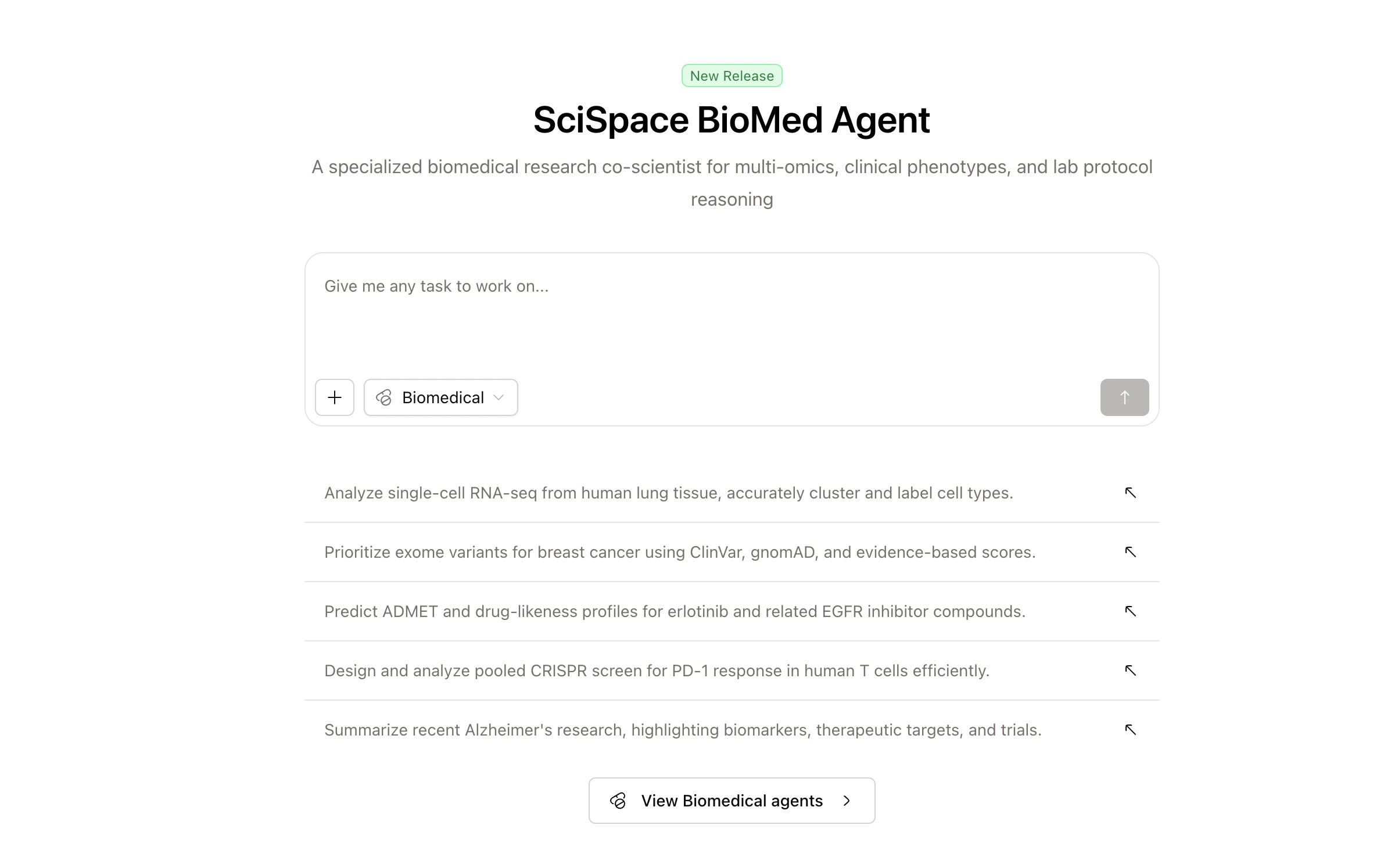
SciSpace BioMed Agent - A specialized biomedical research co-scientist for multi-omics, clinical phenotypes, and lab protocol reasoning
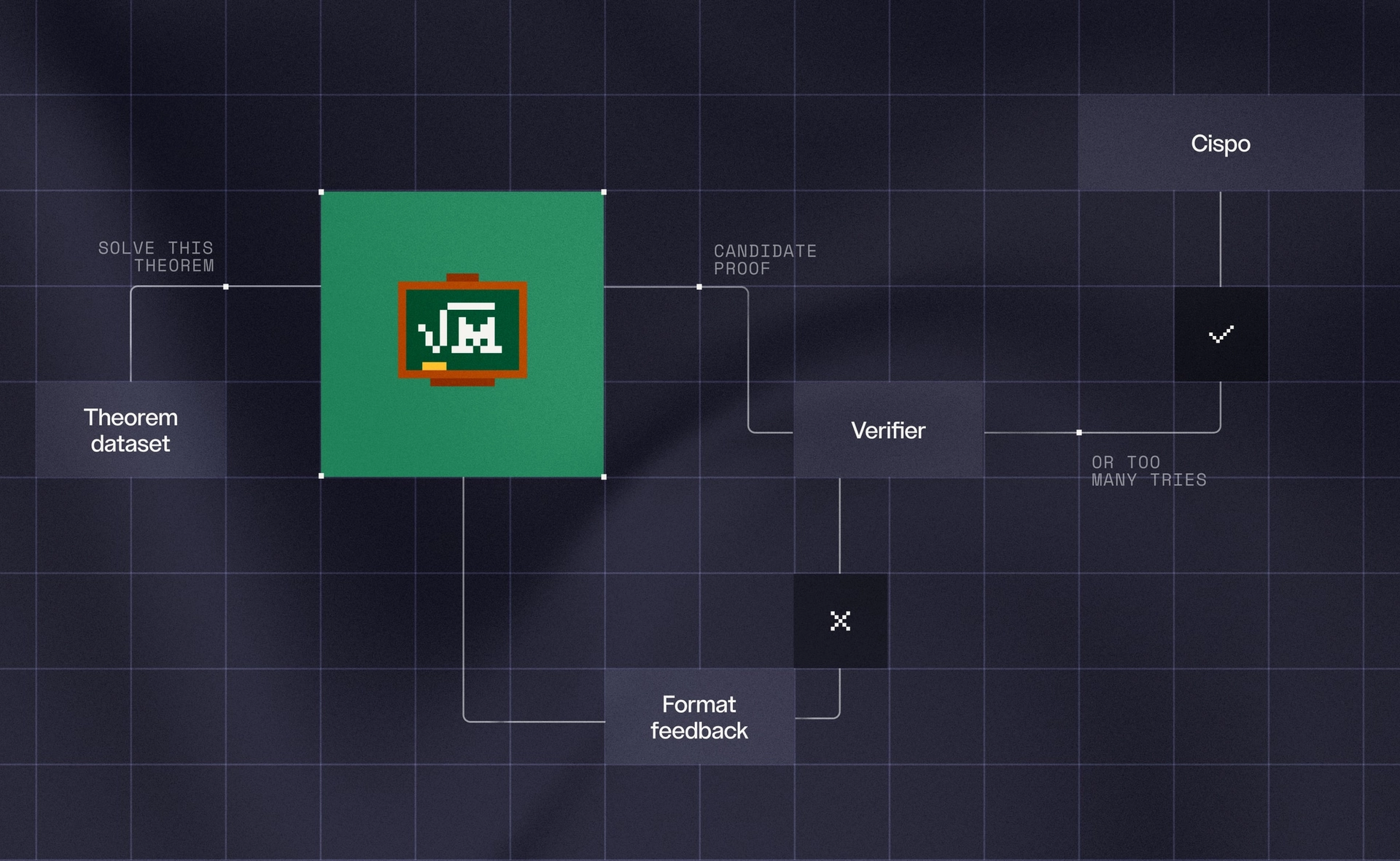
Leanstral 1.5 - Mistral's open model for writing verified math proofs

Nomos 1 - Nous Research’s powerful open-source AI math reasoning system

Get access to all our AI courses, hundreds of real-world AI use cases, live expert-led workshops, an exclusive network of AI early adopters, and more.
Get unlimited access to all of our current & upcoming industry-specific AI courses for the duration of your subscription.
To keep up with the rapid pace of AI, our team publishes AI implementation guides daily. Our library contains 300+ practical use cases to automate real-world work.
Join weekly, live, interactive sessions with industry leaders who are at the forefront of AI for hands-on implementation guidance and exclusive insights.
Network with an exclusive community of AI-first professionals who are working smarter with AI. Learn how early adopters are using AI in their work and businesses.