Existing Sonic 3 applications
Keep a validated production voice stable while planning and testing a deliberate move to Sonic 3.6.
Independent tool overview
Sonic 3 is Cartesia's still-supported low-latency text-to-speech model for voice agents and real-time applications, but Sonic 3.6 is now the company's recommended model for new deployments.
Visit the official Sonic 3 site ↗
Overview
Sonic 3 is a streaming text-to-speech model built for conversational agents, narration, dubbing and other applications that need speech to begin quickly. It supports 42 languages, voice cloning, pronunciation dictionaries and API controls for speed, volume and emotion.
The model remains available through the stable `sonic-3` alias and the immutable `sonic-3-2026-01-12` snapshot. Cartesia now lists Sonic 3 among its older compatibility models and recommends Sonic 3.6 for better naturalness, two additional languages and new production work.
Existing teams may reasonably keep Sonic 3 when they have validated its exact output, rely on its specific controls or need to avoid an untested voice change. New teams should evaluate Sonic 3.6 first and pin a dated snapshot once they have approved voice quality, pronunciation and latency.
Use cases
The strongest fit depends on the job you need the product to complete, not the size of its feature list.
Keep a validated production voice stable while planning and testing a deliberate move to Sonic 3.6.
Stream speech over WebSocket with timestamps and continuations for interactive support, sales or assistant experiences.
Use custom pronunciations plus speed, volume, pauses and experimental emotion guidance when a script needs explicit delivery controls.
Generate speech in 42 supported languages through one API and reuse compatible library or cloned voices.
Capabilities
Produces audio incrementally for applications where playback should begin before the full utterance is generated.
Use a bytes response for simple audio streaming, SSE when HTTP timestamps are useful, or WebSocket for timestamps, continuations and multiple generations on one connection.
Covers major European and Asian languages plus Arabic, Hebrew, Bengali, Tamil, Telugu and other multilingual markets.
Select a Cartesia voice or use an eligible plan to create an instant or professional voice clone, subject to consent and usage rules.
Guide speed, volume and emotion through generation parameters or SSML-like tags; Cartesia describes emotion control as experimental.
Define replacements for names, brands, technical terms and other words that require consistent pronunciation.
Process
Step 1
Use Sonic 3 only when compatibility or its evaluated behavior matters; begin new model comparisons with Sonic 3.6.
Step 2
Test several library voices or an authorized clone against real transcripts, accents, phone audio and edge cases rather than a short demo phrase.
Step 3
Use bytes for a straightforward response, SSE for timestamps over HTTP, or WebSocket for long-lived conversational streaming and continuations.
Step 4
Pass the correct language code and build a pronunciation dictionary for names, products, abbreviations and domain-specific vocabulary.
Step 5
Pin an immutable dated snapshot after evaluation, measure time to first audio and failure rate, and rerun listening tests before migrating models.
Cost
Cartesia sells monthly platform credits rather than a separate Sonic 3 subscription. Current public plan estimates are presented for Sonic 3.6, the recommended model, so teams retaining Sonic 3 should confirm their actual credit usage in the dashboard. Commercial use begins on the $5 per month Pro plan.
$0/month
For development, evaluation and noncommercial experiments.
$5/month
For small commercial applications and instant voice cloning.
$49/month
For production applications that need more volume and organization features.
$299/month
For higher-volume production and greater concurrency.
Custom
For negotiated volume, compliance and deployment requirements.
Pricing checked . Check current pricing at the source ↗
Assessment
Compare
The right alternative depends on the specific output, workflow, controls and budget your project requires.
Content Creator
Consider Eleven v3 when expressive performance and audio-content creation matter more than retaining a Cartesia-compatible real-time stack.
Explore Eleven v3 →Marketing
Choose ElevenLabs for a broader voice platform with mature creator tools, dubbing and a large voice ecosystem.
Explore ElevenLabs →Consumer
Consider Qwen3-TTS when an open-weight multilingual model and self-hosting flexibility are more important than a managed low-latency API.
Explore Qwen3-TTS CustomVoice 1.7B →Content Creator
Consider VibeVoice for open-source experimentation with streaming and long-form, multi-speaker speech.
Explore VibeVoice →Questions
Yes. Cartesia still serves the `sonic-3` model and lists `sonic-3-2026-01-12` as a stable snapshot, but it categorizes Sonic 3 as an older compatibility model.
Sonic 3.6 is Cartesia's current generally available model and the company's recommendation for new work. It supports 44 languages and is designed to improve naturalness, pacing and pronunciation.
New projects should evaluate Sonic 3.6 first. Existing deployments should compare both models on real transcripts and voices, then migrate only after latency, pronunciation, interruption handling and audio quality meet their requirements.
Sonic 3 supports 42 languages. Sonic 3.6 adds Odia and Urdu for a total of 44.
Cartesia supports instant and professional voice-cloning workflows on eligible plans. Only clone a voice when you have clear permission from the speaker and the intended use complies with Cartesia's terms.
Use the bytes endpoint for simple streamed audio, SSE when you need timestamps over HTTP, and WebSocket when you need timestamps, continuations or many generations on one persistent connection.
Bottom line
Sonic 3 remains a practical compatibility choice for production systems that have already evaluated its voices and depend on its behavior or controls. It is not the default recommendation for a new build: test Sonic 3.6 first, pin a dated snapshot after approval and keep Sonic 3 only when a measured requirement justifies it.
Visit Sonic 3 website ↗
Hailuo 2.3 - MiniMax's new AI video model with upgraded movement, realism, and expression

LTX-2-Fast
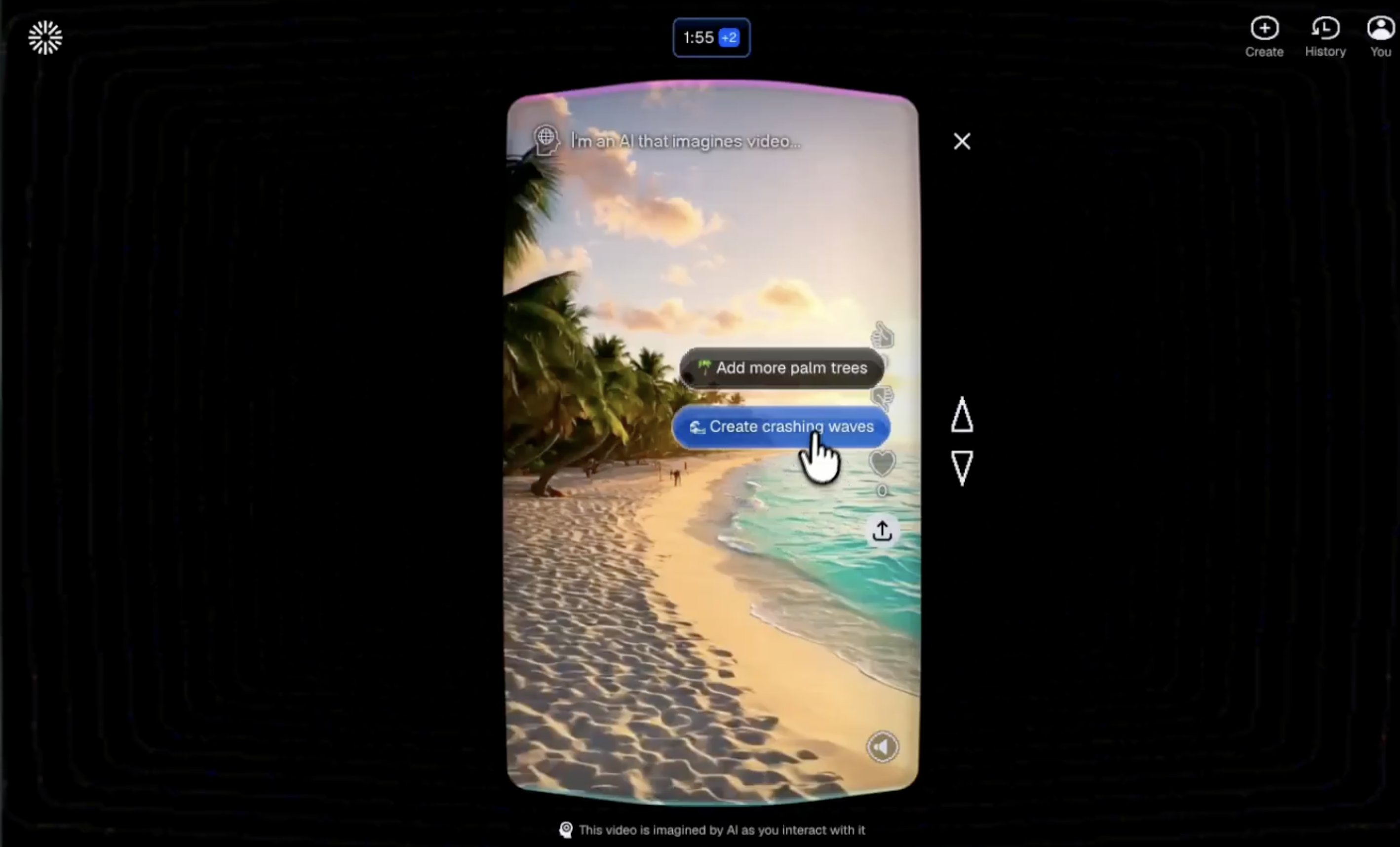
Odyssey 2 - Instant, interactive AI video
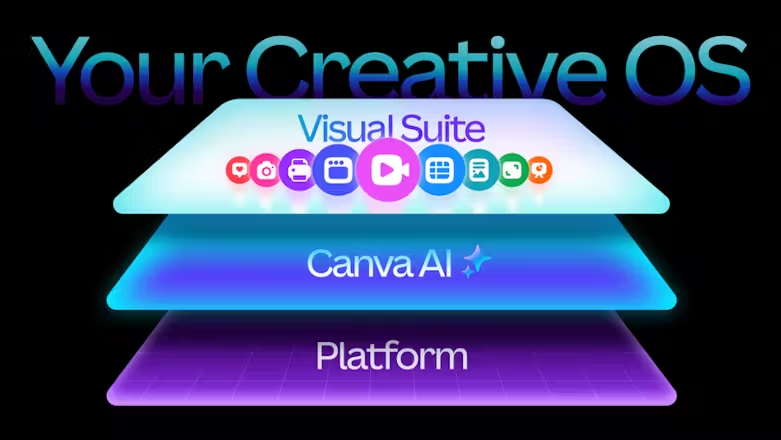
Canva Creative Operating System - A supercharged Visual Suite with a design-focused AI model, video tools, marketing upgrades, and more.

Get access to all our AI courses, hundreds of real-world AI use cases, live expert-led workshops, an exclusive network of AI early adopters, and more.
Get unlimited access to all of our current & upcoming industry-specific AI courses for the duration of your subscription.
To keep up with the rapid pace of AI, our team publishes AI implementation guides daily. Our library contains 300+ practical use cases to automate real-world work.
Join weekly, live, interactive sessions with industry leaders who are at the forefront of AI for hands-on implementation guidance and exclusive insights.
Network with an exclusive community of AI-first professionals who are working smarter with AI. Learn how early adopters are using AI in their work and businesses.