Rapid multimodal prototypes
Combine text, image, audio and video models into a testable workflow before investing in custom orchestration.
Independent tool overview
Scade is a no-code platform for chaining hosted AI models and utility nodes into workflows, agents and web apps, then running those flows manually or through a unified API.
Visit the official Scade site ↗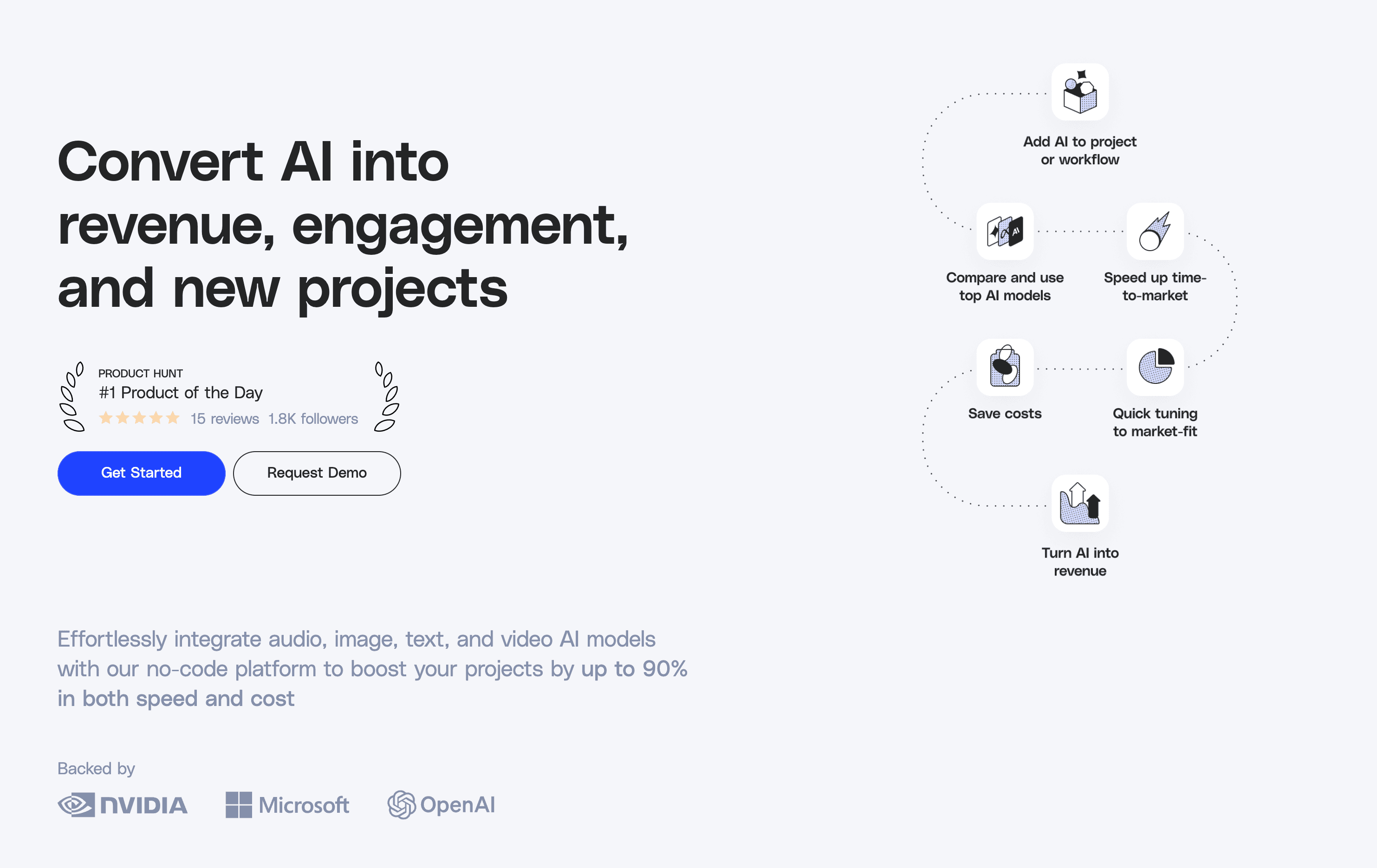
Overview
Scade is aimed at marketers, creators and product teams that want to combine many AI providers without wiring every model API themselves. Its visual builder connects model, code, logic and media-processing nodes into an executable flow.
Users can begin with templates, compare models in a playground, add private knowledge or LoRA training, publish an app and expose a finished flow through one asynchronous API pattern. Scade advertises more than 1,500 reviewed models across text, image, audio and video.
The convenience creates another operational layer between the customer and underlying providers. Production users should test every node, track credit spend, secure API credentials, document where data goes and require human approval before an agent performs consequential actions.
Use cases
The strongest fit depends on the job you need the product to complete, not the size of its feature list.
Combine text, image, audio and video models into a testable workflow before investing in custom orchestration.
Adapt templates for briefs, product images, competitive research, faceless video and repurposing with human review.
Route the same input through multiple models and inspect output, latency and node-level credit cost in one workspace.
Capabilities
Connects model, code, logic and utility nodes on a canvas, with variables passed between each step.
Provides editable starting points for image, video, research, document and marketing workflows.
Offers hosted access to models from providers such as OpenAI, Anthropic, Perplexity and ElevenLabs plus image and media tools.
Shows execution state, time and cost at the node or flow level so builders can identify failures and expensive steps.
Supports agent workflows, private knowledge and specialized content automation on eligible configurations.
Turns a tested Scade flow into a shareable web app or a feature connected to another web or mobile product.
Starts a published flow with one endpoint and retrieves the result through a separate task-status request.
Process
Step 1
Define the allowed inputs, required output, quality checks, budget and actions that must always stay behind human approval.
Step 2
Start from a template or connect a Start node, chosen processors and a clear End node on a blank canvas.
Step 3
Run normal, malformed, adversarial and provider-failure cases while checking output, latency and credit cost at each node.
Step 4
Use least-privilege credentials, keep Scade server keys out of client code and identify every provider that receives sensitive data.
Step 5
Publish only after adding rate limits, spend alerts, logs, retries, data-retention rules, incident handling and human approval for write actions.
Cost
Scade uses subscription credits for flows, apps, the playground and agents, with optional top-ups and bring-your-own provider keys. Its public pricing page did not expose current plan prices or allowances in readable text during this review, so verify the signed-in billing screen before purchase.
$0 to start
Try templates and the builder without a credit card, subject to the current free-credit allowance.
Shown in account
Recurring plan with a monthly credit allocation and plan-specific capabilities.
Usage-based
Purchased credit pool used after the monthly allocation.
Provider charges apply
Route supported nodes through an existing provider account to reduce Scade credit use.
Pricing checked . Check current pricing at the source ↗
Assessment
Compare
The right alternative depends on the specific output, workflow, controls and budget your project requires.
Business Operations
Consider n8n when general-purpose workflow automation, self-hosting and broader application integrations matter more than a curated AI-model catalog.
Explore n8n →Business Operations
Consider Zapier for a mature no-code automation ecosystem spanning thousands of business applications.
Explore Zapier →Agents
Consider Zapier Agents when autonomous work across established app connectors is the primary requirement.
Explore Zapier Agents →Coding
Consider Replicate when developers want direct hosted-model APIs and per-run pricing without a visual business-workflow layer.
Explore Replicate →Questions
Scade.pro is a no-code platform for connecting hosted AI models, code and utility nodes into workflows, agents and deployable applications.
Yes. The live product and pricing pages remained available during this August 31, 2026 review and the homepage actively promotes agents, templates, workflows and API integration.
Scade starts free and uses subscription credits plus optional top-ups. The public page did not expose reliable current plan amounts in readable text, so check the signed-in Billing and Usage screen before purchasing.
Each node consumes credits based on the underlying model, input, output and media size. Subscription credits reset monthly; purchased credits remain until used.
The knowledge base says supported services can use a customer's existing API key, reducing Scade credit usage while shifting charges and terms to that provider.
Yes. A published flow can be started through Scade's unified API and its result retrieved by task ID. The server key should be stored only in a secured backend.
It can power a production feature, but teams still need rate limits, monitoring, retries, data controls, version tests, incident handling and a migration plan for platform or provider changes.
Do not assume so from a model or platform label alone. Map every processor, obtain current Scade and provider terms, minimize inputs, define retention and avoid regulated or confidential data until security and legal review is complete.
Bottom line
Scade is attractive for quickly prototyping a multimodel workflow and exposing it through one API. Its production value depends on disciplined testing, cost accounting, provider-level data review and approval gates; buyers should obtain current in-app pricing and enterprise terms before relying on it for sensitive or consequential work.
Visit Scade website ↗
Get access to all our AI courses, hundreds of real-world AI use cases, live expert-led workshops, an exclusive network of AI early adopters, and more.
Get unlimited access to all of our current & upcoming industry-specific AI courses for the duration of your subscription.
To keep up with the rapid pace of AI, our team publishes AI implementation guides daily. Our library contains 300+ practical use cases to automate real-world work.
Join weekly, live, interactive sessions with industry leaders who are at the forefront of AI for hands-on implementation guidance and exclusive insights.
Network with an exclusive community of AI-first professionals who are working smarter with AI. Learn how early adopters are using AI in their work and businesses.


.png)
