Community banks and credit unions
Institutions can add conversational transaction workflows without positioning the AI as an ungoverned replacement for the core banking system.
Independent tool overview
Payman AI is an enterprise agentic banking platform for banks and credit unions that want AI agents to understand customer intent and execute controlled payments, transfers, account services, and other financial actions.
Visit the official Payman site ↗.avif&w=3840&q=75)
Overview
Payman AI originally attracted attention around AI agents paying people for work. Its current product has moved decisively toward agentic banking: deploying conversational agents inside banks and credit unions that can complete financial actions rather than only answer questions.
The platform sits between the customer experience and a financial institution's core systems. An AI agent interprets a request and plans the work, while a separate policy layer checks limits, permissions, payees, approvals, and other deterministic rules before authenticated banking APIs execute a transaction.
Payman is an enterprise implementation, not a self-serve consumer finance app. The current site asks institutions to schedule a demo and does not publish plan prices. Any evaluation should therefore cover integration scope, regulatory obligations, model risk, fraud controls, incident response, data isolation, auditability, and total deployment cost.
Use cases
The strongest fit depends on the job you need the product to complete, not the size of its feature list.
Institutions can add conversational transaction workflows without positioning the AI as an ungoverned replacement for the core banking system.
The platform is designed for natural-language requests that result in internal transfers, bill payments, P2P sends, or other authorized money movement.
Banks can use agent workflows for alerts, card controls, disputes, profile updates, account analysis, and other journeys exposed through their APIs.
The architecture separates probabilistic AI reasoning from immutable transaction rules, approvals, execution, and audit records.
Capabilities
Customers describe an outcome in natural language, and the agent extracts the action, entities, amounts, accounts, and required steps.
Transaction thresholds, approved payees, required documents, confirmations, and escalation rules are enforced outside the language model.
Approved actions execute against core banking services using the customer's authenticated session and the institution's existing controls.
The agent can plan and coordinate sequences for transfers, account services, fraud reports, disputes, alerts, and other supported tasks.
Payman says it records the original request, the agent's interpretation, evaluated policies, approval outcome, and exact transaction result.
The platform describes authentication-gated actions, configurable approval rules, a bank-controlled kill switch, and isolated customer environments.
Payman says it can integrate with established core and digital platforms through existing APIs rather than requiring a full core replacement.
Process
Step 1
Choose the specific payments, account services, analyses, and support journeys the agent may handle.
Step 2
Document authentication, session handling, transaction APIs, records, data boundaries, approvals, and downstream providers.
Step 3
Set transaction limits, payee rules, required confirmation, escalation, separation of duties, and prohibited actions outside the model.
Step 4
Exercise prompt injection, ambiguous intent, compromised accounts, duplicate payments, outages, partial completion, and human handoff.
Step 5
Start with bounded workflows, review audit trails and exceptions, and expand only after operational, compliance, and customer outcomes meet agreed thresholds.
Cost
Payman does not publish self-serve plans or list prices for its current agentic banking platform. Financial institutions must schedule a demo and obtain a proposal based on integration, deployment, security, support, and transaction requirements.
Custom quote
Demo-led pricing for banks and credit unions implementing agentic transaction and account-service workflows.
Pricing checked . Check current pricing at the source ↗
Assessment
Compare
The right alternative depends on the specific output, workflow, controls and budget your project requires.
Finance
Consider Robinhood Agentic Trading for a narrower consumer trading workflow designed for authorized AI-agent access.
Explore Agentic Trading →Finance
Consider Cleo for a consumer-facing conversational finance assistant rather than bank-operated transaction infrastructure.
Explore Cleo →Finance
Consider ChatGPT for Personal Finance for user-directed analysis of connected personal accounts instead of a bank-deployed execution layer.
Explore Finances in ChatGPT →Questions
Payman AI is an enterprise agentic banking platform for banks and credit unions. It helps deploy AI agents that can understand customer intent and execute permitted financial actions under institutional controls.
That was part of Payman's earlier positioning. The current website and product materials focus on agentic banking for financial institutions, not a public human-task marketplace.
Payman says deployed agents can initiate supported transfers, payments, and other banking actions through authenticated APIs after an independent policy layer validates the request. The actual scope depends on each institution's integration and rules.
The documented architecture places deterministic policies between the AI and transaction execution. Institutions can set limits, payee rules, approvals, required confirmations, and escalation conditions that the model cannot override.
Payman does not publish prices for its current enterprise product. Banks and credit unions must schedule a demo and request a custom proposal.
Payman positions its agent and orchestration layer as an integration with existing core and digital banking systems through APIs, rather than a replacement for the ledger or core platform.
Bottom line
Payman is a specialized enterprise option for financial institutions that want conversational AI to complete real banking tasks under explicit controls. Its separation of reasoning, policy, and execution is the right architectural direction for high-risk money movement. The decision cannot be made from marketing pages alone: buyers need a deep technical, security, compliance, model-risk, integration, reconciliation, and total-cost evaluation using their own workflows and failure cases.
Visit Payman website ↗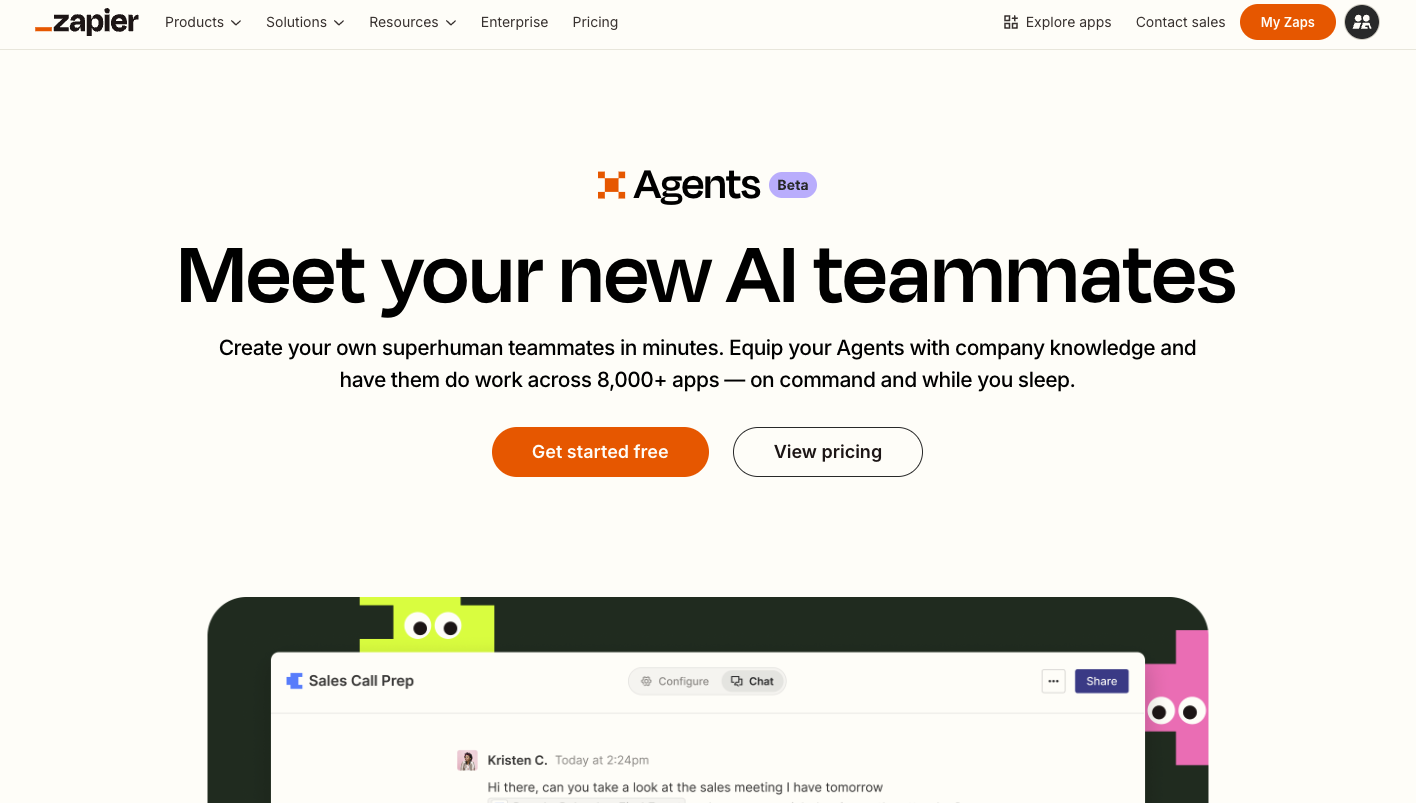
Zapier Agents: Let you delegate tasks to ai-powered agents that run workflows across apps and services.
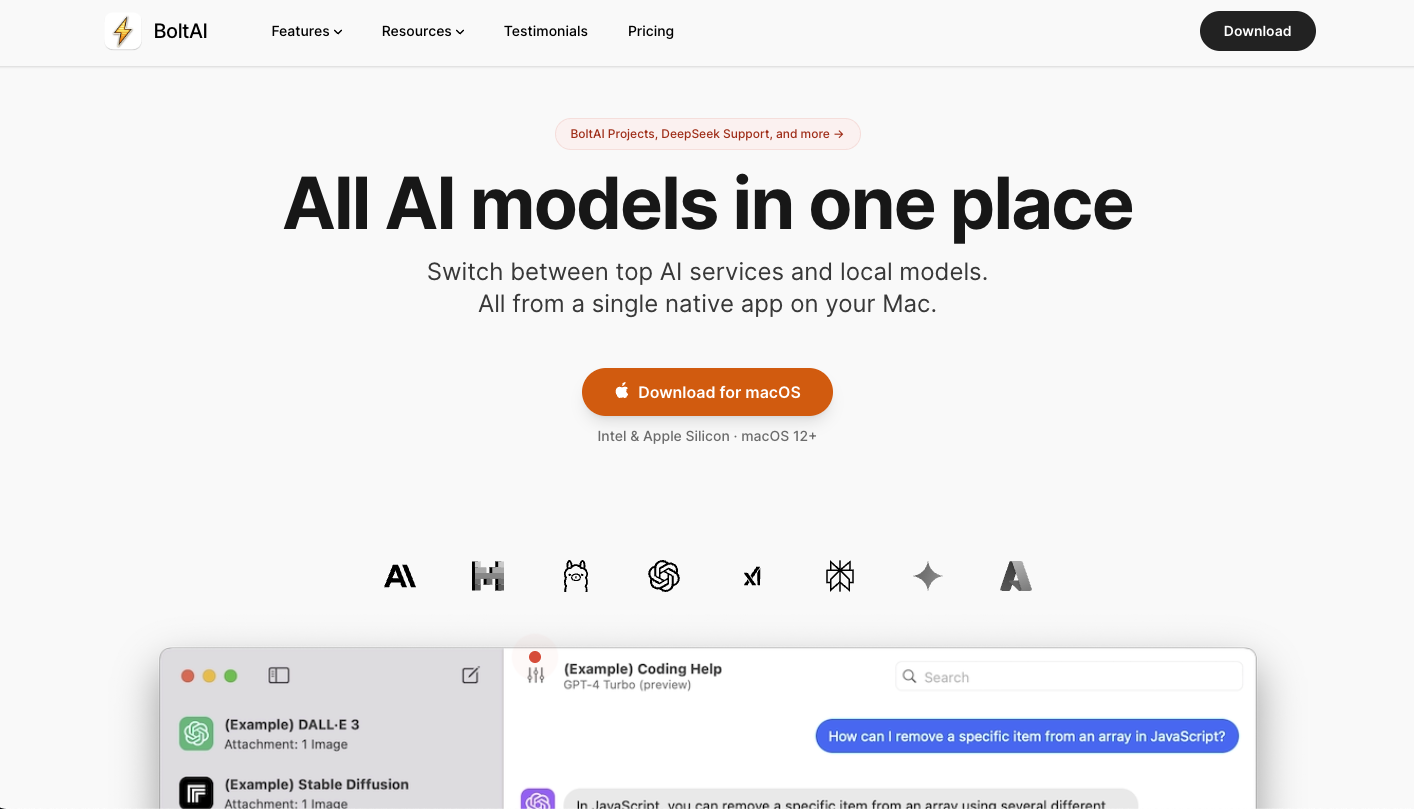
Bolt AI: Brings chatgpt-like functionality into your mac menu bar for quick ai access.

H Company's new computer-use models

Poe: provides instant answers and engaging conversations.

Get access to all our AI courses, hundreds of real-world AI use cases, live expert-led workshops, an exclusive network of AI early adopters, and more.
Get unlimited access to all of our current & upcoming industry-specific AI courses for the duration of your subscription.
To keep up with the rapid pace of AI, our team publishes AI implementation guides daily. Our library contains 300+ practical use cases to automate real-world work.
Join weekly, live, interactive sessions with industry leaders who are at the forefront of AI for hands-on implementation guidance and exclusive insights.
Network with an exclusive community of AI-first professionals who are working smarter with AI. Learn how early adopters are using AI in their work and businesses.