On-device application teams
Build assistants, extraction tools, and agents that need low latency, offline operation, or local data processing on mobile and embedded hardware.
Independent tool overview
LFM2.5 is Liquid AI's expanding family of compact open-weight text, vision, audio, and retrieval models designed to run efficiently on phones, laptops, vehicles, and other edge hardware.
Visit the official LFM 2.5 site ↗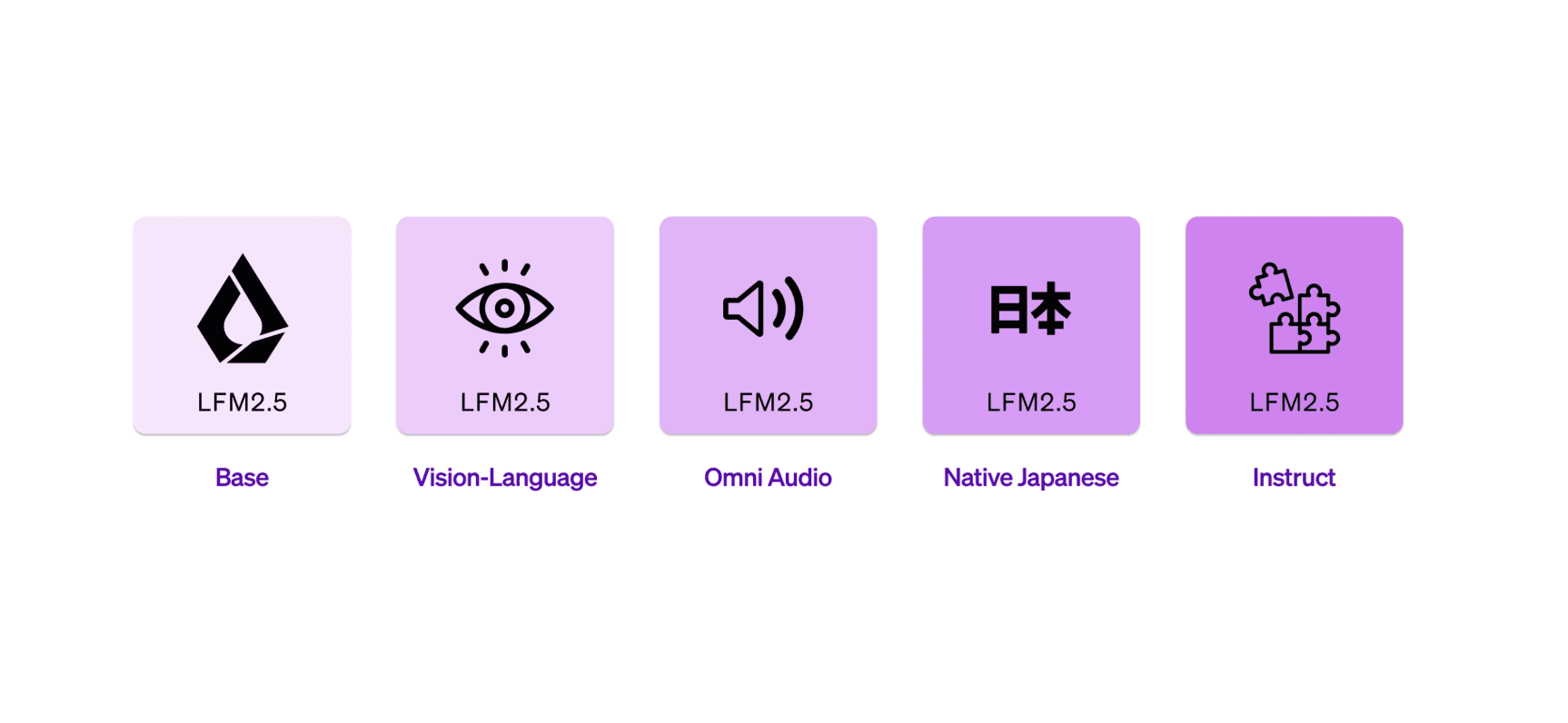
Overview
LFM2.5 is a model family rather than a consumer chatbot. Liquid AI launched it with compact 1.2B-parameter text, vision, audio, and Japanese variants, then expanded the family across smaller and larger text models, vision-language models, encoders, embeddings, and specialized checkpoints.
The central advantage is deployment efficiency. LFM2.5 models are distributed in formats for Transformers, GGUF and llama.cpp, MLX, ONNX, and other runtimes, making them practical for local inference on CPUs, GPUs, and NPUs. This can reduce cloud dependence, latency, and exposure of user data when an application truly runs on-device.
LFM2.5 is best for engineering teams that can evaluate, integrate, and monitor a small model for a defined task. It is not a drop-in replacement for a frontier cloud model across every workload, and the LFM Open License has a commercial revenue threshold that larger organizations must address before deployment.
Use cases
The strongest fit depends on the job you need the product to complete, not the size of its feature list.
Build assistants, extraction tools, and agents that need low latency, offline operation, or local data processing on mobile and embedded hardware.
Keep inference on user-controlled hardware when the product architecture and chosen runtime do not send prompts to a cloud service.
Fine-tune a compact base or instruction model for a narrow domain, language, or structured task.
Deploy useful language, vision, or audio behavior in vehicles, laptops, phones, IoT devices, and other environments with limited compute or memory.
Use instruction and tool-calling variants as components in applications that invoke approved functions without requiring a large hosted model.
Capabilities
Current LFM2.5 releases include text models from 230M through 2.6B parameters, an 8B mixture-of-experts model, vision-language variants, audio models, and retrieval-focused encoders.
The hybrid architecture combines convolution and attention blocks to target faster inference and lower memory use than conventional models of a similar size.
Instruction-tuned checkpoints support chat, structured instruction following, and function calling for agent-like application workflows.
Liquid publishes native, GGUF, MLX, and ONNX checkpoints across much of the family, with support varying by model.
Developers can choose lower-bit GGUF, MLX, or ONNX variants to trade some model quality for smaller storage, memory, and compute requirements.
Liquid's free LEAP platform provides model search, testing, fine-tuning tools, model bundling, and an Edge SDK for local deployment.
The LFM license allows teams below its commercial threshold to keep their fine-tuned derivatives private while retaining required notices.
The family includes native vision-language and audio-language models rather than limiting developers to text-only inference.
Process
Step 1
Start with a measurable use case, target hardware, response-time budget, memory ceiling, privacy requirement, and acceptable failure rate.
Step 2
Compare the smallest text, vision, audio, or retrieval model that supports the task and confirm its context, languages, license, and runtime formats.
Step 3
Test accuracy, latency, prefill speed, decode speed, memory, battery impact, and thermal behavior on the actual device rather than relying on vendor benchmarks alone.
Step 4
Use prompting, retrieval, adapters, fine-tuning, and quantization only where evaluation shows they improve the target task, then create a deployment bundle.
Step 5
Validate tool calls, constrain outputs, handle unsupported requests, and preserve a reliable fallback when the local model is uncertain.
Step 6
Track real-world failures, regression-test new checkpoints, and revisit the license before company revenue or use conditions change.
Cost
Liquid AI makes its open models and LEAP's core features free to use. The LFM Open License permits commercial use at no charge while the user's company remains below $10 million in annual revenue; organizations at or above that threshold need a separate commercial license. Hardware, development, support, and any third-party hosting costs remain separate.
Free below $10M annual revenue
Download, run, fine-tune, and deploy LFM2.5 under the LFM Open License.
Free
The license provides research and qualifying nonprofit allowances without the commercial revenue threshold.
Free
Core model search, fine-tuning, bundling, and Edge SDK capabilities.
Contact sales
Commercial license and deployment support for companies at or above $10 million in annual revenue or teams needing a custom engagement.
Pricing checked . Check current pricing at the source ↗
Assessment
Compare
The right alternative depends on the specific output, workflow, controls and budget your project requires.
Consumer
Google's current open-weight family is a strong alternative when ecosystem breadth and a wider range of reasoning-oriented sizes matter.
Explore Gemma 4 →Coding
Meta's Llama family offers a large deployment ecosystem and many third-party tools, fine-tunes, and hosting options.
Explore Meta Llama Models →Agents
Mistral provides both open-weight and hosted model options for teams that may want to move between self-hosted and managed inference.
Explore Mistral AI →Questions
LFM2.5 is Liquid AI's family of compact open-weight text, vision, audio, and retrieval models designed for efficient deployment on edge devices and conventional servers.
Liquid calls the models open-weight. They can be downloaded, modified, and redistributed under the LFM Open License, but that license includes attribution obligations and a commercial revenue threshold, so it is not identical to a standard permissive software license.
Yes, while your company remains below $10 million in annual revenue and you comply with the LFM Open License. At or above the threshold, commercial use requires a separate license from Liquid AI.
The current family includes compact 230M, 350M, 1.2B, and 2.6B text checkpoints, an 8B mixture-of-experts model, and separate vision, audio, embedding, and encoder variants. Check the live model library because the family continues to expand.
Yes. Liquid targets iOS, Android, and other edge hardware through LEAP and publishes quantized checkpoints for local runtimes. Actual speed and memory use depend on the chosen model, quantization, device, and app.
Selected instruction models support native function calling, but developers still need to validate tool calls and enforce permissions in the surrounding application.
Liquid says LEAP's core model search, fine-tuning, bundling, and Edge SDK features are free. Enterprise support and licensing use custom terms.
Bottom line
LFM2.5 is a strong option when the hard requirement is useful AI within a strict memory, latency, connectivity, or privacy envelope. Its formats and expanding model family make it practical for serious edge evaluation, but teams should treat task accuracy, device performance, and the $10 million commercial threshold as first-class deployment requirements.
Visit LFM 2.5 website ↗
Alexa.com - Amazon's AI assistant experience across voice, mobile, and web

FalconH1R 7B - TII's small hybrid reasoner that outperforms rivals up to 7x its size on math and coding benchmarks while running at double the inference speed.
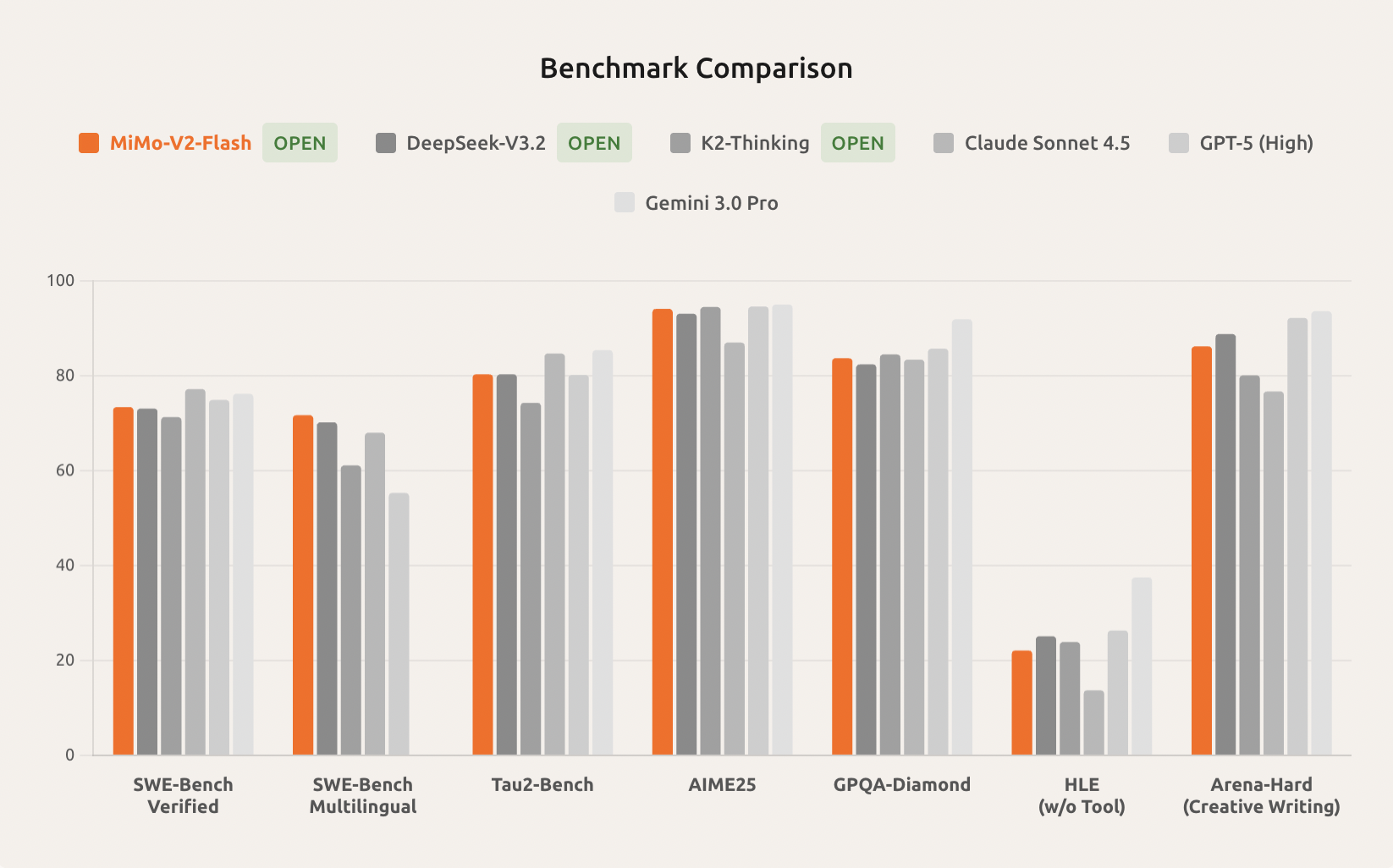
MiMo-V2-Flash - Xiaomi's powerful open-weights reasoning model

Gmail - Google's email inbox, now infused with Gemini for AI-powered insights, actions, and improvements

Get access to all our AI courses, hundreds of real-world AI use cases, live expert-led workshops, an exclusive network of AI early adopters, and more.
Get unlimited access to all of our current & upcoming industry-specific AI courses for the duration of your subscription.
To keep up with the rapid pace of AI, our team publishes AI implementation guides daily. Our library contains 300+ practical use cases to automate real-world work.
Join weekly, live, interactive sessions with industry leaders who are at the forefront of AI for hands-on implementation guidance and exclusive insights.
Network with an exclusive community of AI-first professionals who are working smarter with AI. Learn how early adopters are using AI in their work and businesses.