AI infrastructure teams
Organizations with the GPU capacity and engineering experience to operate a very large open-weight model.
Independent tool overview
MiMo-V2-Flash is Xiaomi's open-weight mixture-of-experts model for reasoning, coding, and agentic workflows, with 309 billion total parameters, 15 billion active parameters, and a 256K-token context window.
Visit the official MiMo-V2-Flash site ↗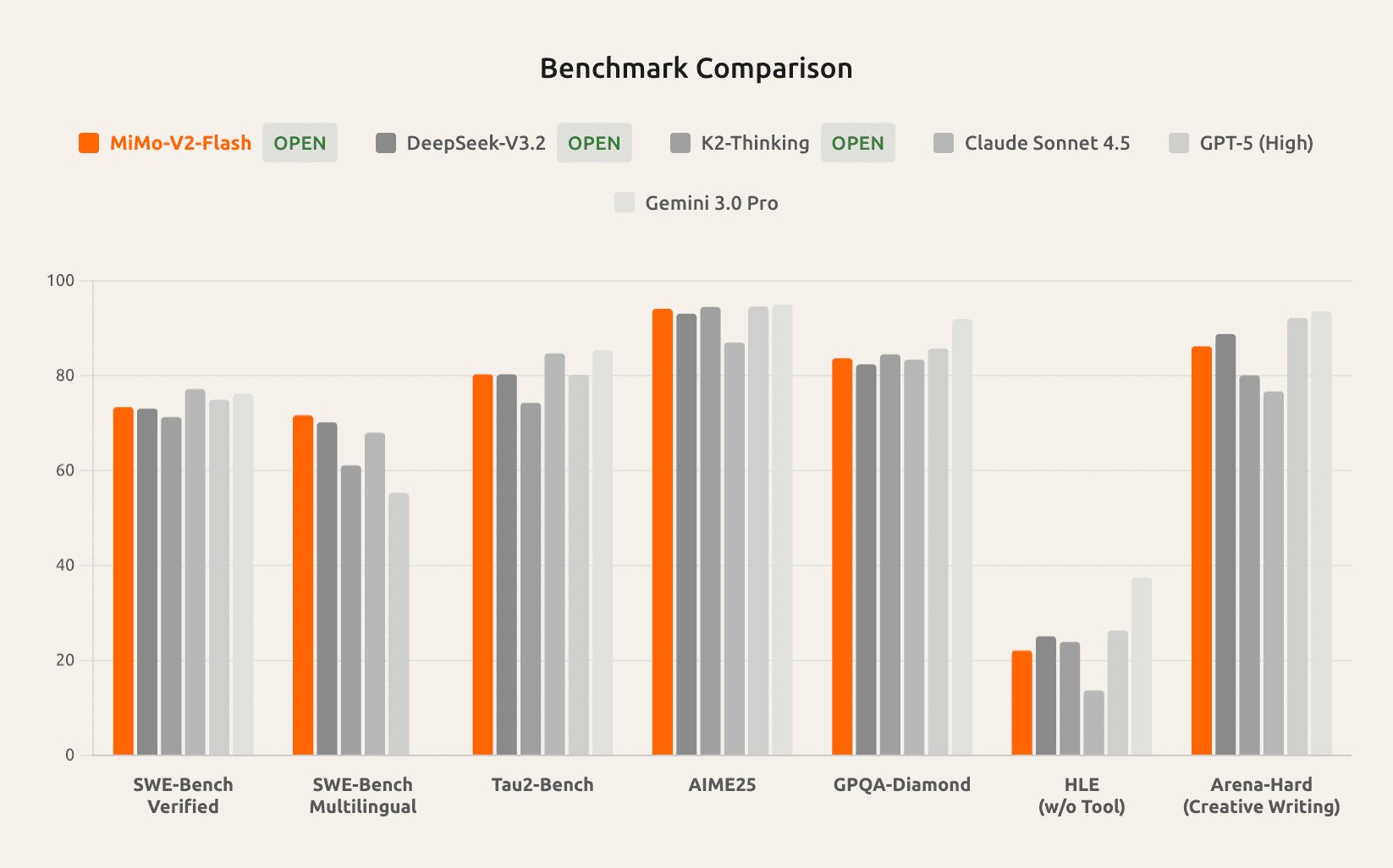
Overview
MiMo-V2-Flash is a large open-weight model from Xiaomi built for reasoning, software development, and tool-using agents. Its mixture-of-experts architecture activates about 15 billion of 309 billion total parameters for each token, aiming to provide high capability without the inference cost of activating the full model.
This is infrastructure for experienced AI teams, not a lightweight model for a typical laptop. The official model files total roughly 313 GB, and Xiaomi's recommended high-throughput serving examples use multi-GPU deployments. Teams can instead access MiMo through Xiaomi's hosted Studio and API platform.
Xiaomi reports strong coding and reasoning benchmark results, including 73.4 on SWE-bench Verified. Those are vendor-reported evaluations; teams should test the model on their own repositories, tools, languages, latency targets, and safety requirements before choosing it for production.
Use cases
The strongest fit depends on the job you need the product to complete, not the size of its feature list.
Organizations with the GPU capacity and engineering experience to operate a very large open-weight model.
Teams building repository-aware assistants, software agents, or automated development workflows.
Products that need multi-turn function calling, long context, and structured interaction with external systems.
Researchers comparing open-weight reasoning models against private workloads and deployment constraints.
Capabilities
The model has 309 billion total parameters while activating about 15 billion per token, balancing capacity with inference efficiency.
A long context window supports large codebases, extended conversations, and document-heavy agent workflows, although longer prompts increase compute and latency.
MiMo-V2-Flash interleaves sliding-window and global attention at a 5:1 ratio; Xiaomi says this reduces key-value cache requirements by nearly six times.
A dedicated prediction module supports self-speculative decoding. Xiaomi reports up to roughly three times faster output in its serving setup.
The model supports reasoning mode, function calls, and multi-turn tool use through OpenAI-compatible serving interfaces.
Teams can download the weights from Hugging Face, serve them with tools such as SGLang or vLLM, or use Xiaomi's hosted Studio and API.
Process
Step 1
Use Xiaomi's hosted platform for a faster start, or self-host when infrastructure control, customization, or data location is more important.
Step 2
Review the controlling model license and your organization's data, security, and acceptable-use requirements before deployment.
Step 3
For self-hosting, download the weights and size GPU memory, storage, networking, quantization, and concurrency for the expected workload.
Step 4
Set sampling parameters for the workload, define function schemas, and retain reasoning_content across messages when using multi-turn tool calls.
Step 5
Measure answer quality, code correctness, tool-call reliability, latency, throughput, and cost using representative internal examples.
Step 6
Apply access controls, prompt-injection defenses, output validation, monitoring, and human approval for consequential actions.
Cost
The model weights can be downloaded without a model fee, but self-hosting requires substantial GPU, storage, and operations capacity. Xiaomi also offers hosted Token Plans; the public platform lists monthly prices of $6, $16, $50, and $100, with lower effective monthly prices on annual billing. Confirm included credits and current model eligibility before purchasing.
Free model download
Download MiMo-V2-Flash from Hugging Face and operate it on your own infrastructure.
$6/month
Entry hosted Token Plan, shown at an effective $5.28 per month with annual billing.
$16/month
Mid-volume hosted plan, shown at an effective $14.08 per month with annual billing.
$50/month
Higher-volume hosted plan, shown at an effective $44 per month with annual billing.
$100/month
Largest public Token Plan, shown at an effective $88 per month with annual billing.
Pricing checked . Check current pricing at the source ↗
Assessment
Compare
The right alternative depends on the specific output, workflow, controls and budget your project requires.
Coding
Consider it when you want an open-weight model focused more narrowly on efficient agentic coding.
Explore Qwen3-Coder-Next →Consumer
Consider it when a smaller open model and more practical deployment footprint matter more than maximum scale.
Explore Mistral 4 Small →Business Operations
Consider DeepSeek when comparing another established family of open reasoning and coding models.
Explore DeepSeek →Questions
It is best described as open weight: Xiaomi publishes the model files and serving guidance. Review the model's controlling license and accompanying terms before commercial or modified use.
Not in its full official form for practical everyday use. The model files are roughly 313 GB, and useful serving generally requires substantial GPU resources. A hosted API is the easier route for most users.
Xiaomi positions it for complex reasoning, coding, and agentic work, including tool calls and long-context tasks. Its actual fit should be tested against your own workload.
Yes. Xiaomi documents tool calling and multi-turn agent use. Applications should preserve reasoning_content in conversation history for multi-turn tool workflows.
It has 309 billion total parameters with about 15 billion active for each token. The downloadable Hugging Face files total roughly 313 GB.
The weights are downloadable without a model fee, but self-hosting infrastructure is costly. Xiaomi's hosted platform lists Token Plans from $6 to $100 per month before annual-billing discounts.
The results in Xiaomi's launch materials are vendor-reported. Treat them as a starting point and run evaluations on your own repositories, prompts, tools, and deployment stack.
Bottom line
MiMo-V2-Flash is a compelling open-weight option for teams that need long-context reasoning, coding, and agent behavior and can support a heavyweight deployment. Most organizations should start through the hosted API, benchmark it on real work, and only self-host when control or economics justify the infrastructure.
Visit MiMo-V2-Flash website ↗
Chatterbox Turbo - Resemble AI's fast, expressive, open-source text-to-speech model
Alexa.com - Amazon's AI assistant experience across voice, mobile, and web
Gemini 3 Flash - Google's powerful, cost-effective frontier reasoning model
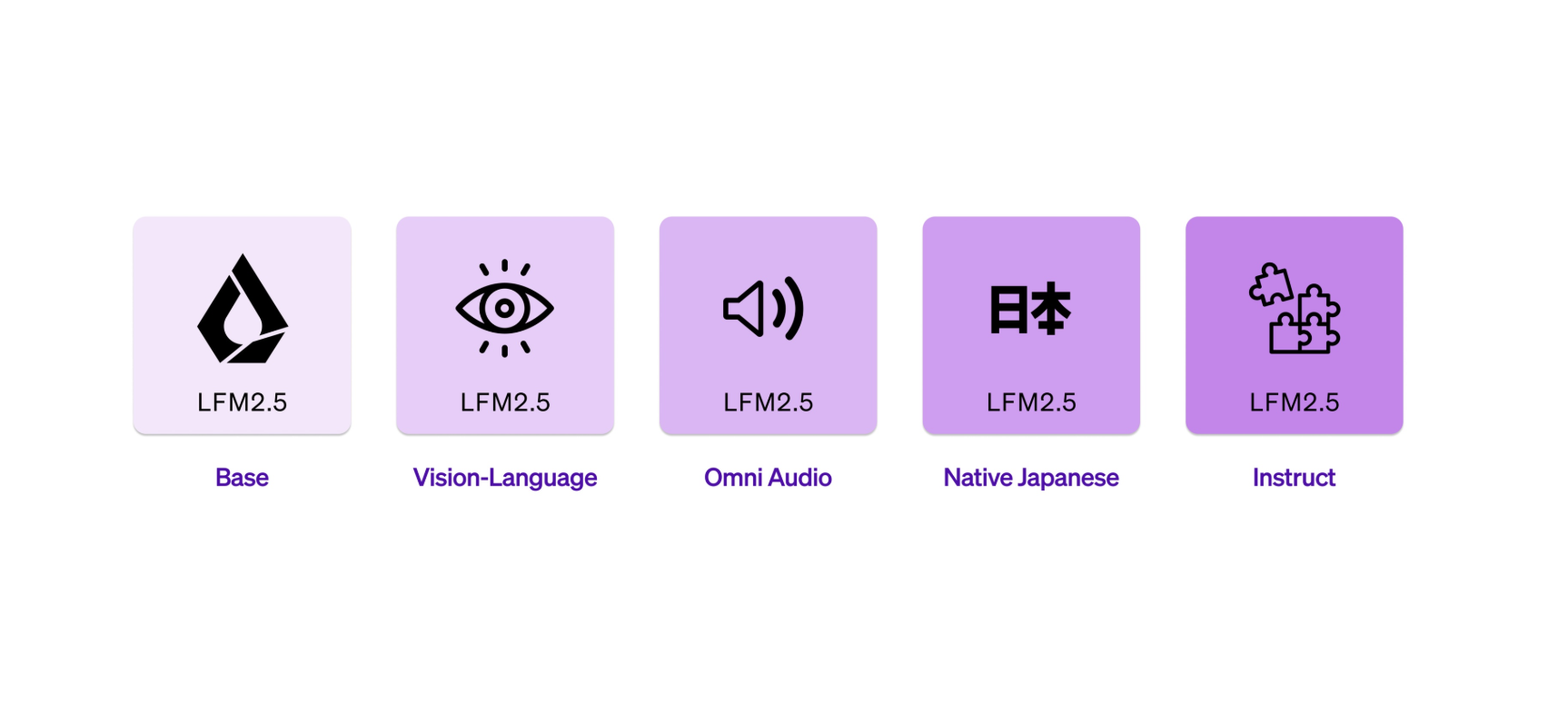
LFM 2.5 - Liquid AI’s new AI model family for on-device speed and efficiency

Get access to all our AI courses, hundreds of real-world AI use cases, live expert-led workshops, an exclusive network of AI early adopters, and more.
Get unlimited access to all of our current & upcoming industry-specific AI courses for the duration of your subscription.
To keep up with the rapid pace of AI, our team publishes AI implementation guides daily. Our library contains 300+ practical use cases to automate real-world work.
Join weekly, live, interactive sessions with industry leaders who are at the forefront of AI for hands-on implementation guidance and exclusive insights.
Network with an exclusive community of AI-first professionals who are working smarter with AI. Learn how early adopters are using AI in their work and businesses.