Teams deploying their own agent model
Run a controllable OpenAI-compatible endpoint for coding, tools, multi-step workflows, and long-context tasks on dedicated infrastructure.
Independent tool overview
Tencent Hy3 is a 295-billion-parameter mixture-of-experts reasoning and agent model with 21 billion active parameters, a 256K context window, open weights under Apache 2.0, and official vLLM and SGLang deployment recipes.
Visit the official Hy-3 site ↗
Overview
Hy3 is Tencent's production-oriented text model for reasoning, coding, tool use, long conversations, and agent workflows. It follows the earlier Hy3 Preview and keeps the same broad architecture while adding more post-training, reinforcement learning, and product feedback.
The model is a large mixture of experts: it has 295B total parameters, activates 21B parameters per token, adds a 3.8B-parameter multi-token-prediction layer, and routes each token through eight of 192 experts. That can reduce compute per generated token compared with a dense 295B model, but the full expert weights still make deployment a substantial infrastructure project.
Tencent publishes a 256K context length, BF16 base weights, a separate FP8 checkpoint, tool-call and reasoning parsers, OpenAI-compatible serving examples, fine-tuning code, and reinforcement-learning guidance. Official production recipes target vLLM and SGLang with tensor parallelism across eight GPUs.
Tencent's reliability claims are promising but primarily self-reported. It says internal hallucination rates fell from 12.5% to 5.4%, commonsense error rates from 25.4% to 12.7%, and multi-turn issue rates from 17.4% to 7.9%. Those numbers describe Tencent's test sets, not a guarantee for a buyer's domain, tools, language mix, or agent scaffold.
Hy3 is best evaluated as a deployable model component, not a finished assistant. Teams still need inference infrastructure, prompt and tool design, identity and permissions, retrieval, moderation, observability, red-team testing, fallbacks, and human approval for consequential actions.
Use cases
The strongest fit depends on the job you need the product to complete, not the size of its feature list.
Run a controllable OpenAI-compatible endpoint for coding, tools, multi-step workflows, and long-context tasks on dedicated infrastructure.
Evaluate a model Tencent specifically post-trained for coding, office work, financial modeling, frontend work, game development, and tool use.
Inspect, host, fine-tune, quantize, and govern the model under the published Apache 2.0 license.
Use official vLLM, SGLang, MTP speculative decoding, FP8, and AngelSlim guidance as a starting point for deployment experiments.
Capabilities
Routes each token through eight of 192 experts, activating 21B parameters while retaining a much larger total capacity.
Accepts long prompts and multi-turn histories, subject to memory, serving, latency, and real-task quality constraints.
The official chat template exposes direct-response, low, and high reasoning-effort modes for different cost and task profiles.
Official vLLM and SGLang recipes include Hy3-specific tool-call and reasoning parsers plus automatic tool selection.
Self-hosted examples expose a chat-completions interface that can reduce integration work for compatible clients.
Tencent publishes the original instruct weights and a lower-precision FP8 variant for teams balancing memory, throughput, and quality.
The repository includes supervised fine-tuning guidance and GRPO post-training support using verl, Megatron-LM, and vLLM rollout.
Tencent points users to AngelSlim for quantization, low-bit compression, and speculative-sampling workflows.
Process
Step 1
Specify languages, latency, concurrency, context length, tool count, quality thresholds, data residency, and cost per successful task.
Step 2
Compare BF16 and FP8 on the actual hardware, then follow a pinned vLLM or SGLang recipe rather than an unversioned snippet.
Step 3
Test the chosen scaffold, prompts, tools, retrieval, and retry behavior; Tencent notes that even scaffold changes can move SWE-Bench accuracy.
Step 4
Validate schemas, apply least-privilege credentials, sandbox code, cap time and spend, log calls, and require confirmation for consequential writes.
Step 5
Measure hallucination, refusal, long-context retrieval, multilingual behavior, prompt injection, data leakage, and multi-turn constraint retention on private test cases.
Step 6
Measure tokens per second, time to first token, batch efficiency, GPU utilization, failures, and cost per completed task under realistic concurrency.
Step 7
Start with low-risk read-only tasks, monitor regressions by model and server version, and maintain human escalation plus a tested rollback path.
Cost
Tencent does not charge a license fee for the published Hy3 or Hy3-FP8 weights; both are released under Apache 2.0. The real price is infrastructure and operations. Tencent recommends eight H20-3e or other large-memory GPUs for serving the 295B model, while managed inference providers set their own token rates. Benchmark total cost on the selected precision, context length, concurrency, and agent workload.
No model license fee
The primary instruct checkpoint for teams prioritizing the published full-precision serving path.
No model license fee
A lower-precision official checkpoint intended to reduce the deployment burden.
Variable infrastructure cost
Operate vLLM or SGLang on owned, leased, or cloud GPU capacity.
Provider-specific
Use a third-party hosted endpoint instead of operating the model stack.
Pricing checked . Check current pricing at the source ↗
Assessment
Compare
The right alternative depends on the specific output, workflow, controls and budget your project requires.
Consumer
Consider GLM-5.1 when comparing another open flagship explicitly designed for long-horizon agentic coding.
Explore GLM-5.1 →Coding
Consider Qwen3-Coder-Next when a smaller open-weight model for agentic coding is more practical than a 295B-total-parameter deployment.
Explore Qwen3-Coder-Next →Business Operations
Consider DeepSeek when you want a broader family of open models and hosted access options to compare against self-hosting Hy3.
Explore DeepSeek →Questions
Hy3 is a text-generation, reasoning, coding, and agent model from Tencent's Hy Team. It uses a 295B-parameter mixture-of-experts architecture with 21B parameters active per token and a 256K context window.
Tencent publishes the model weights and repository under the Apache License 2.0. Teams should still review the exact repository and checkpoint license files and account for third-party dependencies.
Not in the official production configuration. Tencent recommends eight H20-3e or other large-memory GPUs. Community quantizations may broaden experimentation, but they are separate artifacts with different performance and support.
It is a mixture-of-experts model. A router selects eight of 192 experts for each token, so only part of the network computes each token, while the complete expert set still needs to be available in memory or storage.
Yes. Tencent's vLLM and SGLang recipes include Hy3-specific tool-call parsers and automatic tool selection. Applications still need schema validation, least-privilege credentials, logging, and approval controls.
There is no model license fee for the Apache-licensed official weights. Cost comes from GPUs, storage, networking, operations, and engineering or from a managed inference provider's token rates.
Hy3 is the primary BF16 checkpoint, while Hy3-FP8 stores model values at lower precision to reduce memory and potentially improve serving efficiency. Benchmark both on your tasks before choosing.
No. They are useful published evidence, but production quality depends on the prompt, tools, agent scaffold, retrieval, languages, domain, serving configuration, and evaluation set.
Bottom line
Hy3 is a compelling open-weight candidate for organizations that want a capable agent and coding model with a much lower active-parameter count than its total capacity. Tencent has made deployment unusually concrete with official parsers, vLLM and SGLang recipes, FP8 weights, and training support. It is still enterprise-scale infrastructure: the right evaluation compares full-agent task success and total serving cost against smaller open models and managed APIs, not just headline benchmark scores.
Visit Hy-3 website ↗
Higgsfield Explainer - Turn any topic into a faceless explainer video
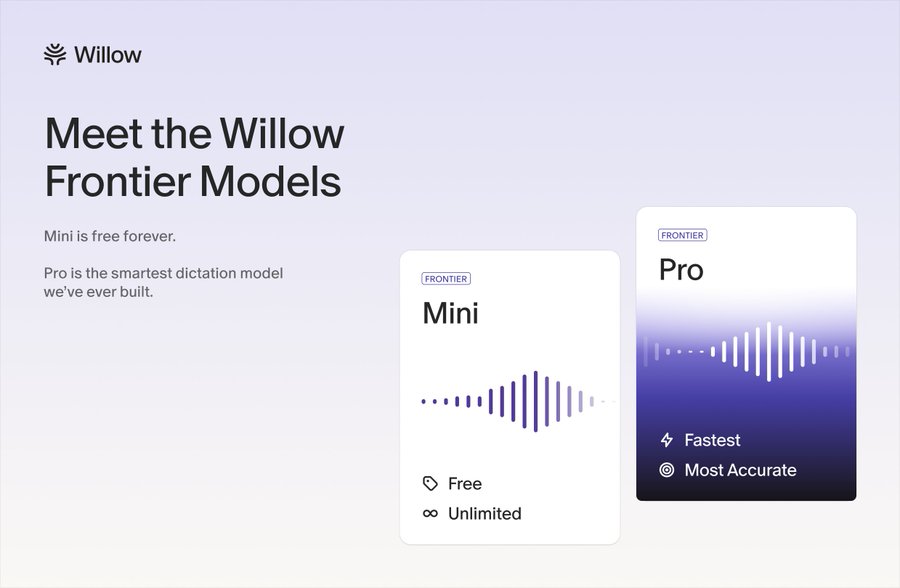
Willow Frontier Mini - Willow's free, unlimited AI dictation model

Claude Sonnet 5 - Anthropic's mid-sized, cost-effective model with strong agentic and coding capabilities
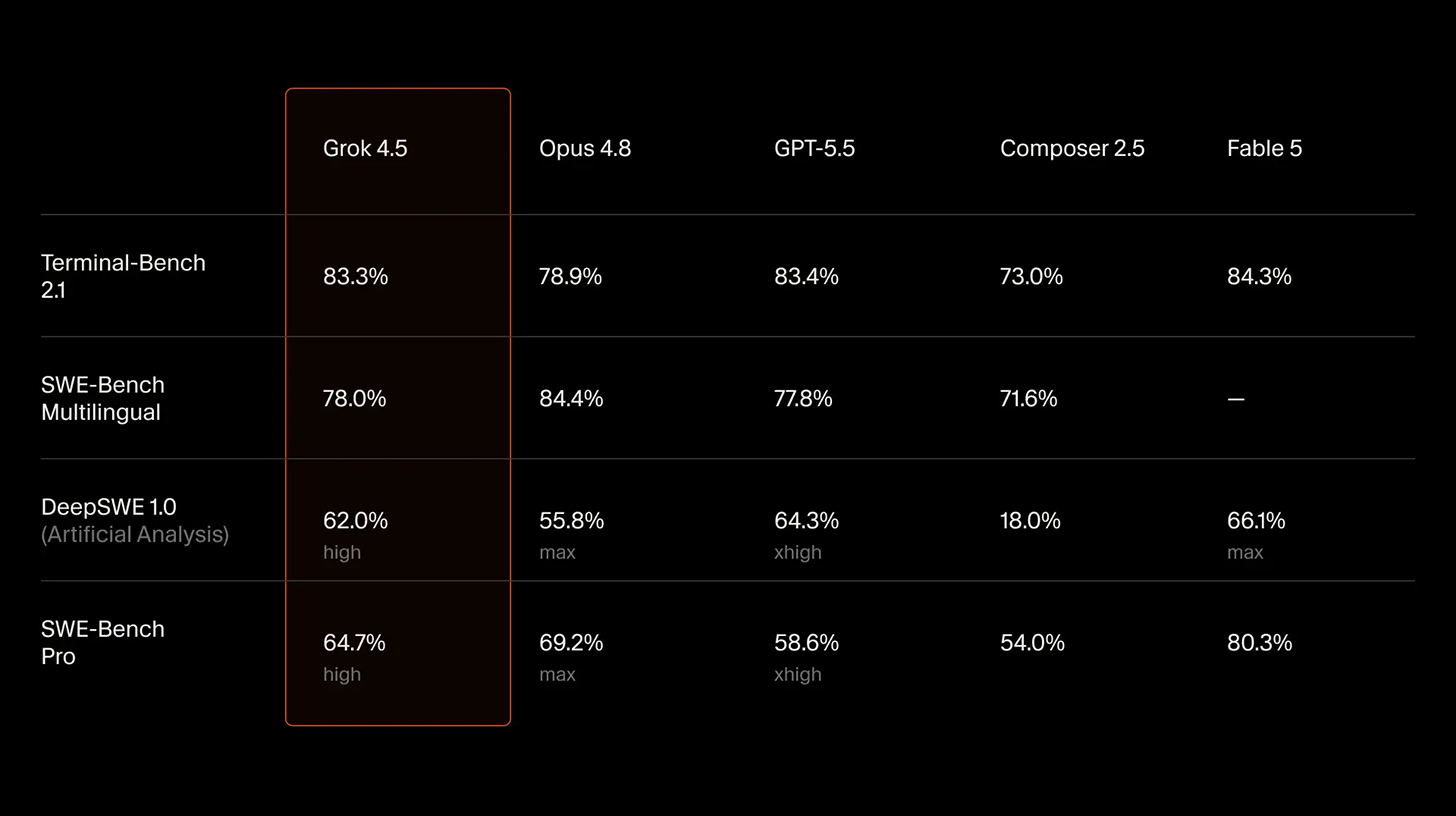
Grok 4.5 - SpaceXAI and Cursor's strongest Grok model with powerful performance and efficiency at low costs

Get access to all our AI courses, hundreds of real-world AI use cases, live expert-led workshops, an exclusive network of AI early adopters, and more.
Get unlimited access to all of our current & upcoming industry-specific AI courses for the duration of your subscription.
To keep up with the rapid pace of AI, our team publishes AI implementation guides daily. Our library contains 300+ practical use cases to automate real-world work.
Join weekly, live, interactive sessions with industry leaders who are at the forefront of AI for hands-on implementation guidance and exclusive insights.
Network with an exclusive community of AI-first professionals who are working smarter with AI. Learn how early adopters are using AI in their work and businesses.