Agentic software development
Use Sonnet 5 for repository-scale debugging, implementation, testing, and terminal or browser workflows that require several connected steps.
Independent tool overview
Claude Sonnet 5 is Anthropic’s balanced frontier model for coding, multi-step agents, research, and professional work. It combines a 1 million-token context window and up to 128,000 output tokens with permanent API pricing of $2 per million input tokens and $10 per million output tokens.
Visit the official Claude Sonnet 5 site ↗
Overview
Claude Sonnet 5 is positioned between Anthropic’s faster, lower-cost Haiku models and its most capable Opus models. It is the default model for Claude Free and Pro users, and it is also available through Claude Code, the Claude API, Amazon Bedrock, Google Cloud, and Microsoft Foundry.
The model is designed for sustained agentic work: it can plan, use browsers and terminals, call tools, inspect results, and continue through multi-step coding or knowledge-work tasks. Adaptive thinking is enabled by default, letting developers trade latency and token use against reasoning depth with the effort setting.
For developers, the headline numbers are a 1 million-token context window, a 128,000-token maximum output, and the API model ID claude-sonnet-5. Those limits make Sonnet 5 useful for large repositories and document collections, but teams should still test retrieval quality and total workload cost instead of assuming every token receives equal attention.
Use cases
The strongest fit depends on the job you need the product to complete, not the size of its feature list.
Use Sonnet 5 for repository-scale debugging, implementation, testing, and terminal or browser workflows that require several connected steps.
Build assistants and agents that need a strong balance of capability, speed, and per-token cost without paying Opus pricing for every request.
Analyze large document sets, codebases, and multimodal inputs inside a 1 million-token context window, subject to request and image limits.
Draft, research, synthesize, and operate across connected tools in Claude Chat, Claude Code, or custom API workflows.
Capabilities
Sonnet 5 can plan work, use browsers and terminals, call tools, and continue through multi-step tasks rather than stopping after a single answer.
Reasoning is adaptive by default, with effort controls that let developers tune the balance among quality, latency, and billed output tokens.
The standard context window supports up to 1 million tokens across Anthropic’s native API and supported cloud platforms.
A maximum output of 128,000 tokens supports long reports, code generation, and complex agent traces when the use case justifies it.
The Claude API supports browser use and Anthropic’s computer-use toolset for workflows that must interact with websites or desktop-style interfaces.
Sonnet 5 works with text, images, PDFs, and files, making it suitable for multimodal document and interface analysis.
Developers can use Sonnet 5 through the Claude API, Amazon Bedrock, Google Cloud, and Microsoft Foundry.
Prompt caching and batch processing can reduce repeat-input and asynchronous workload costs, depending on the request pattern.
Process
Step 1
Use a Claude subscription for interactive work, Claude Code for coding sessions, or the metered API for software and automated agents.
Step 2
Test Sonnet 5 on real prompts, tools, repositories, and failure cases rather than relying only on model benchmarks.
Step 3
Switch to claude-sonnet-5, replace manual thinking budgets with adaptive thinking and effort, and remove unsupported custom sampling parameters.
Step 4
Measure requests with the updated tokenizer because the same text can use roughly 1.0 to 1.35 times as many tokens as Sonnet 4.6.
Step 5
Set spend limits, tool permissions, approval points, timeouts, and validation checks before allowing autonomous actions.
Step 6
Track task success, latency, token use, tool errors, and responses whose stop reason is refusal, including HTTP 200 responses.
Cost
Claude subscriptions and Claude API usage are billed separately. Sonnet 5 API pricing is permanently $2 per million input tokens and $10 per million output tokens; subscription limits and taxes vary.
$0
Limited Claude Chat access with Sonnet 5 as the default model.
$20/month or $200/year
Individual plan with more usage and access to Claude Code, Cowork, projects, Research, and additional models.
$100/month or $200/month
Individual plans offering approximately 5x or 20x Pro usage per session.
From $20/seat/month annually
Team workspace for organizations with 2 to 150 seats.
$20/seat/month plus API-rate usage
Enterprise deployment with advanced administration, security, and metered model usage.
$2 input / $10 output per million tokens
Metered developer access using the claude-sonnet-5 model ID.
Pricing checked . Check current pricing at the source ↗
Assessment
Compare
The right alternative depends on the specific output, workflow, controls and budget your project requires.
Consumer
Choose the Opus line when maximum reasoning and agentic capability matter more than per-token cost.
Explore Claude Opus 4.8 →Business Operations
Choose ChatGPT for a broad consumer and team assistant ecosystem with OpenAI models, tools, and integrations.
Explore ChatGPT →Consumer
Consider an older Opus model when an existing workflow is already benchmarked and stable on that model.
Explore Claude Opus 4.6 →Questions
Claude Sonnet 5 is Anthropic’s balanced frontier model for coding, tool use, agents, and professional knowledge work. It sits below the Opus line in maximum capability and above Haiku in typical capability and cost.
The standard API price is $2 per million input tokens and $10 per million output tokens. Anthropic made that price permanent in August 2026.
Sonnet 5 is the default model on Claude’s Free plan, subject to usage limits. Developers using the API pay separately for token usage.
Sonnet 5 supports a 1 million-token context window by default and a maximum output of 128,000 tokens.
Yes. Anthropic makes Sonnet 5 available in Claude Code as well as Claude Chat and the Claude API.
Developers should use adaptive thinking and effort instead of manual thinking budgets, remove unsupported nondefault sampling parameters, avoid assistant-message prefilling, and recalculate token use with the updated tokenizer.
Sonnet 5 offers a lower-cost balance of speed and intelligence. Anthropic positions Opus as its more capable option for the most complex agentic, coding, and enterprise tasks.
No. Claude Chat subscriptions and developer API usage are separate products with separate billing.
Bottom line
Claude Sonnet 5 is the practical default for teams that want Anthropic’s modern agentic and coding capabilities without paying Opus rates. Its 1 million-token context, broad tool support, and permanent $2/$10 API price are compelling, but migration changes, higher token counts, variable thinking costs, and the need for human review should be part of the implementation plan.
Visit Claude Sonnet 5 website ↗
Sakana Fugu - Sakana’s new orchestration model nearing frontier capabilities
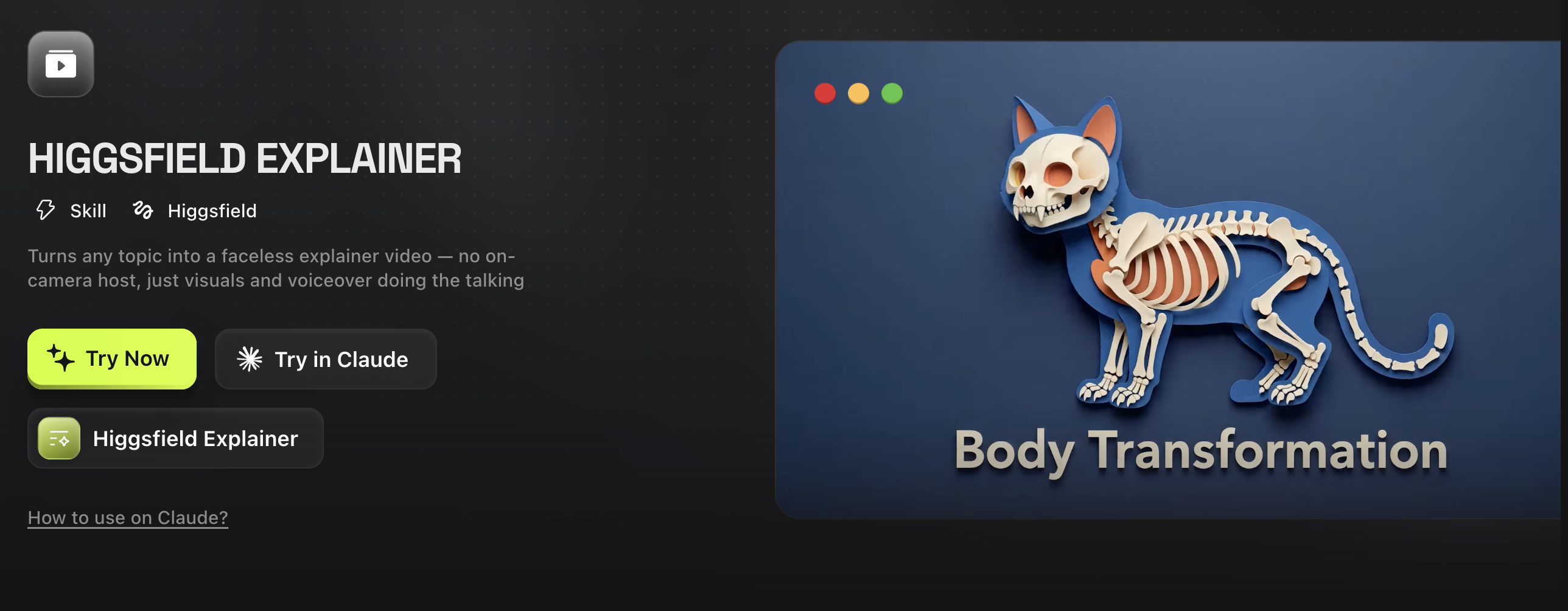
Higgsfield Explainer - Turn any topic into a faceless explainer video

Framer 3.0 - Canvas-native agents that build and run your whole site
Hy-3 - Tencent's new open-source model built for cheap, reliable agent deployment

Get access to all our AI courses, hundreds of real-world AI use cases, live expert-led workshops, an exclusive network of AI early adopters, and more.
Get unlimited access to all of our current & upcoming industry-specific AI courses for the duration of your subscription.
To keep up with the rapid pace of AI, our team publishes AI implementation guides daily. Our library contains 300+ practical use cases to automate real-world work.
Join weekly, live, interactive sessions with industry leaders who are at the forefront of AI for hands-on implementation guidance and exclusive insights.
Network with an exclusive community of AI-first professionals who are working smarter with AI. Learn how early adopters are using AI in their work and businesses.