Long-running coding agents
Working through repository-scale implementation, debugging, refactoring, and verification loops when the host provides controlled file, terminal, and test tools.
Independent tool overview
Grok 4.6 is SpaceXAI's active flagship model for coding, long-running agents, visual and interactive projects, and general knowledge work. It accepts text and images, has a 500,000-token context window, supports four reasoning-effort levels, and can use function calling, structured outputs, web search, X search, and code execution through supported products. It is a capable model, not an autonomous source of truth: benchmark claims are mostly vendor-published, tool actions need least-privilege controls, and important code, research, financial, legal, medical, and operational outputs require independent verification.
Visit the official Grok 4.6 site ↗.jpeg&w=3840&q=75)
Overview
SpaceXAI released Grok 4.6 on August 12, 2026 as the successor to Grok 4.5, with an emphasis on sustaining work across many agent steps and producing stronger first passes for coding, visual interfaces, research, and knowledge work.
The direct API model name is `grok-4.6`. Official documentation lists a 500,000-token context window, a January 2026 knowledge cutoff, text and image input, text output, and reasoning effort values of low, medium, high, and xhigh, with high as the default.
Grok 4.6 can be called through the Responses API or Chat Completions and supports developer-defined functions, JSON-schema structured outputs, web search, X search, and code execution. Long-running applications can also use prompt caching and context compaction to reduce repeated context cost and latency.
The model is available through the SpaceXAI API, Grok Build and its CLI, Cursor, GitHub Copilot, Gemini Enterprise Agent Platform, and model gateways including OpenRouter, Vercel, and Cloudflare. Availability, tool behavior, privacy, limits, and pricing differ across those hosts.
The announcement reports strong coding and agent benchmark results and describes improved self-testing, but those figures are point-in-time measurements under particular harnesses. Teams should evaluate the exact prompts, tools, repositories, languages, latency targets, failure costs, and human-review workflow they plan to use.
Use cases
The strongest fit depends on the job you need the product to complete, not the size of its feature list.
Working through repository-scale implementation, debugging, refactoring, and verification loops when the host provides controlled file, terminal, and test tools.
Turning a concrete product idea into an initial web or visual experience and iterating on structure, behavior, and presentation.
Combining reasoning with current web or X search, code execution, and structured extraction while preserving source-level human review.
Analyzing substantial document, image, code, or conversation context that fits inside the 500K-token window.
Returning schema-constrained objects after using developer functions or supported server-side tools.
Using Grok 4.6 through Cursor, GitHub Copilot, Gemini Enterprise Agent Platform, or a model gateway alongside other providers.
Capabilities
Supports large prompts and long agent trajectories, with higher long-context pricing once the prompt reaches 200,000 tokens.
Lets API users trade latency and token use against deeper reasoning with low, medium, high, or xhigh settings.
Accepts written and visual inputs and returns text, enabling document, screenshot, diagram, and interface analysis.
The model was trained and evaluated for multi-step software work and is the default model in Grok Build.
Can request developer-defined functions with structured parameters; the application remains responsible for validating and executing the call.
Can return JSON matching a supported schema, including after tool use, which reduces parsing failures but does not guarantee factual correctness.
Supported xAI tools can retrieve current web and X material for grounded answers, subject to source quality and search coverage.
Supported hosts can let the model calculate, inspect, test, or transform data in an execution environment.
A stable cache key can route conversation requests consistently and improve cache-hit economics for repeated context.
The API can replace a long conversation history with an opaque compacted item that preserves salient state for continued work.
The API supports OpenAI-style clients through the SpaceXAI base URL as well as xAI's own SDK.
The model is offered in Cursor, GitHub Copilot, Gemini Enterprise Agent Platform, and gateways such as OpenRouter, Vercel, and Cloudflare.
The direct model page currently lists us-east-1 and us-west-2 regions.
Process
Step 1
Use Grok chat for individual work, Grok Build or an IDE host for controlled code tasks, and the API for applications requiring explicit prompts, tools, logging, and evaluation.
Step 2
Specify the objective, inputs, sources, tools, output schema, constraints, prohibited actions, success checks, latency and cost budget, and when a human must approve.
Step 3
Send only the necessary files and records. Remove secrets, personal data, irrelevant logs, generated artifacts, vendor code, and stale conversation turns before paying for a large prompt.
Step 4
Start with low or medium for simple transformations and classification, and reserve high or xhigh for difficult reasoning where measured quality justifies added latency and output tokens.
Step 5
Give each tool a narrow schema, allowlist, account, directory, network scope, budget, and timeout. Keep destructive, financial, publishing, identity, and production actions behind explicit approval.
Step 6
Web pages, X posts, repository files, emails, and documents can contain prompt injection. Separate data from instructions and do not let retrieved content expand tool authority.
Step 7
Ask the model to link claims to retrieved primary sources, exact file paths, test output, or calculations, then independently open and verify the evidence.
Step 8
Request strict structured output, validate it again in application code, reject unexpected enums or ranges, and never treat schema compliance as proof that the values are true.
Step 9
Review diffs, dependencies, licenses, migrations, permissions, and commands; then run formatting, types, tests, builds, security checks, accessibility tests, and runtime acceptance.
Step 10
Build a versioned test set with normal, ambiguous, adversarial, long-context, image, tool-failure, and high-impact cases. Compare quality, cost, latency, and reviewer effort with alternatives.
Step 11
Track prompt, cached, reasoning, tool, and output usage. Use cache keys and compaction carefully, and test whether compressed state preserves every fact and instruction your workflow needs.
Step 12
Pin the model name where possible, log model and prompt versions, sample production outputs, alert on tool and quality failures, cap spend, and keep a tested fallback for provider or behavior changes.
Cost
Grok 4.6 is available through consumer subscriptions, the direct usage-based API, and partner products. Direct API requests below 200,000 prompt tokens cost $2 per million input tokens, $0.50 per million cached input tokens, and $6 per million output tokens. At 200,000 prompt tokens or more, all tokens in the request use the long-context rates of $4, $1, and $12 respectively. Tool charges and partner markups or plan allowances can be additional; the launch post also advertises a faster service option at twice the standard token price.
$0/month
General consumer Grok access with limited usage; the current pricing page does not promise Grok 4.6 access on this tier.
$30/month
Consumer plan that explicitly includes Grok 4.6 and higher limits.
$100/month
Higher-capacity consumer plan for frequent chat, media, voice, and build usage.
$2 input / $0.50 cached / $6 output per 1M tokens
Applies when the prompt is below 200,000 tokens.
$4 input / $1 cached / $12 output per 1M tokens
Applies to all tokens in a request once the prompt reaches 200,000 tokens.
Plan or contract-dependent
Team and enterprise products with administration, security, support, and custom infrastructure options.
Pricing checked . Check current pricing at the source ↗
Assessment
Compare
The right alternative depends on the specific output, workflow, controls and budget your project requires.
Consumer
Choose GPT-5.2 when an established OpenAI API model and its broader product ecosystem better fit the application's existing stack.
Explore GPT-5.2 →Project Management
Choose Claude when Anthropic's model behavior, long-document work, coding ecosystem, and enterprise controls better match the team.
Explore Claude →Consumer
Choose Gemini 3.1 Pro when Google Cloud integration, multimodal workflows, and Gemini's surrounding agent platform are the priority.
Explore Gemini 3.1 Pro →Consumer
Choose Grok 4.3 for a lower-cost, 1M-context Grok option when maximum Grok 4.6 agent performance is unnecessary.
Explore Grok 4.3 →Coding
Choose Cursor when the main requirement is a complete repository-aware coding product rather than direct access to one model.
Explore Cursor →Questions
Grok 4.6 is SpaceXAI's current flagship model for coding, agentic tasks, visual and interactive projects, and general knowledge work.
SpaceXAI announced and released it on August 12, 2026.
The direct API documentation lists 500,000 tokens.
The current developer guide lists January 2026. Use search or supplied primary sources for later information.
Yes. It accepts text and image inputs and produces text output.
Not through the `grok-4.6` model itself. SpaceXAI offers separate Grok Imagine image and video models and consumer features.
Low, medium, high, and xhigh are supported, with high documented as the default.
Below 200K prompt tokens, direct pricing is $2 input, $0.50 cached input, and $6 output per million tokens. At 200K prompt tokens or more, the rates rise to $4, $1, and $12 for the entire request.
The launch offered free trials in supported products, but the current consumer pricing page explicitly lists Grok 4.6 under the $30-per-month SuperGrok plan, not the Free tier. Partner allowances vary.
It is available through the SpaceXAI API, Grok Build, Cursor, GitHub Copilot, Gemini Enterprise Agent Platform, and gateways including OpenRouter, Vercel, and Cloudflare.
Yes. Supported structured-output schemas can enforce the output shape, including after tool use. The application must still verify values and business rules.
SpaceXAI says it does not train on API inputs or outputs without explicit permission. Direct requests are retained by default for 30 days for abuse auditing unless an eligible ZDR configuration is enabled.
Consumer content may be used unless the user turns off Improve the Model or uses Private Chat where available. Grok Build sessions have separate persistence rules and currently do not offer Private Chat.
No model should receive broad unsupervised authority. Validate arguments, isolate execution, restrict credentials and network access, cap steps and spend, and require approval for external side effects.
No. Run representative evaluations in the exact host and tool setup you will use, including failures, cost, latency, reviewer effort, and adversarial inputs.
Bottom line
Grok 4.6 is a credible flagship choice for teams that need long-context coding, tool use, structured automation, or rapid visual application work, especially when they already use Cursor, Grok Build, or the SpaceXAI API. Its 500K context, four reasoning levels, and competitive short-context price are attractive. The long-context price step, opaque compaction, partner differences, limited public safety detail, and ordinary model failure modes make disciplined evaluation essential. Give it narrow tools, verified sources, typed outputs, hard budgets, and a human approval path—not blanket authority.
Visit Grok 4.6 website ↗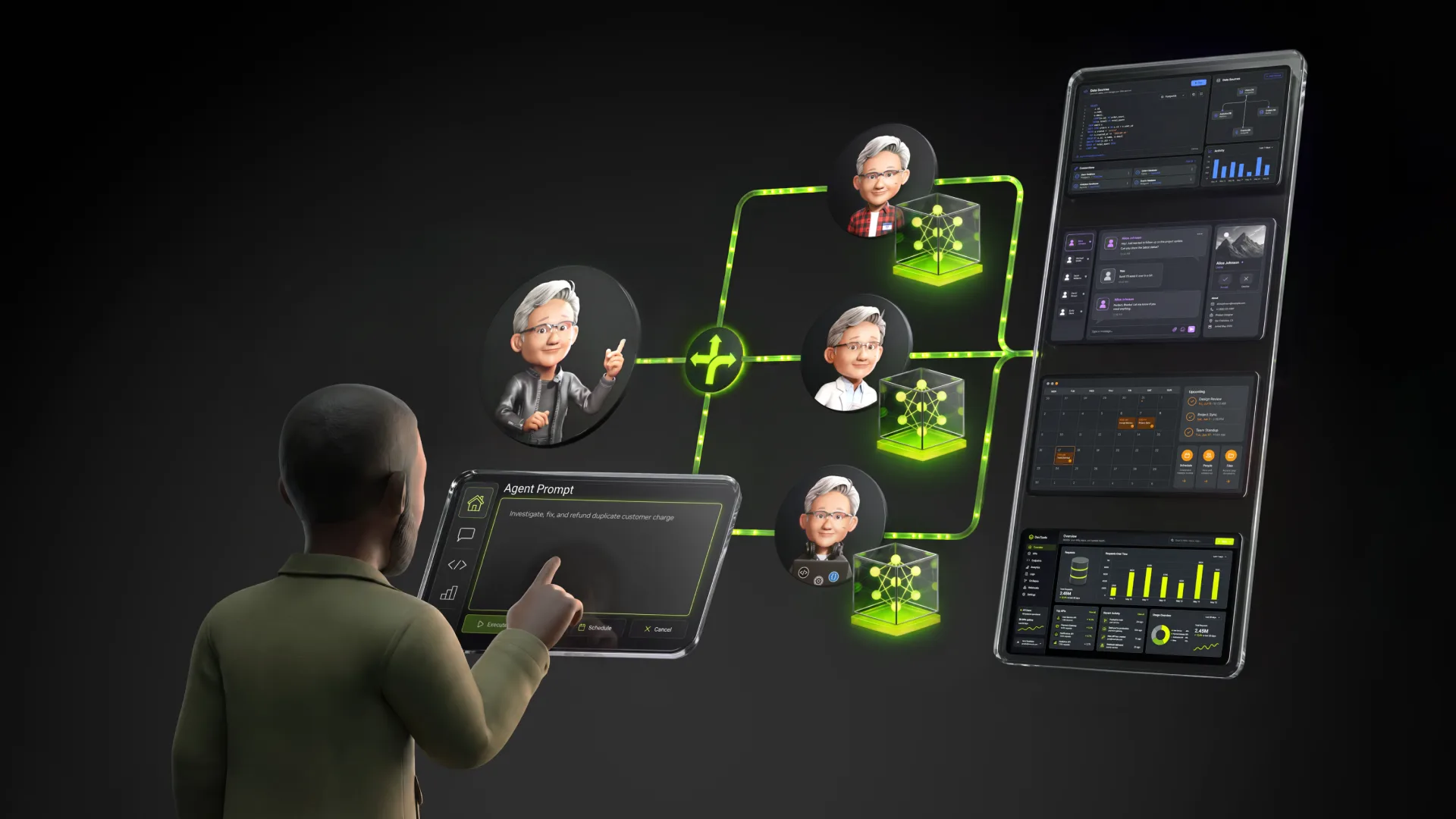
Nemotron 3.5 Lightning - Nvidia's small open model for agents' high-volume grunt work
Gemini Flash 3.7 - Google’s upgraded fast, cheap and capable mid-class model
.webp)
Muse Glimmer - Meta's open-weights local model for on-device agents
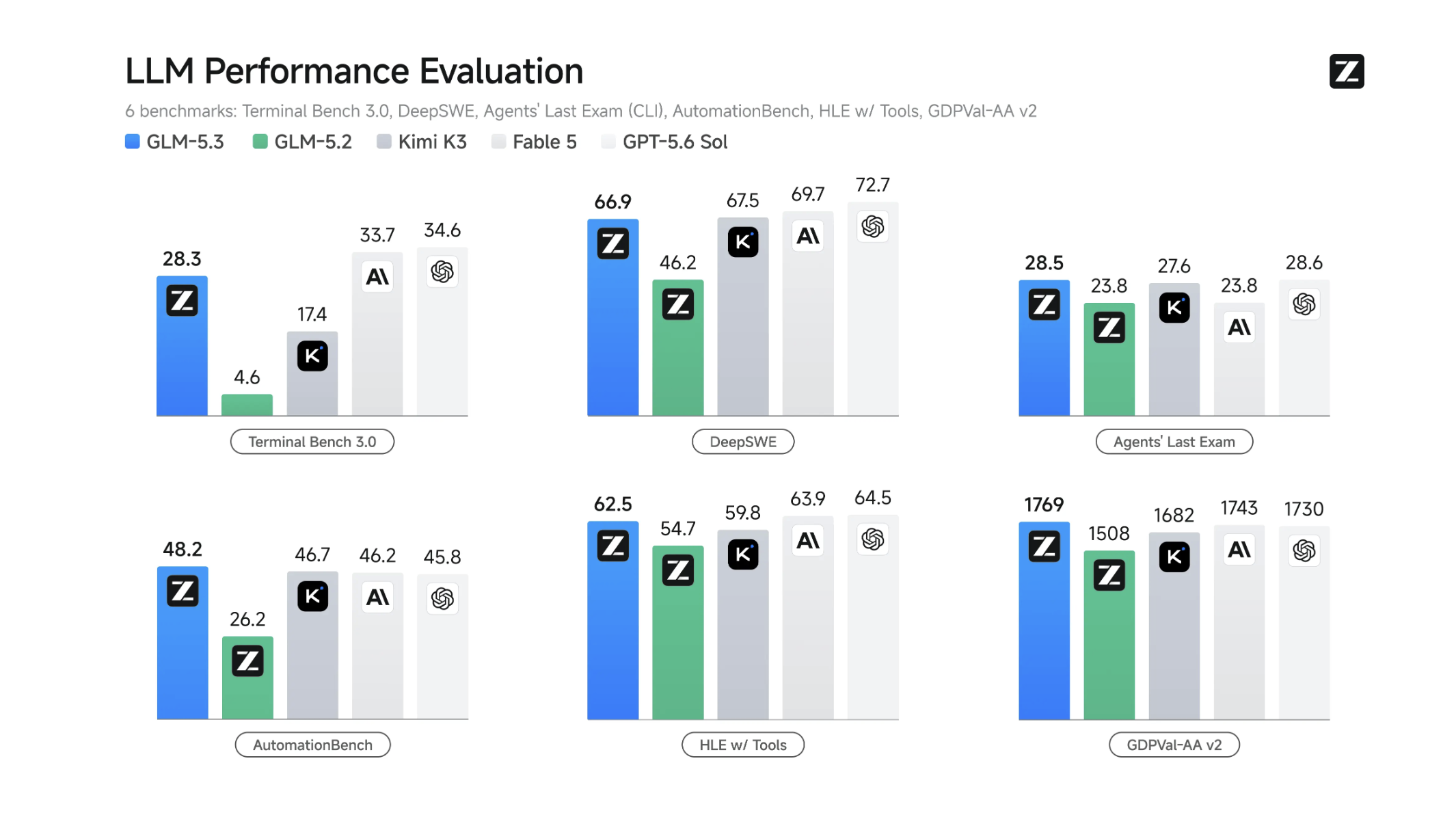
GLM 5.3 - Z AI’s new open-source model with strong coding, agentic, and cyber capabilities

Get access to all our AI courses, hundreds of real-world AI use cases, live expert-led workshops, an exclusive network of AI early adopters, and more.
Get unlimited access to all of our current & upcoming industry-specific AI courses for the duration of your subscription.
To keep up with the rapid pace of AI, our team publishes AI implementation guides daily. Our library contains 300+ practical use cases to automate real-world work.
Join weekly, live, interactive sessions with industry leaders who are at the forefront of AI for hands-on implementation guidance and exclusive insights.
Network with an exclusive community of AI-first professionals who are working smarter with AI. Learn how early adopters are using AI in their work and businesses.