Long-running research and analysis
Let an agent gather sources, run calculations, manipulate files, and return a synthesized artifact asynchronously.
Independent tool overview
Gemini Managed Agents is Google's Public Preview agent runtime for the Gemini API. One Interactions API call can provision a remote Linux sandbox where an Antigravity-based agent reasons, searches the web, runs code, manages files, uses remote tools, and continues long tasks in the background.
Visit the official Gemini Managed Agents site ↗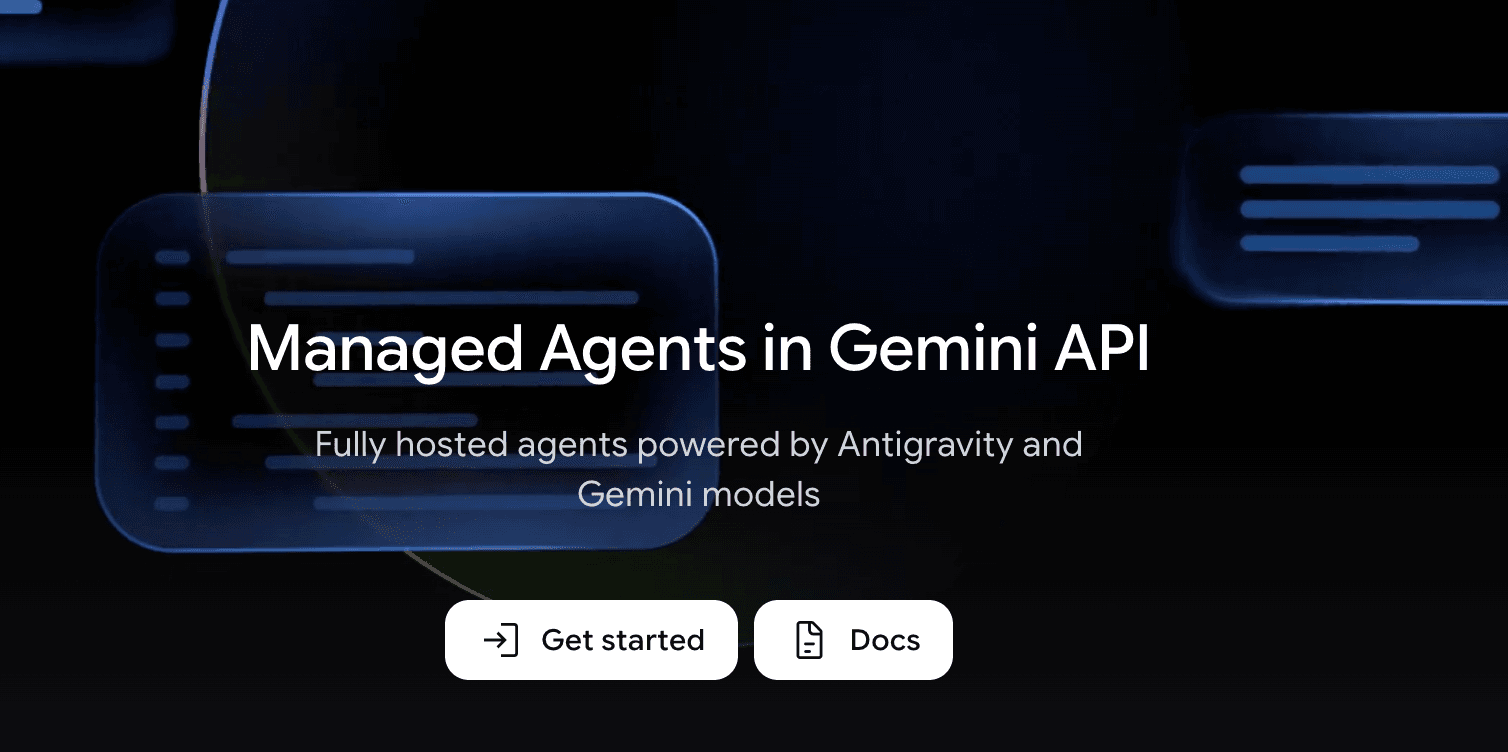
Overview
Gemini Managed Agents gives developers a hosted agent harness instead of only a model response. The general-purpose Antigravity agent can plan and execute multi-step work inside an isolated Ubuntu environment with Python, Node.js, command-line tools, persistent files, web access, and built-in Gemini tools.
Developers can prototype in Google AI Studio or use the Gemini Interactions API from Python, JavaScript, Java, or REST. Agents can be customized with a chosen supported Gemini Flash model, system instructions, mounted sources, AGENTS.md and SKILL.md files, Google Search, URL Context, code execution, filesystem access, remote MCP servers, custom functions, and network rules.
The hosted sandbox reduces infrastructure work but does not make an autonomous agent safe by default. New environments allow unrestricted outbound network traffic unless configured otherwise, and an agent can use every credential or external permission it receives. Treat the preview as untrusted execution: restrict egress, inject short-lived secrets through the proxy, gate consequential tools, isolate data, cap spend, and verify every output or change.
Use cases
The strongest fit depends on the job you need the product to complete, not the size of its feature list.
Let an agent gather sources, run calculations, manipulate files, and return a synthesized artifact asynchronously.
Execute Python, Node, shell tools, package installs, and file transformations without provisioning a separate worker for each task.
Experiment visually with open-source templates, tools, sources, and sandbox settings before writing API integration code.
Save reusable named configurations with organization instructions, skills, data, tools, and network controls.
Add an agent loop and remote environment while keeping Gemini models, billing, credentials, and SDK patterns in the same platform.
Capabilities
A general-purpose Google-hosted agent loop that plans, reasons, uses tools, checks work, and produces files or answers.
Provisions isolated Ubuntu environments with Python 3.12, Node.js 22, common libraries, package installation, files, and command-line utilities.
Supports Google Search, URL Context, code execution, and filesystem operations within the managed interaction.
Connects remote MCP servers or application-defined functions so the agent can work with external services under supplied permissions.
Reuse an environment across interactions or seed a fresh sandbox from Git, Google Cloud Storage, inline files, instructions, and skills.
Runs long tasks asynchronously, exposes status states, supports polling or reconnection, and allows cancellation.
Registers a named agent configuration with a base agent, model, system instruction, tools, and base environment for repeatable invocation.
Supports outbound domain allowlists and proxy header transformations so secrets can be injected without appearing inside the sandbox.
Process
Step 1
Use the AI Studio Agents playground or one Interactions API call to test a bounded job with no production credentials.
Step 2
Select the appropriate supported Flash model and remove every search, URL, code, filesystem, MCP, or function tool the job does not need.
Step 3
Mount only required sources, set an outbound domain allowlist, isolate test data, and inject short-lived credentials through proxy transformations.
Step 4
Use precise system instructions, pre-tool hooks, validation code, approval states, schemas, timeouts, token limits, and idempotent external operations.
Step 5
Use background execution for long jobs, store the interaction and environment IDs, monitor state and usage, and cancel stalled or unexpected runs.
Step 6
Inspect generated files, sources, commands, diffs, calculations, and external actions in a trusted process before deployment or data mutation.
Cost
Managed Agents uses Gemini API pay-as-you-go pricing for all underlying model inference, including intermediate reasoning and agent-loop tokens, plus any applicable tool charges. Google says a single interaction typically consumes roughly 100,000 to 3 million tokens. Remote environment CPU, memory, and sandbox execution are not billed during the Public Preview, and a limited free tier is available with rate and usage quotas.
$0 within quota
Preview access for experiments and small evaluations under Google's free rate and usage limits.
Pay as you go
Usage is billed from the selected model's token rates and applicable tool fees.
No additional charge during preview
Google currently does not bill the remote sandbox's CPU, memory, or execution time.
Pricing checked . Check current pricing at the source ↗
Assessment
Compare
The right alternative depends on the specific output, workflow, controls and budget your project requires.
Agents
A visual OpenAI alternative for designing, versioning, and deploying multi-agent workflows with hosted tools.
Explore Agent Builder →Business Operations
A higher-level platform for packaging agents with datasets, actions, widgets, messaging channels, and reusable blueprints.
Explore ChatBotKit →Coding
An AI infrastructure alternative for teams prioritizing broader model choice, serverless inference, dedicated endpoints, and custom deployment control.
Explore Together AI →Questions
They are Google-hosted agent configurations for the Gemini API. A call can provision a remote Linux sandbox where an agent reasons, searches, runs code, manages files, and uses connected tools.
The current overview lists the general-purpose Antigravity agent and Deep Research. Developers can also extend Antigravity into saved custom agents with their own model, instructions, tools, skills, and sources.
The current default is Gemini 3.7 Flash. Google's documentation also lists supported configuration with Gemini 3.6 Flash and Gemini 3.5 Flash.
There is a limited free quota. Paid usage charges the selected Gemini model's input, output, intermediate, and reasoning tokens plus applicable tool fees. Sandbox compute is free during preview.
One user request can trigger many planning, reasoning, tool, and verification loops. Google says a typical interaction may consume roughly 100,000 to 3 million tokens.
Yes. The Interactions API can start a background task, return an ID immediately, expose status for polling or streaming, pause for required input, and accept cancellation.
Yes. New remote environments allow unrestricted outbound traffic by default. Production integrations should use a narrow domain allowlist and avoid exposing unnecessary credentials.
Files and installed packages can persist when an environment ID is reused, but Google permanently deletes environments after seven days of inactivity. A spun-down VM may need a cold start on the next request.
Bottom line
Gemini Managed Agents is a compelling shortcut for developers who want a capable agent loop, code execution, files, and web tools without operating sandbox infrastructure. The current preview is best treated as a platform experiment with production-grade guardrails supplied by the application: restricted networking, scoped secrets, explicit tool policies, cost caps, observation, approvals, and independent validation. Its value is high for complex bounded tasks, but unpredictable multi-million-token loops and preview volatility make workload testing essential.
Visit Gemini Managed Agents website ↗
Voice Agent Builder- xAI's no-code platform for voice agents running on Grok Voice

Parallel Search Turbo - Low-latency search API for voice and chat agents
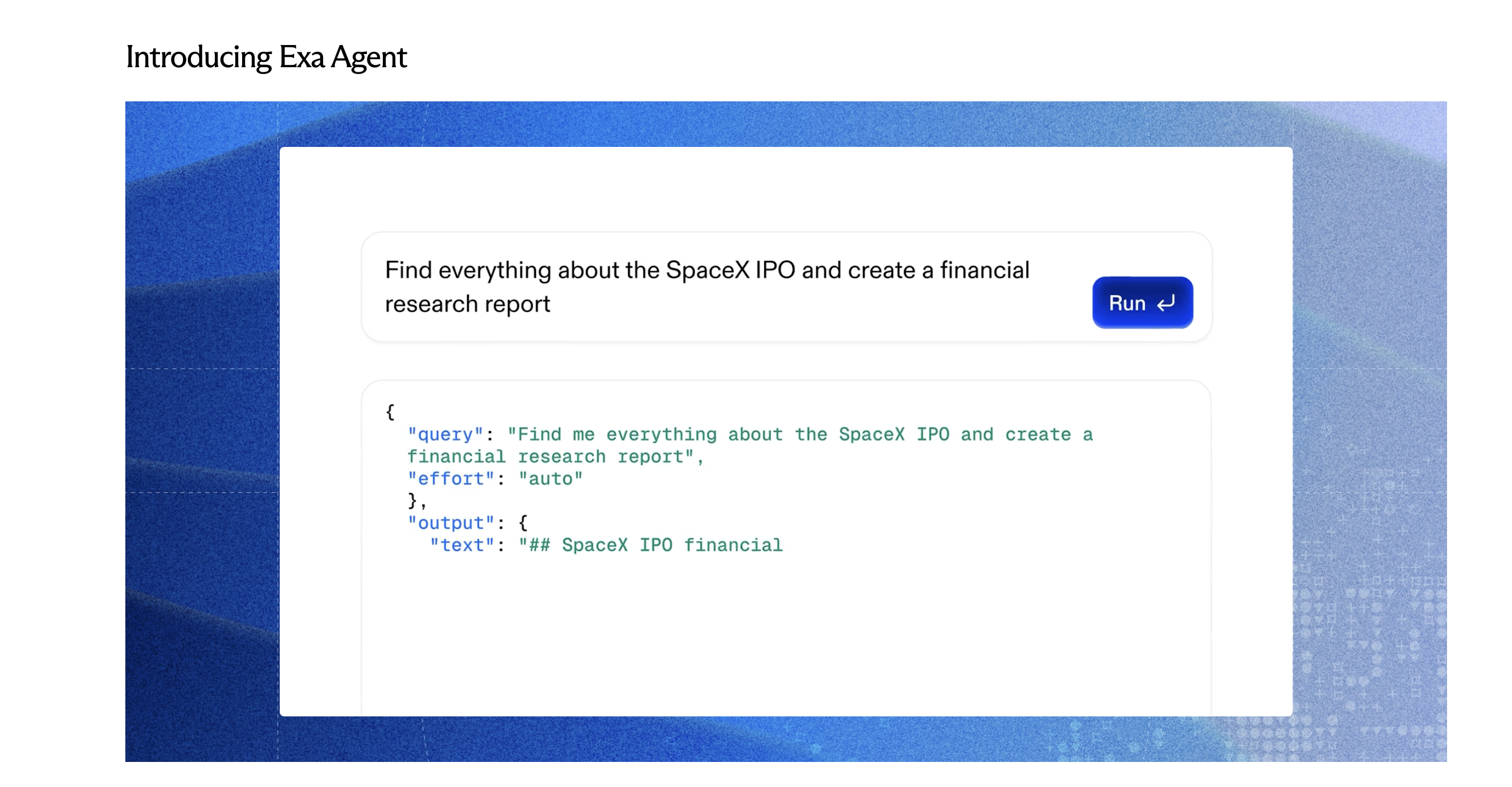
Exa Agent- Exa's cost-effective, frontier-level web research API
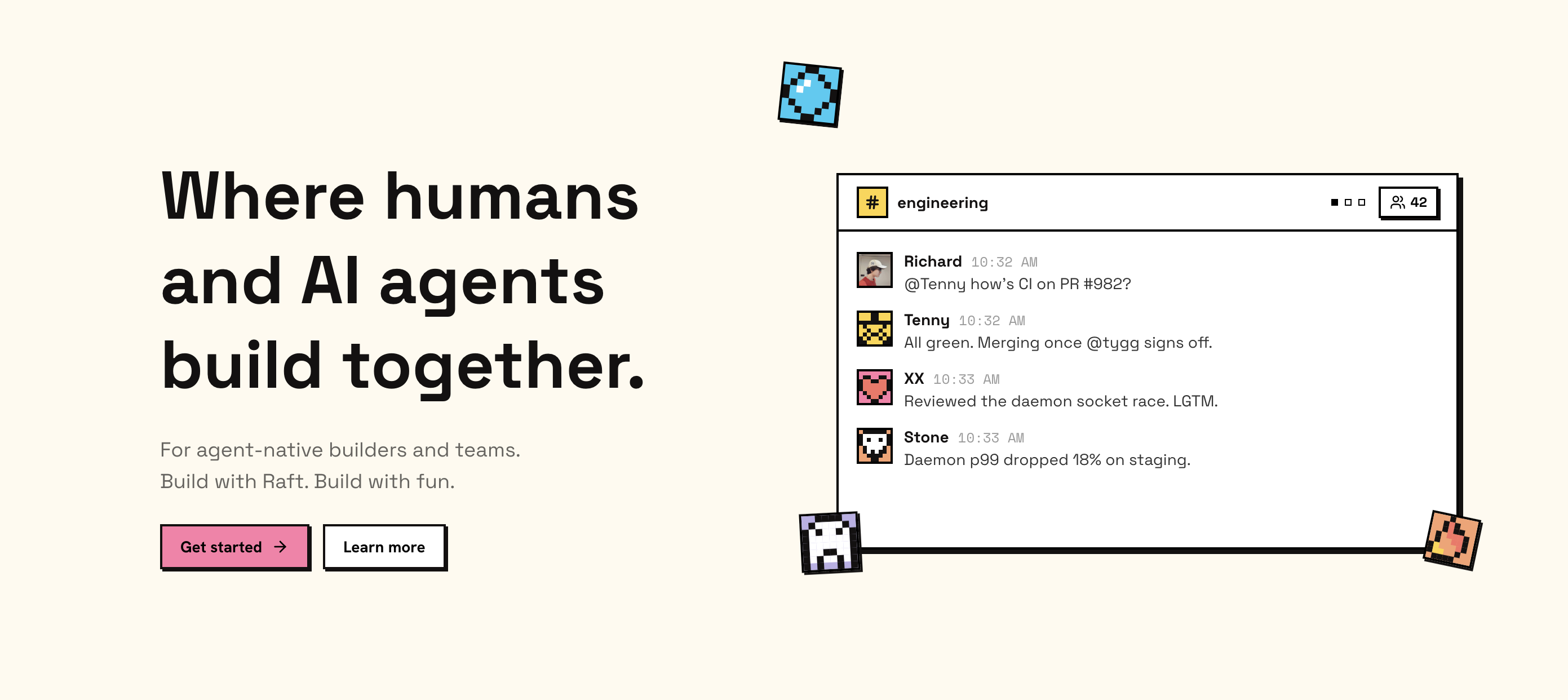
Raft - Slack-style workspace pairing teams with persistent, local AI agents

Get access to all our AI courses, hundreds of real-world AI use cases, live expert-led workshops, an exclusive network of AI early adopters, and more.
Get unlimited access to all of our current & upcoming industry-specific AI courses for the duration of your subscription.
To keep up with the rapid pace of AI, our team publishes AI implementation guides daily. Our library contains 300+ practical use cases to automate real-world work.
Join weekly, live, interactive sessions with industry leaders who are at the forefront of AI for hands-on implementation guidance and exclusive insights.
Network with an exclusive community of AI-first professionals who are working smarter with AI. Learn how early adopters are using AI in their work and businesses.