Agent code mode
Executing short programs written by an LLM against a narrow typed API instead of exposing dozens of individual tool calls.
Independent tool overview
Cloudflare Dynamic Workers is an open-beta runtime primitive for loading code at request time into lightweight V8 isolate sandboxes. It gives developers control over bindings, outbound network access, resource limits and logs, making it useful for AI agent code mode, generated apps and user-supplied automations—but it is infrastructure, not a ready-made agent product.
Visit the official Dynamic Workers site ↗
Overview
A parent Cloudflare Worker uses the Worker Loader API to create a Dynamic Worker from code supplied at runtime. The `load()` mode creates a one-off sandbox, while `get(id, callback)` can reuse the same code under a stable ID across requests. Supported module types include JavaScript, Python and WebAssembly; TypeScript and npm dependencies must be compiled or bundled first.
The key security model is capability-based composition. The parent decides which bindings and RPC stubs the child receives, can block or intercept outbound network access, attaches observability through Tail Workers and can enforce custom CPU or subrequest limits. Durable Object Facets can add isolated SQLite-backed state when a sandbox needs persistence.
Cloudflare markets isolates as roughly 100 times faster to start and 10-to-100 times more memory efficient than typical containers. Those are architecture-level vendor comparisons, not a guarantee for every application. Isolates also have a different security and compatibility profile from hardware-isolated virtual machines, so the correct choice depends on the threat model and workload.
Use cases
The strongest fit depends on the job you need the product to complete, not the size of its feature list.
Executing short programs written by an LLM against a narrow typed API instead of exposing dozens of individual tool calls.
Running previews, prototypes and user-generated applications on demand with explicit bindings, egress rules and resource controls.
Workloads that need millisecond-scale startup and broad geographic placement without the full operating-system environment of a container.
Capabilities
Creates a new Worker from modules and configuration assembled dynamically by a parent Worker.
Uses `load()` for fresh execution or stable IDs with `get()` to reuse matching code and reduce repeated creation charges.
Passes only the RPC services, data and platform bindings a sandbox should be allowed to use.
Blocks all Internet access or intercepts outbound requests through a handler that can enforce host, method and path policy.
Applies custom CPU and subrequest limits to constrain runaway or abusive generated code.
Attaches Tail Workers to capture execution logs and events for individual Dynamic Worker runs.
Cloudflare publishes packages for resolving npm dependencies, bundling TypeScript and giving agents a persistent virtual file workspace.
Process
Step 1
Classify who supplies the code, what data it can see, the damage it could cause and whether isolate-based separation is sufficient for the risk.
Step 2
Add a Worker Loader binding and keep code retrieval, authentication, policy and billing controls outside the dynamic sandbox.
Step 3
Pass narrow RPC stubs rather than raw credentials or broad account bindings; validate every argument again at the capability boundary.
Step 4
Set `globalOutbound` to null unless the workload needs networking, then implement an explicit allowlist and protect against SSRF, redirects and DNS-based bypasses.
Step 5
Cap CPU and subrequests, use stable IDs where code is intentionally reusable and add application-level rate limits and budget alarms.
Step 6
Exercise infinite loops, excessive allocations, dependency attacks, prompt injection, secret exfiltration attempts and malformed outputs before production.
Step 7
Capture execution events and cost metrics while redacting credentials, personal data and confidential payloads from logs.
Cost
Dynamic Workers requires the $5-per-month Workers Paid plan. That account plan includes 1,000 unique Dynamic Workers per month, 10 million requests and 30 million CPU milliseconds. Additional usage is billed across worker creation, requests and CPU time. Enterprise contracts may differ.
$5/month minimum plus usage
The required self-serve Cloudflare account plan with monthly included usage.
Usage-based
Charges apply after the account's included monthly amounts.
Contract pricing
Enterprise accounts are billed according to their contracted Workers usage model.
Pricing checked . Check current pricing at the source ↗
Assessment
Compare
The right alternative depends on the specific output, workflow, controls and budget your project requires.
Agents
A higher-level visual system for composing and versioning multi-agent workflows when the goal is orchestration rather than hosting arbitrary runtime code.
Explore Agent Builder →Coding
An evaluation-oriented product for testing coding models in isolated environments rather than embedding a low-level sandbox in an application.
Explore Code Arena →Coding
A full agentic development environment for people who want coding agents and parallel workspaces instead of building their own execution platform.
Explore Antigravity →Questions
They are Cloudflare Workers created from code and configuration supplied at runtime by another Worker. Each runs in a V8 isolate sandbox with developer-controlled bindings, network access and limits.
No. Cloudflare describes the Worker Loader feature as open beta. It was available to Workers Paid users when reviewed on August 31, 2026.
They require Workers Paid, which has a $5 monthly account minimum. The plan includes 1,000 unique Dynamic Workers per month, 10 million requests and 30 million CPU milliseconds; overages are $0.002 per unique Worker per day, $0.30 per million requests and $0.02 per million CPU milliseconds.
`load()` creates a fresh Dynamic Worker for one-time execution. `get(id, callback)` uses a stable ID so matching code can remain warm and be reused, which also avoids counting every invocation as a new creation.
The current docs list JavaScript, Python and WebAssembly modules. TypeScript must be compiled to JavaScript, and Cloudflare's worker-bundler can resolve npm dependencies and package code before loading it.
Only as configured by the parent. Developers can block outbound access entirely, pass a custom egress handler or permit the default network behavior. Default-deny is the safer starting point for untrusted code.
No sandbox is risk-free, and V8 isolates use a different boundary from containers and microVMs. Cloudflare publishes multiple defense layers, but teams should match the isolation mechanism to the sensitivity and hostility of the workload.
Common patterns include AI agent code mode, generated application previews, user-uploaded apps, custom runtime automations and low-latency disposable code sandboxes.
Bottom line
Dynamic Workers is a compelling low-level option when an application needs thousands of fast, capability-scoped code sandboxes and already fits the Cloudflare Workers model. Its pricing is transparent and the security controls are thoughtfully placed at the parent-child boundary. The tradeoff is responsibility: open beta status, isolate-specific risk, bundling, egress, observability and billing behavior all demand production engineering that a turnkey sandbox product would otherwise absorb.
Visit Dynamic Workers website ↗
NemoClaw - Nvidia's open-source security and privacy layer for OpenClaw autonomous agents

MolmoWeb - Ai2's open-source web browsing agent that navigates sites using screenshots
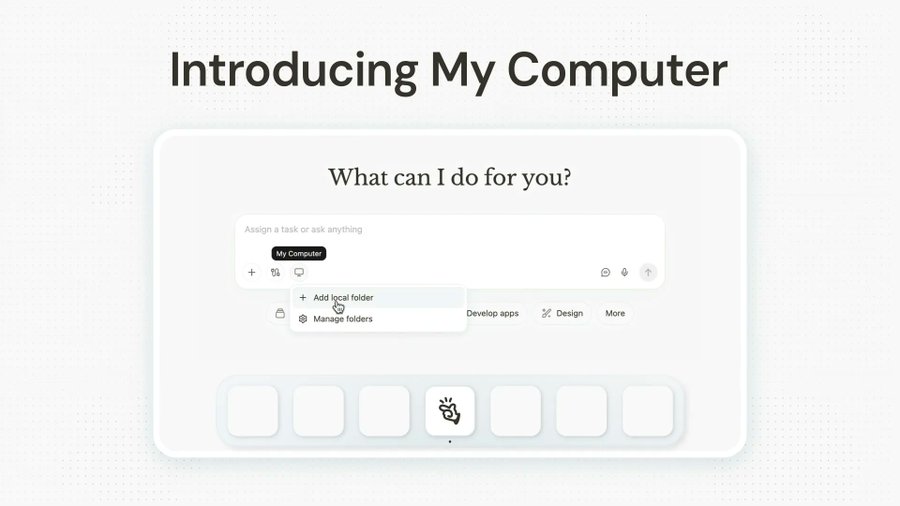
My Computer - Manus' new desktop app bringing its AI agent to your local machine

Holo 3 - H Company's open-weight computer-use agent that navigates enterprise desktops with SOTA accuracy on 10B active params

Get access to all our AI courses, hundreds of real-world AI use cases, live expert-led workshops, an exclusive network of AI early adopters, and more.
Get unlimited access to all of our current & upcoming industry-specific AI courses for the duration of your subscription.
To keep up with the rapid pace of AI, our team publishes AI implementation guides daily. Our library contains 300+ practical use cases to automate real-world work.
Join weekly, live, interactive sessions with industry leaders who are at the forefront of AI for hands-on implementation guidance and exclusive insights.
Network with an exclusive community of AI-first professionals who are working smarter with AI. Learn how early adopters are using AI in their work and businesses.