Complex software engineering
Work through difficult multi-file implementation, debugging and code-review tasks with tools and verification loops.
Independent tool overview
Claude Opus 4.7 is an active Anthropic model built for difficult coding, long-running agents, high-resolution vision and complex professional work, though newer Opus 4.8 and Opus 5 models now sit above it.
Visit the official Claude Opus 4.7 site ↗
Overview
Claude Opus 4.7 improved on Opus 4.6 in advanced software engineering, instruction following, long-horizon work and high-resolution visual analysis. It supports a one-million-token context window, adaptive thinking, tool use and outputs up to 128,000 tokens.
The model remains active in Anthropic's API lifecycle table, with retirement listed as no sooner than April 16, 2027. It is no longer Anthropic's newest Opus model, so new projects should benchmark Opus 4.8 and Opus 5 before choosing 4.7.
Opus 4.7 keeps the $5 input and $25 output price per million tokens used by nearby Opus releases, but the same text can tokenize roughly 1.0 to 1.35 times higher than it did on Opus 4.6. Higher visual resolution and deeper effort can also raise token usage.
Use cases
The strongest fit depends on the job you need the product to complete, not the size of its feature list.
Work through difficult multi-file implementation, debugging and code-review tasks with tools and verification loops.
Handle multi-step workflows that require sustained instruction following and recovery across many tool calls.
Reason over large source collections, detailed images, diagrams and professional documents.
Capabilities
Processes very large prompts at the standard per-token rate without a separate long-context premium.
Lets the model adjust reasoning effort to the task when explicitly enabled through the API.
Supports up to 128,000 output tokens for extensive code, documents or structured results.
Processes images at higher fidelity than Opus 4.6, improving detailed diagram and document work while using more tokens.
Works with client and server tools including bash, code execution, computer use, web search, web fetch, MCP and memory.
Caching lowers repeated-input costs, while asynchronous batch processing discounts input and output tokens by 50%.
Process
Step 1
Collect representative coding, document and agent tasks with objective success criteria.
Step 2
Enable adaptive thinking deliberately, remove unsupported manual-thinking or sampling parameters and review literal instruction behavior.
Step 3
Compare quality and spend using the new tokenizer, tool overhead, visual inputs and later-turn reasoning.
Step 4
Keep 4.7 for validated compatibility or migrate to a newer Opus model after regression and cost testing.
Cost
Claude Opus 4.7 costs $5 per million standard input tokens and $25 per million output tokens. Batch requests are half price, and prompt-cache reads cost one-tenth of normal input. Cloud-provider and data-residency pricing can differ.
$5 input / $25 output per MTok
First-party Claude API global-routing price.
$2.50 input / $12.50 output per MTok
Asynchronous processing with a 50% token discount.
Provider dependent
Bedrock, Vertex AI, Microsoft Foundry and restricted routing have separate modifiers.
Pricing checked . Check current pricing at the source ↗
Assessment
Compare
The right alternative depends on the specific output, workflow, controls and budget your project requires.
Consumer
Choose Opus 4.8 for a newer Anthropic model at the same standard token price and with fast-mode support.
Explore Claude Opus 4.8 →Consumer
Choose GPT-5.4 to compare OpenAI's advanced reasoning, coding and agent ecosystem.
Explore GPT 5.4 →Consumer
Choose Gemini 3.1 Pro for Google's flagship reasoning model and cloud integration.
Explore Gemini 3.1 Pro →Questions
Yes. Anthropic lists claude-opus-4-7 as active, with retirement not scheduled sooner than April 16, 2027. Newer Opus models are also available.
The first-party API price is $5 per million input tokens and $25 per million output tokens. Batch processing is half price, while cloud routing and residency options can change the total.
The model supports one million input tokens and up to 128,000 output tokens at standard per-token pricing.
Usually, benchmark Opus 4.8 and Opus 5 first. Use 4.7 when it already passes a validated workload, compatibility matters or a newer model introduces an unacceptable regression.
Expect a newer tokenizer, more literal instruction following, adaptive thinking instead of manual extended-thinking budgets and additional parameter changes. Re-run cost and behavior evaluations rather than swapping the model ID blindly.
Bottom line
Claude Opus 4.7 remains a capable active model for demanding coding and agent systems, but it is now a compatibility or benchmarked-workload choice rather than Anthropic's frontier default. New deployments should compare newer Opus models at the task, latency and total-token level.
Visit Claude Opus 4.7 website ↗.png)
Gemini for Mac - Google's new native macOS app for Gemini
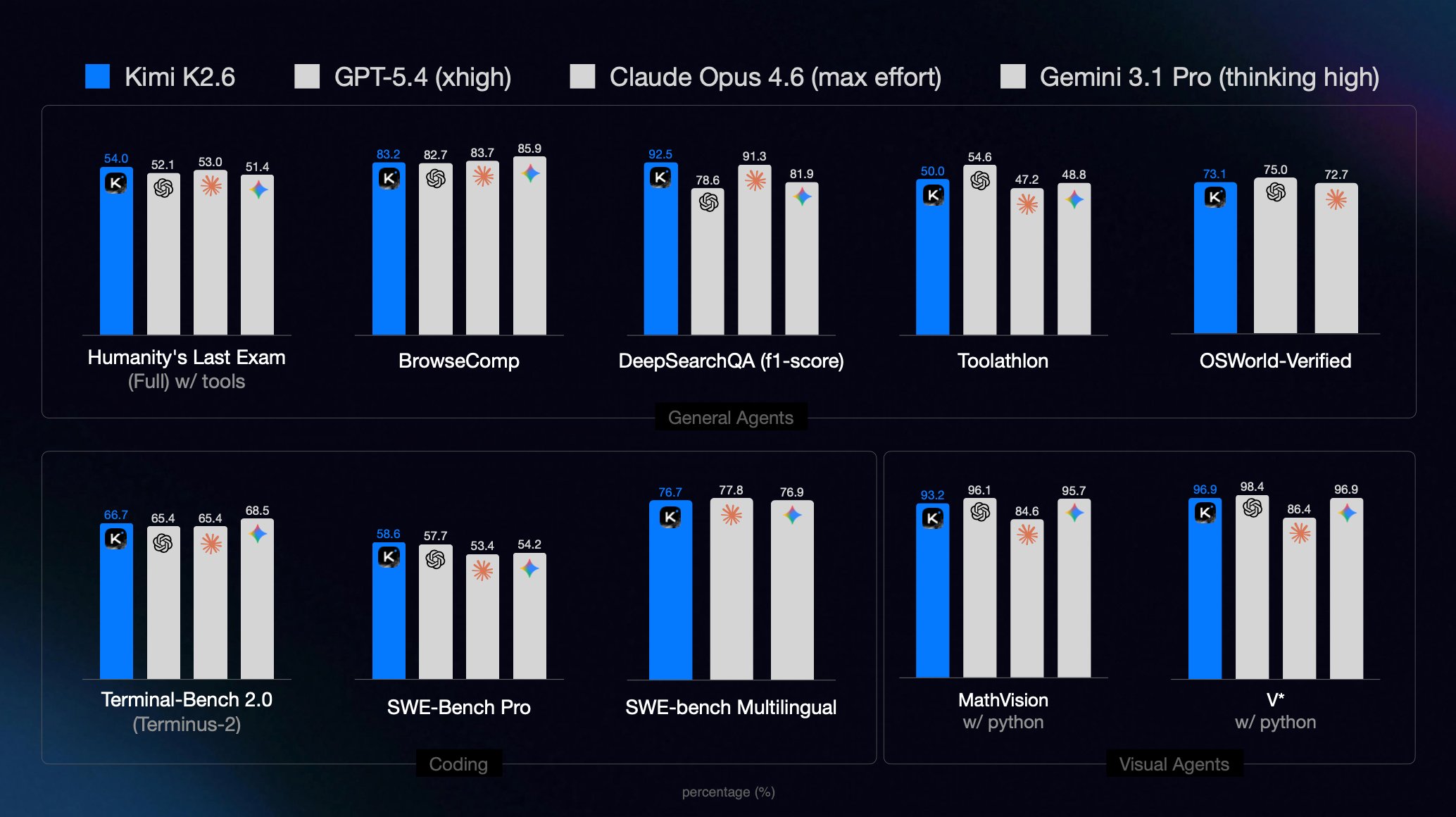
⚙️ Kimi K2.6 - Moonshot AI's powerful open-source coding and agent model

Clicky - Open-source AI teacher that lives next to your cursor
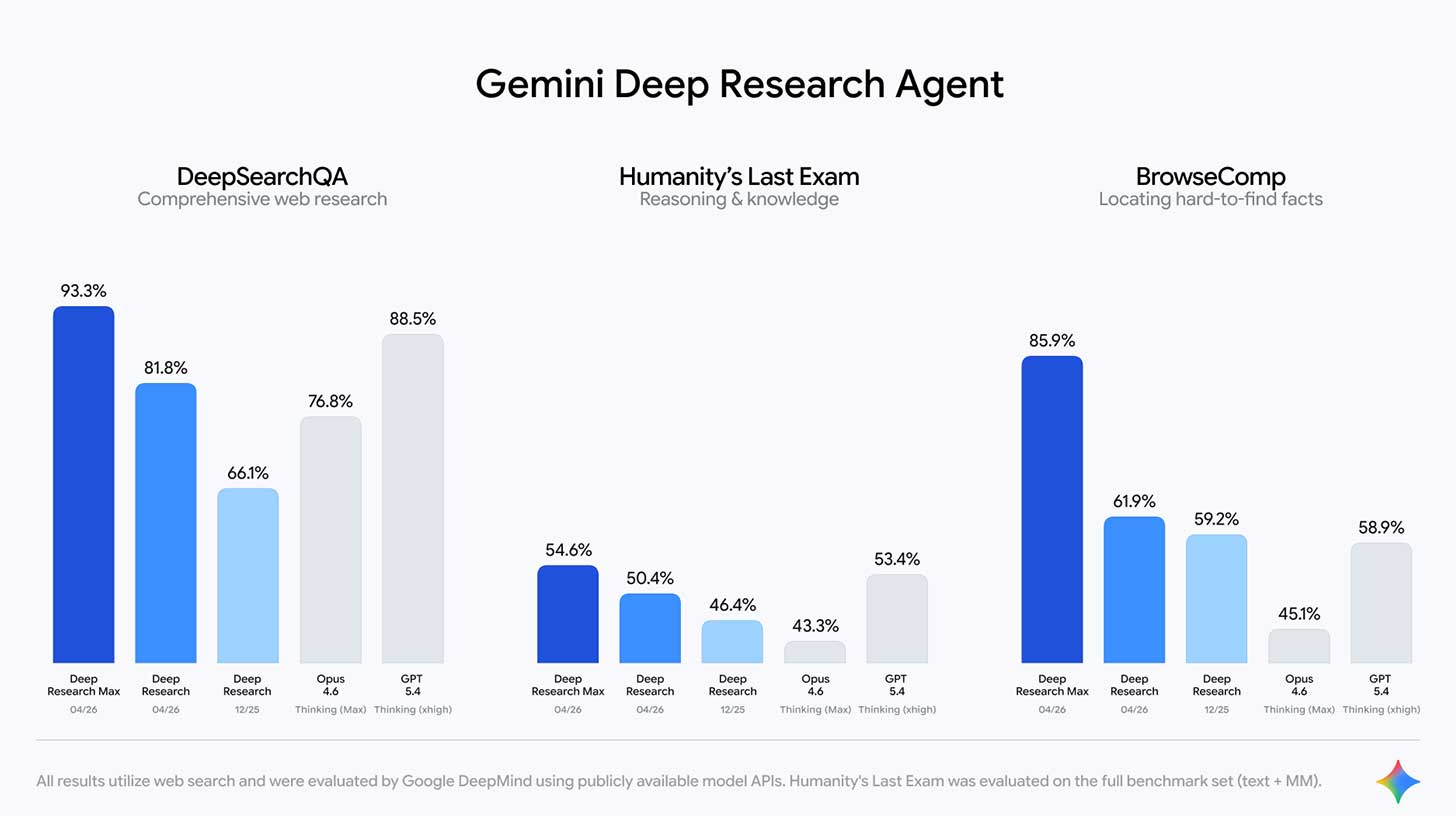
Deep Research Max - Google DeepMind's Gemini 3.1 Pro-powered autonomous research agent with MCP and native charts

Get access to all our AI courses, hundreds of real-world AI use cases, live expert-led workshops, an exclusive network of AI early adopters, and more.
Get unlimited access to all of our current & upcoming industry-specific AI courses for the duration of your subscription.
To keep up with the rapid pace of AI, our team publishes AI implementation guides daily. Our library contains 300+ practical use cases to automate real-world work.
Join weekly, live, interactive sessions with industry leaders who are at the forefront of AI for hands-on implementation guidance and exclusive insights.
Network with an exclusive community of AI-first professionals who are working smarter with AI. Learn how early adopters are using AI in their work and businesses.