Real-time voice agents
Generate responsive English speech for assistants, support agents, games, and interactive applications.
Independent tool overview
Chatterbox Turbo is a 350-million-parameter, English text-to-speech model from Resemble AI built for low-latency voice agents, zero-shot voice cloning, and expressive speech tags.
Visit the official Chatterbox Turbo site ↗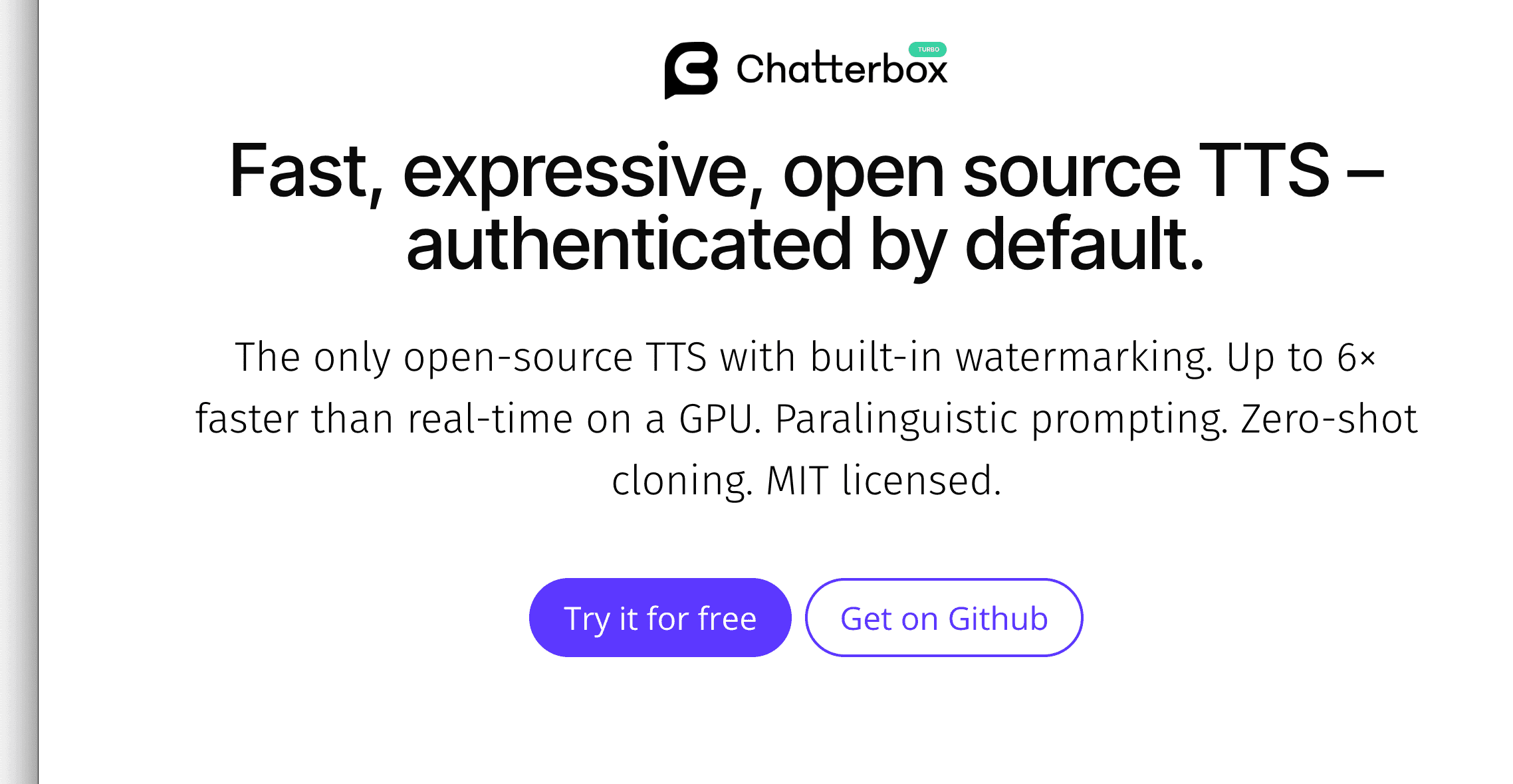
Overview
Chatterbox Turbo is the low-latency English model in Resemble AI's open-source Chatterbox family. It is designed for conversational agents and interactive audio, while also supporting narration and creative voice workflows.
The model uses a streamlined 350-million-parameter architecture and a single-step speech decoder. Resemble says it can run up to six times faster than real time on a modern GPU with roughly 75 milliseconds of latency, though actual performance depends on hardware, software, text length, and deployment settings.
Turbo can clone a voice from a short reference clip and respond to paralinguistic tags such as [laugh], [cough], [chuckle], and [whisper]. Voice cloning should only be used with clear permission, and generated speech should be disclosed where listeners could reasonably mistake it for a real person.
Use cases
The strongest fit depends on the job you need the product to complete, not the size of its feature list.
Generate responsive English speech for assistants, support agents, games, and interactive applications.
Add laughs, sighs, coughs, whispers, and other vocal reactions directly from tagged text.
Run an MIT-licensed model on infrastructure you control instead of sending every generation to a hosted API.
Test a cloned voice from a short authorized reference clip without training a dedicated model.
Capabilities
A 350M-parameter design and distilled one-step decoder target real-time English synthesis with lower compute and VRAM requirements.
Uses a short reference recording to reproduce a speaker's voice without a separate fine-tuning run.
Understands text tags for reactions including laughs, sighs, gasps, coughs, breaths, and whispers.
Generated outputs include Resemble AI's imperceptible neural watermark for provenance and incident-response workflows.
Code is available on GitHub, weights are distributed through Hugging Face, and the project uses an MIT license.
The official package exposes a Python API for loading Turbo, supplying reference audio, and generating waveforms.
Resemble also offers a browser playground and production speech service for teams that do not want to operate the model themselves.
Process
Step 1
Use only a voice you own or have explicit permission to clone, and document the allowed use cases.
Step 2
Decide between local or cloud-hosted inference based on latency, privacy, GPU availability, maintenance, and scale.
Step 3
Record a short, noise-free reference clip with one speaker and the intended vocal character.
Step 4
Install the official package, load ChatterboxTurboTTS, provide text and the authorized reference clip, and save the waveform.
Step 5
Evaluate pronunciation, speaker similarity, pacing, tag behavior, hallucinations, and latency before expanding the workload.
Step 6
Disclose synthetic speech, preserve watermarking, restrict voice assets, monitor misuse, and provide a human fallback.
Cost
Chatterbox Turbo's code and model are free to self-host under the MIT license, but users pay their own compute and operations costs. Resemble's hosted platform starts with a $0-per-month Flex plan and pay-as-you-go credits; higher-volume and enterprise arrangements cost extra.
Free
Self-host the official Chatterbox Turbo model under its MIT license.
$0/month + usage
Use Resemble's hosted platform and API without a subscription fee.
From $350/month
Team, Business, and custom deployments add seats, lower selected rates, and enterprise controls.
Pricing checked . Check current pricing at the source ↗
Assessment
Compare
The right alternative depends on the specific output, workflow, controls and budget your project requires.
Marketing
Choose ElevenLabs for a mature hosted voice platform with broad language support and managed APIs.
Explore ElevenLabs →Miscellaneous
Consider Fish Audio S1 for another modern speech model and voice-cloning workflow.
Explore Fish Audio S1 →Business Operations
Choose Speechify when the priority is a consumer-friendly reading and narration product rather than operating a model.
Explore Speechify →Questions
It is Resemble AI's 350M-parameter, low-latency English text-to-speech model for voice agents, expressive synthesis, and zero-shot voice cloning.
The open-source code and model are free to self-host under the MIT license. You still pay for hardware and operations. Resemble's managed platform uses separate hosted pricing.
Yes. Resemble says a short reference clip can guide zero-shot voice cloning. Only clone voices you have clear permission to use.
Turbo is built primarily for English. Resemble's Chatterbox Multilingual models are the better fit for broader language coverage.
They are inline instructions such as [laugh], [sigh], and [whisper] that ask the model to perform a nonverbal vocal reaction in the generated voice.
Yes. Resemble says every generated output includes its PerTh neural watermark, which can be checked with the accompanying tooling.
The repository uses the MIT license, which generally permits commercial use subject to its terms. Users remain responsible for voice consent, content rights, privacy, and applicable law.
Bottom line
Chatterbox Turbo is a strong option for developers who want a fast, expressive English TTS model they can inspect and self-host. Its open license and native reaction tags are compelling, but teams should benchmark their own workload and treat voice consent, access control, disclosure, and misuse prevention as core product requirements.
Visit Chatterbox Turbo website ↗
Gemini 3 Flash - Google's powerful, cost-effective frontier reasoning model
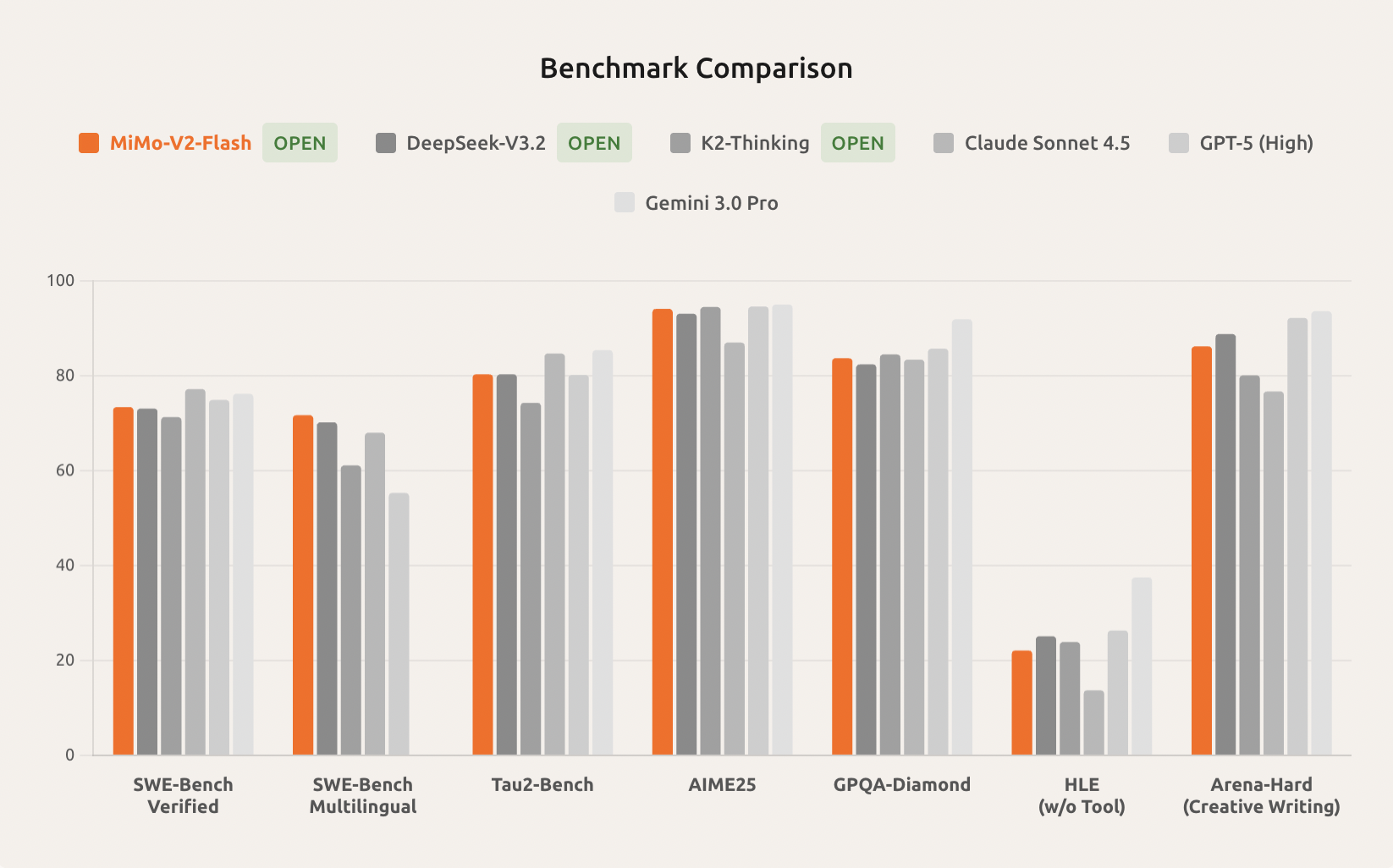
MiMo-V2-Flash - Xiaomi's powerful open-weights reasoning model
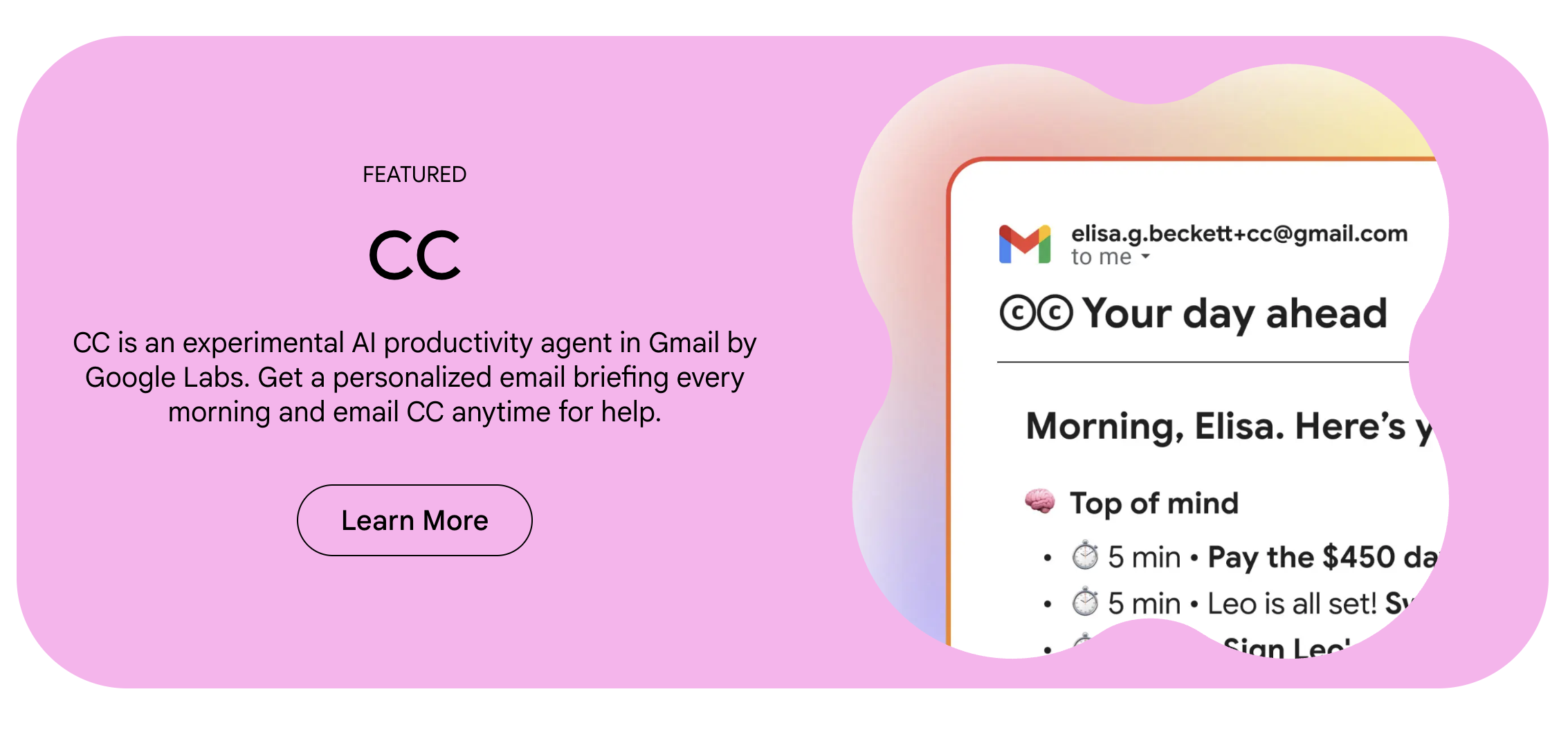
CC - Google Labs’ experimental AI productivity agent in Gmail
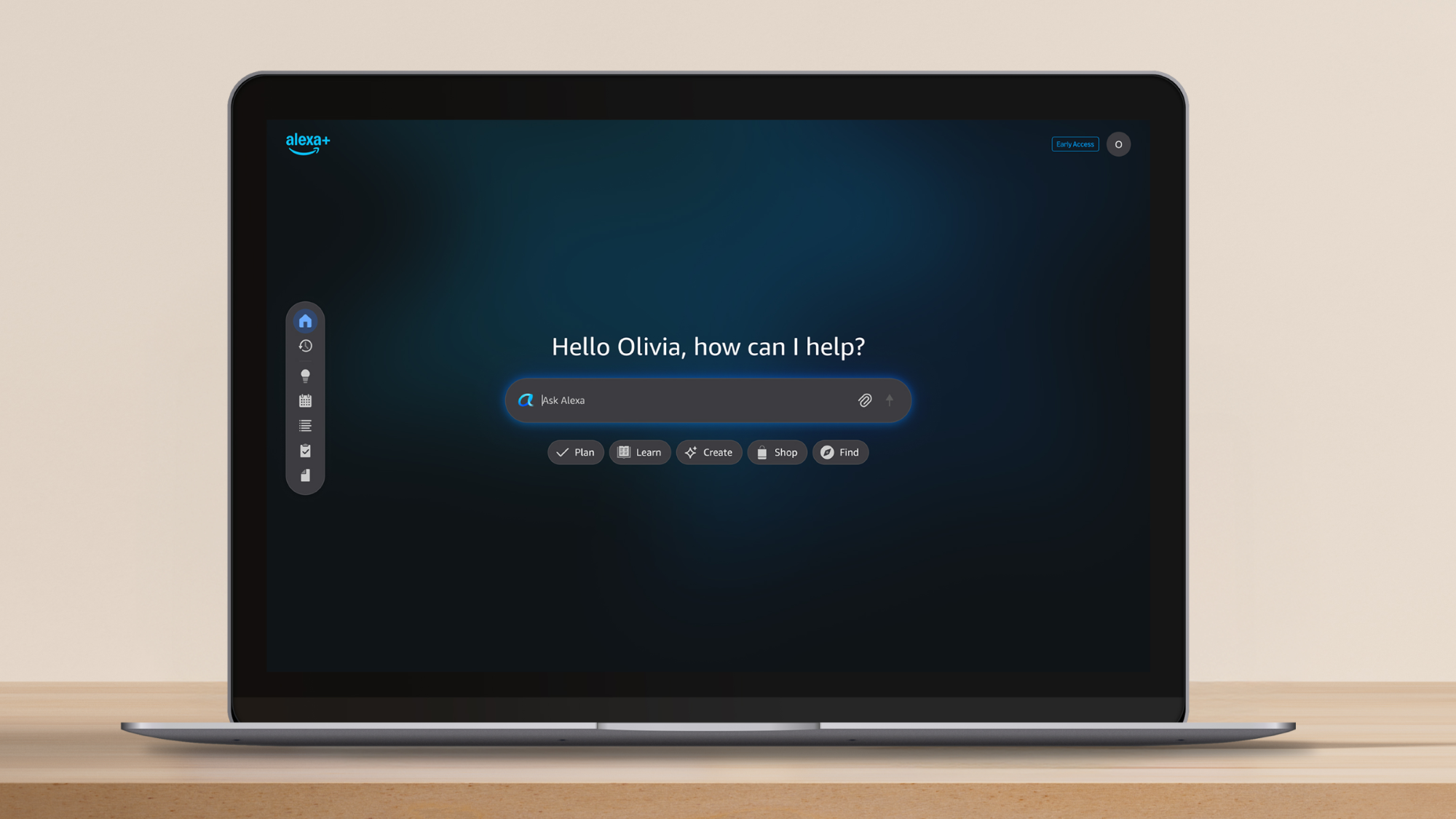
Alexa.com - Amazon's AI assistant experience across voice, mobile, and web

Get access to all our AI courses, hundreds of real-world AI use cases, live expert-led workshops, an exclusive network of AI early adopters, and more.
Get unlimited access to all of our current & upcoming industry-specific AI courses for the duration of your subscription.
To keep up with the rapid pace of AI, our team publishes AI implementation guides daily. Our library contains 300+ practical use cases to automate real-world work.
Join weekly, live, interactive sessions with industry leaders who are at the forefront of AI for hands-on implementation guidance and exclusive insights.
Network with an exclusive community of AI-first professionals who are working smarter with AI. Learn how early adopters are using AI in their work and businesses.