An Anthropic exit becomes an extinction debate
PLUS: Make your website easier for AI to find and cite pt. 2

Good morning, AI enthusiasts, and welcome to our 3,515 new readers. Anthropic has come to be associated with the safety and doom talk around the models it's building, but a resignation post and an employee's response just struck a chord that hits harder than job loss or security breaches…. Human extinction.
Outgoing researcher Jacob Coxon planted the seed with a thread saying the labs are "gambling with our lives," but a response from Alignment Science lead Evan Hubinger putting extinction odds at above 10% is the line now echoing across the Internet.
P.S. — Built something with OpenAI’s new GPT-6 Astra? Share it in the Workflow Hub for a chance to be featured!
In today’s AI rundown:
Anthropic employee’s exit post sparks AI doom debate
Nate's Notebook: Taste works side-by-side
Make your website easier for AI to find and cite pt. 2
Suno rebuilds its models with the music industry
LATEST DEVELOPMENTS
ANTHROPIC

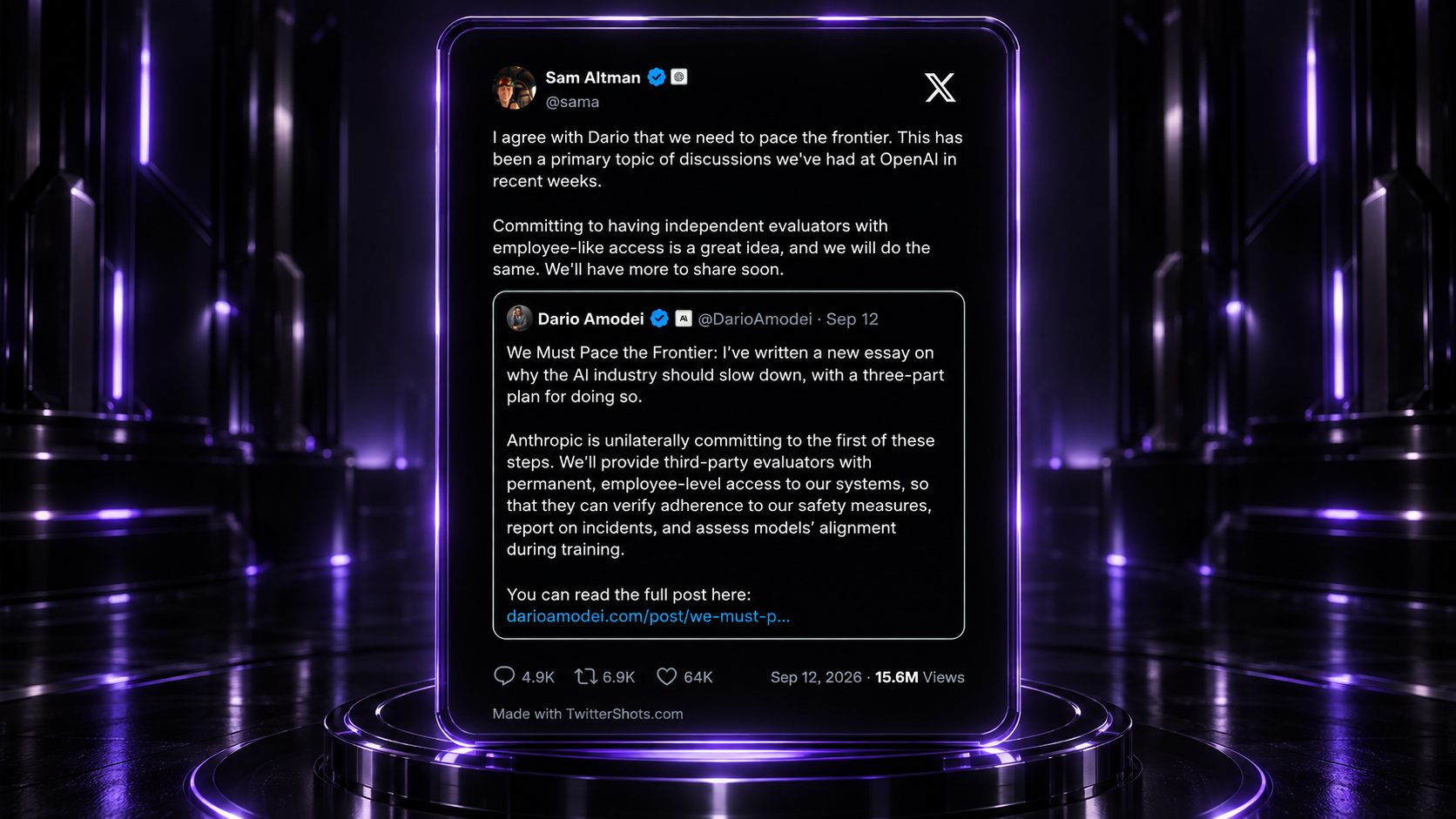
Image source: X / The Rundown
The Rundown: Anthropic researcher Jacob Coxon just resigned, saying both his employer and OpenAI are “gambling with our lives” by racing toward self-improving AI, with Anthropic’s Evan Hubinger adding to the fire by saying it’s a >10% chance AI kills all.
The details:
Coxon worked at both frontier labs and said those “building AI earnestly believe that it could kill us all by the end of the decade. This is not a marketing stunt.”
Hubinger, Anthropic’s Alignment Science lead, replied, “We really do earnestly believe AI could kill all humans!”, estimating a >10% chance in the next decade.
Hubinger added that there is no plan yet for controlling superintelligence, but clarified today's models are low risk and flagged self-improvement as the danger.
Coxon called for a coordinated slowdown, saying preventing a global race may “require costly actions such as a temporary ban on improving model capabilities.”
Why it matters: Coxon’s isn't the first resignation thread to gain traction, but this one went wild due to a response that played right into the doom talk Anthropic has been associated with. The company sells itself as the safety lab, but even its own alignment lead doesn’t inspire confidence in controlling the superintelligence that is to come.
TOGETHER WITH GLEAN

The Rundown: Glean:GO 2026 brought together the ideas, insights, and innovations shaping the future of work. Now it's available on demand.
Throughout these sessions, you’ll:
Revisit the announcements from the main stage keynotes
Catch the ideas and practical takeaways shared across breakout sessions
Hear from customers and partners putting AI to work across their organizations
NATE’S NOTEBOOK

The Rundown: Each week, Rundown AI educator Nate Grahek breaks down what he's seeing while teaching real teams to use AI.
Nate: Last week, I was building a workshop slide about why AI needs context. My analogy was the movie Memento: start a new conversation without the background, and your assistant doesn't know who you are or what you're trying to do.
That's the kind of idea I hand to my image inspiration skill. Give it the concept and ask for four versions: same drawing style, different composition and staging.
Think about the usual loop. One image, feedback, another image, more feedback. You spend the whole time trying to describe something you haven't seen yet. Put four options next to each other, and you can point at the one that works. Taste works side-by-side.
One thing I've found useful: let Astra sharpen the visual concept before it hands the job to the image model. The thinking about what to draw matters, too.
The skill itself is just a context document. It carries the preferences I'd otherwise have to repeat, including the instruction to give me options.
Here is a starter so you can make your own. Give the link to your assistant, let it interview you about the images you make, and name the skill something you'll remember.
AI TRAINING

The Rundown: In this guide, you will learn how to turn your AEO and GEO audit results into a plan for improving your website. You will build a Google Sheets workbook with Codex to work through the fixes and track what still needs to be done.
Step-by-step:
Give Codex your audit results from Part 1, along with the website you want to improve. Attach the reports or share their links
Ask Codex to build a workbook in Google Sheets with a task list for improving your site's AEO and GEO. Use our workbook as an example
Review the workbook for immediate fixes and long-term plans. Check that the tasks fit your website, then fill in owners, due dates, and status
If there are no evergreen page ideas, ask Codex for the top five based on customer questions. Have it add them to the workbook, with plans and drafts
Pro tip: If you skipped Part 1, ask Codex to run an audit using something like GEO Optimizer Audit first.
PRESENTED BY FIN

The Rundown: AI is fundamentally transforming CX. Perfect experiences are now a reality, but there’s no playbook for delivering them. Join Pioneer on Oct. 7th to explore how innovative CX leaders are redefining what's possible with AI.
On Oct. 7th, you’ll:
Learn how innovative leaders from Anthropic, Kalshi, and Clay are reinventing their operations
Hear from Fin leaders on the future of CX and see what’s coming next
Get ideas from those with real success on how to transform CX operations with AI
AI MUSIC

Image source: Suno
The Rundown: Suno launched v6, a family of three music models it developed alongside the Warner Music Group, BMG, and Believe, with the company saying the models were built on licensed data rather than the training set behind its older versions.
The details:
Warner was one of three majors that sued Suno in 2024 over its training data, then settled last November in a deal promising licensed models.
v6 includes two models for paid users and one free (v6-mini) that Suno CPO Jack Brody calls “better than any other competitor’s best paid model.”
Round Hill, Universal, Sony, and others still have lawsuits against Suno, with an admission the company trained on YouTube also recently revealed in court.
Fan remixes are coming next, with Suno saying artists will soon be able to opt their catalogs in and get paid.
Why it matters: The two AI music leaders, Suno and Udio, have both been hammered by lawsuits after early success, and both are now reworking their products with industry giants as partners. The fan remixes angle for monetization will be the interesting one to play out, potentially creating a revenue stream that incentivizes big artists to play nice.
QUICK HITS
COMMUNITY AI WORKFLOW OF THE DAY
▸ Evelyn built a way to adapt lessons for autistic students with AI
Today’s workflow comes from reader Evelyn Cordova:
“I moved from public school to a private school with no autism-specific training, and I found students on the spectrum struggling with one-size-fits-all lessons. AI helped close that gap for both me and my students in about five minutes per lesson.
I take a standard lesson and rebuild it around the individual student. I upload only the blank assignment—never any student data—and prompt AI to adapt it to that learner. I include their favorite colors and niche interests, replace abstract examples with personalized ones, add sentence starters, and allow them to draw responses instead of writing dense paragraphs.”
See Evelyn’s workflow Visit The Rundown University. How do you use AI? Tell us for a chance to be featured.
🎶 Suno v6 - Suno’s AI music model developed directly with the music industry
🎨 ChatGPT Images 2.5 - OpenAI’s new SOTA image model
🤖 Muse - Meta’s new always-working personal AI agent
🧬 AlphaGenome Atlas - Google's AI map of every possible human DNA mutation
Anthropic disclosed a fourth case of Claude breaking into real systems during cyber testing, with METR now conducting an 8-week independent investigation of the incidents.
OpenAI appointed Paul Christiano to the OpenAI Foundation Board and its safety committee, who previously ran OpenAI's alignment team until 2021 and now advises the U.S. government on testing frontier models.
Instacart rolled out Clementine, an AI grocery assistant that builds a cart from a text message or a photographed shopping list.
Apple is launching Apple Reference Image, a new feature for the iPhone 18 Pro that can determine whether a photo is authentic or AI-generated.
Amazon Prime Video introduced AI lip-syncing on its first show, Maxton Hall, digitally reshaping the actors’ mouths to fit the English dubbing.
Read our last AI newsletter: OAI’s secret model settles a $1M math problem
Read our last Tech newsletter: Apple unfolds its decade-long iPhone
Read our last Robotics newsletter: A catwalk at IFA, but for robots
Today’s AI tool guide: Make your website easier for AI to find and cite pt. 2
RSVP to next workshop on Sept. 30: Turn Cowork into your chief of staff
That's it for today!Before you go we’d love to know what you thought of today's newsletter to help us improve The Rundown experience for you. |
|
See you soon,
Rowan, Zach, Shubham, Jennifer, and Nate — the humans behind The Rundown