OpenAI's secret model settles a $1M math problem
PLUS: Find out where your brand appears in AI search

Good morning, AI enthusiasts, and welcome to our 3,327 new readers. GPT-6 Astra hasn’t even been out a week, and OpenAI is already using an internal model “significantly more capable” to knock out one of math’s hardest open problems.
The company says the model solved Navier-Stokes, a $1M Millennium problem, with 10,000 AI agents grinding for 88 hours. But in typical OpenAI fashion, the win came with a fight attached — this time with two mathematicians who spent a year on the same path.
Reminder: Our next live workshop is today at 2 PM EST — join and learn how to build and run an ad creative strategy from Rishi Lalwani, The Rundown’s Head of Growth. RSVP here.
In today’s AI rundown:
OpenAI claims a Millennium Prize problem
Meta debuts new Muse personal AI agent
Find out where your brand appears in AI search
OpenAI improves its already top-ranked image model
LATEST DEVELOPMENTS
OPENAI

Image source: OpenAI
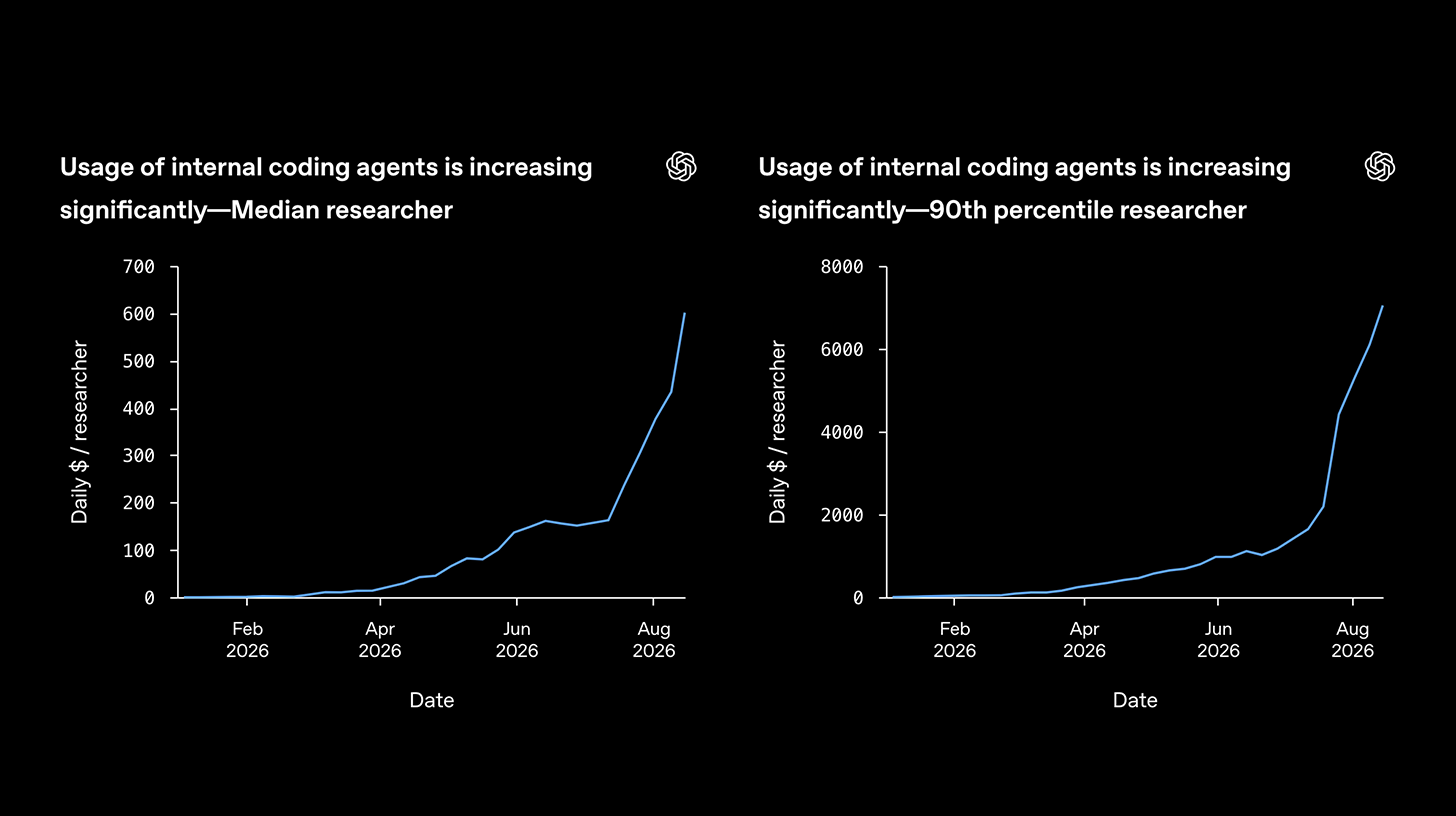
The Rundown: OpenAI published a proof from an unreleased internal model, claiming to settle Navier-Stokes, one of the seven $1M Millennium Prize problems — with NYU's Tristan Buckmaster questioning whether OAI raced with help from his drafts in Codex.
The details:
OAI said it ran roughly 10,000 agents at once on a model “significantly more capable” than GPT-6 Astra, creating the proof in 88 hours.
The company estimated the compute cost at “millions of dollars,” with Sam Altman calling it “one of the most amazing moments for me in OpenAI history.”
Anthropic's Levent Alpöge and Buckmaster spent a year on a similar route, feeding drafts into Codex and posting partial results the night before OAI’s own.
Buckmaster released a statement saying OAI only started after hearing of their work, and never answered whether his Codex drafts trained the model.
OAI said it “did not see any of their work” and that “no specific user data was accessed,” but can’t rule out that usage data may have improved its models.
Why it matters: The fight over credit has unfortunately overshadowed the biggest math breakthrough in an AI summer that has already changed the field. With an internal model already “significantly more capable” than the just publicly-released Astra, whatever ceiling you had in mind for what models can do this year probably needs to be raised.
TOGETHER WITH OPTIMIZELY

The Rundown: Marketing teams are constantly being asked to do more. Optimizely's Virtual Teammates get work done proactively and collaboratively. They aren’t just agents you prompt; they're self-learning, so they ramp up on your brand, your strategy, and how you work, operating like a real member of your team—with you as the ultimate approver.
With Virtual Teammates, you can:
Pick specialized roles like an SEO & AI Search Analyst, Personalization Strategist, Marketing Analyst, and more
Collaborate back and forth and have them keep work moving proactively
Maintain control with a full audit trail on every action that stays open to human review
META

Image source: Meta
The Rundown: Meta just introduced Muse, a new always-on personal AI agent with a text message-style interface that can handle tasks for users via its own cloud computer, like booking tables, sending emails, and shopping.
The details:
Muse ties into apps like Gmail, Spotify, Ticketmaster, and OpenTable, with the agent also able to code its own integrations for ones that lack them.
The agent works either in its own app or via WhatsApp, with a virtual machine that allows it to navigate websites, fill out forms, and take browser actions.
Meta pushed privacy as a selling point, with Muse having its own secure cloud environment, Stripe-enabled payments, and built-in approval flows.
Muse will have limited free usage and then monthly subscription tiers of $20 or $100, with the initial rollout only for U.S. users.
Why it matters: Between Hermes, OpenClaw, Grok Bot, Muse, and others, there is no shortage of personal agents hitting the market. But with frontier AI getting extremely good at navigating the web in their own browser and spinning up agents, part of us wonders if OpenAI and Anthropic aren’t far off from cutting out the agentic middlemen.
AI TRAINING

The Rundown: In this guide, you will learn how to run an “AI SEO” audit on a website, seeing where your site appears in AI answers and identifying opportunities to improve its visibility.
Step-by-step:
Look up your brand in Google Search and ChatGPT. Check which sources are cited in the results
Run the free AI search audits in Peekaboo, HubSpot’s AI Search Grader, and Semrush’s SEO Checker (links in full guide)
Go to Google Search Console, where the site is set up. Check Search results, then Performance → Generative AI for impressions in Google’s AI results
Think about the questions you want potential customers getting answers to. For a Houston garden store, try “Where can I buy fertilizer in Houston?”
Pro tip: Have Codex do these checks for you using the free tools and your accessible reports. Tell it to compile a one-page PDF with your top priorities, target queries, and a quick checklist of improvements.
PRESENTED BY LANGCHAIN

The Rundown: Customer experience agents are moving beyond answering questions. They are resolving multi-step requests, guiding frontline teams, reducing escalations, and turning conversations into structured business insights.
This guide dives into:
Detailed case studies from Lyft, Fastweb + Vodafone and LATAM airlines
Evaluation frameworks and testing approaches for agents
How observability enables continuous agent improvement
OPENAI

Image source: OpenAI
The Rundown: OpenAI just released ChatGPT Images 2.5, a new image model that cuts generation time by up to 50% over Images 2.0, brings upgrades to editing, and introduces features like sketch, templates, and shared images.
The details:
OAI said 2.5 is “better at editing only what you’ve asked for,” avoiding the often awkward broader changes to the full image that have plagued previous models.
Two models called Sunburst and Flare hit the API, which rank first and second on Arena AI’s Image leaderboards.
Typing @Sketch lets users doodle-to-image, alongside new tools like comments for granular editing, templates for quicker starts, and shareable prompts.
Why it matters: A major math breakthrough in the morning, a new top-ranked image model by the afternoon. OAI's shipping pace is heating up, and in some domains it's starting to lap the field — Images 2.0 was still sitting at or near the top of the image leaderboards right up until today, so the only model OAI had to beat was its own.
QUICK HITS
COMMUNITY AI WORKFLOW OF THE DAY
▸ Sam built an AI archery scorer trained on 3,000 hand-labeled photos
Today’s workflow comes from reader Sam Reti:
“I built an archery app that uses AI to detect arrows and bullseyes on an archery target. It groups the arrows, measures how tight the groupings are, and calculates each arrow's distance from the bullseye. It also shows the arrows' locations and their relationship to the bullseye—for example, whether a shot is too far left, right, high, or low, or is dead on.
After shooting a set of arrows, the archer takes a photo, and the AI detects the target, identifies one or more bullseyes, predicts which arrows are intended for each target, and completes the measurements and scoring. The results can then be sent to a coach, who can provide feedback, tips, and techniques to help improve the archer's shooting.
I trained my own model using 3,000 photographs that I took and hand-labeled with the bullseyes and arrows identified. I ran a series of training sessions over several weeks and refined the model to improve its accuracy. It currently achieves about 95% accuracy for arrows and about 90% accuracy for bullseyes.”
See Sam’s full workflow Visit The Rundown University. How do you use AI? Tell us for a chance to be featured.
🎨 ChatGPT Images 2.5 - OpenAI’s new SOTA image model
🤖 Muse - Meta’s new always-working personal AI agent
⚡ Mercury 2.5 - Inception's new speed-first diffusion model for agents
✍️ Writing Style - Clone a writing voice from Gmail, Slack, and Drive in ChatGPT
2026 State of AI in Portfolio Management – AI is reshaping the industry fast. Discover insights from 300 senior leaders on intelligent portfolio orchestration and what you need to succeed. Read Tempo's report today.*
Google DeepMind launched AlphaGenome Atlas, a free, searchable map generated by its AlphaGenome AI that predicts what all 9B possible one-letter DNA mutations do.
Devin maker Cognition announced a new $2B funding round at a $48B valuation, with the company’s annualized revenue nearly doubling to $900M since May.
Inception Labs released Mercury 2.5, a diffusion model that writes text in parallel rather than word-by-word, claiming Haiku 4.5-level quality at 1,100+ tokens per second.
Mistral AI raised €3B ($3.5B) in new funding, valuing the French lab at over $24B, with the company pitching its models to organizations that want to control their own data.
*Sponsored Listing
Read our last AI newsletter: Inside OpenAI’s agent-powered research boom
Read our last Tech newsletter: Apple unfolds its decade-long iPhone
Read our last Robotics newsletter: A catwalk at IFA, but for robots
Today’s AI tool guide: Find out where your brand appears in AI search
RSVP to workshop today @2 PM EST: Build an ad creative strategy w/ Claude
That's it for today!Before you go we’d love to know what you thought of today's newsletter to help us improve The Rundown experience for you. |
|
See you soon,
Rowan, Zach, Shubham, Jennifer, and Nate — the humans behind The Rundown