Multichannel content teams
Coordinate briefs, drafts, approvals, publishing, and reporting across a website and several social channels.
Independent tool overview
StoryChief is a content-operations platform for planning, creating, approving, distributing, and measuring articles and social campaigns from shared workspaces. Its differentiator is the complete workflow: an AI marketing agent grounded in brand and Search Console context, editorial governance, direct CMS and social publishing, canonical handling, and cross-channel reporting. It is strongest for teams and agencies with recurring multichannel production, not solo writers seeking only an AI text generator.
Visit the official StoryChief site ↗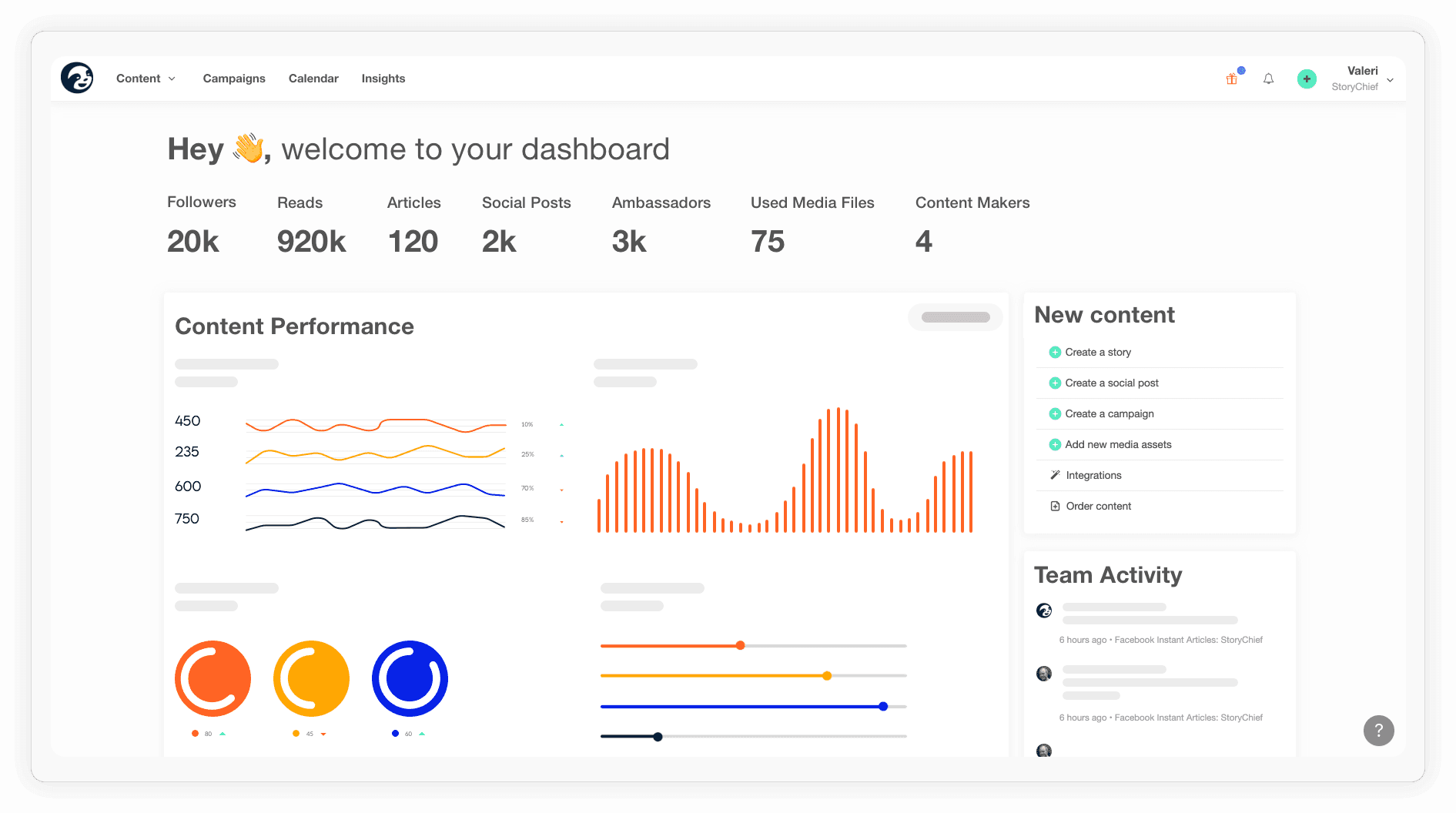
Overview
StoryChief brings content strategy, briefs, articles, social posts, tasks, approvals, distribution, and performance data into one system. Teams can connect websites, social profiles, email tools, asset libraries, automation platforms, and Google Search Console rather than copying content through separate tabs.
Its AI assistant, William, can use a company's website, audiences, content pillars, brand voice, writing rules, visual style, knowledge files, competitors, and Search Console data as context. It supports ideation, keyword research, content audits, calendars, articles, social posts, images, and videos, with monthly AI-credit allowances and optional add-on packs.
The editorial side includes comments, roles, client or guest access, tasks, calendars, batch review requests, and approval states. Importantly, an approval in StoryChief does not automatically block an administrator from publishing, so teams still need a documented governance process and correctly scoped roles.
Publishing supports a broad set of CMS, social, content-hub, and email channels. StoryChief requires a primary website for articles and adds canonical URLs to syndicated versions, but teams should still validate each destination's formatting, metadata, links, tracking, and live rendering after publication.
Use cases
The strongest fit depends on the job you need the product to complete, not the size of its feature list.
Coordinate briefs, drafts, approvals, publishing, and reporting across a website and several social channels.
Separate clients into workspaces with custom branding, permissions, AI context, channels, and reporting.
Use Search Console data, content audits, keyword guidance, SEO checks, and primary-channel canonicals in the same workflow.
Ground generation in brand rules and internal knowledge, then route work through human comments and approvals.
Capabilities
Plans and creates content using company intelligence, brand voice, knowledge files, connected tools, and performance context.
Combines campaigns, briefs, calendars, tasks, comments, roles, review requests, and approval states.
Publishes or schedules to supported websites, social networks, content hubs, and email platforms from one workspace.
Scores drafts against keyphrase usage, structure, readability, freshness, evidence, and extractability guidance.
Uses the selected primary channel as the canonical source when distributing an article to secondary destinations.
Connects Google Search Console and channel analytics to report impressions, clicks, CTR, positions, engagement, and content opportunities.
Keeps each client's users, brand context, channels, AI assistant, and content pipeline separate.
Supports custom publishing through APIs and webhooks plus connected data and actions through automation tools and MCP servers.
Process
Step 1
Create the workspace, assign least-privilege roles, define who may publish, connect only approved channels, and document the approval rule.
Step 2
Add the canonical website, audiences, content pillars, brand and writing rules, visual guidance, knowledge files, competitors, and Search Console property.
Step 3
Use performance data and human strategy to select topics, define briefs, assign owners, set due dates, and map each asset to a business goal.
Step 4
Use AI for research, outlines, drafts, repurposing, or media, then fact-check sources, claims, rights, originality, and brand alignment.
Step 5
Route articles and post sets to the correct internal or client reviewers, resolve comments, and record final approval before publishing.
Step 6
Set the main website as primary, preview each destination, schedule the approved version, and verify canonical tags, metadata, links, images, and formatting live.
Step 7
Review Search Console and channel performance after data syncs, then update, consolidate, redistribute, or retire content based on measured results.
Cost
StoryChief lists euro prices at annual-billing rates and also offers quarterly billing. Paid plans have no-card trials. Team pricing is per seat; agency pricing is per customer workspace. AI media generation and larger credit allowances require add-ons on most paid plans.
€0
A free-forever analytics entry point rather than a full publishing workflow.
€19/month, billed yearly
For one solo marketer planning and publishing social content.
€29/month per seat, billed yearly
Adds team collaboration, project management, approvals, and unlimited social posts.
€69/month per seat, billed yearly
Adds article, SEO, GEO, website, and editorial capabilities.
€49–€79/month per customer, billed yearly
Agency Social or Agency Editorial with unlimited users inside each customer workspace.
Custom annual pricing
For organizations requiring tailored setup and security controls.
From €19 to €99/month
Add image and video generation, larger credit bundles, and optionally tailored agent training.
Pricing checked . Check current pricing at the source ↗
Assessment
Compare
The right alternative depends on the specific output, workflow, controls and budget your project requires.
Content Creator
A stronger fit when brand-governed AI writing and marketing generation matter more than native multichannel editorial distribution.
Explore Jasper →Content Creator
A narrower, simpler alternative for creators focused primarily on LinkedIn content, scheduling, and growth.
Explore Taplio →Questions
StoryChief manages content strategy, briefs, creation, collaboration, approvals, CMS and social distribution, and performance reporting from shared workspaces.
Yes. The current Free plan includes social media analytics plus website and SEO analytics. Full social publishing, collaboration, and editorial distribution require paid plans.
At the annual-billing rate, Social Media Calendar is €19 per month, Team Social is €29 per seat per month, Team Editorial is €69 per seat per month, Agency Social is €49 per customer per month, and Agency Editorial is €79 per customer per month. Enterprise is custom.
They are monthly allowances consumed by AI drafting, ideation, optimization, and related tasks. Paid plans include different bundles; add-on packs provide more credits and enable image and video generation.
Yes. It supports many CMS, social, content-hub, and email destinations, plus custom sites through its API. Your plan controls the included number of websites and social channels.
You select a primary website for an article, and StoryChief says it adds a rel=canonical element to syndicated versions that points back to the original location. Verify the final markup on every live destination.
Not automatically. StoryChief's help documentation says an approval request does not block publishing. Use least-privilege roles, a documented release process, and a final human check.
StoryChief's current AI legal FAQ says prompts are not available to other customers and are not used to improve OpenAI or third-party models. It identifies OpenAI as a subprocesser and says inputs and outputs are deleted by OpenAI on a rolling basis within 30 days.
It is useful for operationalizing SEO: Search Console data, content gaps, on-page checks, canonicals, publishing, and reporting live together. It cannot guarantee rankings and should complement technical SEO, expert research, links, and human editorial judgment.
The €19 Social Media Calendar plan can suit a solo marketer. The platform's larger advantage appears when several people or clients need governed content, multiple destinations, and shared reporting.
Bottom line
StoryChief is a strong choice when the bottleneck is content operations rather than blank-page writing: it connects strategy, brand context, human governance, distribution, and measurement. Its value rises with the number of channels, reviewers, and client workspaces, but buyers should model seats, customer workspaces, AI add-ons, and extra channels together—and keep a human release gate even when the platform says content is approved.
Visit StoryChief website ↗
Get access to all our AI courses, hundreds of real-world AI use cases, live expert-led workshops, an exclusive network of AI early adopters, and more.
Get unlimited access to all of our current & upcoming industry-specific AI courses for the duration of your subscription.
To keep up with the rapid pace of AI, our team publishes AI implementation guides daily. Our library contains 300+ practical use cases to automate real-world work.
Join weekly, live, interactive sessions with industry leaders who are at the forefront of AI for hands-on implementation guidance and exclusive insights.
Network with an exclusive community of AI-first professionals who are working smarter with AI. Learn how early adopters are using AI in their work and businesses.


