Private and sovereign deployments
Run permissively licensed weights in controlled infrastructure when data location and model control matter.
Independent tool overview
Mistral 3 is an Apache 2.0 open-weight model family spanning the 675B-total-parameter Mistral Large 3 and 3B, 8B, and 14B Ministral 3 edge models.
Visit the official Mistral 3 site ↗
Overview
Mistral 3 is a model family rather than one chatbot. Mistral Large 3 is a sparse mixture-of-experts model with 675B total and roughly 41B active parameters for high-end multimodal, multilingual, agentic, and long-context work. Ministral 3 provides much smaller dense 3B, 8B, and 14B options for local, edge, and cost-sensitive deployments.
Mistral released the family under Apache 2.0 with weights in multiple formats, while also serving it through the Mistral API and several cloud providers. Large 3 and all three Ministral sizes remain available, although newer Mistral Small 4 and Medium 3.5 models now sit elsewhere in Mistral's broader catalog. Choose from current capability and deployment tests—not the shared generation number alone.
Use cases
The strongest fit depends on the job you need the product to complete, not the size of its feature list.
Run permissively licensed weights in controlled infrastructure when data location and model control matter.
Build text-and-image applications across dozens of supported languages with one model family.
Use instruction models with function calling and structured JSON in carefully constrained automation.
Apply the 256K context window to retrieval, document review, enterprise knowledge, and multi-file tasks.
Select a 3B, 8B, or 14B Ministral variant for devices and servers that cannot host a frontier-scale model.
Capabilities
Choose a 3B, 8B, or 14B dense Ministral model or the much larger sparse Mistral Large 3.
Mistral Large 3 uses a mixture-of-experts design with 675B total parameters and about 41B active for each token.
The Large and Ministral 3 models can analyze image input in addition to text.
Mistral positions the family for more than 40 native languages, including major European, Asian, and Arabic-language use cases.
Base and instruction weights are available under Apache 2.0, with compressed formats for different inference environments.
Each 3B, 8B, and 14B size has base, instruct, and reasoning releases.
Instruction models support system prompts, native function calling, and JSON output for application integration.
Official model cards document up to a 256K-token context window for long documents and conversation state.
Mistral serves Large 3 and all three Ministral 3 sizes with token-based pricing and cached-input discounts.
The release is available through Mistral Studio, Hugging Face, and multiple cloud and inference providers.
Process
Step 1
Separate requirements for quality, latency, vision, reasoning, languages, context, tool use, and data residency.
Step 2
Start with the smallest Ministral model likely to succeed, then compare it with Large 3 or a newer catalog model.
Step 3
Use the API or a managed provider to measure task quality, token volume, latency, and tool behavior before buying hardware.
Step 4
Include real languages, images, long documents, edge cases, unsafe requests, and failure recovery—not only public benchmarks.
Step 5
Compare API economics with self-hosting, then validate any FP8, NVFP4, GGUF, or other quantized checkpoint against the reference.
Step 6
Add retrieval boundaries, least-privilege tools, structured validation, content safeguards, monitoring, and a rollback path.
Cost
Mistral's standard API bills per million tokens and discounts cached input. Open weights have no per-token license charge, but self-hosting shifts cost to accelerators, storage, engineering, security, and operations.
$0.50 input / $0.05 cached / $1.50 output per 1M tokens
Hosted access to the flagship Mistral 3 model.
$0.20 input / $0.02 cached / $0.20 output per 1M tokens
The largest dense Ministral 3 option.
$0.15 input / $0.015 cached / $0.15 output per 1M tokens
A balanced hosted model for efficient applications.
$0.10 input / $0.01 cached / $0.10 output per 1M tokens
The smallest and least expensive hosted member of the family.
No model usage fee; infrastructure costs apply
Run official checkpoints in your own or rented environment.
Pricing checked . Check current pricing at the source ↗
Assessment
Compare
The right alternative depends on the specific output, workflow, controls and budget your project requires.
Coding
Choose Qwen3.6-27B for a newer compact open-weight model with strong coding and multimodal performance.
Explore Qwen3.6-27B →Consumer
Consider Qwen3-Max-Thinking when managed, high-end reasoning matters more than self-hostable Apache-licensed weights.
Explore Qwen3-Max-Thinking →Coding
Choose GLM 5.2 for a newer flagship model emphasizing coding and a much larger usable context window.
Explore GLM 5.2 →Business Operations
Consider DeepSeek for alternative open and hosted reasoning or general-purpose model economics.
Explore DeepSeek →Questions
Mistral 3 is an open-weight family containing Mistral Large 3 and the smaller 3B, 8B, and 14B Ministral 3 models.
Mistral releases the model weights under Apache 2.0, a permissive open-source license. The complete training data and pipeline are not published, so open-weight is the more precise description of the model release.
Large 3 is a 675B-total-parameter sparse mixture-of-experts model for high-end workloads. Ministral 3 consists of dense 3B, 8B, and 14B models intended for lower-cost, local, and edge deployment.
Yes. Large 3 and the Ministral 3 variants have image-understanding capability in addition to text.
As of August 30, 2026, Large 3 costs $0.50 per million input tokens and $1.50 per million output tokens. Ministral 3 input and output rates range from $0.10 for 3B to $0.20 for 14B, with separate cached-input discounts.
It can be self-hosted, but not on an ordinary laptop. Mistral documents FP8 deployment on an eight-B200 or eight-H200 node and NVFP4 on an eight-H100 or eight-A100 node.
Start with the smallest model that meets a representative evaluation. Compare 3B, 8B, and 14B for efficient tasks, and use Large 3 when its additional quality justifies higher latency and infrastructure cost.
Yes. Mistral still lists Large 3 and all three Ministral 3 sizes in its active model catalog and API pricing. Newer models such as Mistral Small 4 and Medium 3.5 may be better fits for some workloads.
Bottom line
Mistral 3 remains a valuable open-weight family because it combines a permissive license, vision, long context, multilingual support, and sizes ranging from edge-friendly to frontier-scale. The practical choice is rarely 'Mistral 3 or not'; it is which exact checkpoint, precision, host, and newer comparison model wins a task-specific evaluation at an acceptable total cost.
Visit Mistral 3 website ↗
Shopping Research - Personalized, interactive shopping experience directly in ChatGPT to find the perfect products

Amazon Nova - Four new models with industry-leading price-performance, alongside a service for building custom frontier models and managing AI agents
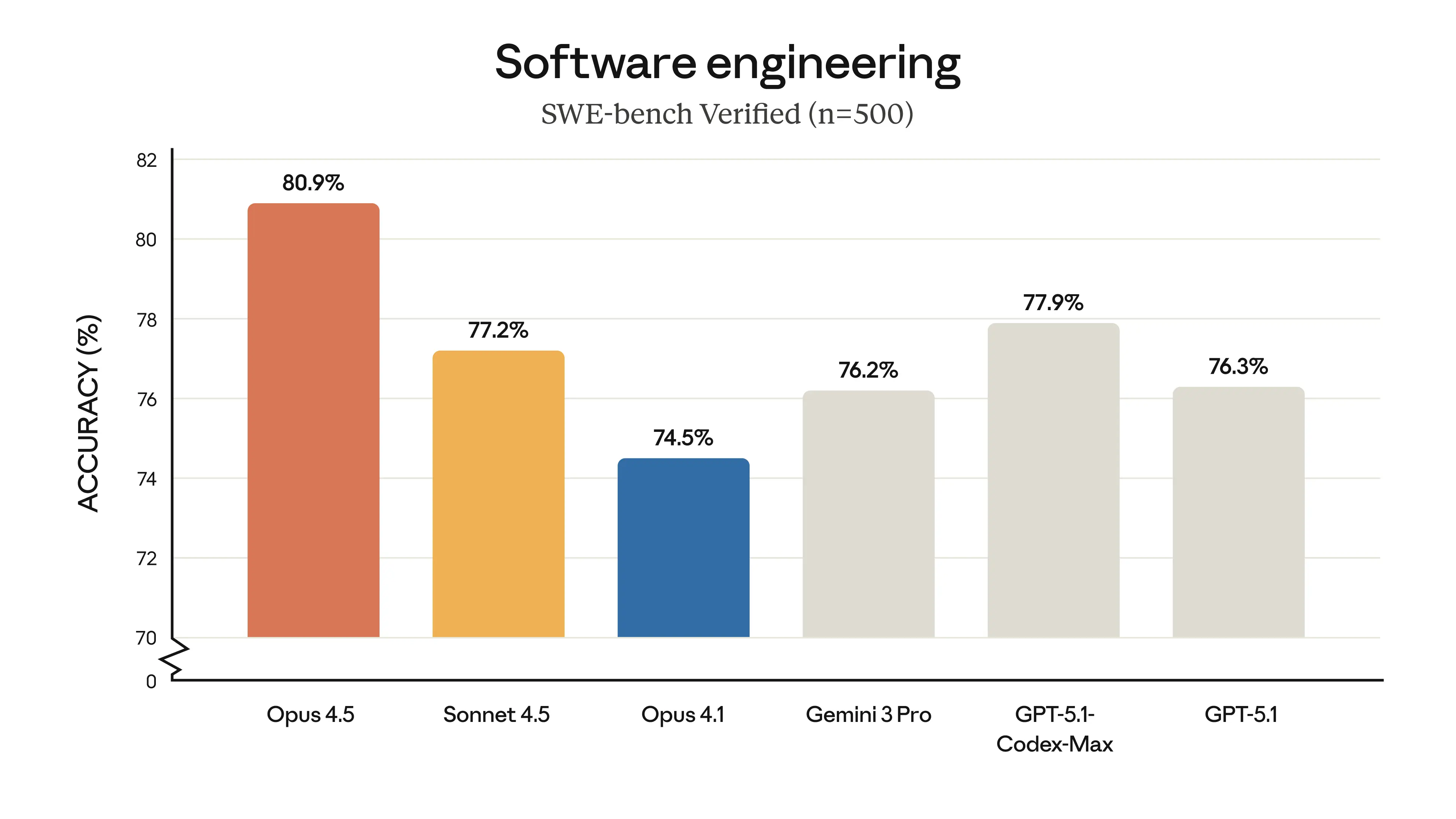
Claude 4.5 Opus - Anthropic's frontier model with SOTA coding, agentic, and computer use capabilities.
Kling Avatar 2.0 - Upgraded avatar model with enhanced expressiveness, realism, and full 5-minute generations

Get access to all our AI courses, hundreds of real-world AI use cases, live expert-led workshops, an exclusive network of AI early adopters, and more.
Get unlimited access to all of our current & upcoming industry-specific AI courses for the duration of your subscription.
To keep up with the rapid pace of AI, our team publishes AI implementation guides daily. Our library contains 300+ practical use cases to automate real-world work.
Join weekly, live, interactive sessions with industry leaders who are at the forefront of AI for hands-on implementation guidance and exclusive insights.
Network with an exclusive community of AI-first professionals who are working smarter with AI. Learn how early adopters are using AI in their work and businesses.