Governed KPI definitions
Organizations that need finance, operations, marketing, product, and BI tools to reuse the same approved metric logic.
Independent tool overview
Kyligence is an enterprise analytics vendor with three related offerings: Kyligence Zen for defining and governing reusable business metrics, Kyligence Copilot for asking questions and generating analyses in natural language, and Kyligence Enterprise for accelerating multidimensional SQL analytics on large data lakes. It is most relevant to organizations that need a governed metrics layer or embedded analytics—not someone looking for a lightweight spreadsheet chatbot. Kyligence offers a free evaluation and sales-led deployments, while production pricing is not publicly itemized.
Visit the official Kyligence site ↗
Overview
Kyligence is not simply a generic AI data-analysis app. Its core proposition is a governed business-metrics layer: teams connect data, define calculations and dimensions once, catalog those definitions, and expose the same metrics to dashboards, spreadsheets, APIs, embedded applications, and an AI assistant.
Kyligence Zen is the low-code metrics platform. It combines data access, metric modeling, a shared catalog, dashboards, Excel access, and open APIs. This can reduce the common problem of finance, marketing, product, and operations teams calculating the same KPI differently, but only when ownership, definitions, lineage, freshness, and access rules are implemented well.
Kyligence Copilot sits on Zen and uses Azure OpenAI. Users can ask questions about approved metrics, explore changes, request attribution or root-cause analysis, and turn conversations into dashboards or reports. The interface makes analysis more accessible; it does not make an LLM's explanation, causal claim, forecast, or recommendation automatically correct.
Kyligence Enterprise is a separate Apache Kylin-based commercial platform for multidimensional analytics on data lakes. Kyligence promotes standard SQL, high concurrency, and sub-second responses at petabyte scale, but those are vendor claims whose real-world result depends on model design, cardinality, preprocessing, infrastructure, data freshness, and the customer's actual query mix.
The company supports SaaS and private-cloud patterns, and its published materials describe granular row-and-column permissions, encryption, isolated cloud networks, identity integrations, and compliance certifications. Buyers should still validate the exact product edition and deployment: certification scope, model-provider flow, regions, subprocessors, prompt and output retention, support, recovery, deletion, and service levels are contract questions rather than assumptions.
Use cases
The strongest fit depends on the job you need the product to complete, not the size of its feature list.
Organizations that need finance, operations, marketing, product, and BI tools to reuse the same approved metric logic.
Teams that want non-technical users to explore governed metrics through chat, dashboards, and Excel without granting unrestricted raw-data access.
SaaS and internal-platform teams that want to add branded dashboards or a metric-aware copilot through APIs and a JavaScript SDK.
Enterprises evaluating Apache Kylin-based acceleration for repetitive multidimensional SQL queries and high-concurrency BI.
Organizations that need to evaluate an AI analytics interface in a more controlled deployment than a standard multi-tenant SaaS service.
Capabilities
Defines reusable measures, dimensions, business terms, and KPI logic in one layer for consistent use across teams and applications.
Provides graphical tools and templates for connecting data and building governed business metrics with less hand-written implementation.
Kyligence Copilot maps questions to approved metrics and produces analyses, explanations, and recommendations through a chat interface.
Helps users investigate changes in a KPI across configured dimensions; outputs should be treated as hypotheses until an analyst verifies them.
Turns selected metrics and Copilot conversations into visual dashboards or report-style summaries for sharing.
Lets business users analyze centrally defined metrics from familiar pivot-table workflows rather than recreate calculations locally.
Exposes metrics and analytics experiences to BI tools, SaaS products, portals, and custom applications; Kyligence advertises JavaScript embedding.
Kyligence Enterprise uses Apache Kylin-derived multidimensional models and precomputation to accelerate repeatable analytics over large datasets.
Published materials describe cloud and lake sources, SQL interfaces, JDBC, ODBC, REST, and identity connections such as LDAP, SSO, OAuth 2.0, and Microsoft Entra ID.
Supports user, group, and role controls plus row-and-column-level permissions according to Kyligence's security documentation.
Kyligence markets SaaS and private-cloud Copilot deployments and broader public, private, and hybrid-cloud options for its data platform.
Process
Step 1
Decide whether the need is metric governance, conversational analysis, embedded analytics, OLAP acceleration, or a combination; the products are related but not interchangeable.
Step 2
List sources, regions, refresh requirements, data owners, existing BI tools, application consumers, concurrency, query patterns, and regulated fields.
Step 3
Use representative datasets, joins, cardinality, freshness, row-level policies, dashboard concurrency, and difficult business questions instead of a polished vendor demo.
Step 4
Map where raw data, models, prompts, query results, logs, embeddings, and generated text are processed and stored for both Kyligence and Azure OpenAI.
Step 5
Start with a small group of high-value KPIs and document formula, grain, filters, currency, timezone, owner, source lineage, freshness, and approved dimensions.
Step 6
Test row, column, object, workspace, API, export, and administrative permissions with real user roles before enabling natural-language access.
Step 7
Reconcile Zen results against trusted finance, warehouse, and BI calculations, including nulls, late data, slowly changing dimensions, and edge periods.
Step 8
Test ambiguous terms, unauthorized data requests, prompt injection, misleading filters, impossible causal questions, and confident but unsupported recommendations.
Step 9
Measure cold and warm latency, concurrency, model-build time, freshness, compute and storage cost, failures, and recovery on the customer's real workload.
Step 10
Keep a qualified analyst, data owner, finance lead, clinician, lawyer, or other responsible expert in the loop before decisions with material impact.
Step 11
Confirm price units, overages, support, uptime, backup, recovery, audit access, incident notice, deletion, data residency, subprocessors, model training, and exit assistance.
Step 12
Publish certified metrics gradually and track adoption, disagreement rates, permission incidents, answer corrections, performance, cost, and stale definitions.
Cost
Kyligence does not publish itemized production prices on its current product pages. Zen and Copilot advertise a free trial without a credit card, while production SaaS, private-cloud, embedded, Enterprise, and managed-service deployments are sales-led. Older official pages describe different trial lengths, so confirm the current duration and limits in writing. The end-user license says free software is for non-production evaluation for up to 30 days unless Kyligence specifies otherwise and allows capacity overages to be billed at the then-current price.
$0 trial
For testing Zen and Copilot before a purchase.
Custom quote
Hosted metrics management, AI analysis, dashboards, and APIs for production teams.
Custom quote
For organizations embedding Copilot or requiring a more controlled deployment.
Custom quote
For Apache Kylin-based OLAP acceleration and enterprise data-lake analytics.
Open-source software
A separate self-managed route for teams with the engineering capacity to operate Apache Kylin.
Pricing checked . Check current pricing at the source ↗
Assessment
Compare
The right alternative depends on the specific output, workflow, controls and budget your project requires.
Data Analysis
A lighter conversational data-analysis tool for individuals who want to upload files, generate charts, and explore data without implementing an enterprise metrics layer.
Explore Julius AI →Data Analysis
An AI-enabled spreadsheet alternative for operational teams that prefer familiar grid workflows, formulas, integrations, and shareable analyses.
Explore Rows →Data Analysis
A broader enterprise data and AI platform for teams already building governed analytics, machine-learning, and generative-AI workloads on Databricks.
Explore Databricks Mosaic AI →Questions
Kyligence is an enterprise analytics company. Kyligence Zen manages reusable business metrics, Kyligence Copilot lets people analyze those metrics in natural language, and Kyligence Enterprise accelerates large multidimensional data-lake queries.
Partly. It provides dashboards and conversational analysis, but its more distinctive role is the governed metrics and semantic layer underneath BI tools, spreadsheets, APIs, and embedded applications.
Zen is the metrics platform used to connect data and define governed KPIs. Copilot is the AI interface built on that foundation for questions, analysis, attribution, reports, and dashboards.
It is Kyligence's Apache Kylin-based commercial OLAP product for accelerating standard SQL and multidimensional analytics over large data lakes. It is different from the Zen and Copilot user experience.
No. Kyligence was founded by original Apache Kylin creators and its Enterprise product is based on Kylin, but Apache Kylin is a separate open-source project and does not include every commercial Kyligence capability.
Kyligence advertises a free Zen and Copilot trial without a credit card. Production plans are sales-led, and the current duration and usage limits should be confirmed because official materials show different trial periods.
As checked August 31, 2026, Kyligence did not publish itemized production prices. Request a quote that separates software, licensed capacity, AI usage, compute, storage, cloud, implementation, support, managed services, and overages.
Kyligence says Copilot is powered by Azure OpenAI. An older product article named GPT-3.5, but buyers should ask which current model and deployment process applies to their environment.
No tool can prove causality from a generated explanation alone. Copilot can explore configured dimensions and identify associations or candidate drivers, but an analyst should verify the data, method, confounders, and alternative explanations.
Kyligence advertises SaaS and private-cloud Copilot availability and broader public, private, and hybrid patterns. Confirm the architecture, responsibilities, model endpoint, region, networking, keys, logs, updates, and certification scope for the proposed deployment.
Kyligence publishes controls including encryption, isolated cloud networks, roles, granular row-and-column permissions, backups, and SOC 2 and ISO certifications. Security still depends on the exact service scope and customer configuration, so review the current reports, architecture, tests, and contract.
No. It can make governed metrics easier to query and reduce repetitive reporting, but people still have to define the metrics, validate data, interpret ambiguity, challenge causal claims, and approve consequential decisions.
Bottom line
Kyligence is worth evaluating when the hard problem is not drawing another chart but making KPI logic consistent across people and products. Zen's governed metrics layer can give Copilot, Excel, BI, and embedded apps a stronger foundation than an unrestricted text-to-SQL bot. The tradeoff is enterprise implementation: definitions, permissions, lineage, AI data flow, performance, and total cost all need disciplined validation. Run a representative proof of concept, treat Copilot explanations as reviewable hypotheses, and do not buy against vendor benchmark claims or an unspecified custom quote.
Visit Kyligence website ↗
Grok for Excel - Ask questions in plain English, write formulas, and run scenarios with Grok inside Excel

Excel queries made simple with Spreadsheet Sage.
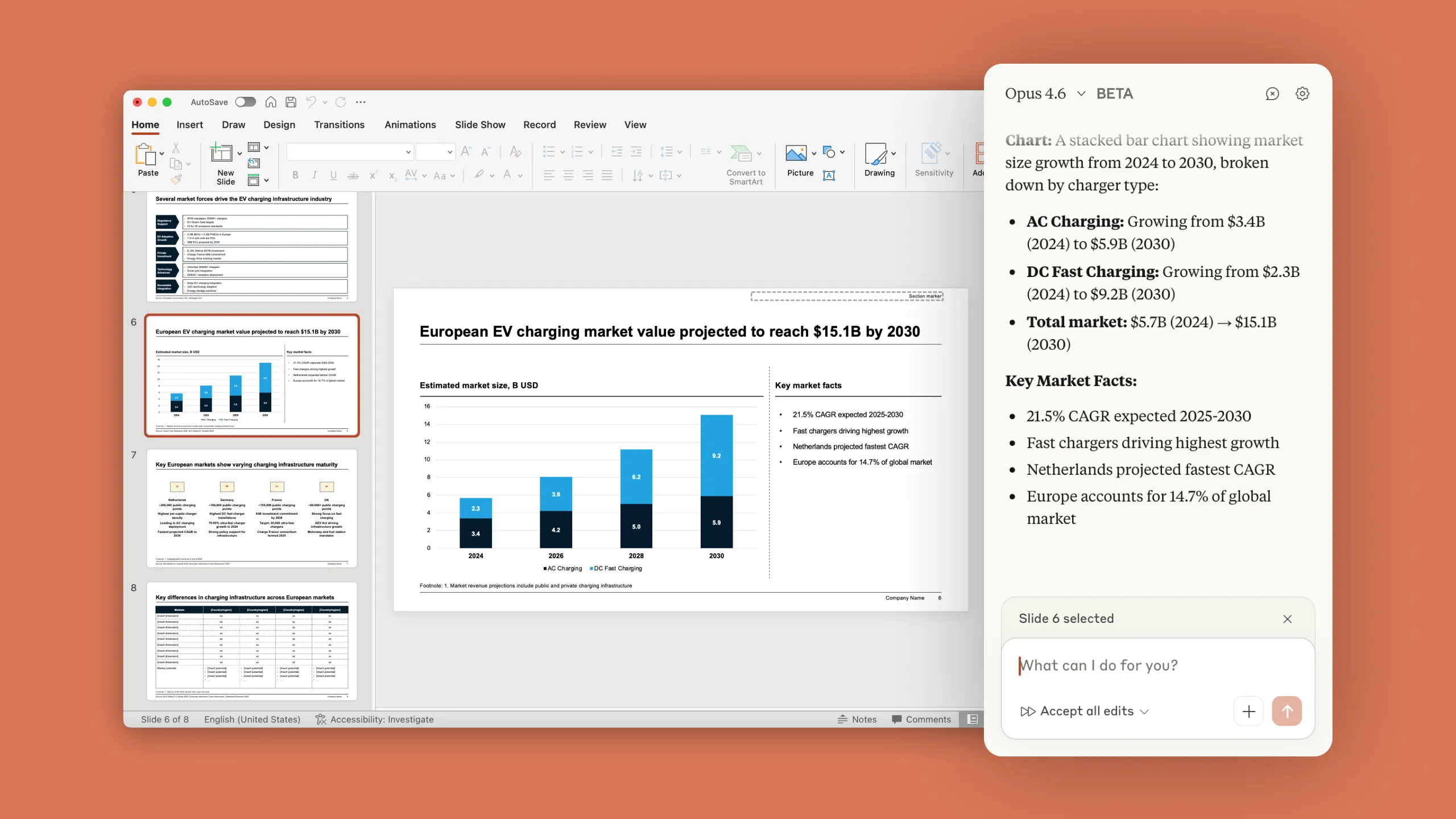
Claude in Powerpoint - Anthropic's AI sidebar for building and editing slides natively in PowerPoint

Chat with your Notion data effortlessly.

Get access to all our AI courses, hundreds of real-world AI use cases, live expert-led workshops, an exclusive network of AI early adopters, and more.
Get unlimited access to all of our current & upcoming industry-specific AI courses for the duration of your subscription.
To keep up with the rapid pace of AI, our team publishes AI implementation guides daily. Our library contains 300+ practical use cases to automate real-world work.
Join weekly, live, interactive sessions with industry leaders who are at the forefront of AI for hands-on implementation guidance and exclusive insights.
Network with an exclusive community of AI-first professionals who are working smarter with AI. Learn how early adopters are using AI in their work and businesses.