Biopharma research teams
Investigate targets, mechanisms, biomarkers and other R&D questions that require coordinated literature and data work.
Independent tool overview
Kosmos is Edison Scientific's AI research agent for long-horizon scientific investigations that combine literature and patent review, data analysis, code execution, hypothesis generation and iterative testing.
Visit the official Kosmos site ↗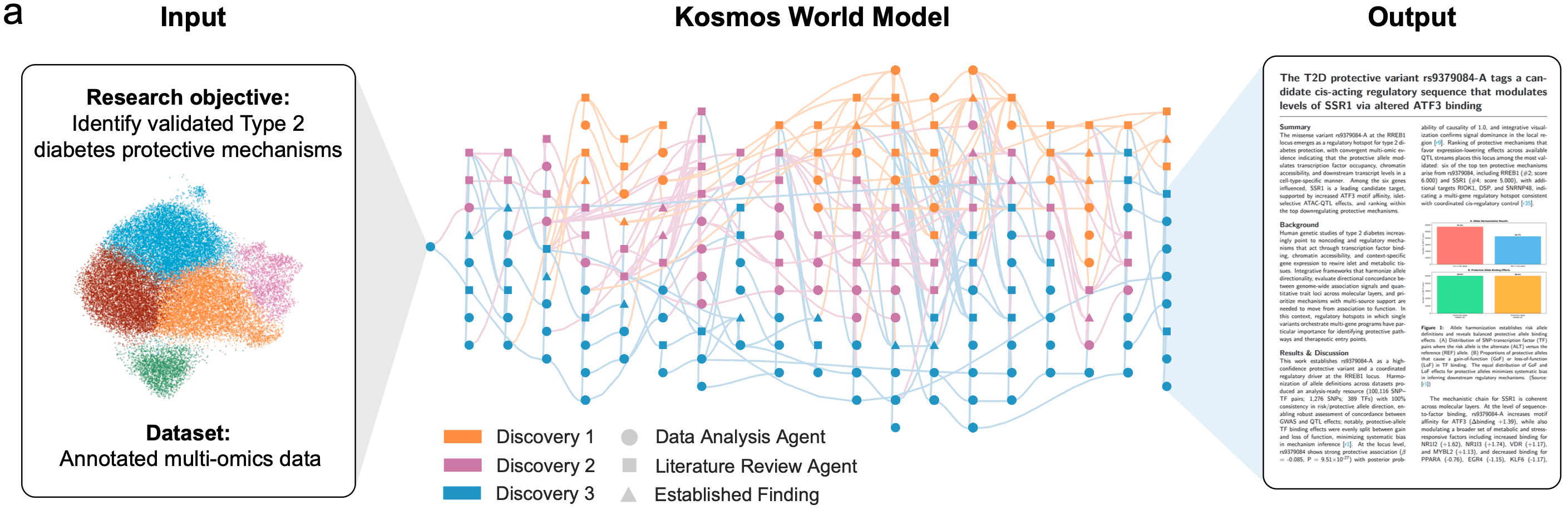
Overview
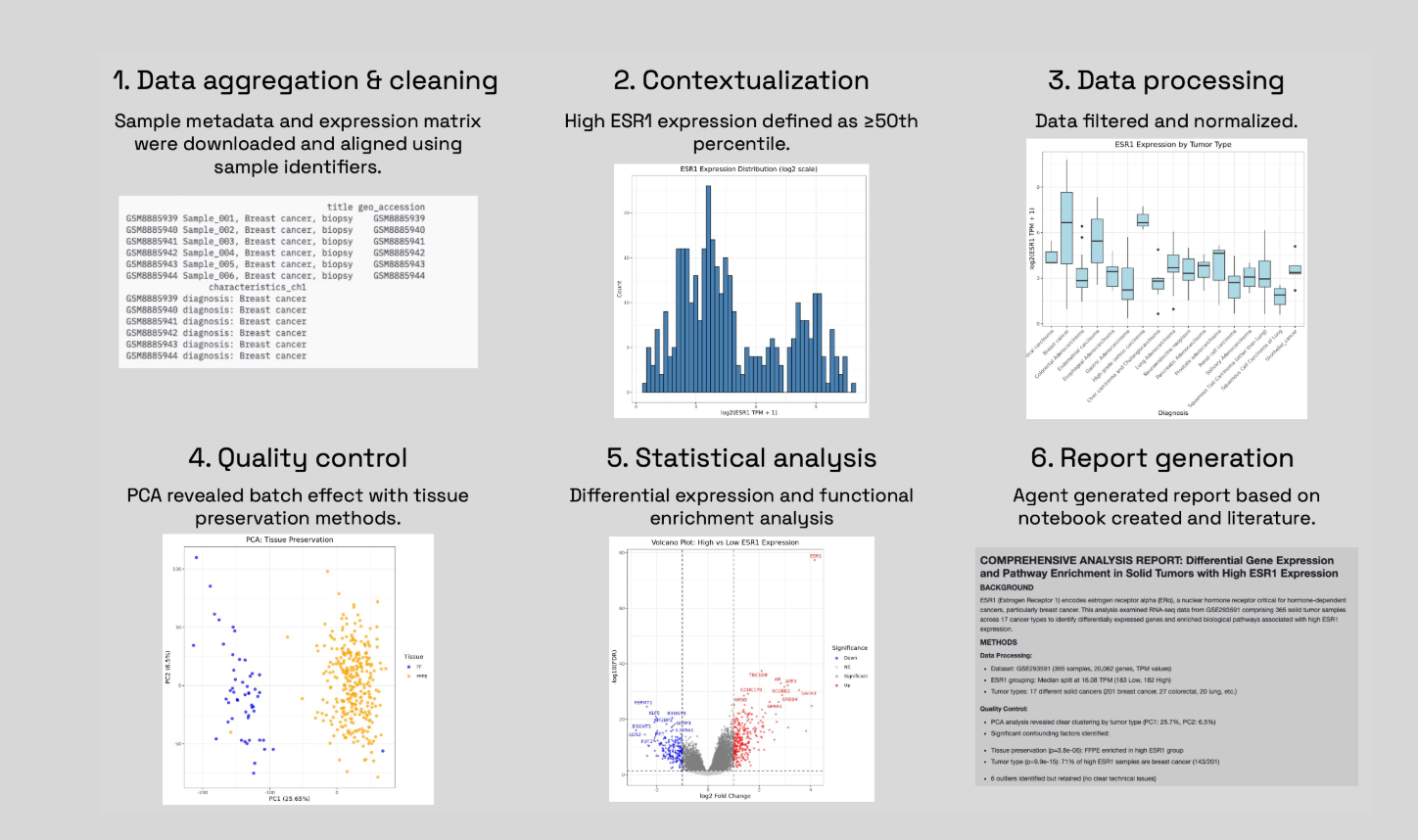
Kosmos is built for research questions that are too broad for a single literature search or one-off analysis. It can review large bodies of scientific literature and patents, work with uploaded or public datasets, write and run code, branch into parallel investigations and assemble the evidence into an auditable research report.
The current system has evolved from the original one-prompt Kosmos into a persistent, collaborative code-writing agent. Researchers can discuss the approach, steer the work while it runs and ask for progress artifacts rather than waiting for a single final answer. Edison positions it primarily for biopharma R&D and advanced academic research.
Kosmos is not a general-purpose science chatbot. Access to the newest version is being rolled out through an application process, current subscription pricing is not publicly posted, and its findings require expert review and experimental validation before they can support scientific or clinical decisions.
Use cases
The strongest fit depends on the job you need the product to complete, not the size of its feature list.
Investigate targets, mechanisms, biomarkers and other R&D questions that require coordinated literature and data work.
Explore well-labeled, quality-controlled scientific datasets against a focused research objective.
Connect claims in papers and patents to executable statistical or computational analyses rather than stopping at a narrative review.
Use a persistent agent that can branch investigations, accept feedback and continue working across an extended research process.
Capabilities
Kosmos searches and reads large research collections, including figures and tables, and links conclusions back to supporting passages.
It can retrieve data from scientific repositories, work with supplied files and write analysis code in isolated cloud workspaces.
A structured world model helps the system retain research context, propose explanations and update its working view as analyses produce evidence.
Kosmos can delegate literature searches and other scientific tasks to subagents while sharing a persistent project filesystem.
The current version can discuss the plan, receive feedback during an investigation and create progress websites or other research artifacts.
Edison describes collaboration through Slack, Microsoft Teams and email for research groups and enterprise deployments.
Process
Step 1
Choose a focused scientific question that genuinely requires iterative literature review, data analysis and hypothesis testing.
Step 2
Explain experimental design, assumptions and column meanings, then provide quality-controlled files or identify relevant public sources.
Step 3
Discuss likely analyses, useful evidence and validation criteria before allowing the agent to branch into longer-running work.
Step 4
Review progress, correct domain assumptions and redirect analyses that are scientifically unhelpful.
Step 5
Trace conclusions to source passages and code, reproduce critical analyses, and validate meaningful findings with independent experts or experiments.
Cost
Edison retired its Founding Kosmos offer and is rolling out a new version through applications. New subscription prices have not been publicly announced. The separate Edison Playground still provides limited free access to core research agents.
10 free credits/month
Public access to Edison's core Literature, Analysis and Precedent agents.
Apply for access
The current collaborative Kosmos system is being introduced as capacity becomes available.
Pricing checked . Check current pricing at the source ↗
Assessment
Compare
The right alternative depends on the specific output, workflow, controls and budget your project requires.
Science
Consider SciSpace BioMed Agent for a more narrowly biomedical co-scientist experience across literature, multi-omics and protocol reasoning.
Explore SciSpace BioMed Agent →Data Analysis
Choose Elicit when the main job is structured literature review, paper screening and evidence extraction rather than autonomous data-driven discovery.
Explore Elicit →Educators
Choose Consensus when you want a faster, more accessible search interface for questions that can be answered from published research.
Explore ResearchGPT (now Consensus) →Questions
Kosmos is Edison Scientific's AI scientist for long-running research. It combines scientific literature and patent review, data retrieval, code execution, analysis, hypothesis generation and iterative investigation.
Edison is accepting applications for the new Kosmos and says academic research groups are being prioritized as access expands. The older Kosmos interface remains in the public Playground only for a limited transition period.
Edison has ended its original Founding Kosmos subscriptions and has not published prices for the upcoming plans. The original $200-per-run launch price should therefore not be treated as the current offer.
Kosmos can work with uploaded scientific datasets and retrieve data from major public repositories. Edison recommends clear labels, experimental context and quality-controlled data rather than raw files that still need basic processing.
Instead of returning a quick answer, Kosmos can run a persistent research workspace, read large evidence collections, write analysis code, branch work across subagents and update hypotheses over time.
Its traceable sources and code make auditing easier, but they do not make every conclusion correct. Edison explicitly warns that Kosmos can follow unhelpful paths, so researchers need to reproduce analyses and validate findings independently.
No. Kosmos is a scientific R&D system, not a consumer medical adviser. Clinical or treatment decisions require qualified professionals, validated evidence and the appropriate regulatory process.
Bottom line
Kosmos is one of the more ambitious AI-for-science systems because it attempts to connect evidence review, computation and iterative discovery in a single persistent workflow. That makes it potentially valuable for well-resourced research groups with consequential questions and strong validation practices. It is excessive for ordinary paper search, and access uncertainty plus the need for expert oversight make it a specialist R&D tool rather than a general research assistant.
Visit Kosmos website ↗
Get access to all our AI courses, hundreds of real-world AI use cases, live expert-led workshops, an exclusive network of AI early adopters, and more.
Get unlimited access to all of our current & upcoming industry-specific AI courses for the duration of your subscription.
To keep up with the rapid pace of AI, our team publishes AI implementation guides daily. Our library contains 300+ practical use cases to automate real-world work.
Join weekly, live, interactive sessions with industry leaders who are at the forefront of AI for hands-on implementation guidance and exclusive insights.
Network with an exclusive community of AI-first professionals who are working smarter with AI. Learn how early adopters are using AI in their work and businesses.