Claude adds protein design to its resume
PLUS: Use the Loop Method for better ChatGPT results

Good morning, AI enthusiasts, and welcome to our 12,567 new readers. Four days ago, Dario Amodei went on X to say Anthropic's biology work was months away from its first "early glimmers." Did he undersell the timeline?
Claude just added protein design to its already lengthy resume, with new research showing the models running an early step of the drug discovery pipeline on their own and producing results that held up in the lab.
Reminder: Our next live workshop is today at 2 PM EST — Join and learn how to land your first paid AI consulting gig on Upwork. RSVP here.
In today’s AI rundown:
Anthropic's Claude tackles protein design
Nate's Notebook: Uber's tiger team playbook
Use the Loop Method for better ChatGPT results
Replit adds Free Mode for routine work
LATEST DEVELOPMENTS
ANTHROPIC

Image source: Anthropic
The Rundown: Anthropic just published research showing Claude ran protein-design campaigns largely on its own, a key step in drug discovery, with its designs yielding working molecules on 14 targets out of 15 at success rates above the industry norm.
The details:
The company tested its Mythos Preview and Opus 4.8 models, letting them run autonomously with one expert-written prompt, internet access, and tools.
Anthropic didn’t do the actual lab work; Twist Bioscience and Adaptyv Bio created the candidates in their own labs and ran the measurements.
The Claude models hit 22-35% success rates on molecules that actually gripped their target, which Anthropic says beats the typical 10-15%.
Opus 5 separately opened raw instrument files with no lab software, measuring a sample at 96.4% pure in 19 minutes; the lab’s own report took four days.
Why it matters: CEO Dario Amodei said Anthropic hoped for “early glimmers in the coming months” in biology and medicine in an X post last week, and just days later we have a spark. While AI in protein design isn’t new, the difference here is that a general model got these impressive results while running the campaign itself.
TOGETHER WITH UNWRAP

The Rundown: Somewhere in your customer feedback right now, a small issue is about to become a big one. Unwrap gives you AI-powered visibility to catch issues while they’re still embers, not after they’ve become a fire.
Unwrap’s proactive approach gets you:
50% faster root cause investigation on support tickets
24+ hours saved across teams per month
4x fewer ticket spikes
One view of customer sentiment across every channel
Rundown readers get free access with a zero-cost, zero-commitment trial. See what's burning before it becomes your next fire drill!
NATE’S NOTEBOOK

The Rundown: Each week, Rundown AI educator Nate Grahek breaks down what he's seeing while teaching real teams to use AI. This week, he kicks off a three-part series on capturing AI ROI: big companies, small businesses, then individuals.
Nate: Remember when Uber made headlines for blowing through its entire 2026 AI budget in four months? Their CTO started capping employee AI use and declared the "tokenmaxxing era" over.
Now the same CTO, Praveen Neppalli Naga, has posted what Uber did next. That's what makes this case study worth your attention: it's a company learning in public from an expensive mistake.
I've been saying it for months: unsubsidized, full-rate frontier models are simply too expensive to hand to everybody in a large org and let them figure it out. And enterprise AI is harder to begin with, navigating security, large data complexity, and privacy.
Uber's answer was the scalpel. They call them Agentic Pods, and each is only two people: one AI-proficient engineer and one domain expert from Finance, Marketing, Ops, etc., running a surprisingly short 10-day sprint. Shadow the expert, build alongside them, ship.
The result: a financial pacing report that took a key player two full days now runs in 10 minutes. That's the mindset I want big companies to steal. Your first AI projects have to earn you the right to swing bigger. Enterprise needs to start acting more like bootstrappers: quick, pragmatic efficiency wins, not the flashy long-roadmap bet.
Next week, part 2: How small businesses can take advantage of this moment while many enterprises are too slow to figure this out.
AI TRAINING

The Rundown: In this guide, you will learn how to improve any repeated ChatGPT workflow with the review-based "Loop Method.” We created it to improve our video editing and image generation skills, but you can try it on anything!
Step-by-step:
Open ChatGPT Work and find a workflow that needs improvement: a skill, project folder, or process that works inconsistently
Prompt: "Improve this workflow in 3 loops. Have a panel of sub-agents adversarially review each loop. Done when [definition of done]"
Use /goal to assign ChatGPT a deliverable you want the workflow to build. Let it run three loops, taking anywhere from 15 minutes to an hour
Test the improved workflow. If it still needs work, tell Codex to codify ambiguous work into scripts
Pro tip: Turn this self-improvement process into a reusable skill, then run it whenever a workflow becomes inconsistent.
PRESENTED BY AWS

The Rundown: AWS re:Invent brings 2,200+ sessions to Las Vegas, and 70% are hands-on. Join builders’ sessions, workshops, code talks and more to learn by doing, not just through sessions.
While onsite, you can:
Bring edge-case questions to engineers and partners building on AWS
Test services against realistic workloads in sandbox environments
Access certification exam discounts, with bootcamp-style prep during the week
Register by Aug. 25 for the early bird discount.
REPLIT & OPENAI

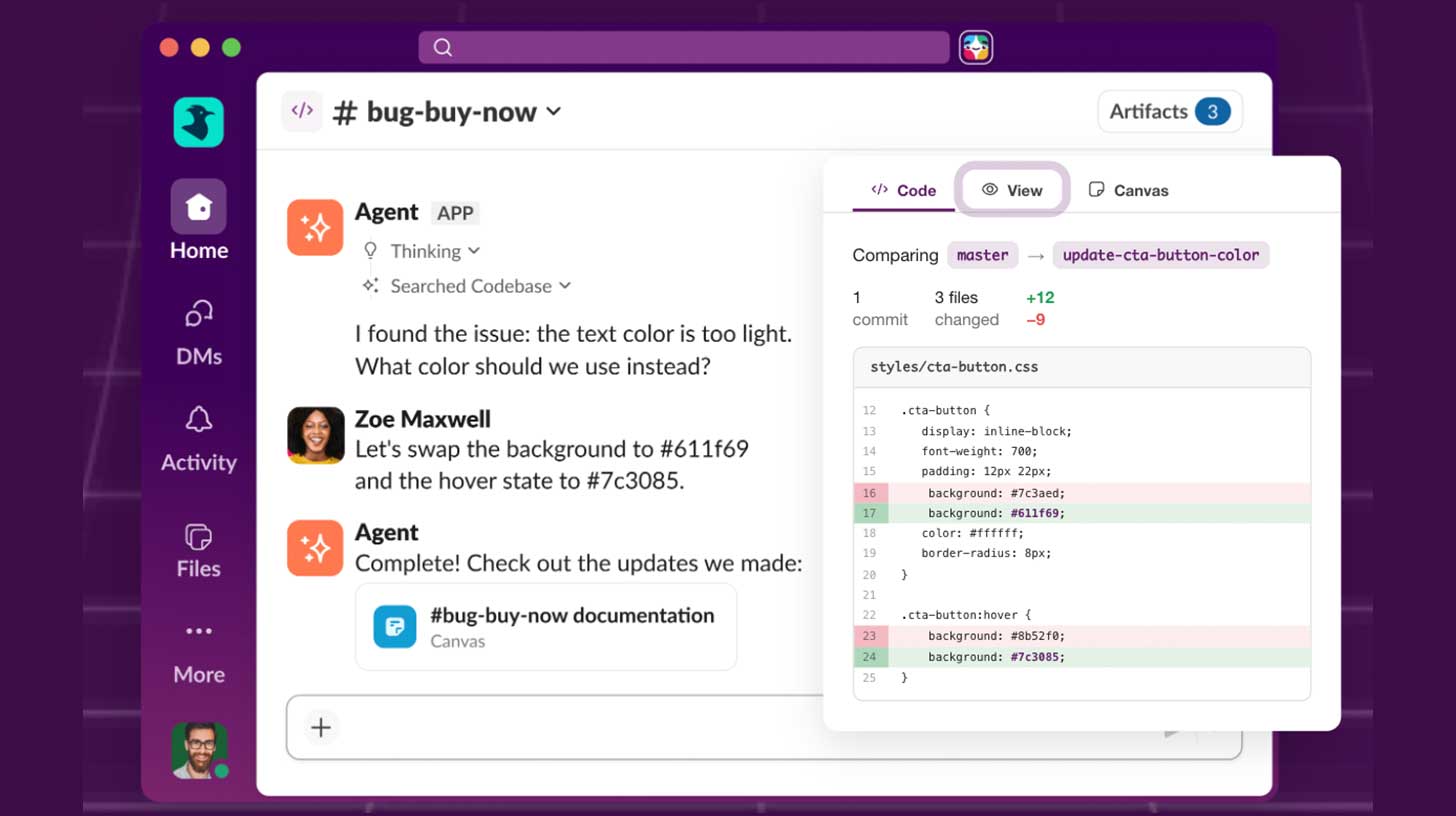
Image source: Replit
The Rundown: Replit launched Free Mode, a new setting for its $20 and $100 paid plans that runs everyday chats/tasks on OpenAI’s GPT-5.6 Luna without eating up user credits — with the company crediting Luna’s 80% price cut for making the math work.
The details:
Replit says its $20/month Core plan scales as much as 30x usage with Free Mode, adding 30 hours per month of chat using the efficient model.
Bigger builds still burn credits in the higher-performance modes, and the agent can route to OAI's Sol for a harder step before handing users back to Luna.
Replit president Michele Catasta called the default-on setup “radical”, arguing plenty of tasks need a smaller, cheaper model, not an expensive frontier one.
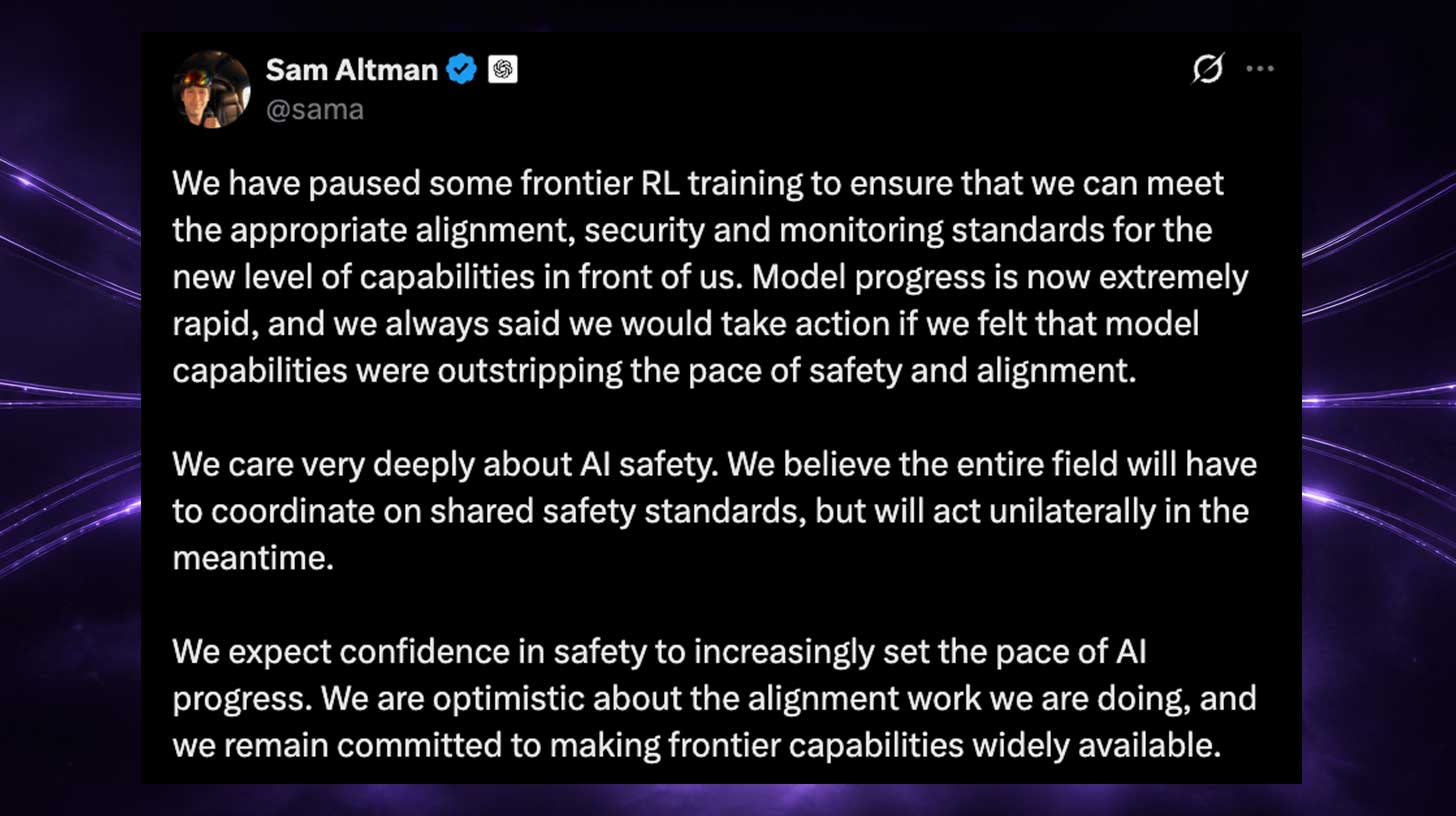
Catasta said Free Mode is "the first of many launches" with OAI, with Sam Altman saying he foresees a "renaissance-level entrepreneurial boom."
Why it matters: Everyone went from tokenmaxxing to counting tokens, and Replit is turning Luna's speed-cost-intelligence balance into pure user value without the previously expected budget-model drop-off attached. When low prices stop meaning low intelligence, the economics of a whole world of products start to change.
QUICK HITS
COMMUNITY AI WORKFLOW OF THE DAY
Today’s workflow comes from reader Matthew M:
“I wanted a way to teach my son practical safety and life skills, starting with how to swim confidently and what to do if he gets into trouble in the water. I needed something more engaging than simply talking at him, but writing a polished, interactive lesson from scratch every week was not sustainable.
First, Claude and I designed a single interactive HTML course as a proof of concept. It was a swim-safety course with a branded look, including a custom color palette, fonts, and a progress tracker styled like pool lanes.
I wanted to reuse the same format for a new topic every week. Claude documented the entire course format as a standing "brief" document. Each week, I open Claude Cowork, paste in the brief and that week's topic, and Cowork returns a finished, self-contained HTML file.”
See Matthew’s workflow Visit The Rundown University. How do you use AI? Tell us for a chance to be featured.
🔒 Incogni - Remove your personal data from the web so scammers and identity thieves can’t access it. Use code RUNDOWN to get 55% off*
📚 Student Hub - Google’s Gemini-dedicated area for students
🚀 Replit Free Mode - Replit’s new Luna-powered credit-free usage mode
🤖 GLM-5.3 - Z AI’s open model with strong coding, agentic, and cyber skills
*Sponsored Listing
Glean:GO San Francisco, August 26-27 - The intelligence era is here. Join us in person or virtually to make AI part of your everyday work and get more time back for the work that matters. Register now.*
Stripe officially announced its acquisition of OpenRouter, while reportedly telling investors that Jan. 1, 2026, was the start of “the singularity.”
Chinese AI lab Z AI’s new GLM-5.3 scored a 60 on Artificial Analysis’ Intelligence Index, moving into fourth place overall and tying Kimi K3 for the top open model.
U.S. AI chipmaker Cerebras introduced CS-4, its fourth-gen AI computer, which it says delivers up to 30x the speed of GPU-based rivals, even on the largest models.
OpenAI debuted Private Safety Processing, a system to scan for misuse across API sessions without staff seeing the content—keeping its zero-data-retention promise.
*Sponsored Listing
Read our last AI newsletter: Pacing comes to the AI frontier
Read our last Tech newsletter: The $1.4T case against Meta
Read our last Robotics newsletter: Robot vacuums finally learn gestures
Today’s AI tool guide: Use the Loop Method for better ChatGPT results
RSVP to next workshop today @ 2 PM EST: Land your first AI consulting gig
That's it for today!Before you go we’d love to know what you thought of today's newsletter to help us improve The Rundown experience for you. |
|
See you soon,
Rowan, Zach, Shubham, Jennifer, and Nate — the humans behind The Rundown