Customer-facing video agents
Embed a visual AI representative for support, onboarding, guided intake, or other structured conversations.
Independent tool overview
Tavus is a developer platform for real-time conversational video agents and asynchronous avatar videos. Its CVI stack combines a configurable persona, a visual replica, perception, turn-taking, speech, an LLM, and WebRTC delivery; a separate API turns scripts or audio into finished videos.
Visit the official tavus site ↗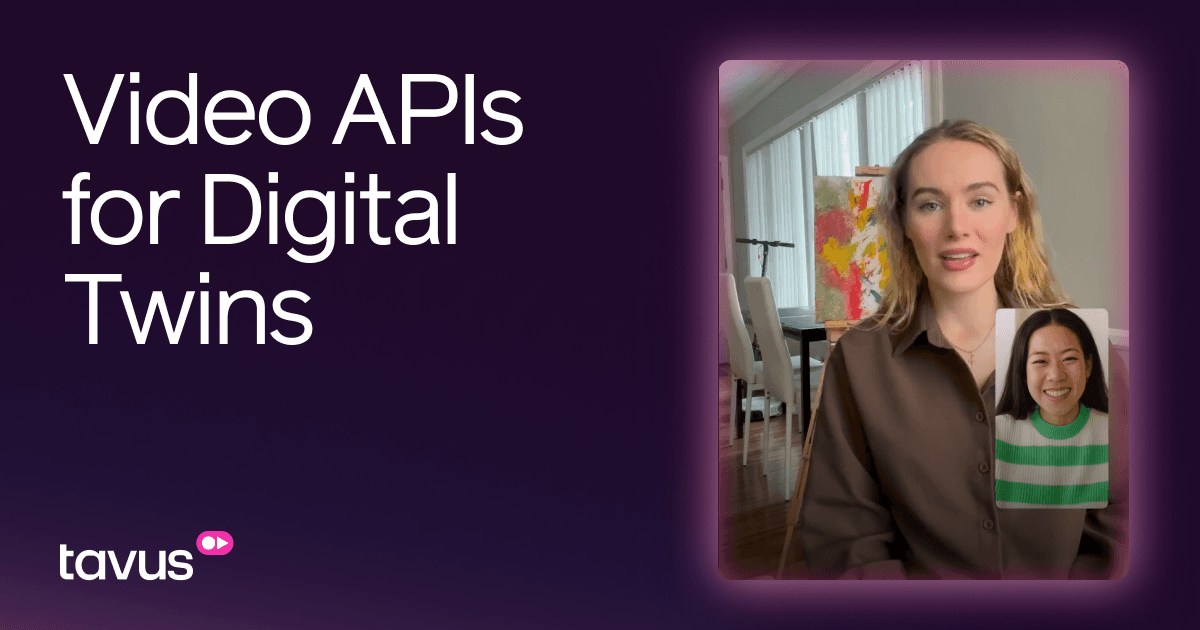
Overview
Tavus has moved beyond its earlier positioning around personalized video generation. Its central developer product is the Conversational Video Interface (CVI), an end-to-end pipeline for embedding a face-to-face AI agent in an application. A Persona controls behavior and pipeline settings, a Replica supplies the visual identity, and a Conversation connects the agent and participant in a real-time video session.
The same platform also offers non-interactive Video Generation for turning a script and replica into a finished video. That distinction matters when comparing costs and architecture: CVI is metered by live conversation time and concurrency, while generated video is an asynchronous output. Tavus is compelling for teams that specifically need a visual agent, but consent, disclosure, biometric-data handling, hallucination controls, accessibility, and safe escalation are core product requirements—not launch-day polish.
Use cases
The strongest fit depends on the job you need the product to complete, not the size of its feature list.
Embed a visual AI representative for support, onboarding, guided intake, or other structured conversations.
Build repeatable practice sessions with a configurable persona, visual presence, and conversation logic.
Use APIs and configurable pipeline layers instead of adopting only a fixed no-code avatar workflow.
Create asynchronous videos from scripts or audio using a stock or properly consented custom replica.
Test whether visual perception, screen context, interruption handling, and a human-like face materially improve a specific workflow.
Capabilities
Managed real-time pipeline combining perception, turn-taking, speech recognition, LLM reasoning, text-to-speech, replica rendering, and WebRTC.
Define behavior, tone, knowledge, context, and most CVI layer settings separately from the visual replica.
Start from a stock avatar or train a custom visual and voice replica with the required consent workflow.
Raven can analyze visual context such as expressions, gaze, background, and shared-screen content for use by the conversation pipeline.
Sparrow manages when the agent listens and responds to support more natural conversational flow.
Use Tavus defaults or configure supported speech, language-model, and voice components; Echo Mode can bypass parts of the managed pipeline.
Use the default Daily room, build a custom interface, or start from Tavus's React CVI component blocks.
Configure greetings, context, duration, timeouts, language, captions, audio-only mode, backgrounds, and supported recording flows.
A separate API generates a finished avatar video from a script or supplied audio without a live conversation.
Create personas, replicas, conversations, and generated videos through the portal or HTTP APIs.
Process
Step 1
Decide whether the use case needs a real-time CVI conversation or a finished generated video; they have different architectures and billing.
Step 2
Define disclosure, consent, data collection, prohibited tasks, escalation, recording, retention, and human-review rules before creating the persona.
Step 3
Configure the agent's behavior and pipeline, then select a stock replica or train a custom replica with explicit informed consent.
Step 4
Create a conversation through the portal or API, embed the room or UI, and test with synthetic or low-risk data first.
Step 5
Measure latency, interruptions, transcription, visual interpretation, answer quality, refusal behavior, accessibility, cost, and human escalation.
Step 6
Add authentication, API-key protection, monitoring, rate and duration controls, cost alerts, deletion workflows, incident handling, and conspicuous AI disclosure.
Cost
Developer pricing includes a free Basic plan, $59/month Starter, $397/month Growth, and custom Enterprise. Live CVI minutes, generated-video minutes, replica training, concurrency, recordings, and overages vary by tier. Tavus also lists separate consumer PAL plans.
Free
For testing the developer APIs with a small included allowance.
$59/month
For individuals and teams that need custom replicas and pay-as-you-go capacity.
$397/month
For teams productionizing higher-volume conversational video.
Custom
For high-volume deployments requiring custom concurrency, support, SLAs, discounts, and white-label controls.
Pricing checked . Check current pricing at the source ↗
Assessment
Compare
The right alternative depends on the specific output, workflow, controls and budget your project requires.
Marketing
A direct alternative for real-time interactive avatars and live visual agents.
Explore LiveAvatar by HeyGen →Marketing
Offers talking avatars and agent experiences built from images, scripts, and conversational AI.
Explore D-ID →Marketing
Best known for polished asynchronous business videos, training content, and avatar-led presentations.
Explore Synthesia →Content Creator
A creative character-video option when expressive generated content matters more than a managed real-time agent stack.
Explore Hedra →Questions
Tavus is an API platform for real-time conversational video agents and asynchronous AI avatar videos. Its CVI system combines a persona, visual replica, multimodal conversation pipeline, and WebRTC session.
CVI is an interactive live session in which an agent sees, hears, and responds. Video Generation takes a script or audio plus a replica and produces a finished video without a live conversation.
Developer plans reviewed in August 2026 are Basic for free, Starter at $59/month, Growth at $397/month, and custom Enterprise. Included minutes, overages, replicas, recordings, and concurrency vary, so model total usage rather than the subscription alone.
No. Tavus requires explicit informed consent from the depicted person, prohibits replicas of minors and non-consensual real people, and requires customers to keep use within the scope of consent and honor revocation.
Yes. Its acceptable-use policy says customers must clearly and prominently disclose when end users are interacting with AI-generated content or an AI-powered agent rather than a real human.
The CVI pipeline is configurable and supports selected external components and integration modes. Echo Mode and documented integrations can bypass or replace parts of the managed stack, but capabilities such as perception may no longer apply.
Tavus markets enterprise and regulated use cases, but a vendor certification is not enough. These deployments require a signed contract, verified configuration, legal and bias review, strict data governance, qualified human oversight, and safe escalation.
Recording is a supported configuration on eligible plans. A customer using it must provide appropriate notice and consent, secure storage, access and retention controls, and deletion procedures. Do not assume recording is harmless because the interface is AI-generated.
Bottom line
Tavus is a strong candidate when a product genuinely benefits from a real-time visual agent and the team wants an API-first, mostly managed pipeline. Its advantage is integration across perception, conversational flow, speech, language, rendering, and WebRTC—not freedom from the hard parts. Run a bounded pilot, model minute and concurrency costs, disclose the AI clearly, and make consent, safety, accessibility, privacy, and human escalation part of the architecture.
Visit tavus website ↗
Get access to all our AI courses, hundreds of real-world AI use cases, live expert-led workshops, an exclusive network of AI early adopters, and more.
Get unlimited access to all of our current & upcoming industry-specific AI courses for the duration of your subscription.
To keep up with the rapid pace of AI, our team publishes AI implementation guides daily. Our library contains 300+ practical use cases to automate real-world work.
Join weekly, live, interactive sessions with industry leaders who are at the forefront of AI for hands-on implementation guidance and exclusive insights.
Network with an exclusive community of AI-first professionals who are working smarter with AI. Learn how early adopters are using AI in their work and businesses.


