Contest-style problem solving
Generate candidate Python solutions for algorithmic problems with explicit time, memory, input, and output constraints.
Independent tool overview
NousCoder-14B is a downloadable, open-weight Qwen3-based model optimized for solving long-form Python competitive-programming problems.
Visit the official NousCoder-14B site ↗
Overview
NousCoder-14B is a roughly 15-billion-parameter coding model from Nous Research. It starts from Qwen3-14B and uses reinforcement learning on 24,000 verifiable programming problems, making it most relevant to algorithmic coding, contest practice, and research on code reasoning.
Nous reports 67.87% Pass@1 on its LiveCodeBench v6 evaluation at an 81,920-token context, compared with 60.79% for its Qwen3-14B baseline. That is a strong result for the tested window and setup, but it should not be read as a general software-engineering score: the training and evaluation focus on Python solutions to competitive-programming problems.
The model weights are free to download under Apache 2.0. This is not a polished coding app or managed API, and the official Hugging Face page did not list an inference provider at review time. Users need compatible local or cloud inference infrastructure, and should independently test correctness, security, latency, and memory use.
Use cases
The strongest fit depends on the job you need the product to complete, not the size of its feature list.
Generate candidate Python solutions for algorithmic problems with explicit time, memory, input, and output constraints.
Run or quantize an Apache-licensed model on infrastructure you control.
Study an openly documented model trained with verifiable code execution and outcome-based rewards.
Capabilities
Post-trained specifically on verifiable algorithmic coding problems rather than positioned as a general chat model.
The published configuration supports up to 81,920 tokens using YaRN context scaling.
BF16 Safetensors weights are available from the official Nous Research repository on Hugging Face.
The model card lists Apache 2.0, allowing broad use subject to the license terms.
Nous publishes the dataset composition, reward design, infrastructure, hyperparameters, and several RL objective comparisons.
Third-party quantized versions exist for lower-memory runtimes, though they are separate community artifacts and require their own verification.
Process
Step 1
Choose NousCoder for algorithmic Python generation; benchmark another model if the real task is repository editing, tool use, or multi-language development.
Step 2
Download the official BF16 weights or evaluate a reputable quantization that fits the available memory and inference stack.
Step 3
Load the official tokenizer and model configuration rather than guessing prompt tokens or context settings.
Step 4
Execute candidates with strict time, memory, network, and filesystem limits, just as the research uses isolated verification.
Step 5
Measure compile rate, test-pass rate, latency, cost, and security on unseen examples that match the intended use.
Cost
NousCoder-14B's official weights are free under Apache 2.0. There is no bundled managed service, so the real cost is the hardware, storage, inference platform, and engineering needed to run it.
Free
Download the BF16 Safetensors model from Nous Research's Hugging Face repository.
Usage-based
Run the model on owned hardware or a compatible third-party GPU platform.
Pricing checked . Check current pricing at the source ↗
Assessment
Compare
The right alternative depends on the specific output, workflow, controls and budget your project requires.
Coding
Choose Qwen3-Coder for a broader agentic coding model designed around repository-scale and tool-using workflows.
Explore Qwen3-Coder →Coding
Choose Devstral 2 when software-engineering agents and real codebase tasks matter more than contest-style problem solving.
Explore Devstral 2 →Coding
Choose GLM 5.2 for a newer general coding model with a managed API option and broader agentic positioning.
Explore GLM 5.2 →Questions
It is a Qwen3-14B-based language model post-trained with reinforcement learning to generate Python solutions for competitive-programming problems.
The official model weights are free to download under Apache 2.0. You still pay for the hardware, cloud compute, storage, and engineering used to run them.
Nous reports 67.87% Pass@1 on LiveCodeBench v6 at an 81,920-token evaluation context, versus 60.79% for its Qwen3-14B baseline in the same write-up.
Not by itself. It is a model checkpoint, not a complete agent with repository search, file editing, tool execution, approvals, and change verification.
Hugging Face labels it as roughly 15B parameters, and the official BF16 repository is about 29.6 GB before accounting for runtime memory and cache.
The official configuration sets a maximum of 81,920 tokens using YaRN scaling. Actual usable context depends on the inference engine, memory, and prompt.
No model-generated code should be trusted automatically. Review it and run it in a sandbox with strict filesystem, network, time, and memory controls.
Bottom line
NousCoder-14B is an interesting open model for competitive-programming research and controlled local experiments. Its license, detailed training write-up, and benchmark gain are meaningful strengths. For day-to-day software engineering, a newer agentic coding model is usually the better default, and anyone deploying NousCoder should budget for infrastructure and rigorous execution safeguards.
Visit NousCoder-14B website ↗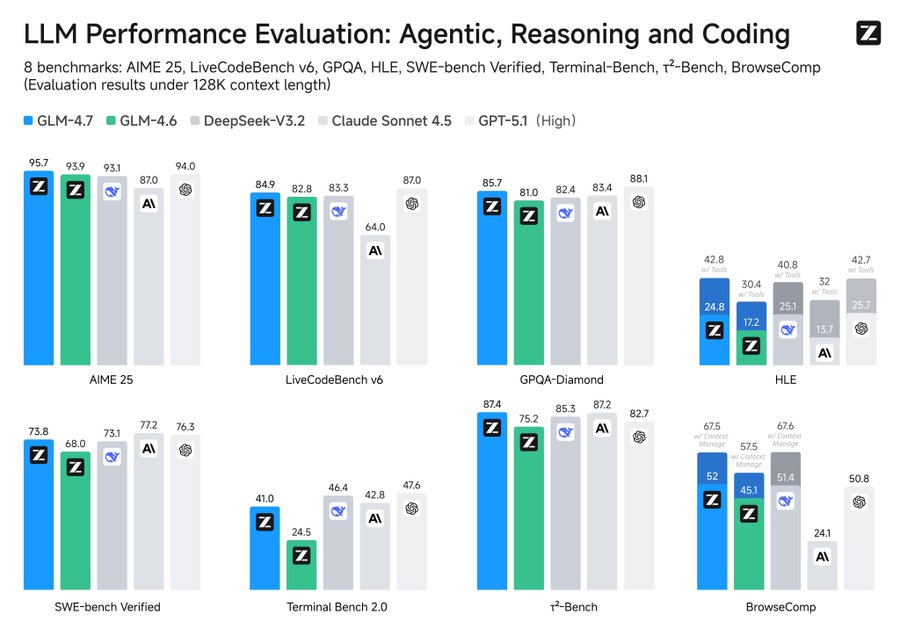
GLM-4.7 - Z AI's new SOTA open-source model with advanced coding and reasoning capabilities
SERA - AI2's open-source coding agents able to be cheaply trained on private codebases with native support for Claude Code.

MiniMax 2.1 - New model with powerful capabilities across a variety of programming languages and for mobile and web app development
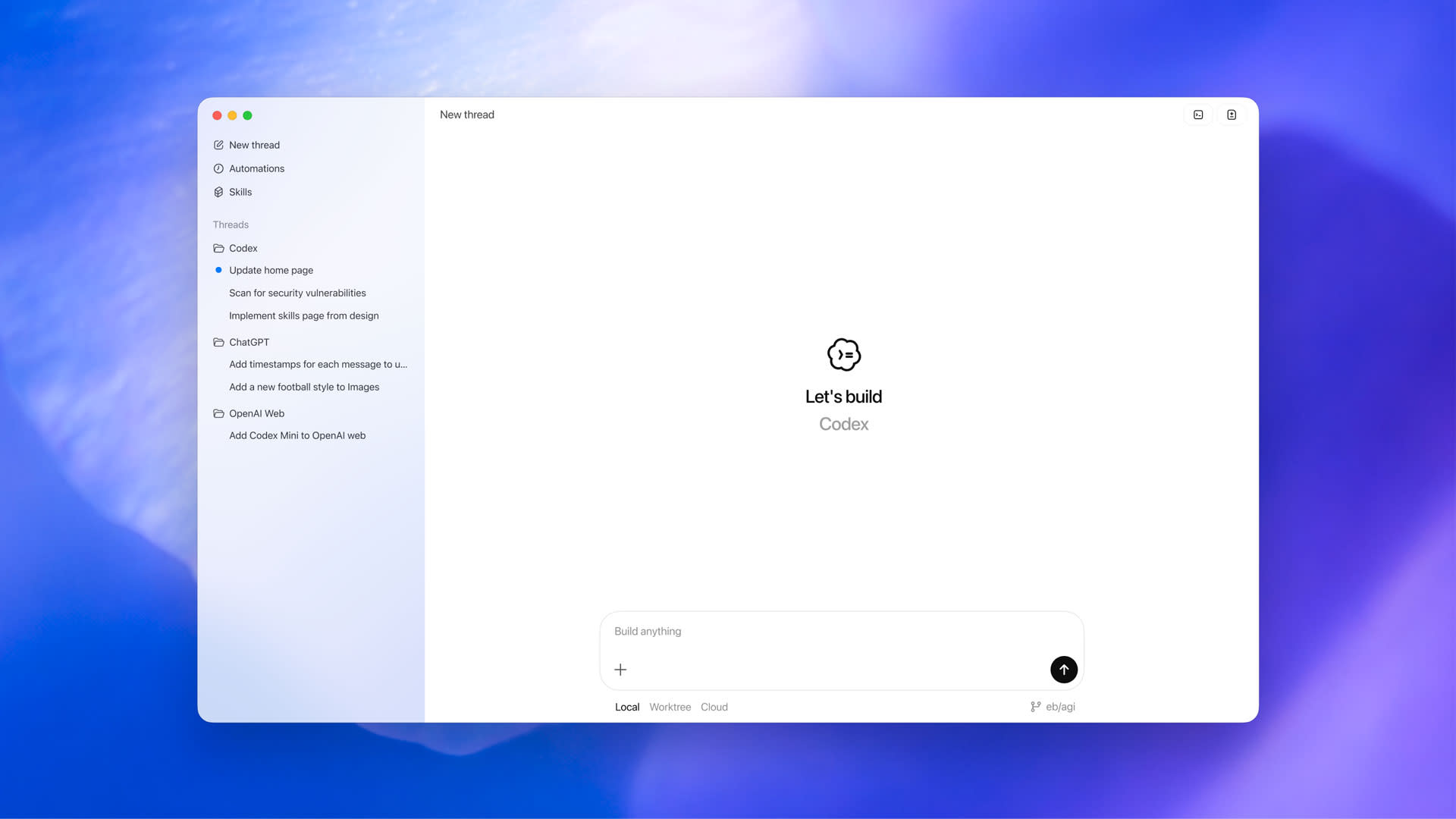
Codex App - OpenAI's new Mac app interface for managing agents with its Codex agentic coding assistant

Get access to all our AI courses, hundreds of real-world AI use cases, live expert-led workshops, an exclusive network of AI early adopters, and more.
Get unlimited access to all of our current & upcoming industry-specific AI courses for the duration of your subscription.
To keep up with the rapid pace of AI, our team publishes AI implementation guides daily. Our library contains 300+ practical use cases to automate real-world work.
Join weekly, live, interactive sessions with industry leaders who are at the forefront of AI for hands-on implementation guidance and exclusive insights.
Network with an exclusive community of AI-first professionals who are working smarter with AI. Learn how early adopters are using AI in their work and businesses.