Tavus' AI looks, listens, and talks back live
PLUS: Is ChatGPT “Dots” worth upgrading to Pro for?

Good morning, AI enthusiasts, and welcome to our 6,908 new readers. It's already hard to believe your eyes on the internet. After Tavus' new "Human Interaction Model" demo, it looks like the same is about to go for live video calls.
The company's new Griffin model looks, listens, and reacts like a human, and nearly half of testers left convinced they'd met a real person. The good uses are real and will come, but the bad ones tend to show up just as fast.
In today’s AI rundown:
Tavus’ Griffin passes for human on video calls
Rowan’s Corner: My recurring AI performance review
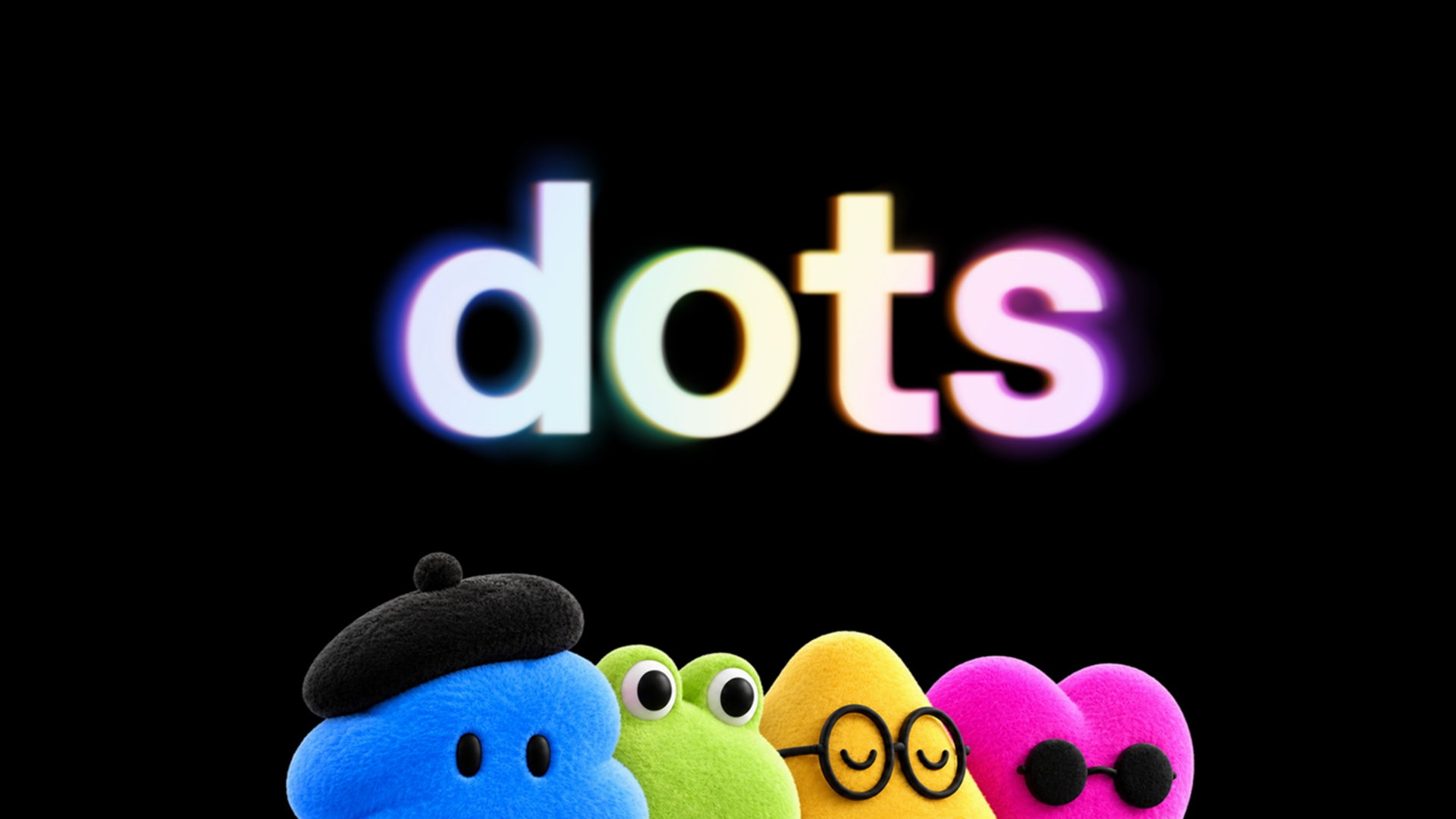
Is ChatGPT ‘Dots’ worth upgrading to Pro for?
Google’s AI watermarks cross into the lab
LATEST DEVELOPMENTS
TAVUS

Image source: Tavus
The Rundown: AI startup Tavus just previewed Griffin, a ‘Human Interaction Model’ that renders a lifelike person who can hear, see, talk, and react over live video — with the company claiming nearly half of users in video call tests thought it was a human.
The details:
Griffin watches and listens instead of waiting its turn, nodding mid-sentence or working in details from a user’s screen (like the peacock above) into its response.
Tavus tested Griffin-Lite in a face-to-face study, with 48% of participants believing their conversation partner was human, up from just 2.4% in previous models.
The model also came within 0.09 points of real people on NVIDIA's VideoFDB, a test of natural video chat, and beat the next-best AI model by over a point.
Tavus is only making Griffin-Lite available to trusted testers for now to continue working on safety and disclosure features, with a public rollout later on.
Why it matters: AI video is already fooling people across the web, and this wild demo shows where things are heading next, with real-time, responsive avatars that further blur reality. A lifelike personal tutor or a companion for an aging parent are real upsides, but in the wrong hands, it could also be a scammer’s dream.
TOGETHER WITH ALGOLIA

The Rundown: Search used to be a list of links. Now it’s a list of actions aligned with remote MCP servers built for tool-using agents. These agents require fast, intelligent retrieval and ranking to understand user intent, find relevant data, and execute. Failing to build systems that help agents move faster slows down your entire organization.
In this white paper, you’ll learn:
How Algolia’s retrieval and ranking layer powers enterprise intent routers
The intricacies behind an indexed tool catalog
The ins and outs of ranking candidates under policy constraints
How Algolia turns natural language into safe, auditable action
ROWAN’S CORNER

Rowan: If you’ve been following my content for a while, you’ll know that I’m pretty boring in most ways, but a complete nut case for two things. The first is personal optimization; the second is tracking my data so I can optimize even more.
I do everything from aggressively tracking my health data to using AI agents to store our team's workflows and meeting summaries for future employees, to exporting my social media data to create better content.
A couple of months ago, I wrote a Rowan’s Corner called “I asked AI to audit me.” The short version is that I exported my entire AI conversation history, dropped it in Claude, and had it find ways I can improve as a human, CEO, and creator.
The results shocked me, but they made me realize something bigger. There’s a new, extremely valuable source of data we’re all collecting under our fingertips every day: the history sitting in our chatbots.
So now, naturally, I’m building a system around this. Every 3 months or so, I export only my last 90 days of chat history, re-run the same audit prompt, and have it compare against the previous audit to tell me what actually changed.
It's essentially a recurring performance review of myself as a human.
My first comparison just came back, and it was humbling (in a good way)… My delegation has improved since August, but it caught a bad new habit forming.
If you use chatbots as consistently as I do, this is the most powerful life coach in the world right now. And easily one of my favorite AI use cases of all time.
The full steps and my audit prompt are in the same free Google Doc if you want to run your own.
AI TRAINING

The Rundown: In this guide, you will learn how to set up ChatGPT Dots, and also decide whether it's worth upgrading to ChatGPT Pro ($100/month) in order to use it.
Step-by-step:
Do you already have a ChatGPT account? If you do, that's a point in the yes column. Your "dot" will not pull from ChatGPT or Codex limit. Make sure your desktop app is upgraded, and you will see the dots option in the sidebar
Do you work in Slack? We found the Slack integration easier to set up and use than any other agent. Just click on your dot and find the Connect to Slack button
Are you concerned about data privacy? The desktop app asks for a lot of permissions by default. We recommend skipping these and just letting it work in the cloud + integrations. During setup, give hard rules on what it can and can’t do
Do you already use Grok Bot or Muse? The dots experience feels the most similar to these products. But they are more generous with free or cheaper tokens
Pro tip: Give dots a research and analysis task and tell it to write its report in a PDF with sources. We were blown away by the speed and quality of the work our dot did.
PRESENTED BY CUBE

The Rundown: Cube is the agentic analytics platform built on a semantic layer. Your agent reads the definitions your business already agrees on so the answers come back in your terms, not its own.
With Cube, you can:
Ask the hardest questions, get real answers
Connect Claude or ChatGPT to governed data
Brex improved AI answer accuracy to ~90%

Image source: Google
The Rundown: Google DeepMind just introduced SynthID Bio, a proof of concept that extends its AI watermarking tech to proteins, potentially helping DNA suppliers trace unfamiliar designs before filling an order.
The details:
SynthID Bio tweaks Google’s protein-folding AlphaFold 3 model to leave a hidden pattern in its predicted protein shapes, without reducing prediction accuracy.
Google’s lab tests found that proteins with watermarks still worked as intended once produced, with marks still detectable in the physical form.
Companies that make custom DNA currently check orders for known threats, but unfamiliar AI designs can need manual review that delays research.
The watermark doesn't offer any complete safety guarantees, with Google still working on preventing tampering.
Why it matters: The debate around watermarking tends to be polarizing, but tracing AI-designed biology seems like it should be far less controversial. The tech’s advances in the lab offer enormous promise for drug discovery, but also feels like a Pandora’s box that needs safeguards in place before the systems outrun our ability to screen them.
QUICK HITS
COMMUNITY AI WORKFLOW OF THE DAY
▸ A Rundown reader built a poultry plant's management system with ChatGPT
Today’s workflow comes from an anonymous Rundown reader:
“I’m the Export and Operations Manager at Supreme Poultry & Chickens, an Australian poultry processing business. My original request to ChatGPT was straightforward: find and track grants that could help us grow our business. As we worked together, I began to see the potential to build a management system that could organise our operations. That led me to discover Sites and the possibility of building our own system.
Over roughly ten weeks, working with ChatGPT and Sites, we progressively developed the Supreme Poultry Management System (SPMS). It brings together export enquiries, purchase orders and approvals, assets and maintenance schedules, supplier certificates and HACCP records, and a central 45-day action calendar.
Water is one of the most critical factors in our poultry processing business. SPMS receives tank-level readings from a laser-operated monitoring device that transmits data over the 4G network. We placed a water management widget at the top of every SPMS page, keeping that information visible wherever we're working.”
See the full workflow Visit The Rundown University. How do you use AI? Tell us for a chance to be featured.
🎨 FLUX 3 Image - Black Forest Labs' image model with box-by-box layout control
📣 Runway Ads - Runway's AI system that makes, posts, and retunes paid ads
🗣️ MAI-Transcribe-2-Streaming - Microsoft's top-ranked live speech-to-text AI
🧑💻 Canvas - Shopify’s AI workspace for designing every page of a store
Three OpenAI researchers were reportedly let go for allegedly passing internal info to an AI-safety group amid investigations into the company over rogue agent activity.
AI engineer Carter Church decrypted a military dispatch from 1809 to Napoleon's Marshal Marmont with GPT-6 Astra, reading a blurry photo and the cipher in ~6 hours.
Microsoft AI released MAI-Voice-2.1 and a faster Flash version alongside MAI-Transcribe-2-Streaming, its first live transcription model that ranked No. 1 on Artificial Analysis’ transcription leaderboard.
OpenAI published an investigation pinning a July effort to copy its models' hidden reasoning on people tied to China’s Moonshot AI, saying the campaign leveraged 15,000+ accounts before it was shut down.
California governor Gavin Newsom signed California's “No Robo Bosses Act,” which requires a human to be in the loop for any firing or discipline driven mainly by AI.
Read our last AI newsletter: Argon aims to return Google to the frontier
Read our last Tech newsletter: SpaceX's $15B megarocket finally delivers
Read our last Robotics newsletter: DoorDash puts its own drone on the menu
Today’s AI tool guide: Is ChatGPT ‘Dots’ worth upgrading to Pro for?
RSVP to next workshop on Oct. 7: Build + deliver a real AI consulting project
That's it for today!Before you go we’d love to know what you thought of today's newsletter to help us improve The Rundown experience for you. |
|
See you soon,
Rowan, Zach, Shubham, Jennifer, and Nate — the humans behind The Rundown