Literature discovery
Find candidate papers by topic, date and citation relevance, then follow adjacent work and primary sources.
Independent tool overview
ScholarAI GPT is a research-focused custom GPT that connects ChatGPT to ScholarAI's paper-search, full-text extraction, document-management and citation tools.
Visit the official Scholar AI GPT site ↗
Overview
ScholarAI GPT helps researchers discover papers, inspect accessible full text, ask questions about PDFs and follow citations without leaving a ChatGPT conversation. ScholarAI says its semantic index covers hundreds of millions of papers and its metadata layer is based on Semantic Scholar.
The GPT is one entry point into a broader ScholarAI system that also includes an API and research tools now used in Jenni. Searches can be ranked by relevance, citation count or publication date, while projects and PDF extraction support deeper work on selected documents.
Retrieval does not make the generated answer authoritative. Users must open every source, verify that the cited passage supports the claim, check versions and retractions, and use a documented review protocol for academic, medical or regulatory work.
Use cases
The strongest fit depends on the job you need the product to complete, not the size of its feature list.
Find candidate papers by topic, date and citation relevance, then follow adjacent work and primary sources.
Upload or retrieve an accessible PDF and ask targeted questions about its methods, results and limitations.
Build a source-backed map of a field before applying a formal review, appraisal or writing process.
Capabilities
Searches titles and abstracts by meaning, with filtering and sorting options for date, citation count and peer-review status.
Finds related and adjacent papers to expand beyond the first search results.
Reads accessible or uploaded PDFs section by section, including older scans through OCR.
Retrieves relevant sections from a specific paper to answer a focused question.
Stores groups of PDFs for batch analysis and retrieval across a defined source set.
Returns links and identifiers and can save citations to Zotero through supported ScholarAI tooling.
The ScholarAI API also exposes patent search and agent endpoints for developers building research applications.
Process
Step 1
Define population or topic, intervention or exposure, comparison, outcomes, years, languages and eligible study types before searching.
Step 2
Vary terminology, inspect exact queries and supplement ScholarAI with discipline-specific databases and manual reference chasing.
Step 3
Confirm title, authors, DOI, publication date, version, peer-review status, retraction or correction notices and full supporting passage.
Step 4
Evaluate design, sample, controls, missing data, effect sizes, conflicts, bias and applicability using an appropriate domain framework.
Step 5
Record searches, inclusion decisions and extracted data, use independent review for consequential work and never cite a generated summary as the primary source.
Cost
ScholarAI uses credits across its GPT and Copilot. The vendor says one credit is roughly one Copilot answer or 10 to 20 GPT responses, but actual use depends on request complexity. ChatGPT's own account limits also apply to the GPT.
$0/month
Limited access for evaluating ScholarAI GPT and Copilot.
$9.99/month
Monthly credit plan for individual research use.
$18.99/month
Higher-access individual plan.
From $4.99
One-time credits for users who exceed their included allowance.
Custom
Organization plan with team data sharing and collaboration.
Pricing checked . Check current pricing at the source ↗
Assessment
Compare
The right alternative depends on the specific output, workflow, controls and budget your project requires.
Educators
Consider Consensus, formerly ResearchGPT, for question-led answers synthesized from academic research.
Explore ResearchGPT (now Consensus) →Data Analysis
Consider Elicit for structured literature-review workflows, screening and evidence-table extraction.
Explore Elicit →Educators
Consider Semantic Scholar for direct paper discovery and metadata without an additional generative synthesis layer.
Explore Semantic Scholar →Science
Consider SciSpace BioMed Agent for specialized biomedical reasoning, with equally strict scientific and clinical review.
Explore SciSpace BioMed Agent →Questions
ScholarAI GPT is a custom GPT that uses ScholarAI's paper search, extraction and document tools inside ChatGPT.
Yes. ScholarAI's current website still links to the GPT while also offering its API and research tooling through Jenni.
As checked on August 31, 2026, ScholarAI has a Free tier, Basic at $9.99 monthly and Premium at $18.99. Credit packs start at $4.99, and Teams pricing is custom.
Discovery generally uses title and abstract metadata. ScholarAI can retrieve or OCR full text when it is accessible or uploaded, but publishers, copyright rules and document quality can block or weaken extraction.
They are leads, not guarantees. Open the DOI or publisher page, verify the exact passage and check versions, corrections and retractions before citing.
It can assist searching and extraction, but a defensible systematic review still needs a registered protocol, database-specific searches, documented screening, independent reviewers, risk-of-bias assessment and reproducible synthesis.
Not through the public GPT without explicit institutional approval. Confirm OpenAI and ScholarAI contracts, retention, subprocessors, data location and any required BAA before handling sensitive research or health data.
No. It can help locate literature, but clinical decisions require current guidelines, the complete evidence, patient-specific context and qualified clinicians.
Bottom line
ScholarAI GPT is useful for accelerating paper discovery and asking better questions of selected sources. Its value comes from retrieval, not automatic truth: rigorous users will preserve a reproducible search trail, inspect every paper and keep domain experts responsible for interpretation and consequential decisions.
Visit Scholar AI GPT website ↗
Claude for Teachers - Free Claude access with teaching and lesson-planning skills for verified K-12 teachers

I help parents assist kids with math.
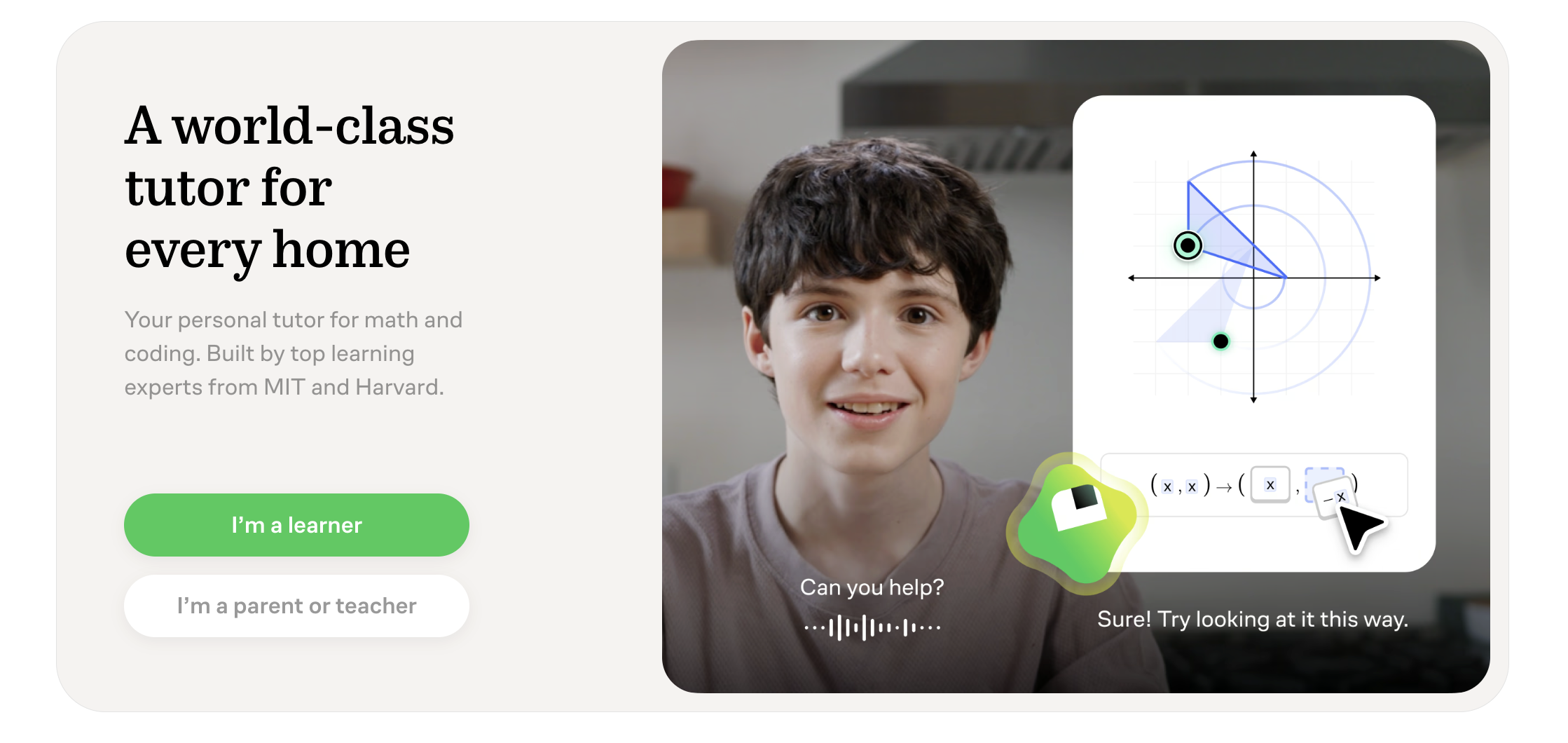
Koji by Brilliant - A personal AI tutor for math and coding

Practice speaking languages naturally with Language Coach.

Get access to all our AI courses, hundreds of real-world AI use cases, live expert-led workshops, an exclusive network of AI early adopters, and more.
Get unlimited access to all of our current & upcoming industry-specific AI courses for the duration of your subscription.
To keep up with the rapid pace of AI, our team publishes AI implementation guides daily. Our library contains 300+ practical use cases to automate real-world work.
Join weekly, live, interactive sessions with industry leaders who are at the forefront of AI for hands-on implementation guidance and exclusive insights.
Network with an exclusive community of AI-first professionals who are working smarter with AI. Learn how early adopters are using AI in their work and businesses.