Local multimodal assistants
Private or offline prototypes that need text plus image understanding on more modest hardware than flagship models.
Independent tool overview
Qwen3.5 Small is the 0.8B, 2B, 4B and 9B group of Apache-licensed multimodal models released for local text, image, video, reasoning, coding and tool-use experiments.
Visit the official Qwen3.5 Small site ↗
Overview
Qwen3.5 Small refers to four dense, post-trained models: Qwen3.5-0.8B, 2B, 4B and 9B. Each combines a language model with a vision encoder, can accept text and visual inputs, and supports thinking and non-thinking responses.
The range is useful because it lets teams trade capability against memory, speed and device constraints without leaving the same model family. The 0.8B and 2B versions target the lightest deployments, while 4B and 9B generally provide stronger reasoning, coding and visual understanding at higher runtime cost.
Claims that these models rival systems many times their size come from Qwen's selected benchmark comparisons. They should be tested on the intended language, image quality, task and hardware; small models can still hallucinate, miss visual details and make unsafe tool decisions.
Use cases
The strongest fit depends on the job you need the product to complete, not the size of its feature list.
Private or offline prototypes that need text plus image understanding on more modest hardware than flagship models.
Teams measuring whether 0.8B, 2B or 4B capability is sufficient before paying the memory and latency cost of 9B.
Developers building Apache-licensed extraction, classification, visual Q&A, coding or tool-use systems with their own controls.
Capabilities
Official post-trained checkpoints at 0.8B, 2B, 4B and 9B let operators choose a device and quality target.
A vision encoder supports image-text-to-text tasks, including visual questions, documents, screenshots and sampled video.
The model cards document 262,144 tokens natively and extension to about 1.01M tokens under the recommended long-context method.
Models produce explicit thinking content by default and can be configured for direct, non-thinking responses.
Qwen says the family supports 201 languages and dialects across text and multimodal work.
Qwen documents tool-call parsing, Qwen-Agent and Qwen Code integration for controlled agent workflows.
The family works through current Transformers, SGLang and vLLM, with community quantizations for llama.cpp, Ollama and MLX.
Process
Step 1
Collect representative prompts, languages, screenshots, documents and failure cases, then score accuracy, latency, memory and safety.
Step 2
Test 0.8B or 2B for narrow classification and extraction, then move to 4B or 9B only when measured quality justifies the resource increase.
Step 3
Use current supported packages or a vetted quantization, and cap context to what the hardware and task actually require.
Step 4
Treat images, documents and web content as untrusted; isolate file and network tools and require approval for side effects.
Step 5
Check citations, calculations, OCR, visual details and code with deterministic tests or qualified reviewers, and log the exact model and settings.
Cost
The four official model checkpoints are free under Apache 2.0. There is no official Alibaba Cloud per-token listing for these small open model IDs as of August 31, 2026; costs come from local hardware, rented accelerators or a third-party host.
Free under Apache 2.0
Download one or more of the four Qwen3.5 Small checkpoints.
Hardware-dependent
Run full-precision or quantized models on compatible devices or servers.
Provider pricing
Use a hosted model or endpoint where the exact checkpoint is available.
Pricing checked . Check current pricing at the source ↗
Assessment
Compare
The right alternative depends on the specific output, workflow, controls and budget your project requires.
Consumer
Google's current open-weight model family offers another range of compact reasoning and agentic checkpoints to benchmark.
Explore Gemma 4 →Coding
Meta's Llama family is a widely supported open-weight alternative with a different license and ecosystem.
Explore Meta Llama Models →Questions
The March 2 release includes Qwen3.5-0.8B, 2B, 4B and 9B. The broader Qwen3.5 collection also contains much larger models, but those are not the focus of this page.
Yes. Their model cards identify them as causal language models with vision encoders for text, image and sampled-video tasks.
Start with the smallest model that fits your task and hardware, then compare against the next size on a fixed evaluation set. Narrow extraction may work on 0.8B or 2B, while complex reasoning and vision generally benefit from 4B or 9B.
The model cards document 262,144 tokens natively and extension to roughly 1.01M tokens. Actual usable context depends heavily on memory, runtime and the model's ability to attend accurately to the task.
Quantized 0.8B, 2B and sometimes 4B variants can be practical on modern consumer machines; 9B needs more memory. Performance depends on precision, context, vision input and the chosen runtime.
The official model cards use Apache 2.0, so the weights have no license fee. Hardware, cloud inference, development, monitoring and compliance still cost money.
Yes, Qwen documents tool-call parsing and agent integrations. Small-model agents still need least-privilege access, sandboxing, approval gates and task-specific validation.
No. Benchmark results are workload- and setup-specific. Compare accuracy, robustness, latency and safety on your own prompts before replacing a stronger model.
Bottom line
Qwen3.5 Small is a strong test bed for local multimodal AI because it offers four Apache-licensed sizes with the same broad capabilities and a very long documented context. Its value comes from measured fit, not headline benchmark ratios: use the smallest checkpoint that passes a representative evaluation, then add strict validation before letting it interpret important visuals or call tools.
Visit Qwen3.5 Small website ↗
Gemini 3.1 Pro - Google's upgraded flagship model with SOTA reasoning gains

GPT-5.3 Instant - OAI's ChatGPT default model update with fewer refusals and less hallucinations
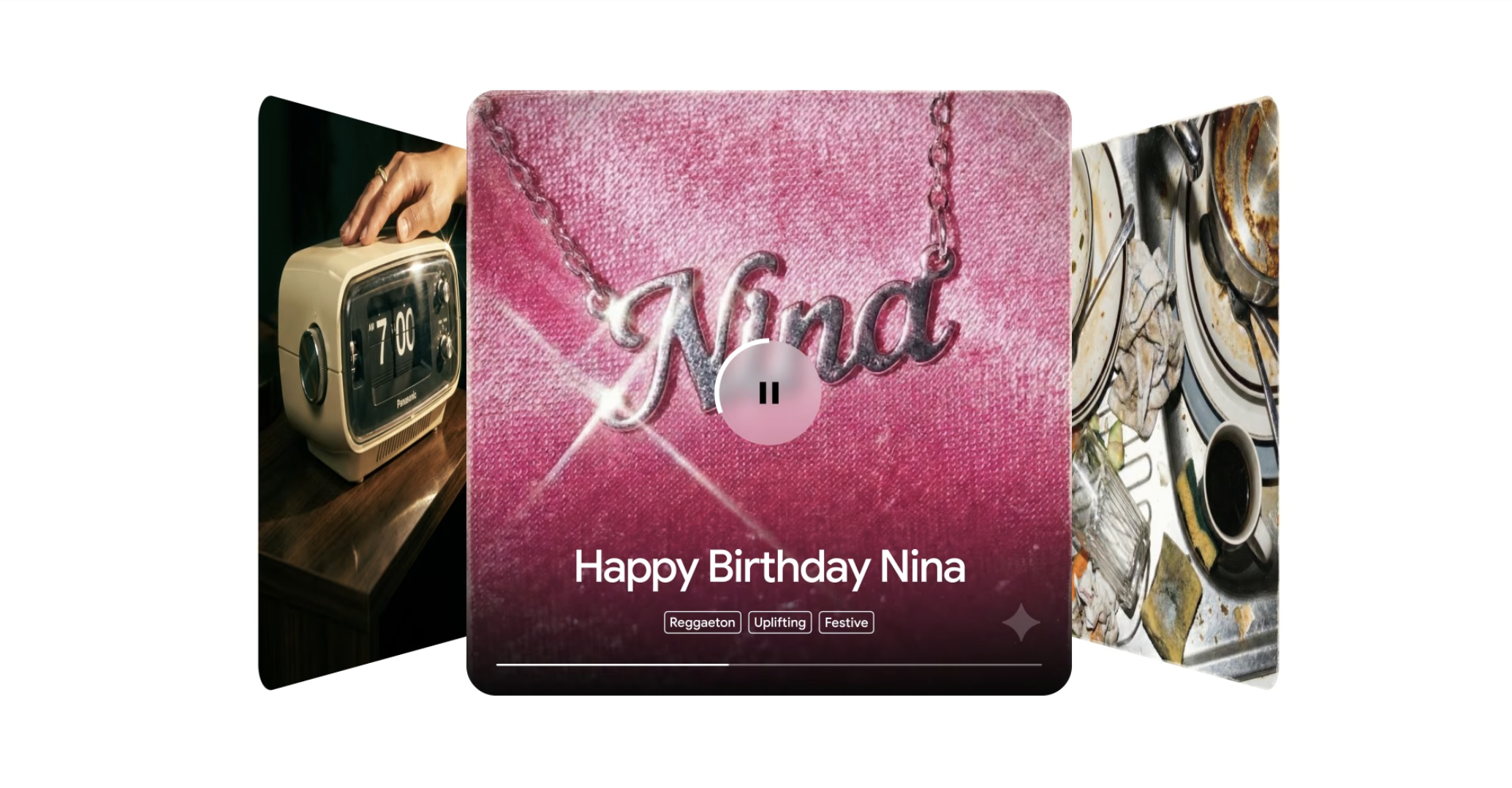
Lyria 3 - Google's new AI music generation model for creating 30-second, customizable audio clips from text, image, or video prompts.
Gemini 3.1 Flash-Lite - Google's fastest, cheapest Gemini 3 model for high-volume dev workloads

Get access to all our AI courses, hundreds of real-world AI use cases, live expert-led workshops, an exclusive network of AI early adopters, and more.
Get unlimited access to all of our current & upcoming industry-specific AI courses for the duration of your subscription.
To keep up with the rapid pace of AI, our team publishes AI implementation guides daily. Our library contains 300+ practical use cases to automate real-world work.
Join weekly, live, interactive sessions with industry leaders who are at the forefront of AI for hands-on implementation guidance and exclusive insights.
Network with an exclusive community of AI-first professionals who are working smarter with AI. Learn how early adopters are using AI in their work and businesses.