Virtual production teams
Create layered, depth-aware environments for LED stages and transfer them into a Disguise production workflow.
Independent tool overview
Cuebric is evolving from an AI virtual-production tool into a contact-led creative operating system that aims to unite video tools, 3D engines, and production automation.
Visit the official Cuebric site ↗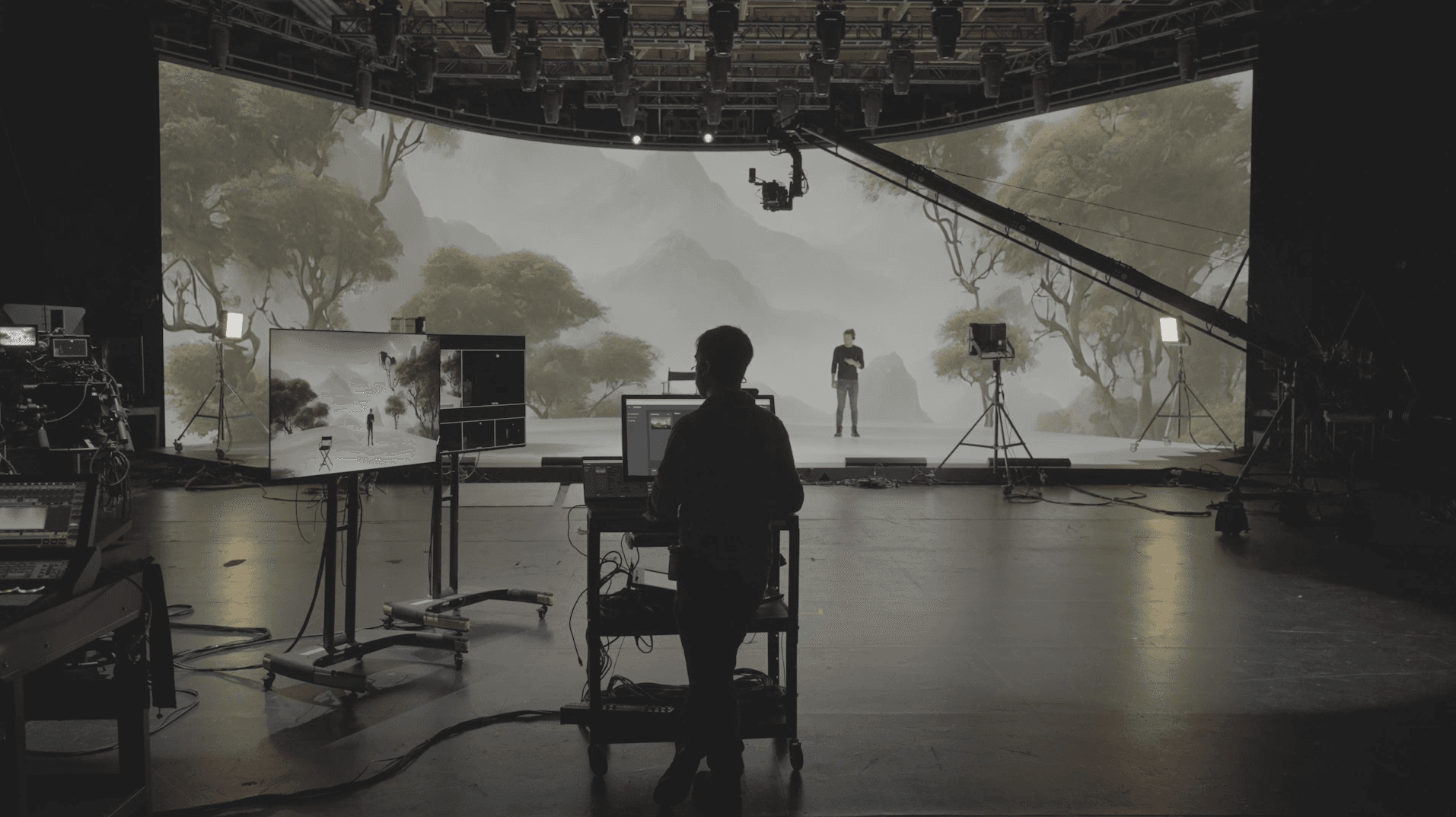
Overview
Cuebric builds AI-assisted production tools for filmmakers, studios, agencies, and brands. Its established product turned generated or uploaded images into segmented, depth-aware 2.5D environments for virtual production, reducing the time needed to create layered backgrounds for LED stages.
The company is now positioning Cuebric as a broader creative operating system for the AI era. Its public roadmap language describes an agentic environment that brings together video tools, 3D engines, collaboration, and workflow automation from concept through camera, but the current site does not publish a detailed feature matrix or self-serve plan comparison.
Cuebric remains active and its project application is available, while the company invites agencies, studios, brands, filmmakers, and creators to collaborate directly. Buyers should therefore treat access as a product evaluation or partnership conversation and confirm which established 2.5D tools and newer operating-system capabilities are available to their team.
Use cases
The strongest fit depends on the job you need the product to complete, not the size of its feature list.
Create layered, depth-aware environments for LED stages and transfer them into a Disguise production workflow.
Explore a coordinated concept-to-camera workflow across AI media generation, 3D tools, collaboration, and automation.
Work directly with Cuebric when ethical content production, tool integration, and repeatable distribution workflows matter more than a simple creator subscription.
Capabilities
Start from a text prompt or an imported image to create a visual environment for a film, commercial, or virtual-production scene.
Separate a 2D composition into foreground, middle, and background plates using automated and manual controls.
Fill the areas revealed when layers are separated and refine the environment before dimensionalizing it.
Generate depth information that gives 2D plates shape and creates stronger parallax for camera movement.
Package segmented plates and depth data as a 2.5D asset that supported production tools can import.
Import Cuebric scenes into Disguise Designer, where plates and depth data can be mapped to an LED environment.
Cuebric's current direction is an agentic environment connecting video tools, 3D engines, and workflow automation, although public implementation details remain limited.
The company says it is building the next platform with leading creative teams, filmmakers, content creators, agencies, studios, and brands.
Process
Step 1
Contact Cuebric or access the project application, then confirm the exact product capabilities, integrations, and commercial terms available.
Step 2
Generate an environment from a prompt or bring an existing concept image into the production workflow.
Step 3
Separate the image into plates, repair revealed areas, and add depth maps or meshes for a 2.5D result.
Step 4
Export the supported scene package and import it into Disguise Designer or another agreed production pipeline.
Step 5
Test parallax, camera limits, resolution, color, lighting, and playback on the actual volume before the shoot.
Cost
Cuebric does not currently publish subscription tiers, credit allowances, or list prices on its public site. Agencies, studios, brands, and production teams are directed to get in touch. Budget separately for any required Disguise software, LED volume, compute, generation models, storage, production services, and implementation work.
Contact Cuebric
Product evaluation and collaboration for professional creative teams.
Additional costs
Third-party and operational costs are separate from Cuebric.
Pricing checked . Check current pricing at the source ↗
Assessment
Compare
The right alternative depends on the specific output, workflow, controls and budget your project requires.
Content Creator
Choose Runway for a mature self-serve creative suite with image, video, editing, and enterprise media-generation workflows.
Explore Runway Creative →Content Creator
Choose LTX Studio when script development, storyboards, shot planning, and AI filmmaking in one accessible workspace are the priority.
Explore LTX Studio →Content Creator
Choose Google Flow when direct access to Google's current image and video models, daily free credits, and a self-serve creative studio matter most.
Explore Flow →Questions
Cuebric is an AI production company building tools for creators, studios, agencies, and brands. It is evolving from a 2.5D virtual-environment tool into a broader creative operating system.
Yes. Cuebric's company site and project application remain active, and the company is inviting creative teams to collaborate on its next platform.
Cuebric is now describing its future as an agentic creative operating system that unites video tools, 3D engines, collaboration, and workflow automation. Its public site no longer presents the old product as a conventional self-serve plan matrix.
Cuebric does not publish current list pricing. Contact the company for access and a quote, and include required production software, hardware, stage, compute, storage, and services in the budget.
It is a layered 2D environment with depth maps or meshes that creates parallax and limited dimensional camera movement without building a fully modeled 3D world.
Yes. Disguise documents importing Cuebric 2.5D scenes so segmented plates and depth information can be mapped into a Designer virtual-production project.
Its established workflow creates 2.5D assets rather than fully modeled 3D environments. Cuebric's newer direction says it will unite 3D engines with other production tools, but teams should confirm the exact current integrations.
Cuebric is best suited to professional filmmakers, virtual-production teams, agencies, studios, and brands that need an integrated concept-to-camera workflow and can evaluate it within a real production stack.
Bottom line
Cuebric is most compelling for professional teams trying to shorten the path from visual concept to a stage-ready environment. Its proven 2.5D workflow and Disguise integration solve a specific virtual-production problem, while the broader operating-system direction could be more ambitious. Because current access, capabilities, and pricing are not fully public, evaluate Cuebric through a real scene and require a written scope covering modules, output rights, integrations, support, limits, and total production cost.
Visit Cuebric website ↗
Get access to all our AI courses, hundreds of real-world AI use cases, live expert-led workshops, an exclusive network of AI early adopters, and more.
Get unlimited access to all of our current & upcoming industry-specific AI courses for the duration of your subscription.
To keep up with the rapid pace of AI, our team publishes AI implementation guides daily. Our library contains 300+ practical use cases to automate real-world work.
Join weekly, live, interactive sessions with industry leaders who are at the forefront of AI for hands-on implementation guidance and exclusive insights.
Network with an exclusive community of AI-first professionals who are working smarter with AI. Learn how early adopters are using AI in their work and businesses.


