Long-running agent workflows
Applications that need to pause, resume, recover and preserve a detailed history across multi-step work.
Independent tool overview
Claude Managed Agents is Anthropic's managed runtime and API layer for building persistent, tool-using Claude agents with sandboxes, memory, observability and multi-agent orchestration.
Visit the official Claude Managed Agents site ↗
Overview
Claude Managed Agents packages the operational layer around a Claude-powered agent. Developers define the model, prompt, tools and guardrails; Anthropic handles the agent loop, persistent event stream, execution environment, retries and session lifecycle.
The product is organized around agents, environments and sessions. A session can run for an extended period, pause while idle, resume with its event history and sandbox state intact and expose a trace of model and tool activity in the Claude Console.
Managed Agents entered public beta in April 2026. Memory, outcomes and multi-agent orchestration are also beta capabilities, while Dreaming—the scheduled process that curates patterns from sessions and memory—is a research preview requiring access.
Use cases
The strongest fit depends on the job you need the product to complete, not the size of its feature list.
Applications that need to pause, resume, recover and preserve a detailed history across multi-step work.
Teams that want sandbox execution, credentials, permissions, webhooks and traces without maintaining the entire agent harness.
Complex tasks where a lead agent can delegate independent work to context-isolated specialists running concurrently.
Capabilities
Stores events, outputs and sandbox state so work can stream, idle, resume and be inspected after execution.
Runs tools in Anthropic cloud sandboxes by default or connects self-hosted workers and private MCP servers for tighter infrastructure control.
Mounts exportable, versioned files that agents can read and update across sessions with scoped access and audit history.
Lets developers define a success rubric that a separate grader uses to evaluate the agent's output.
Allows a coordinator to delegate parallel tasks to agents with their own model, prompt, tools and isolated context threads.
Research-preview scheduled processing that reviews sessions and memory, surfaces recurring patterns and proposes or applies memory updates.
Process
Step 1
Start with a clear task, tool allowlist, permissions, success rubric and escalation path before adding multiple agents.
Step 2
Decide whether Anthropic-hosted containers, a self-hosted sandbox or private MCP tunnels fit the data and tool risk.
Step 3
Evaluate real event timelines, retries, cost, memory changes and human approval points before production traffic.
Cost
Claude Managed Agents uses consumption pricing rather than a separate seat plan. Customers pay standard Claude model token rates plus $0.08 for each hour a session is actively running. Idle, rescheduling and terminated time is not billed as runtime; optional web search and external services can add usage charges.
Standard model token rates
Input, output and cache tokens consumed by every agent and grader call.
$0.08/session-hour
Metered runtime while a session is actively running.
$10 per 1,000 searches
Optional search calls triggered inside a Managed Agent session.
Pricing checked . Check current pricing at the source ↗
Assessment
Compare
The right alternative depends on the specific output, workflow, controls and budget your project requires.
Coding
Choose LangChain when a model-neutral framework and more control over orchestration infrastructure matter more than Anthropic's managed Claude runtime.
Explore LangChain →Questions
It is Anthropic's API and managed runtime for building tool-using Claude agents with persistent sessions, sandboxes, permissions, memory, observability and orchestration.
No. The core product is in public beta as of this review. Dreaming is a research preview, and access or behavior can change.
You pay the selected Claude model's normal token rates plus $0.08 per actively running session-hour. Web search costs $10 per 1,000 searches, and other tools can have separate charges.
Yes. Anthropic supports self-hosted sandbox workers and MCP tunnels for private MCP servers, while session control and model inference still use the Claude Platform.
Dreaming is a scheduled research-preview process that reviews prior sessions and memory stores, extracts patterns and curates memory automatically or with human review.
Bottom line
Claude Managed Agents is attractive for teams that have already selected Claude and do not want to build the state, sandbox, trace and memory layers around it from scratch. The tradeoff is stronger platform coupling and exposure to beta changes, so production adoption should start with bounded tasks, hard budgets and explicit approval controls for tools and memory.
Visit Claude Managed Agents website ↗
Codex Pets - OpenAI's animated companions for tracking active Codex work from a floating overlay

Higgsfield Supercomputer - ACloud-based AI agent with built-in tools, persistent memory, and scheduled task automation

Link - Stripe's new payment wallet for AI bots with human approval on every purchase
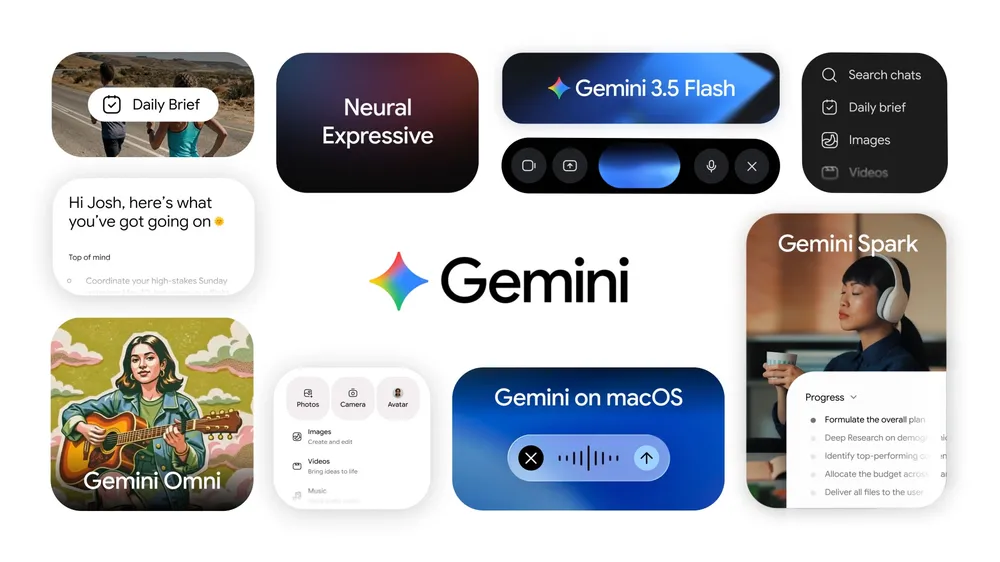
Gemini Spark - Google's personal agent that runs 24/7 on Cloud VMs

Get access to all our AI courses, hundreds of real-world AI use cases, live expert-led workshops, an exclusive network of AI early adopters, and more.
Get unlimited access to all of our current & upcoming industry-specific AI courses for the duration of your subscription.
To keep up with the rapid pace of AI, our team publishes AI implementation guides daily. Our library contains 300+ practical use cases to automate real-world work.
Join weekly, live, interactive sessions with industry leaders who are at the forefront of AI for hands-on implementation guidance and exclusive insights.
Network with an exclusive community of AI-first professionals who are working smarter with AI. Learn how early adopters are using AI in their work and businesses.