Custom model teams
Run repeatable fine-tuning and evaluation loops without hand-tuning every hyperparameter from scratch.
Independent tool overview
AutoScientist is Adaption's managed model-training system for teams that want to fine-tune an AI model without manually designing every training recipe.
Visit the official AutoScientist site ↗
Overview
AutoScientist automates a specific part of AI research: adapting an existing model to a team's dataset and target behavior. A run can optimize training data, choose or accept a base model, fine-tune it, evaluate the result, adjust hyperparameters, and repeat before making the best checkpoint available to download.
The product is available in Adaption's web app and through its Python SDK and API. It is aimed at ML teams, technical startups, and domain experts with a training-ready prompt-and-completion dataset—not at someone looking for a general-purpose chatbot or a no-code research assistant.
Adaption reports stronger aggregate win rates than human-configured recipes in its own evaluation. That is useful evidence, but it is a vendor-run benchmark rather than a guarantee for a new dataset. Teams should still use representative held-out tests, inspect failures, and verify that improvements persist outside the optimization metric.
Use cases
The strongest fit depends on the job you need the product to complete, not the size of its feature list.
Run repeatable fine-tuning and evaluation loops without hand-tuning every hyperparameter from scratch.
Adapt supported base models to specialized language, policies, or task behavior using owned training data.
Compare iterations and download the strongest checkpoint before committing to a larger production workflow.
Capabilities
Optimizes data and training settings, trains the model, evaluates it, and adjusts the recipe across multiple iterations.
Can select a supported base model and derive hyperparameters, while allowing technical users to constrain or override key settings.
Can add domain-focused or general-diversity examples before training to address small or narrow datasets.
Supports parameter-efficient LoRA by default and full fine-tuning where the chosen model allows it.
Runs can be created and monitored through the Adaption app or automated with the Python SDK and REST API.
A successful run can expose the strongest completed checkpoint for download rather than simply returning the final iteration.
Process
Step 1
Import prompt-and-completion data, optionally improve it with Adaptive Data, and reserve a representative evaluation set.
Step 2
Choose model-size requirements, map training columns, and decide whether to add domain or general-diversity rows.
Step 3
Inspect the selected model, training type, hyperparameters, estimated cost, and deployment fit before launching.
Step 4
Monitor training iterations, compare the best win rate with the target, and review loss and other diagnostics.
Step 5
Download the best checkpoint, test it on untouched data and safety cases, then choose separate serving infrastructure.
Cost
Adaption does not publish a stable public dollar price for AutoScientist. The app shows credits or costs for configured work, and teams should confirm the current training and data-augmentation charges before launching a run.
No public list price
Create runs in the Adaption app or API; the configured workload determines the current cost.
Pricing checked . Check current pricing at the source ↗
Assessment
Compare
The right alternative depends on the specific output, workflow, controls and budget your project requires.
Coding
Choose Together AI when you want a broader cloud platform for fine-tuning, inference, and deployment across many open models.
Explore Together AI →Business Operations
Choose Lamini for an enterprise-focused platform centered on building and operating specialized LLMs.
Explore Lamini →Coding
Choose Replicate when simple model hosting and API-based execution matter more than an automated research loop.
Explore Replicate →Questions
It automates an iterative fine-tuning workflow: prepare or augment data, select a supported model and recipe, train, evaluate, adjust, and return the best checkpoint.
Yes. Adaption documents access through its web app, Python SDK, and REST API.
Do not assume so. Adaption offered free use for 30 days at its May 2026 launch, but it does not publish an ongoing free tier or stable public dollar price. Check the in-product estimate or ask Adaption for current terms.
Its documented workflow adapts a supported base model through supervised fine-tuning, using LoRA by default or full fine-tuning when supported.
Not necessarily. Adaption's documentation says a run can succeed after reaching its target win rate or after using its final iteration, so you must inspect the reported best win rate.
Yes, when a completed run has a checkpoint available. The download contains the best iteration's checkpoint, which may not be the last iteration.
No. It automates a bounded model-training loop. People still define the data, target, constraints, evaluation, safety checks, deployment, and decision to ship.
Bottom line
AutoScientist is compelling for technical teams that have valuable domain data but do not want to hand-build every fine-tuning experiment. Its integrated loop and downloadable best checkpoint are practical advantages. Treat the platform's benchmark results as a starting point, demand an upfront cost estimate, and keep independent evaluation and production safeguards outside the automated loop.
Visit AutoScientist website ↗
GPT-Realtime-2 - OpenAI's new voice model that can think, call tools, and recover from interruptions in live calls
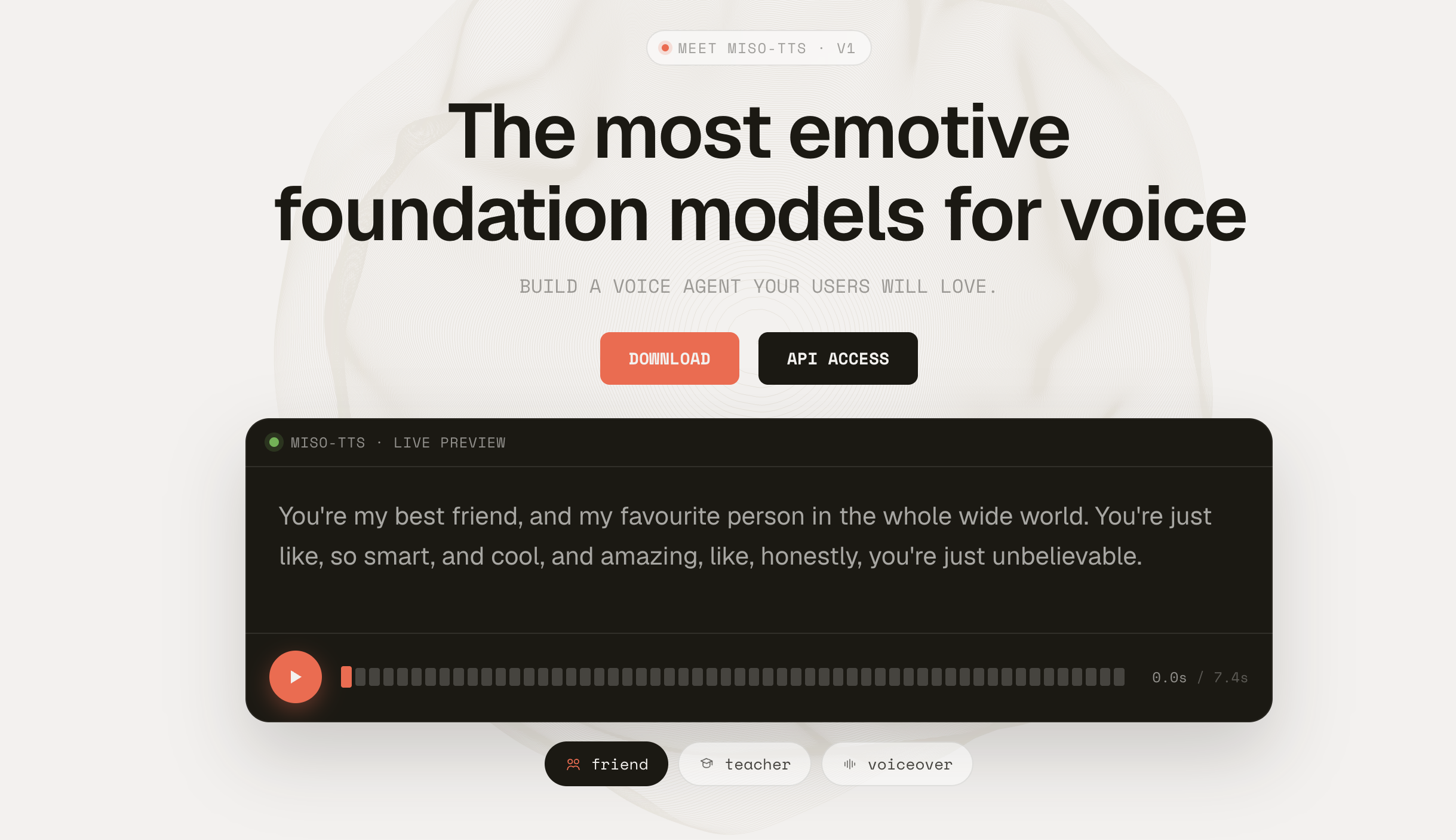
Miso One - Open-source text-to-speech model that reads a speaker’s tone for expressive responses

Realtime TTS-2 - Inworld AI's new voice model that hears conversation audio to match user tone and emotion
Gemini 3.5 Live Translate - Google's real-time voice model for live translation across 70+ languages

Get access to all our AI courses, hundreds of real-world AI use cases, live expert-led workshops, an exclusive network of AI early adopters, and more.
Get unlimited access to all of our current & upcoming industry-specific AI courses for the duration of your subscription.
To keep up with the rapid pace of AI, our team publishes AI implementation guides daily. Our library contains 300+ practical use cases to automate real-world work.
Join weekly, live, interactive sessions with industry leaders who are at the forefront of AI for hands-on implementation guidance and exclusive insights.
Network with an exclusive community of AI-first professionals who are working smarter with AI. Learn how early adopters are using AI in their work and businesses.