Selected law firms
Explore assisted research and drafting within a governed professional workflow.
Independent tool overview
Astra for Law is OpenAI’s GPT-6 Astra configured for professional legal research and drafting. It combines a dedicated U.S. legal search index with task-specific instructions and firm-oriented controls. Initial access is limited to selected U.S. law firms through Trusted Access in ChatGPT and Codex; general API availability and public standalone pricing had not been announced as live.
Visit the official Astra for Law site ↗
Overview
A lawyer’s research question rarely ends at a fluent answer. Relevant authority, procedural posture, jurisdiction, contrary cases and the client’s facts all matter. OpenAI says Astra for Law searches a dedicated index of U.S. case law, statutes, regulations, court rules and administrative decisions covering more than 230 million URLs, with sources added daily. The tailored instructions are meant to push from retrieval toward supported analysis, including identifying weaknesses and distinguishing a holding from other observations.
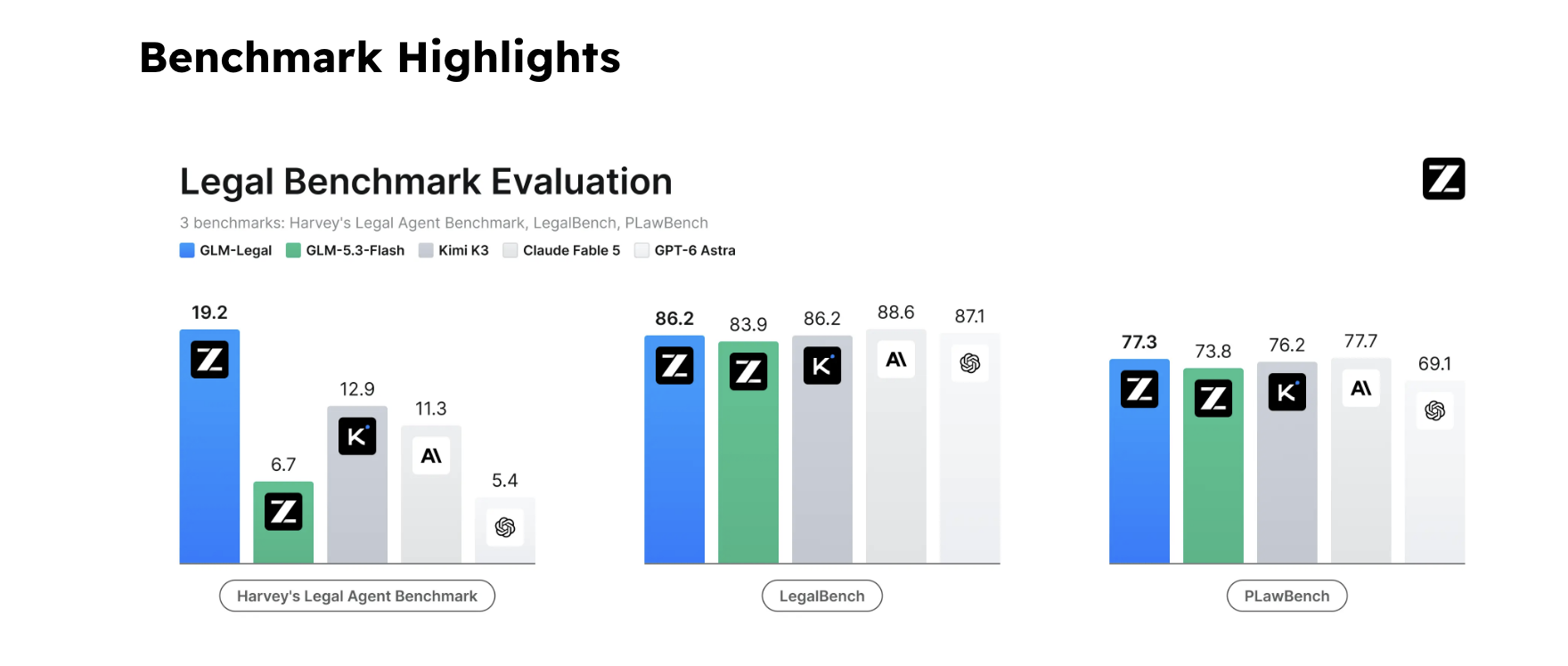
OpenAI reports that its complete setup passed an overall correctness check on 54.0% of 200 private Vals AI legal-research questions, versus 38.7% for GPT-6 Astra with web search alone at the highest reasoning effort. This is useful comparative evidence about the configuration, but it also means many questions did not pass. The result should not be converted into a reliability promise for a specific matter. Lawyers still need to read the cited authority, verify that it remains good law, check local rules and factual fit, and decide how much weight to place on generated analysis.
The offering is also a platform for firm-specific workflows. OpenAI describes legal plugins, customized ChatGPT Enterprise interfaces, and integrations with established matter tools. Its Trusted Access program addresses confidential work with zero-data-retention API options for eligible firms and exclusion of ChatGPT Enterprise use from human review by default. The exact permission model, ethical walls, client instructions and retention settings should be checked in each deployment. Initial access is selective, and OpenAI directs interested firms to an account team or sales rather than publishing a self-serve checkout.
Use cases
The strongest fit depends on the job you need the product to complete, not the size of its feature list.
Explore assisted research and drafting within a governed professional workflow.
Plan for the announced API offering and investigate permissible integrations.
Test firm-specific precedents, playbooks and matter controls in approved access programs.
Capabilities
Retrieve cases, statutes, regulations, court rules and administrative materials from a dedicated U.S. corpus.
Apply legal-writing instructions to facts, arguments, deal terms and contrary authority.
Connect specialist legal tools and selected internal knowledge through supported plugins and enterprise work.
Offer eligible firms a controlled pathway for confidential professional use.
Process
Step 1
Contact OpenAI sales or an account team to assess Trusted Access.
Step 2
Set permitted firm knowledge, client instructions and review obligations before use.
Step 3
Inspect every cited passage, currency, jurisdiction and adverse authority before reliance.
Cost
OpenAI has not published a standalone Astra for Law price. Access initially requires selection into Trusted Access; contact sales for commercial terms.
Contact sales
Initial access for eligible lawyers at selected U.S. law firms through ChatGPT and Codex.
Pricing checked . Check current pricing at the source ↗
Assessment
Compare
The right alternative depends on the specific output, workflow, controls and budget your project requires.
Legal
Compare a separate enterprise legal AI platform with persistent matter context.
Explore Harvey II →Legal
Explore legal workflow agents where review and approval remain with lawyers.
Explore Harvey Agents →Questions
No. OpenAI says initial access is for selected U.S. law firms through Trusted Access in ChatGPT and Codex.
No. Lawyers must verify sources, currency, controlling authority and the application of law to the client’s facts.
OpenAI announced an API path as coming soon; the public materials reviewed do not establish general live access.
Bottom line
Astra for Law is promising as a governed research and drafting foundation, especially when a firm can pair the legal index with its own vetted knowledge and workflows. The benchmark improvement over general web search is meaningful, but its absolute correctness result argues for disciplined review, not delegation of judgment. Adoption should begin with eligibility, permissions and source-validation procedures, then be assessed against representative matters under the firm’s professional standards.
Visit Astra for Law website ↗
Get access to all our AI courses, hundreds of real-world AI use cases, live expert-led workshops, an exclusive network of AI early adopters, and more.
Get unlimited access to all of our current & upcoming industry-specific AI courses for the duration of your subscription.
To keep up with the rapid pace of AI, our team publishes AI implementation guides daily. Our library contains 300+ practical use cases to automate real-world work.
Join weekly, live, interactive sessions with industry leaders who are at the forefront of AI for hands-on implementation guidance and exclusive insights.
Network with an exclusive community of AI-first professionals who are working smarter with AI. Learn how early adopters are using AI in their work and businesses.