Musk's OpenAI case runs out of time
PLUS: How to 3D model anything with Claude and Blender

Good morning, AI enthusiasts. Three weeks of high-profile testimonies, spicy leaked messages, and $100B in claims made for a blockbuster trial — but Elon Musk vs. OpenAI’s conclusion didn’t live up to the hype.
With jurors dismissing the suit in OpenAI’s favor and Musk calling the ruling a “calendar technicality” and vowing to appeal, a more dramatic conclusion to the massive tech trial may have to wait for another day in court.
In today’s AI rundown:
Elon Musk loses lawsuit against OpenAI, Microsoft
Cursor’s Composer 2.5 nears coding frontier
3D model anything with Claude and Blender
Odyssey’s multimodal, multiplayer world models
4 new AI tools, community workflows, and more
LATEST DEVELOPMENTS
ELON MUSK VS. OPENAI

Image source: Images 2.0 / The Rundown / @ElonMusk on X
The Rundown: Elon Musk’s $100B+ lawsuit against OpenAI, Sam Altman, Greg Brockman, and Microsoft was just dismissed after a high-profile three-week trial, with the jury unanimously finding that the case was filed years too late.
The details:
The lawsuit alleged that Altman and Brockman 'stole a charity' by shifting OAI to for-profit, but the jury felt that Musk knew for years before suing.
OAI's attorneys had argued that Musk backed a for-profit structure himself, pushed for control, and only sued after starting his own AI rival xAI in 2023.
Musk’s Microsoft claim was also dismissed, after he had accused the company of aiding OpenAI through its multibillion-dollar backing.
Musk posted on X that the jury’s ruling wasn’t on “the merits of the case, just on a calendar technicality” and that he will be appealing the decision.
Why it matters: The blockbuster trial, packed with private texts and billionaire testimony, did not end with a bang but with a quick dismissal due to the legal clock. It’s a big win for OAI, but an unsatisfying one for anyone hoping the case would settle the question of who controls a nonprofit AI giant once billions of dollars enter the picture.
TOGETHER WITH YOU.COM

The Rundown: Picking an API by scanning a benchmark table and calling it done is a shortcut that can obscure what actually matters in production—like accuracy. This guide from You.com breaks down why raw latency is a deceptive signal and why accuracy, along with other real-world metrics, is what you should be measuring instead.
What you'll learn:
Why p50 latency hides the failures your users actually experience
The "time-to-useful-result" framework that captures what benchmarks leave out
Four hidden cost drivers that show up in your logs, not vendor tables
How to evaluate APIs at your actual concurrency levels, not the demo conditions
CURSOR

Image source: Cursor
The Rundown: Cursor just released Composer 2.5, the company’s upgraded in-house coding model built on Moonshot’s Kimi K2.5, showing near-frontier benchmark performance at much lower token prices.
The details:
Composer 2.5 nears Anthropic’s 4.7 and OAI’s GPT 5.5 across top development benchmarks, while showing a nearly 10% step up from its predecessor.
An average CursorBench task costs under $1 with Composer 2.5, compared to up to $11 per task for Opus 4.7 and GPT-5.5 at similar score levels.
Composer 2.5 was “partially trained on Colossus 2”, with Cursor also revealing it is currently training a larger SpaceXAI model with 10x more compute.
Why it matters: Months back, Composer 2 was swinging at the frontier at 1/10th the cost of GPT-5.4. Composer 2.5 picks up that thread, this time landing Opus 4.7-class scores while staying under $1 per task. With xAI’s Colossus compute muscle now fully behind Cursor, its next model could be the one that takes over the frontier.
AI TRAINING

The Rundown: In this guide, you will learn how to connect Blender to Claude Code with MCP, then use plain English to create and edit a 3D scene.
Step-by-step:
Download and install Blender as well as its MCP extension. Once done, Open Edit > Preferences in Blender, search MCP, and enable the extension
In Terminal, open Claude Code in your project folder and connect Blender with: “claude mcp add blender -- uvx blender-mcp-server claude mcp get blender”
Ask Claude to verify the setup with: “Connect Claude Code to Blender and make sure my mcp.json or Claude MCP config is set up correctly. Check Blender is running MCP server, confirm the host and port, register Blender, and verify the connection before editing"
Test with: ”Use Blender MCP to model my name in 3D. Add disco balls and lighting, reflective materials, and a camera angle to make it like an event poster”
Pro tip: Once connected, download models from sites like BlenderKit, open them in Blender, and ask Claude to arrange objects, adjust lighting, and prepare a render.
PRESENTED BY LIGHTFIELD

The Rundown: Lightfield is the AI CRM with agents that prospect for you. They find companies that look like your fastest-growing customers and engage them with messaging that’s proven to work from your previously won deals.
In Lightfield, you can:
Score accounts on fit, signals, and mutual connections
Run email and LinkedIn sequences in your customers' words
Refresh your target list based on what works
ODYSSEY

Image source: Odyssey
The Rundown: Odyssey just marked two world model firsts back-to-back, dropping Starchild-1, which the company calls the first real-time, multimodal world model, and Agora-1, which lets multiple players interact inside the same AI-generated world.
The details:
Starchild-1 can generate synchronized audio and video on the fly while taking in and adjusting to user inputs, with no fixed generation length.
Agora-1 can host up to 4 players in one AI-generated world stream, demoed via a GoldenEye video game simulation where every pixel is produced live.
Agora keeps a shared game state across participants, tracking agent details like position and health as actions change the world.
The company frames Agora as an early preview for multiplayer games, robotics, and agents training together inside simulations.
Why it matters: Many of the sharpest minds in tech believe world models are the future of the industry, and these previews look like a major move up the capability ladder. Going from rendered clips to live, adjustable shared streams opens whole new avenues for both creative (gaming, storytelling) and simulation (robotics, AI training).
QUICK HITS
🐳 Moby 2 - The AI ecommerce operator brands trust to run Meta ads, build Klaviyo campaigns, and generate creatives that actually work*
⚙️ Composer 2.5 - Cursor's near-frontier and efficient in-house coding model
🎆 Krea 2 - Krea’s first in-house image model, now generally available
🧑💻 Devin - New Auto-Triage coding security feature with long-term memory
*Sponsored Listing
Anthropic acquired Stainless, the startup behind its official SDKs and MCP server tooling, adding the team previously responsible for Claude's developer libraries.
OpenAI partnered with Malta to offer free ChatGPT Plus to every citizen who completes a national AI literacy course, the first country-wide deal of its kind.
Amazon rolled out Alexa Podcasts, a new NotebookLM-style custom podcast creator in Alexa+ that creates a conversation between two AI hosts on any topic.
Meta is laying off as many as 8,000 employees this week and is no longer planning to hire for another 6,000 open roles, coming as part of the company’s AI efficiency push.
OpenAI announced a new partnership with Dell to run Codex inside corporate data centers, connecting the coding agent to enterprise internal systems.
COMMUNITY
Every newsletter, we showcase how a reader is using AI to work smarter, save time, or make life easier.
Today’s workflow comes from reader Michael D. in Littleton, CO:
“I teach mindfulness and meditation. I'm not a master - just someone in the middle of a long path with several years of serious practice and a pile of small wins, stumbles, and reframings that tend to be relatable for newer students.
Over those years, my notes accumulated everywhere—Gmail, OneNote, Word, paper, the Notes app—none of it organized, most of it "somewhere else" when I actually wanted it. A few weeks ago I started moving all of it into Obsidian as markdown files, each tagged with metadata: title, date, themes, teaching potential, and free-form notes.
Now that Claude is pointed at my Obsidian vault in Claude Cowork, it can pull in my own reflections, the stories I've actually lived, and the quotes I've actually saved. Students get a teaching grounded in real practice rather than a generic synthesis.
The unexpected payoff is for my own practice. Claude sometimes uses my notes in ways I wouldn't have thought of, and I end up with a new perspective on my own experience that I didn't even plan for.”
How do you use AI? Tell us Visit videoask.com.
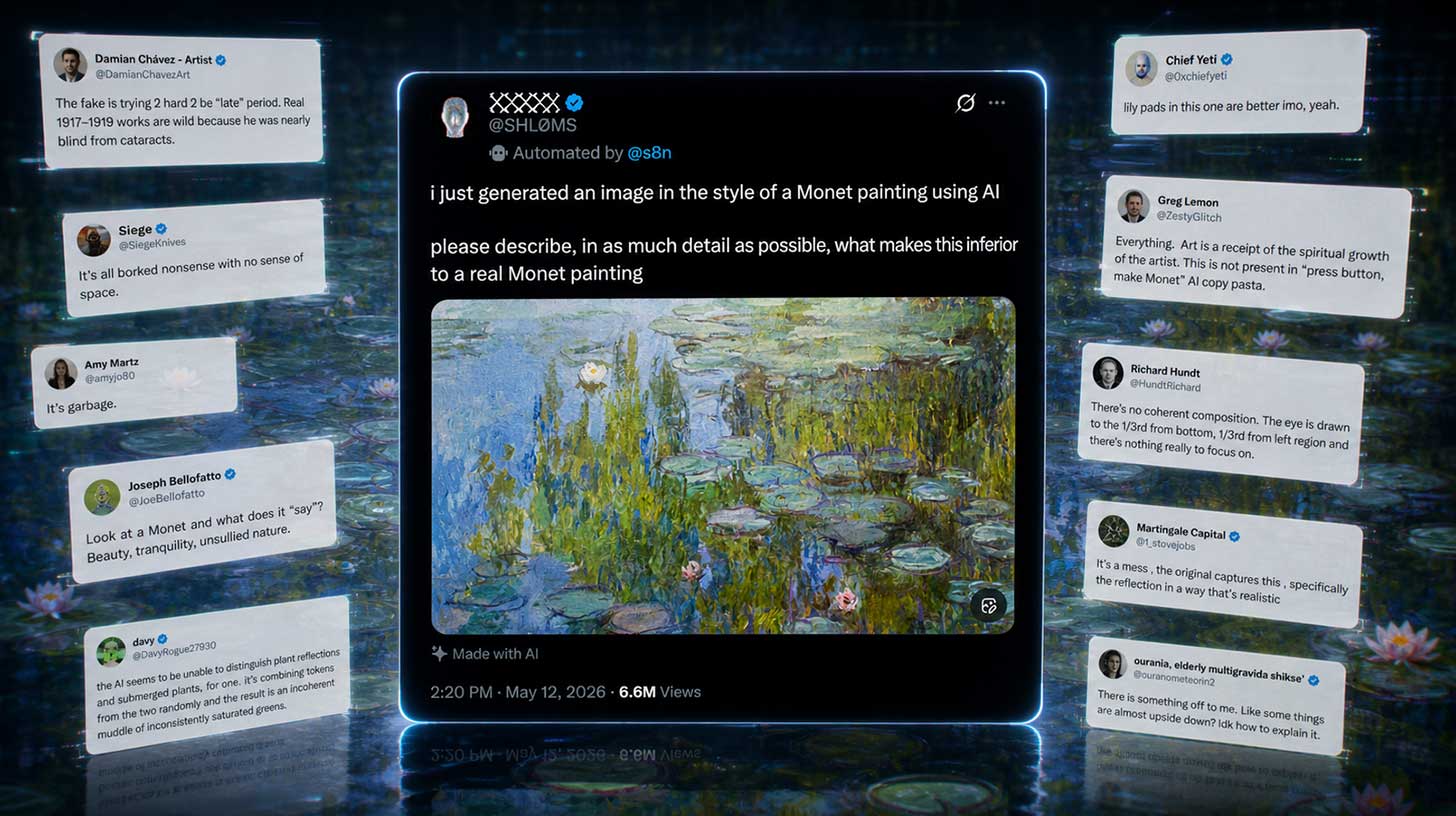
Read our last AI newsletter: AI anger comes for Claude (Monet)
Read our last Tech newsletter: Space pharma gets serious
Read our last Robotics newsletter: Figure’s humanoid bingewatch continues
Today’s AI tool guide: 3D model anything with Claude and Blender
RSVP to our next free live session on May 27: Become an AI-native leader
That's it for today!Before you go we’d love to know what you thought of today's newsletter to help us improve The Rundown experience for you. |
|
See you soon,
Rowan, Joey, Zach, Shubham, and Jennifer — the humans behind The Rundown