Exclusive interview: Sundar Pichai on AI's flip phone moment
PLUS: Generate an agent-native CLI from any website

Good morning, AI enthusiasts. Google’s announcements at I/O gave us a clear picture of the company’s direction: a top-to-bottom approach to making lives easier with AI.
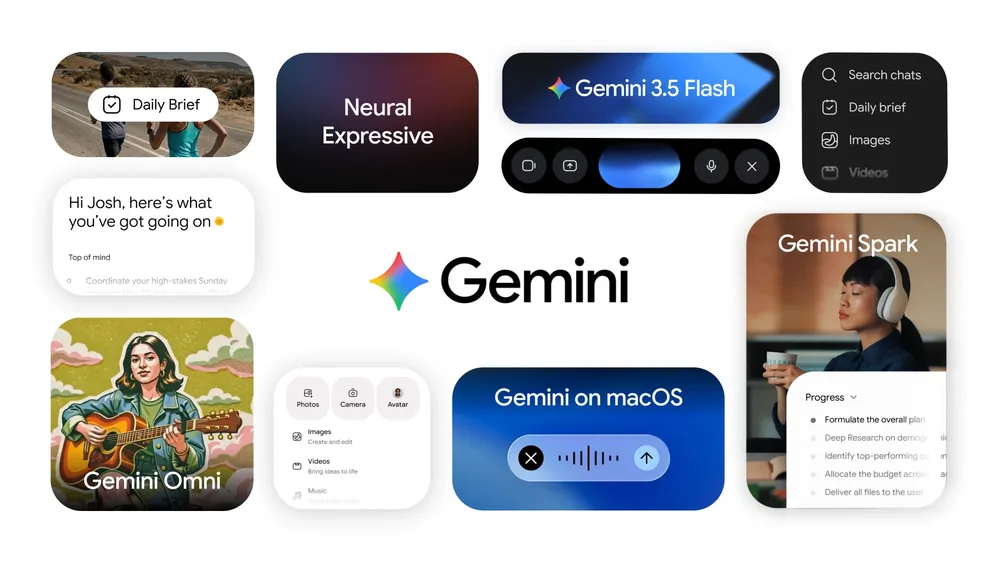
We sat down with Sundar Pichai, CEO of Google, to understand what this shift means for creators, engineers, and everyday users — touching upon everything from YouTube to agentic coding, and why today’s AI will look like a flip phone in three years.
In today’s AI rundown:
Exclusive insights from Sundar Pichai at I/O 2026
OpenAI’s latest wave of Codex upgrades
Generate an agent-native CLI from any website
California moves to protect workers impacted by AI
4 new AI tools, community workflows, and more
LATEST DEVELOPMENTS

Image source: The Rundown
The Rundown: We sat down with Google CEO Sundar Pichai at I/O 2026 for an exclusive interview on the company’s AI push, its effort to empower YouTube creators, everyday users, and engineers, and what AI will look like three years from now.
The details:
Pichai said models like Omni empower creators to express themselves better, but YT will remain creator-first, keeping its “human-to-human” connection.
When asked why an everyday user should switch to Gemini, Pichai pointed to seamless integration in daily life, especially with agents handling tasks.
He added agents will work 24/7 across devices, and they’ll be very common three years from now, with today’s tech looking primitive like flip phones.
Pichai said engineers will have a team of agents, and the metric for success will not be AI-written code but agentic coding, handling long-running tasks.
Why it matters: The full interview covers more on Google’s AI push, Pichai’s advice to the young generation, and where he thinks a human-in-the-loop will always matter. But the throughline is clear: the shift is steep, and getting native to these tools will be the key — for creators, coders, and everyone else.
TOGETHER WITH ALGOLIA

The Rundown: Just like any powerhouse, an AI-powered search stack needs a solid foundation to grow on. If you’re unsure of where to start or where to go next, Algolia has you covered with a new white paper that shows you how to build one that holds up in production from day one.
The guide covers:
Ingestion, enrichment, and hybrid indexing for better retrieval
RAG interfaces that connect your data to LLMs
Observability and governance using secured API keys
Lifecycle management as your search needs evolve
Download the white paper and start building your AI-powered search experience.
OPENAI

Image source: OpenAI
The Rundown: OpenAI dropped another wave of Codex upgrades — this time improving the agentic assistant with the ability to attach app windows, a new goal mode, locked computer use, and advanced annotation for hands-off website work.
The details:
Appshots allows Mac users to attach any open app window (its screenshot, text, and content) to a Codex thread with a simple Command-Command press.
Goal mode — now available in the Codex app, IDE extension, and CLI — lets users set a goal and let Codex work toward it for hours (or even days).
Locked computer use, when enabled, allows Codex (triggered via a second device) to use desktop apps, even after the Mac is locked with its screen off.
Advanced annotation mode lets users directly describe to Codex what they want changed in their web page, and instantly previews the results.
Why it matters: OpenAI continues its push with Codex, giving developers not just more usage but also handy features that improve how they work with the agentic assistant and the context it has access to. The company is betting these efforts will help it close the gap with Anthropic, and maintain its lead over xAI and Google.
AI TRAINING

The Rundown: In this guide, you will learn how to use Printing Press to download agent-friendly tools for hard-to-use APIs like Google Flights or ESPN. You will also learn to build your own CLI tools to access any site with an API.
Step-by-step:
Go to Printing Press and skim the examples or read the GitHub install notes. Now, install the starter kit: npx -y @mvanhorn/printing-press install starter-pack
Tell your agent (Codex/Claude Code/Hermes): “Inspect the starter kit. List the tools, read their help output, and try one safe read-only command from ESPN or flight-goat. Tell me which tool worked and which command you ran”
Ask the agent to install the Printing Press binary with: go install github.com/mvanhorn/cli-printing-press/v4/cmd/printing-press@latest
Now the agent can build its own CLI tools. Start with a site that has lots of public data. “Use Printing Press to generate read-only commands for [WEBSITE]. Propose the useful commands first, then generate and test them”
Pro tip: If your agent struggles to use a specific MCP or integration, you can tell them to build their own commands with Printing Press. You just need an API key.
PRESENTED BY AWS MARKETPLACE

The Rundown: Multi-agent systems fail in predictable ways without an orchestration layer — state lost between steps, no human sign-off on critical decisions, and silent failures when one agent goes down. AWS’s May 26 workshop shows you how to build the control plane that prevents it.
Join and learn how to:
Manage state and retries with AWS Step Functions
Coordinate reasoning and tool use through Amazon Bedrock Agents
Add human approval gates that pause execution until sign-off
Handle multi-step pipeline failures gracefully with Amazon MWAA
AI PROTECTIONS

Image source: Images 2.0 / The Rundown
The Rundown: California Governor Gavin Newsom signed an executive order directing state agencies to study and develop policies around how to protect workers from AI-driven job losses — a day after Meta laid off 8K employees to offset AI investments.
The details:
The order directs agencies to explore policies like severance standards, stock compensation, worker ownership models, and universal basic capital.
Within 90 days, the state will launch a dashboard tracking AI’s job impact, and within 180 days, agencies will pitch WARN Act updates for faster layoff alerts.
By Oct. 15, the state will review how unions are negotiating AI adoption, update workforce training, and explore ways to direct AI revenue toward public benefit.
Why it matters: California is home to 33 of the world’s top 50 AI companies, and now it’s the first state to formally study what this tech might mean for workers and the economy. The timing is hard to ignore: over 70K jobs have already vanished in 2026, and the industry expects more cuts ahead as AI adoption accelerates.
QUICK HITS
🤖 Scrunch - See how AI interprets your site, run a free audit, and unlock the new way to reach customers*
🦞 NanoClaw - A secure, lightweight, open-source alternative to OpenClaw
🧠 Contract Intelligence - Harvey’s agents for first pass on inbound contracts
💻️ Antigravity - Google’s next-gen agentic development platform
*Sponsored Listing
Figure AI co-founder Brett Adcock’s Hark raised $700M at a $6B valuation to build its own take on personal intelligence, with native models, software, and hardware.
Anthropic is reportedly in talks to use Microsoft’s Maia purpose-built AI chips, coming after similar deals with Google for its TPUs and Amazon for its Trainium chips.
Agentic AI startup Manus is exploring options, including a raise of about $1B, to comply with China’s order to unwind its $2B+ acquisition by Meta, Bloomberg reports.
SpaceX’s IPO prospectus revealed that Anthropic is paying the company $1.25B per month through 2029 for access to compute capacity across Colossus and Colossus II.
Microsoft and EY announced a new $1B partnership, with Microsoft pairing its engineers and AI with EY’s 400K consultants to accelerate clients’ AI projects.
COMMUNITY
Every newsletter, we showcase how a reader is using AI to work smarter, save time, or make life easier.
Today’s workflow comes from reader Loïc R. in London:
“I tore my ACL on both knees years ago playing football. As a sprinter, I’ve never done long-distance running. But in one month, I’m taking part in a 5-hour multi-sport adventure race. To train for it, I asked ChatGPT to build a custom 4-week training program taking into account my past injuries and current strengths.
After every running session, I use voice to capture how I did and how my body felt. ChatGPT then adjusts my program based on the time left before the race and how to maximize it while minimizing the risk of injuries. A personalized coach in my pocket for a very specific challenge.”
How do you use AI? Tell us Visit videoask.com.
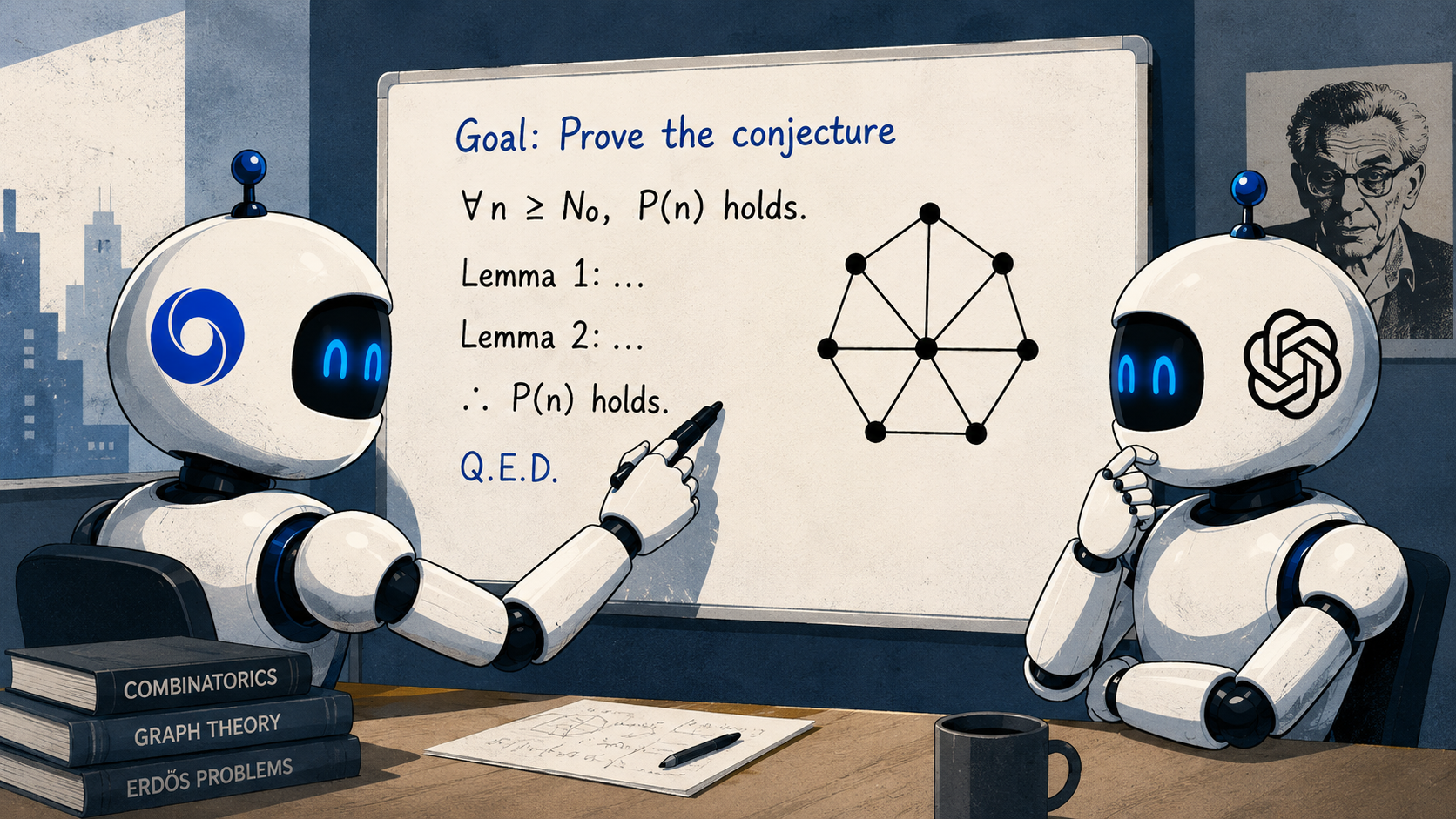
Read our last AI newsletter: OpenAI cracks an 80-year math belief
Read our last Tech newsletter: Meta’s cyborg smart glasses for soldiers
Read our last Robotics newsletter: App sends humanoid for home cleaning
Today’s AI tool guide: Generate an agent-native CLI from any website
RSVP to next workshop on May 27: Become an AI-native leader
That's it for today!Before you go we’d love to know what you thought of today's newsletter to help us improve The Rundown experience for you. |
|
See you soon,
Rowan, Joey, Zach, Shubham, and Jennifer — the humans behind The Rundown