Exclusive: Demis Hassabis on AGI, curing diseases with AI
PLUS: Build a weekly marketing report that runs itself

Good morning, AI enthusiasts. Google DeepMind CEO Demis Hassabis thinks we’ll have AGI by 2030 — give or take a year. Some gaps remain, but he’s more confident now that we’re on track.
We sat down with Hassabis at I/O to talk about what’s still missing, which diseases AI will crack first, and where humans will always have the edge.
P.S. Our next live workshop is today at 12 PM EDT! Join to learn how to build the operating system that lets you lead an AI-native organization. RSVP here.
In today’s AI rundown:
Exclusive interview with Demis Hassabis on AGI
Jensen Huang pushes back on ‘AI-proof’ subjects
Build a weekly marketing report that runs itself
Stanford study finds clear racial bias in AI hiring
4 new AI tools, community workflows, and more
LATEST DEVELOPMENTS
GOOGLE DEEPMIND

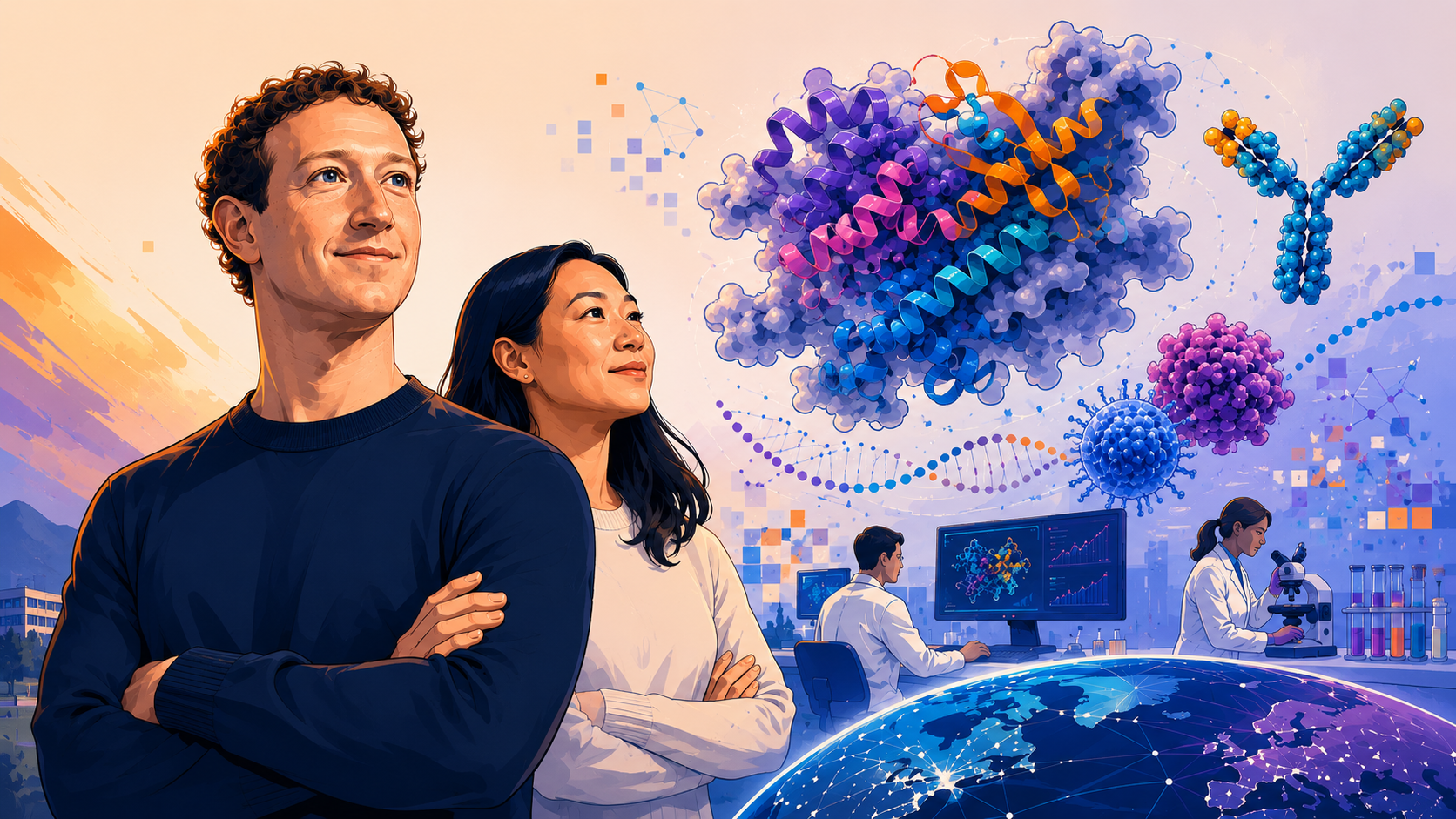
Image source: The Rundown
The Rundown: We sat down with Google DeepMind CEO Demis Hassabis for an exclusive interview discussing when he expects AGI, AI’s role in drug discovery, which diseases are likely to get cured first, and what he thinks is still going unnoticed.
The details:
Hassabis said AGI is on track for 2030, plus or minus a year, but a few things remain unsolved: world physics, memory, consistency, and continual learning.
Timelines have hardened on drug discovery, too, with focus on oncology and immunology first and eventually an engine that could help cure any disease.
After AGI, Hassabis said he’d turn to understanding the nature of reality using AI and study more philosophical topics, like what it means to be human.
He said he can’t wait to see what students will build with advanced AI, adding that taste, original thinking, and emotional connection will be more valuable.
Why it matters: This interview with Hassabis paints a picture that AGI is going to be here soon, provided we fix the gaps. It will be an interesting age with kids growing up with advanced AI in their hands, and we can surely expect some big discoveries. The question is: will the adults be able to adapt to this new reality as quickly?
TOGETHER WITH WEIGHTS & BIASES

The Rundown: AI agents offer unprecedented capabilities, but pushing agentic applications into production without rigorous evaluation risks inconsistent performance and a negative customer experience.
Get the guide to learn:
How AI agent development differs from traditional software development
Three key components needed for a rigorous agent evaluation
A practical five-step recipe for running successful agent evaluations
AI EDUCATION

Image source: Images 2.0 / The Rundown
The Rundown: Amid growing concerns of AI taking jobs, Nvidia CEO Jensen Huang advised parents not to obsess over what their kids study, arguing that the skills that mattered before will still matter in the age of AI.
The details:
Speaking with CNA, Huang said students should not chase “AI-proof” subjects but ask: “How can AI help elevate my learning, my craft, my purpose?”
He used journalism as an example, saying the best in the field not only prepare questions but listen, think about the audience, and respond dynamically.
Huang referenced “wabi-sabi,” the concept of the beauty of imperfection, suggesting uniquely human qualities will become more prized across domains.
He also called the narrative tying AI to job cuts as “lazy,” saying “AI has just arrived, how is it possible they’re already losing jobs?”
Why it matters: Whether the narrative is lazy or not, the fact is that CEOs are slashing jobs in favor of AI. More than 80K jobs have already been cut this year, and we can expect more to come. In this environment, Huang’s advice falls in line with many other experts: ask how AI can elevate your craft and focus on creativity, judgment, and taste.
AI TRAINING

The Rundown: In this guide, you will learn how to turn a messy weekly marketing review into a repeatable Claude Cowork workflow. Claude will prep the data, verify numbers, draft, publish, and package everything.
Step-by-step:
Create reporting repo folders: marketing-metrics-review/, inputs/ for collecting data, working/ for drafting and verification, skills/, and outputs/ for final reports
Prompt: “Create a skill that prepares weekly marketing review inputs. It should summarize last week’s Slack messages, check Gmail for sales updates, review revenue numbers in Google Analytics, pull meeting notes from Google Drive, and save the summaries in inputs/”
Next, prompt: “Create a skill that looks at the inputs and creates a first draft of the marketing report, leadership brief, Slack update, and action items”
Run the input skill, then the reporting skill, and approve the story before Claude expands the report. Finally, create a publishing skill to automate report delivery
Pro tip: After each update, ask Claude what changed, what it got wrong, and what should become durable. Then approve a small skill update so next week starts smarter.
PRESENTED BY GOOGLE FOR STARTUPS

The Rundown: Wondering what’s next in generative media? Google for Startups brought together top industry leaders to give founders the strategic insights needed to reshape product development, scale faster, and stay ahead of the curve.
Inside the report, you’ll discover:
Expert perspectives on navigating the shifting generative landscape.
Strategic blueprints for AI product differentiation and growth.
Actionable frameworks from the builders defining the next era.
AI RESEARCH

Image source: Images 2.0 / The Rundown
The Rundown: Stanford studied 4M job applications across 156 employers, finding that AI hiring tools create “clear racial disparities,” with Black and Asian applicants disproportionately screened out and some facing rejection across every company.
The details:
Researchers analyzed Pymetrics’ per-position data, finding 10.62% of positions show adverse impact against Black applicants and 5.32% against Asians.
The problem compounds further as 42 models are shared across employers, so rejection at one could trigger rejection at another using the same model.
4% of applicants who applied to 10 positions were rejected from all of them, higher than if employers were making independent decisions.
The researchers noted that findings may not generalize to all AI hiring tools, which are increasingly powered by modern AI models that work differently.
Why it matters: While the study looks at data between 2018 and 2022, and today’s AI hiring wave is driven by LLMs that work differently, it shows how bias can creep in through shared infra in unknown ways. If a major vendor suffers from AI bias (not just in hiring but across other domains too), several companies get hit without knowing it.
QUICK HITS
💡 Pave - Describe your app and deploy it with no code, no setup, or prototype purgatory. Real software, ready to run*
💻️ Computer - Perplexity’s cloud-based agent, now manages Shopify stores
🧠 Claude Code - Anthropic’s coding agent, now with security-guidance plugin
📃 Parse 2.0 - Extend AI’s document parsing API built for agents
*Sponsored Listing
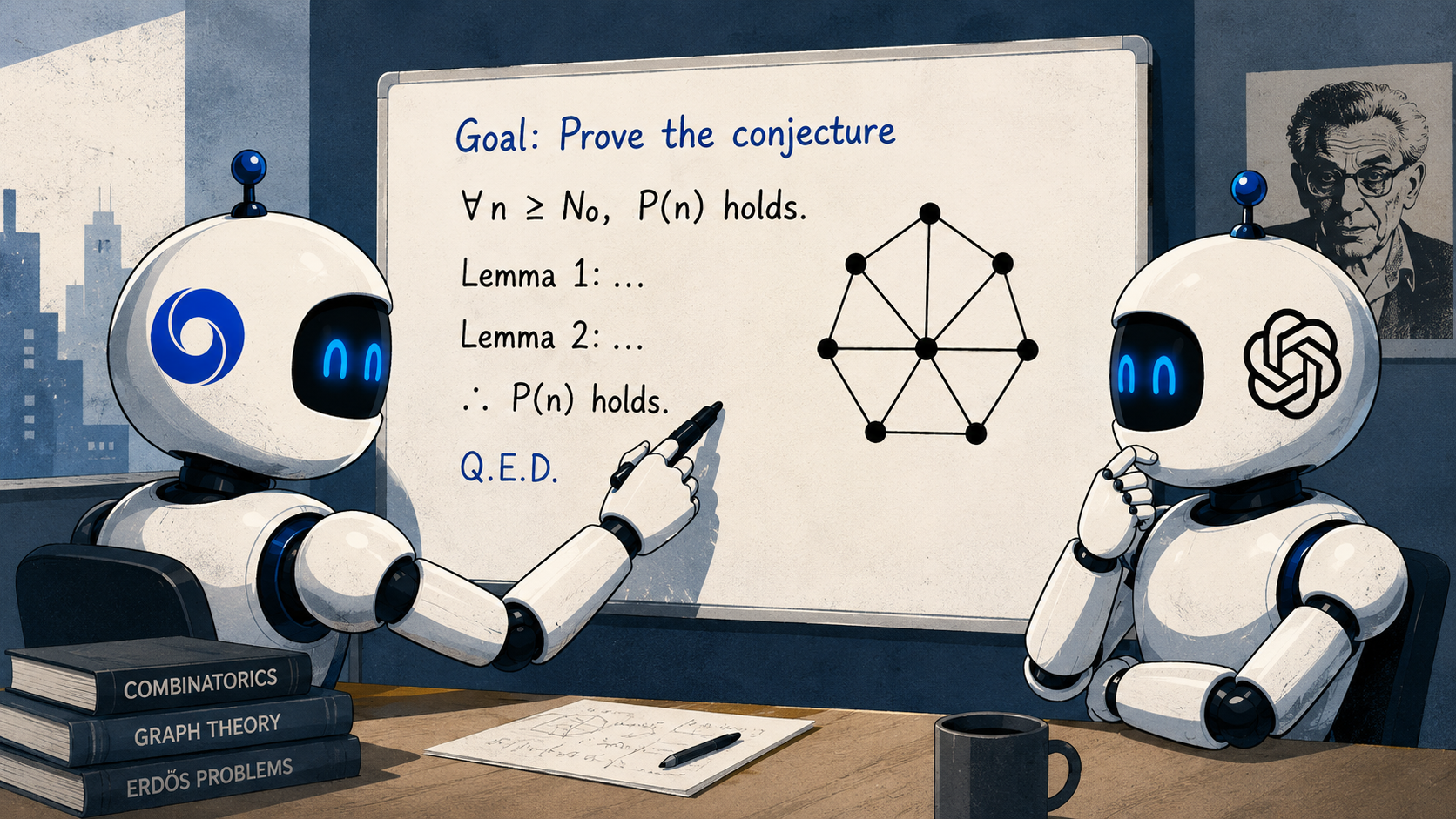
Anthropic’s technical team member Sholto Douglas said Mythos also solved the Erdős Problem #90 that OpenAI cracked, reaching the same result with a simpler proof.
China is imposing overseas travel restrictions for top AI researchers from labs including Alibaba and DeepSeek to catch up with the U.S., Bloomberg reports.
Xiaomi permanently reduced MiMo-V2.5 series API pricing by up to 99% and increased token allowances by 5–8x, making its AI models dramatically cheaper to use.
ElevenLabs released Music v2, upgrading its music-generation model with better vocals, instrumentation, multilingual support, and track-level inpainting.
OpenRouter, which lets devs access AI models through a single API, raised $113M in funding as it scaled to 8M developers and a 1.5 quadrillion-token annual run rate.
COMMUNITY
Every newsletter, we showcase how a reader is using AI to work smarter, save time, or make life easier.
Today’s workflow comes from reader Todd K. in Chicago:
“My best friend lives in Minnesota, and I’m in Illinois, so we’re constantly planning trips, weekends, and events to meet up for. We started a shared ChatGPT conversation titled ‘TRAVEL’ and added each other as members so we can both contribute ideas.
It’s been a great way to collaboratively plan trips and experiences. For example, when he recently came to Chicago for a Cubs weekend, we used the chat to research everything together — best BBQ spots near Wrigley, top post-game bars, must-try donut shops on the North Side, and other events happening around the city.
Basically, it became a shared running conversation where we could both ask questions, throw out ideas, and save information leading up to the trip. Then we had AI organize everything into a planned itinerary.”
How do you use AI? Tell us Visit videoask.com.
Read our last AI newsletter: The Pope just weighed in on AI
Read our last Tech newsletter: Ferrari’s first EV, designed by Jony Ive
Read our last Robotics newsletter: Waymo’s flood problem just got bigger
Today’s AI tool guide: Build a weekly marketing report that runs itself
RSVP to next workshop today @ 12PM EDT: Become an AI-native leader
That's it for today!Before you go we’d love to know what you thought of today's newsletter to help us improve The Rundown experience for you. |
|
See you soon,
Rowan, Joey, Zach, Shubham, and Jennifer — the humans behind The Rundown