Elon Musk's 'Terafab' AI chip factory
PLUS: Use Google Stitch to redesign your entire website

Good morning, AI enthusiasts. Elon Musk already runs the world's biggest EV factory, the world's busiest rocket company, and a $100B+ AI startup. Now, he’s adding cutting-edge chip fabrication to the list to tie them all together.
His new Terafab project between Tesla, SpaceX, and xAI aims to produce 50x the world’s current global compute per year, most of it deployed on AI satellites in orbit — in what Musk called the first step toward a "galactic civilization."
In today’s AI rundown:
Musk’s new $25B ‘Terafab’ AI chip project
The Rundown Roundtable: Our AI use cases
Use Google Stitch to redesign your website
Halter's AI ‘Cowgorithm’ nears $2B valuation
4 new AI tools, community workflows, and more
LATEST DEVELOPMENTS
TESLA, SPACEX, & XAI

Image source: xAI livestream
The Rundown: Elon Musk just unveiled Terafab, a new Tesla-SpaceX-xAI chip facility that aims to produce a terawatt of AI compute per year, or roughly 50x what the entire world outputs today — calling it "the most epic chip building exercise in history by far."
The details:
Musk's Austin facility would handle logic, memory, packaging, and testing, a vertical integration he said exists nowhere else.
Two chip types are planned: one for Tesla vehicles and Optimus robots, another space-grade chip for solar-powered AI satellites launched via Starship.
Musk said "no one wants AI computing centers in their backyard", expecting space-based compute to undercut ground costs within 2-3 years.
Musk also pitched the Terafab as the first step towards a “galactic civilization”, with a post-scarcity economy that provides “abundance for everyone”.
Why it matters: With the film Project Hail Mary trending (great flick), it feels like the perfect weekend for Elon to pitch one of his most sci-fi visions yet. Building a fab on this scale from scratch is an enormous bet, but the need for AI chip scaling is a real one — and Musk has made a career out of ignoring what the industry says can’t be done.
TOGETHER WITH YOU.COM

The Rundown: Most teams pick a search provider by running a few test queries and hoping for the best—a recipe for hallucinations and unpredictable failures. This technical guide from You.com gives you access to an exact framework to evaluate AI search and retrieval.
What you’ll get:
A four-phase framework for evaluating AI search
How to build a golden set of queries that predicts real-world performance
Metrics and code for measuring accuracy
Go from “looks good” to proven quality. Learn how to run an eval.
THE RUNDOWN ROUNDTABLE

Image source: Lovart / The Rundown
The Rundown: The Rundown Roundtable is a weekly feature where we poll members of The Rundown staff about how we use AI in our work and daily lives.
Darren, Director of Media: For a recent video, I needed to animate a visual representation of this ancient board game. Doing that manually in After Effects would've taken a few hours, so instead I described the rules of the game to Claude and asked it to generate an interactive SVG animation.
After a few rounds of tweaking, I was able to screen-record the result, and it worked great for the video.
Jennifer, Tech & Robotics writer: When my sixth-grade daughter needs math help, I sometimes feel a bit lost myself. Some of the teaching methods have changed since I was a kid, and I don’t always have time to dig through her textbooks.
So I use ChatGPT to walk me through problems step by step — in French, since that’s how she learns — so I can actually explain them to her in a way that makes sense.
AI TRAINING

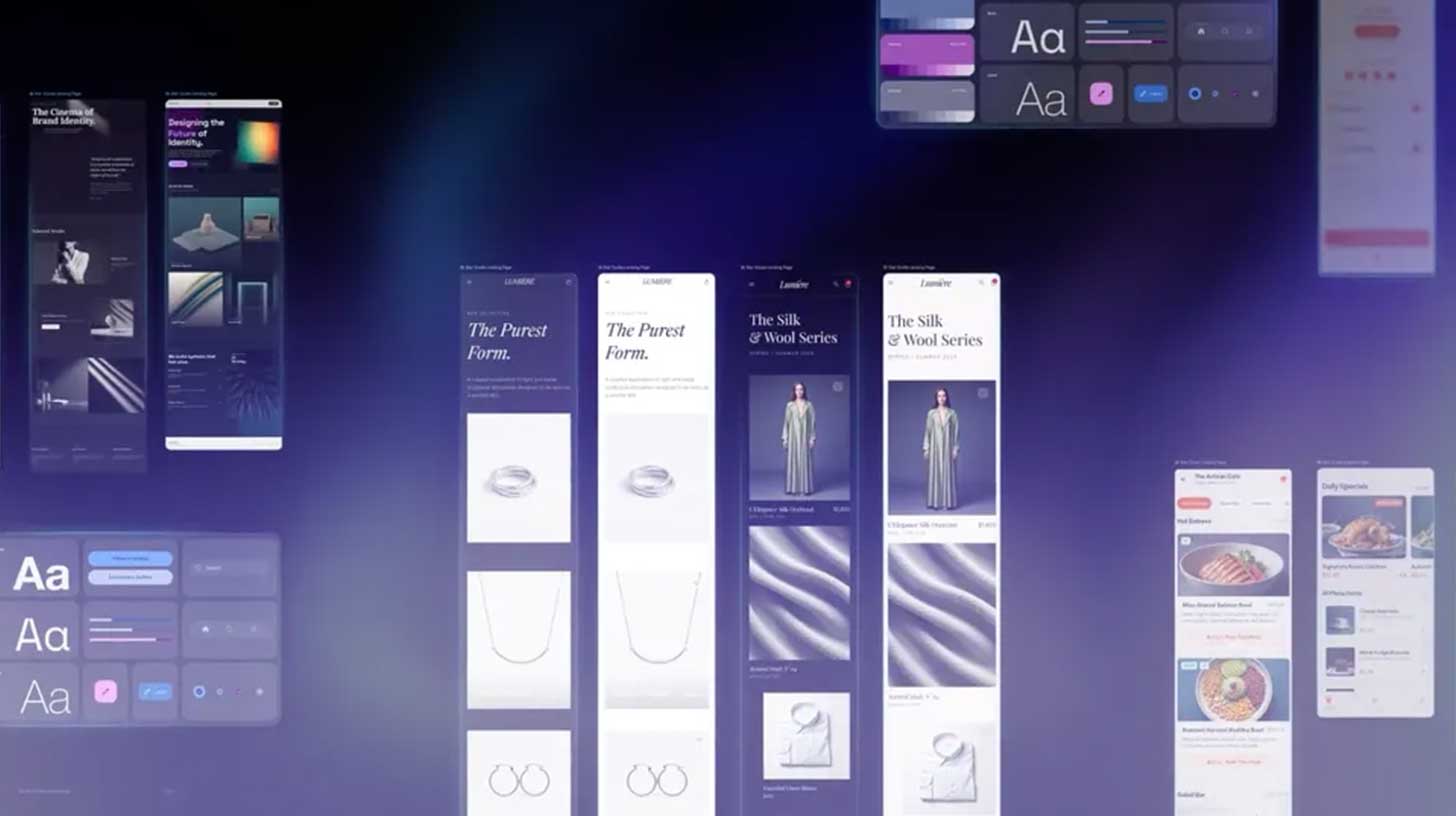
The Rundown: In this guide, you will learn how to use Google Stitch to redesign an existing web page by uploading screenshots. This is a very fast way to fix weak layouts, generate better variations, and create something you can hand off to a developer.
Step-by-step:
Pick a single page on your website that needs improvement. Take a screenshot and think about the specifics of what needs to be changed
Go to Google Stitch, add the screenshot in chat, and prompt: “Improve the layout of this page so the user sees more content and perceives more value. Make the content more accessible and reduce the dead space”
Select the generated page > Generate > Variations > Generate Variations to have four new page concepts. Choose the best one, and go to More > Export
Once you export the design to Figma or download the new code, you can rinse and repeat this process with as many pages as you like in the same canvas
Pro tip: Click Export > AI Studio to build a live prototype with Google’s vibe coding tool.
PRESENTED BY LOVABLE

The Rundown: Lovable for Slides uses AI to generate stunning slides, scripts, and audio narration — no design skills required. Whether it's an investor pitch, client proposal, or quarterly review, just describe what you need, and Lovable handles the rest.
Key highlights include:
Create presentation-ready decks in under 10 minutes with simple prompts
Upload existing slides and let AI transform them into polished, professional formats
Auto-generate speaker scripts and audio narration alongside your deck
Try Lovable for Slides and skip the hours of slide formatting.
AI & AGTECH

Image source: Halter
The Rundown: New Zealand’s Halter is reportedly nearing a new round led by Peter Thiel’s Founder’s Fund that would value the startup at $2B — with its ‘Cowgorithm’ collars using AI in agriculture to track, herd, and modernize pasture management.
The details:
Halter's solar-powered collars create virtual fences and let ranchers herd cattle remotely via app using vibration and audio cues.
Collars send 6,000+ data points per minute to Halter's proprietary AI, which it calls the ‘Cowgorithm’, to track health and optimize grazing.
The round would double Halter's valuation from roughly $1B after a $100M raise last June, with investor demand leaving the deal oversubscribed.
Founded on a 300-cow NZ dairy farm, Halter has collected 7B+ hours of animal behavior data and is now expanding into the US market.
Why it matters: Some of the biggest AI unlocks might be coming in industries that haven’t materially changed in centuries. Halter replaces physical fences, manual herd checks, and more with real-time data, a collar, and an app — bringing practical modernization to an old-school process. Plus, ‘Cowgorithm’ is an excellent name.
QUICK HITS
🧠 Adapt - Slack-native AI for your team. Up to $500 in free credits for new users*
🚀 Claude - Now with Cowork Projects, Claude Code channels, and Dispatch
⚙️ Composer 2 - Cursor’s powerful, cost-effective coding model
🤖 ASMR - Supermemory's experimental agent memory system
*Sponsored Listing
Cursor revealed that its Composer 2 model was built on top of Kimi K2.5, coming after the company faced backlash over failing to include the detail in its release.
Anthropic rolled out Projects in its Claude Cowork, allowing users to import their existing web-based Claude projects or create them to use on the desktop app.
The White House released its AI policy blueprint for Congress, aiming to block states from writing their own AI laws while keeping federal oversight across existing agencies.
OpenAI is reportedly planning to nearly double its workforce from 4,500 to 8,000 by the end of 2026 amid the company’s increasing enterprise AI focus.
A U.S. man pleaded guilty to an AI music fraud that earned him $1.2M/year by generating fake tracks and inflating their play counts, now facing five years in prison.
COMMUNITY
Every newsletter, we showcase how a reader is using AI to work smarter, save time, or make life easier.
Today’s workflow comes from reader Chris P. in Europe:
"I’m a Senior Manager in the public sector exploring a move into big tech, but I had no clear sense of how my experience translated or what level to target. I started using ChatGPT, Gemini, and Claude as a career consultant—refining my CV, aligning it to roles, and running mock interviews.
The biggest surprise was salary guidance. One role had almost no data online, with Glassdoor estimating around €80k–€100k. ChatGPT suggested €120k–€140k based on my experience. I gave that range as expectation, and the recruiter confirmed the salary was €130k. It’s now my go-to consultant for career advice."
How do you use AI? Tell us Visit docs.google.com.
Read our last AI newsletter: How 81k people really feel about AI
Read our last Tech newsletter: Amazon’s secret phone project
Read our last Robotics newsletter: Nvidia’s move to own the robot future
Today’s AI tool guide: Use Google Stitch to redesign your entire website
RSVP to next workshop on March 26 @ 2PM EST: Intro to Vibe Coding pt. 3
That's it for today!Before you go we’d love to know what you thought of today's newsletter to help us improve The Rundown experience for you. |
|
See you soon,
Rowan, Joey, Zach, Shubham, and Jennifer — the humans behind The Rundown