Tavus previews Griffin, a lifelike AI that reacts on video calls
Tavus’ Griffin preview shows lifelike AI responding on live video, with promise for tutors and companions and risks of more convincing impersonation.
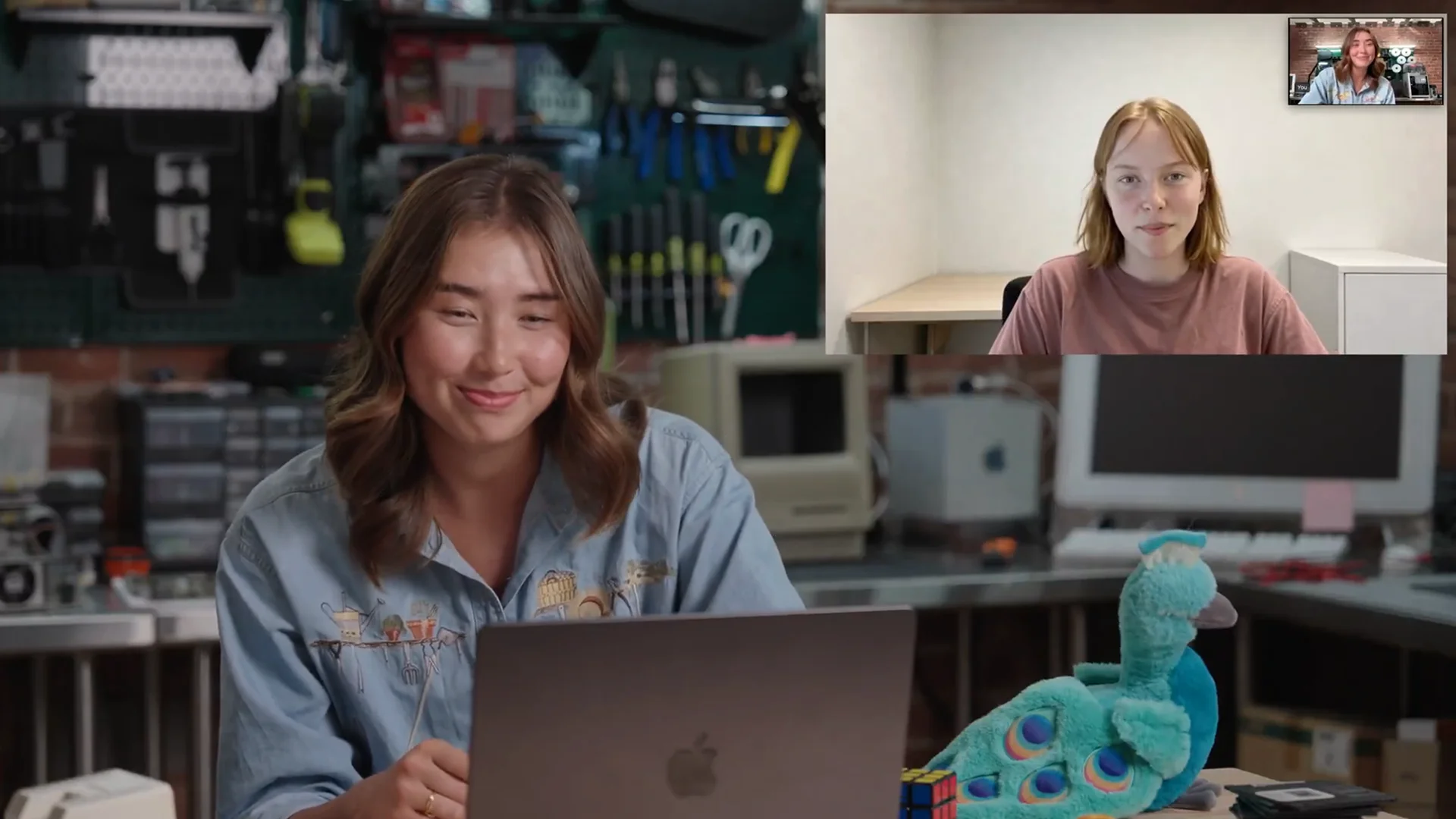
Tavus previewed Griffin on Oct. 1, an AI model that renders a lifelike person who can hear, see, speak, and react during a live video call. The startup says nearly half the participants in a short company test believed they were talking to a human.
As The Rundown reported, Tavus is starting with Griffin-Lite, a research preview limited to trusted testers. The company is working on safety and disclosure features before a wider release and has given no firm public launch date.
How Griffin responds live
Tavus describes Griffin as watching, listening, speaking, and gesturing at the same time. It can nod while a user speaks and work visual details into a reply, making the exchange feel more continuous.
In Tavus’ study, 26 of 54 participants, or 48%, mistook Griffin-Lite for a person after one minute. The previous system fooled 1 of 41 participants, or 2.4%. Participants expected to meet another participant and were debriefed afterward.
The small study captures a brief encounter with people already expecting a human partner. Whether the same impression would hold over longer calls remains uncertain.
What the benchmark shows
Tavus also points to NVIDIA’s VideoFDB results. On the generation track, which rates conversational behavior, Griffin-Lite scores 3.83 out of 5, against 3.92 for human reference recordings. The next listed system, Gemini 2.5 plus Anam, scores 2.80. The table includes only two competing AI systems.
The benchmark uses a language model to score nonverbal behavior against set criteria. Its perception track, which tests how well systems understand conversational cues, shows a wider gap. Griffin-Lite scores 3.73, compared with 4.20 for humans.
Why it matters
Griffin points toward lifelike AI that can keep up as a conversation unfolds. A nod at the right moment or a response to a visual detail could make an assistant easier to talk to. For a student showing where they are stuck or an older person seeking company, that could make a video chat more engaging.
The tutor opportunity has some support. A 2025 study in Scientific Reports involving 194 Harvard physics students found greater immediate learning gains from a structured AI tutor than from the classroom lessons used for comparison. The experiment covered two lessons and did not test Griffin, lifelike video avatars, or lasting retention.
A Griffin tutor could make that kind of help feel more natural. Its value would still depend on the quality of its explanations, how often it makes mistakes, and whether students retain what they learn. Those outcomes would need their own tests.
For an aging parent, a responsive avatar could offer extra conversation and company. AP’s reporting on ElliQ included older users who described companionship, alongside psychologist Julianne Holt-Lunstad’s warning that artificial comfort could discourage human contact. Those interviews suggest a possible benefit. Whether Griffin could offer similar comfort remains uncertain, and families would need to watch for any decline in contact with people.
The same responsiveness could also make a fake identity more persuasive. WIRED’s June 2025 reporting on AI scams cited a Hong Kong case in which a finance worker transferred $25 million after a video call with a fake chief financial officer. A caller who can react to questions could make that kind of deception harder to spot.
How Tavus will enforce AI disclosure and check consent to copy a person’s identity remains an open question for wider release. Employees and families should verify requests for money or sensitive information through a known contact channel before acting.
Sources & further reading
- 01therundown.ai ↗
- 02Griffin: The First Human Interaction Model | Tavus ↗
- 03VideoFDB — Evaluating Full-Duplex Vision-Speech Capabilities in Conversational Agents ↗
- 04[2605.30256] VideoFDB: Evaluating Full-Duplex Vision-Speech Capabilities in Conversational Agents ↗
- 05AI tutoring outperforms in-class active learning: an RCT introducing a novel research-based design in an authentic educational setting | Scientific Reports ↗
- 06Chatty robot helps seniors fight loneliness through AI companionship | AP News ↗
- 07Deepfake Scams Are Distorting Reality Itself | WIRED ↗
This story builds on reporting from The Rundown newsletter on October 2, 2026.